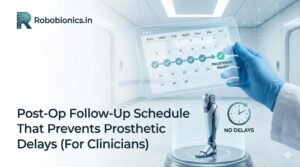
Post-Op Follow-Up Schedule That Prevents Prosthetic Delays (For Clinicians)
For many clinicians, the surgery is only the first step. What happens after the operation




Every patient who loses a limb or risks losing one moves through many specialists before reaching a prosthetics team. Vascular surgeons, neurologists, plastic surgeons, and PM&R doctors all play a role in guiding that patient forward. But without a clear map that connects these specialties, the journey can feel slow, confusing, and stressful for everyone involved.
This article brings you a simple, human-friendly cross-specialty referral map. It shows how each specialty can guide the patient with clarity, how to hand off care smoothly, and how to create a path that feels safe and easy to follow. With clear communication and a shared plan, hospitals can help patients reach prosthetic care faster and with more confidence.

Vascular surgeons often meet patients at a very delicate moment, when blood flow problems threaten tissue or limb survival.
These patients are scared, tired, and unsure of what the future holds.
A gentle explanation from the surgeon can help them understand what is happening and what steps may come next.
This first moment of clarity becomes the foundation for the entire referral pathway.
Many patients look to the vascular team for answers about healing, stability, and long-term recovery.
When the specialist guides the patient with calm and simple words, the journey feels easier to navigate.
They can say things like, We will work together and make sure you get the right support at every stage, which builds trust and lowers fear.
This approach also helps the patient prepare emotionally for possible surgical decisions.
When the limb cannot be saved, the surgeon’s voice becomes even more important.
The patient needs to hear that life will not stop after amputation and that tools exist to help them stay active and independent.
A smooth hand-off from vascular care to rehabilitation and prosthetic planning helps the patient avoid confusion.
This early coordination prevents delays and sets the patient on a stable path forward.
Neurologists meet patients whose limb loss or limb difficulty comes from deeper nervous-system problems.
These patients often feel confused because their symptoms progress slowly or unpredictably.
They may not understand why their body feels weak, numb, or uncooperative.
A neurologist’s calm explanation helps them make sense of their condition.
When nerve damage affects limb function, patients may not think of prosthetics as an option.
Neurologists play a key role in helping them see what is still possible.
By saying, There are tools that can help you regain more control in your daily life, the specialist opens a new door of hope.
This small reassurance encourages the patient to explore supportive devices rather than feeling trapped by their condition.
Neurologists also help identify which prosthetic solutions may work best based on signal strength and muscle activity.
They can guide patients toward early therapy to prepare the residual limb for future devices.
This kind of thoughtful, early advice helps the prosthetic team later on, because the patient arrives with clearer expectations.
It also strengthens continuity between specialties.
Plastic surgeons play a major role in shaping the physical outcome after trauma, burns, or reconstruction.
Their work affects how comfortably a prosthetic device will fit later.
A smooth, well-shaped stump and healthy soft tissue make a dramatic difference in long-term comfort.
Because of this, their decisions have long-lasting impact.
Patients often meet plastic surgeons during emergencies, when emotions run high.
They might be frightened about appearance, function, or long recovery periods.
When the surgeon explains the plan in a calm, hopeful tone, the patient feels less overwhelmed.
This emotional steadiness becomes essential for the rest of the journey.
Plastic surgeons help prepare the patient for rehabilitation and prosthetic assessment by giving simple guidance on wound care and healing expectations.
They can say, Once your healing is steady, we will connect you with a team that helps you regain daily function, which gives the patient a sense of direction.
This single sentence reduces anxiety and helps them imagine life beyond the hospital.
Such clarity strengthens the referral chain.
PM&R doctors often act as bridges between surgery, healing, and real-world function.
They see the patient as a whole person, not just a limb condition.
Many patients feel hopeful when they meet PM&R specialists because the conversation shifts from fear to possibility.
This change of tone helps them believe that independence is still within reach.
PM&R specialists help assess whether the patient is ready for prosthetic fitting based on muscle strength, stump condition, and emotional readiness.
Their guidance often determines when the referral to a prosthetic provider should happen.
When they explain the process in simple words, patients feel supported rather than rushed.
This calm pacing prevents frustration during later training phases.
They also help prepare the patient for the physical and mental effort that comes with learning a prosthetic device.
By saying, We will take this one step at a time, and you will not walk this path alone, the specialist creates a safe space.
This assurance carries the patient through difficult stages.
It also keeps the rehabilitation process steady and predictable.

When specialists identify the need for prosthetic support early, the patient gains precious time.
Even before surgery or diagnosis is complete, early conversations help the patient prepare emotionally for what lies ahead.
Simple guidance like, When the time is right, you will meet a team that helps you regain many daily skills, helps their mind settle.
This early clarity reduces shock and fear later in the process.
Early identification also allows the hospital team to plan the next steps in advance.
This leads to faster referrals, fewer delays, and smoother coordination across departments.
Patients benefit because they do not have to figure out things on their own.
Instead, they move through a structured path that feels safe and predictable.
For the prosthetic provider, early signals about the patient’s condition help them prepare.
They can estimate fitting timelines and therapy needs based on the specialist’s notes.
This preparation creates a smoother handover when the time comes.
Patients feel cared for by a connected system rather than separate, isolated teams.
Hospitals work best when information moves clearly from one specialty to another.
When vascular, neuro, plastics, and PM&R teams communicate openly, patients receive consistent advice instead of mixed messages.
This unity makes the referral journey feel calm and controlled.
It also reduces the chance of misunderstandings.
Simple communication methods, such as shared notes or a unified referral form, help everyone stay on the same page.
Patients appreciate when every team member seems to understand their story without them having to repeat it.
This sense of continuity builds trust and lowers stress.
It also speeds up decision-making.
When the transition between departments feels smooth, patients follow instructions more confidently.
They feel guided rather than lost.
This confidence becomes essential when they reach the prosthetic stage, which requires patience and mental strength.
The earlier specialists prepare them, the better the outcomes later on.
Patients often feel anxious when different specialists say different things.
When the entire team uses similar language and gentle explanations, the patient feels safe and supported.
This unity becomes the emotional backbone of the referral system.
It turns complex medical care into a clear, human experience.
A unified message can be something simple like, There is a clear path ahead, and each team will guide you step by step.
These words calm the patient across every department.
No matter whom they meet, the message remains steady.
This steadiness lowers anxiety and helps the patient stay focused.
When the handover finally reaches the prosthetic provider, the patient carries this confidence with them.
They walk into the new environment with trust instead of fear.
They believe that every step is part of the same caring system.
This trust leads to better engagement and better long-term success.
When patients first meet the vascular team, their focus is often on survival, wound stability, or maintaining circulation.
Once this phase settles, the patient must be guided toward rehabilitation in a way that feels gentle and reassuring.
A simple script such as, Now that your limb is healing, the next step is helping you regain strength and movement, helps the patient shift from fear to possibility.
This message makes rehabilitation feel like progress rather than another burden.
Vascular specialists can help by introducing the idea of muscle activation early.
Even small exercises can prepare the patient for later prosthetic use, especially when the limb is healing well.
These early movements remind the patient that their body still has potential for recovery.
It also helps the prosthetic provider later, because the patient arrives with better tone and confidence.
The handover to PM&R or rehabilitation is smoother when the vascular team offers a calm, hopeful explanation.
Instead of the patient feeling abandoned by one department and sent to another, they see themselves moving forward on a clear path.
This emotional continuity helps them accept new faces and new roles more easily.
It also reduces the shock that often follows major surgical decisions.
Neurology patients have unique challenges because their condition affects not just muscles but also control, sensation, and coordination.
Many of them struggle with uncertainty about what their body can or cannot do.
A neurologist’s guidance can help them understand that assistive devices are not a sign of weakness but tools that support independence.
This reframing is essential for long-term acceptance.
When the neurologist gently explains that prosthetics respond to the patient’s remaining muscle signals, it gives them hope.
Patients with nerve injury often assume their signals are too weak to be useful.
Hearing that even small signals can be trained and strengthened helps them feel empowered rather than defeated.
This encouragement prepares them for rehabilitation with a clearer mindset.
The referral to PM&R or prosthetics feels smoother when the neurologist speaks in steady, simple language.
A script like, Your next team will help you understand what your signals can do, and how to work with them, removes mystery from the process.
Patients feel less intimidated and more curious about their possibilities.
This curiosity keeps them engaged through the early training stages.
Trauma patients often arrive in crisis, overwhelmed by pain, fear, and the shock of sudden change.
Plastic surgeons help stabilize their condition, rebuild damaged structures, and shape the limb for long-term comfort.
This early phase is emotionally heavy, and patients often cling to every word spoken by the surgeon.
Because of this, the surgeon’s tone plays a crucial role in shaping the patient’s future expectations.
Simple guidance like, Your healing will take time, but we will help you prepare for function step by step, helps trauma patients shift from panic to purpose.
These words remind them that their story is not over, even if their body has changed.
The reassurance helps them face the emotional weight of reconstruction without feeling defeated.
This makes the transition to rehabilitation smoother.
Plastic surgeons can also begin preparing patients for prosthetic use by explaining how tissue health affects comfort.
They can say, Once your limb heals fully, a device can help you return to many daily activities.
This simple sentence opens a doorway to hope while keeping expectations realistic.
It also helps set the stage for a meaningful referral to PM&R.
PM&R doctors guide patients into the practical side of recovery.
They help them rebuild strength, understand their movement patterns, and learn how to live confidently with their changing body.
Patients often feel hopeful when they reach this stage because the conversation shifts from treatment to life.
This shift brings renewed energy and motivation.
When the PM&R specialist explains that prosthetics are simply tools in the larger plan for independence, the patient begins to see themselves as capable.
They no longer feel defined by their loss.
Instead, they feel like students learning a new skill.
This positive identity makes training easier and more sustainable.
The referral to the prosthetic provider becomes smoother when the PM&R specialist explains it in simple words.
A phrase like, You are ready to meet the team that will help you find the right device and teach you how to use it, gives a sense of progress.
This clarity removes anxiety and makes the patient feel prepared.
The transition feels natural and timely.
Patients often meet many specialists in a short period of time, and each one may speak in a different style.
Without a unified story, the patient becomes confused and anxious.
A cross-specialty referral map gives the entire hospital a shared language.
This shared language helps the patient feel guided instead of lost.
When vascular, neuro, plastics, and PM&R teams all use similar explanations, the patient feels safe.
They hear the same gentle message at every stage.
This steadiness builds trust and lowers emotional stress.
It also encourages them to stay committed to the long journey ahead.
A unified story also prevents misunderstandings between departments.
Each specialist knows what the others will explain.
This creates a smooth flow of information that benefits the patient.
It also helps the prosthetic provider receive accurate and complete background details.
When each specialty uses a shared set of simple scripts, communication becomes clearer.
Patients feel more confident because they understand what will happen next.
They begin to see their care as one continuous journey rather than separate events.
This continuity is essential for motivation and emotional stability.
Specialists can adapt the scripts to their style while keeping the core message intact.
This balance allows the hospital to maintain consistency without losing the human touch.
Patients appreciate when everyone speaks with the same warmth and clarity.
It makes the hospital feel organized and caring.
These scripts also help prevent delays.
When every clinician knows how to introduce the next stage, they refer patients earlier and more confidently.
Early referrals lead to better rehabilitation outcomes.
They also help the prosthetic team prepare in advance, reducing wait times.
Transitions are emotional moments for patients.
Leaving one specialist and meeting another can feel unsettling, especially after trauma or long illness.
Soft transitions help the patient feel held by a caring system.
They prevent the patient from feeling abandoned or confused.
A soft transition can be as simple as one specialist saying, The next team will guide you through the next steps, and they already know your case.
This sentence alone removes much of the stress around moving to a new department.
It signals that the patient’s story is being carried forward with care.
It also creates a sense of teamwork.
When the patient arrives at the next department, a warm welcome reinforces this feeling of continuity.
The new specialist can say, We’ve been updated about your journey, and we will help you from here.
This reassurance makes the patient feel safe.
It also strengthens trust in the entire hospital.

Many patients reach the prosthetic stage with mixed emotions.
They may feel hopeful about regaining function, yet worried about the new challenges ahead.
When specialists explain that prosthetic care is simply another phase of healing, the patient feels less intimidated.
A simple sentence like, This is the stage where we help you rebuild your daily life, can shift their mindset gently.
When specialists present prosthetics as a normal part of long-term care, patients begin to see the process as structured rather than mysterious.
They understand that each department they visited earlier has prepared them for this moment.
This sense of continuity brings emotional stability.
It allows them to walk into the prosthetic center with a calmer heart.
Patients also appreciate when clinicians explain that learning a prosthetic device is a gradual experience.
They no longer expect instant results, and this keeps them from feeling discouraged early on.
With this expectation set clearly, they approach the process with patience and curiosity rather than fear.
This emotional preparation becomes a key factor in long-term success.
Families often do not realize how much emotional influence they have on the patient during the prosthetic stage.
Some family members feel excited, others hold silent fears about cost or adaptation challenges.
When clinicians guide families with simple, steady words, the entire support system becomes stronger.
A gentle reassurance like, Your encouragement will help them stay confident, can make a big difference.
When families understand that progress takes time, they stop pushing the patient too hard.
This creates a more peaceful home environment where practice feels natural rather than forced.
Families also learn how to celebrate small wins, which boosts the patient’s motivation.
This shared positivity becomes a powerful emotional foundation.
Families benefit greatly from knowing what to expect during fittings, training sessions, and follow-ups.
When clinicians offer a few steady explanations, families feel less overwhelmed.
This reduces misunderstandings and brings everyone onto the same path.
The family becomes a partner rather than a spectator.
Many patients spend weeks or months in survival mode before reaching the prosthetic stage.
They have gone through diagnosis, surgery, healing, and emotional adjustment.
As they prepare for prosthetic care, they need help shifting from fear to growth.
Soft, hopeful language can support this transition.
Clinicians can help by saying, This stage is about rebuilding your abilities, not just recovering from what happened.
These words lift the patient out of the shadows of the past and encourage them to look ahead.
They start imagining themselves cooking, working, writing, driving, or returning to hobbies.
These images speed up emotional recovery.
The patient also needs to hear that progress does not have to be fast to be meaningful.
When clinicians reinforce this idea, the patient stops comparing themselves to others.
They learn to measure success through steady improvement rather than big achievements.
This mindset keeps them committed through the months of training ahead.
A cross-specialty referral pathway works best when every department speaks a similar language.
When the story stays consistent from start to finish, the patient feels protected by a clear, reliable system.
This unity creates trust not only in individual clinicians but in the entire hospital.
Patients begin to see their care as a single journey rather than scattered experiences.
A shared roadmap also helps clinicians communicate more efficiently with each other.
Vascular teams, neuro specialists, plastics surgeons, and PM&R doctors know what the next step should look like.
They pass information smoothly because they all understand the entire referral sequence.
This sense of shared direction improves workflow and reduces delays.
For the prosthetic provider, a unified referral flow ensures they receive complete, accurate details.
They know what information to expect from each specialty.
This removes guesswork and helps them prepare better for assessments.
Patients benefit because their care feels planned, thoughtful, and coordinated.
When every department uses calm, steady language, the patient feels safe.
Even if the situation is medically complex, the communication remains simple and gentle.
This consistency reduces stress because the patient does not feel overwhelmed by new terms or contradicting explanations.
They begin to trust the flow of care more naturally.
Imagine a patient hearing similar sentences from every specialty:
We will guide you step by step.
You will not walk this journey alone.
There is a clear path ahead.
Hearing similar words across departments makes the patient feel supported by a unified team.
This consistency becomes a form of emotional therapy.
It helps them handle the uncertainty of medical decisions with more courage.
It also helps them stay engaged and hopeful through the entire process.
For families, consistent language also brings clarity.
They stop worrying about missing information or misinterpreting instructions.
They feel equipped to support the patient with confidence.
This clarity strengthens the overall referral system.
Patients often face emotional turbulence when moving from one specialty to another.
Soft handovers help them understand that these moves are natural, planned, and beneficial.
A specialist can say, The next team has already been updated and is ready to help you.
This reassurance reduces fear and prepares the patient for the next phase.
When information is shared clearly between specialties, the prosthetic provider can work more effectively.
They receive detailed notes about healing progress, nerve activity, tissue condition, and muscle strength.
This context helps them choose the right device and training plan.
It also reduces the time spent reassessing what has already been evaluated.
Smooth handovers also prevent gaps in care.
Patients do not feel abandoned between departments.
They feel carried forward by a secure system.
This emotional support strengthens their motivation to continue.
The prosthetic team depends heavily on early medical details from vascular and plastic surgery teams.
Information about tissue health, healing speed, skin sensitivity, and stump shape plays a major role in selecting the right device.
If this information is delivered clearly and early, the prosthetic team can prepare more accurately.
This leads to smoother fittings and fewer adjustments later.
When vascular surgeons share details about circulation and healing stability, it helps the prosthetist anticipate comfort issues.
They can choose liners, sockets, and materials that suit the patient’s unique needs.
This reduces discomfort and increases long-term satisfaction.
The patient feels this difference immediately.
Plastic surgeons also provide valuable details about scar patterns, skin grafts, and soft-tissue stability.
These insights help the prosthetic team avoid pressure points and fit more carefully.
When this communication is open and timely, the prosthetic process feels much kinder for the patient.
They experience less pain and more comfort.
The prosthetic team needs to understand the patient’s nerve and muscle function before planning myoelectric devices.
Neurologists can share information about residual muscle signals, nerve injury patterns, and control potential.
These details help the prosthetic provider choose the right sensors and training methods.
This creates a smoother learning experience.
When neurologists explain whether the patient has good signal consistency, the prosthetic team can prepare accordingly.
If signals are weak, they can plan more training time.
If signals are strong, they can move more quickly into advanced control.
This clarity helps the patient feel less lost during the early learning phase.
For the patient, knowing that the prosthetic team already understands their nerve condition brings comfort.
They feel seen and understood before the first fitting even begins.
This emotional safety improves cooperation during training.
It also helps them trust the device more deeply.
PM&R specialists often have the best understanding of a patient’s lifestyle.
They know what tasks matter most to the patient, what movements they struggle with, and what goals they hope to achieve.
When they share these details, the prosthetic team can tailor the device and training plan more accurately.
This alignment leads to better functional outcomes.
If a patient wants to return to farming, tailoring, driving, or caregiving, PM&R insights help shape the prosthetic plan.
The prosthetic provider understands the importance of grip strength, rotation, and comfort over long hours.
This helps them build a device that fits not just the body, but the daily life of the patient.
The result is a device that feels meaningful and practical.
When PM&R and prosthetics teams work in harmony, the patient benefits from a more personalized journey.
They feel that every step has been designed for their life, not just their limb.
This sense of purpose strengthens motivation and long-term use.
By the time patients reach the prosthetic team, they have walked through many departments, carried many emotions, and faced many unknowns.
Some arrive eager to begin, while others feel unsure or overwhelmed.
This is why the words used at this point matter deeply.
A gentle script can help them step into the prosthetic phase with steady confidence.
Clinicians can say, This next team will help you see what is possible and guide you through each step, which immediately positions the prosthetic visit as a safe and supportive environment.
Patients feel grounded when they hear that they will be taught patiently rather than tested or judged.
This small shift in expectation improves cooperation and makes the first visit feel smoother.
They walk in with curiosity rather than fear.
When the patient understands that the prosthetic team is part of the same circle of care, they feel continuity instead of starting from zero.
They realize that their story has been carried through each department with care.
This emotional connection helps them trust the new team more easily.
Trust then becomes the foundation for good learning and long-term success.
It is natural for patients to imagine that a prosthetic hand will instantly replace everything they lost.
When these expectations are not guided gently, they may face disappointment later.
Clinicians from every specialty can help shape expectations in soft, simple language.
They can explain that the device is powerful, but the patient’s effort plays an equally important role.
A clear script might sound like, Your prosthetic hand will help you do many daily tasks, and with practice, you will grow comfortable using it.
This explanation is honest without feeling discouraging.
It encourages the patient to approach training as a journey rather than a performance.
This relaxed approach helps patients stay motivated even during hard days.
By preparing the patient for gradual improvement, clinicians protect them from emotional setbacks.
The patient begins to see progress in small steps rather than waiting for sudden results.
This mindset becomes essential during the weeks and months of practice that follow.
It also strengthens the relationship between the patient and the prosthetic team.
The move from hospital-centered care to daily functional use can feel like a big leap.
Patients often worry about how they will manage tasks at home, at work, or in public spaces.
A few calm sentences can help them picture this transition in a realistic and manageable way.
They learn that functional independence grows slowly and naturally.
Clinicians can say, Each week you will learn new skills, and soon you will notice yourself doing more than you imagined.
These words inspire confidence without building false hope.
They help the patient trust the process and trust themselves.
This emotional reassurance reduces the feeling of being pushed into a new world unprepared.
The more grounded the transition feels, the more confidently patients engage in real-life practice.
This step is important because daily practice determines long-term success with the device.
When patients feel emotionally ready, they are more willing to try new things and accept minor mistakes along the way.
This outlook keeps them progressing steadily.

Each specialty involved in limb-loss care plays a vital clinical role, but the emotional journey of the patient is equally important.
Hospitals that understand this build stronger referral systems.
They see that every conversation shapes how the patient behaves later, especially during prosthetic training.
This awareness helps clinicians speak with a gentle and unified tone.
When hospitals acknowledge the emotional path, they create a culture of compassion.
This culture makes each department feel calmer, kinder, and more connected.
Patients sense this unity from the moment they enter the hospital.
It builds the trust that guides them safely from one specialty to the next.
A hospital that values emotional care also forms deeper partnerships with prosthetic providers.
The prosthetic team feels respected and understood.
They know that the patient has been prepared with care and clarity.
This alignment makes the prosthetic journey smoother for everyone involved.
A strong cross-specialty map depends on clean and reliable information sharing.
When each department shares the right details at the right time, the prosthetic team can plan accurately.
This leads to better comfort, faster training, and more stable long-term use.
Patients feel the difference immediately.
Clear information also prevents miscommunication that can confuse patients.
They no longer have to repeat their story to each new clinician.
Instead, they feel carried through the system by a connected team.
This reduces emotional strain and builds a more trusting relationship with the hospital.
When hospitals and prosthetic teams communicate openly, they create a stable foundation for future improvements.
They can refine referral timing, training plans, and follow-up schedules together.
This collaboration helps every patient move more confidently through their pathway.
It also strengthens the hospital’s reputation for coordinated, patient-centered care.
Patients are not only defined by their medical condition.
They have daily responsibilities, dreams, fears, and habits that shape how they will use a prosthetic device.
When prosthetic teams understand these personal details, they can choose and shape devices more thoughtfully.
This leads to better functional outcomes.
Hospitals can support this by sharing insights about patient lifestyle and motivations.
For example, understanding whether a patient is a farmer, a teacher, a student, or a parent helps tailor the prosthetic plan.
These details create a more realistic and meaningful pathway.
Patients feel seen as whole individuals, not just as cases.
This alignment transforms the prosthetic fitting from a clinical moment into a personal milestone.
Patients begin to imagine how the device will support their actual life rather than a theoretical one.
This connection improves motivation and encourages steady practice.
It also helps the prosthetic team deliver care that feels warm and human.
Once the patient receives their prosthetic hand, follow-up becomes the bridge between early learning and long-term success.
Patients often struggle during this phase because new challenges appear as they try different tasks.
Hospitals and prosthetic teams must stay connected during this time to provide reassurance.
A single check-in can lift a patient out of discouragement.
Follow-up is also a chance to adjust expectations gently and reinforce emotional strength.
Clinicians can say, You are doing well, and small steps forward matter, which gives the patient the validation they need.
This affirmation keeps them committed to practice.
It also prevents the feeling of being “lost” after the device is delivered.
When hospitals participate in follow-up, patients feel supported by a community rather than an isolated team.
This community is what helps them stay confident for the long term.
It also strengthens the connection between specialties, making future referrals smoother.
Overall, follow-up becomes a shared act of care rather than a clinical requirement.
Families often assume that the journey ends once the patient receives the prosthetic hand.
They may not realize how much practice, patience, and emotional support is still needed.
Clinicians can gently explain that steady encouragement will help the patient progress.
This helps families stay involved without feeling overwhelmed.
When families understand the importance of regular practice, they support the patient’s training more actively.
They celebrate small victories and help reduce frustration during tough days.
This emotional partnership improves long-term success with the device.
It also reduces the chances that the patient will stop using the prosthetic hand over time.
Families who feel included also develop greater trust in the medical and prosthetic teams.
They see the journey as a shared mission rather than a burden.
This creates a healthier environment at home, which directly improves patient outcomes.
A strong family foundation is one of the most powerful tools in recovery.
When follow-up details move smoothly between departments, care becomes significantly easier for the patient.
Clinicians can update each other about challenges, improvements, and shifting needs.
This helps the prosthetic team adjust the device or training plan when necessary.
It also prevents small problems from becoming large ones.
Clear communication during follow-up also reduces repetition.
Patients feel relieved when they do not need to explain the same issue to different clinicians.
This decreases fatigue and builds trust.
It also encourages patients to be more honest about struggles because they know their concerns will be heard.
With strong communication channels, specialists can coordinate advice more effectively.
This prevents conflicting instructions and keeps the patient from feeling confused.
The referral system feels clean, supportive, and easy to navigate.
This clarity becomes the hallmark of a well-organized hospital.
A cross-specialty referral map is more than a workflow.
It is a promise that no patient will walk the limb-loss journey alone.
When vascular surgeons, neurologists, plastic surgeons, PM&R specialists, and prosthetic teams work together with steady communication and warm language, the patient feels carried through a thoughtful, human-centered path.
Each department becomes a guiding hand, shaping the patient’s understanding and giving them the emotional strength they need.
With simple explanations, gentle transitions, and honest reassurance, clinicians help patients move from fear to confidence, from confusion to clarity, and from loss to possibility.
This unity transforms a complicated journey into a supportive one.
At Robobionics, we believe that the heart of prosthetic care begins long before the device is fitted.
It begins in every conversation, every referral, every moment of clarity, and every shared message across departments.
When hospitals and prosthetic providers work in harmony, patients gain not just a device but a renewed sense of independence, dignity, and hope.
For many clinicians, the surgery is only the first step. What happens after the operation
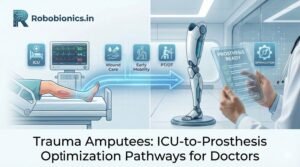
For trauma amputees, the journey does not begin at the prosthetic clinic. It begins much
Amputation after cancer is not just a surgical event. It is the end of one
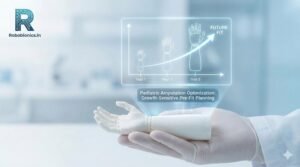
When a child loses a limb, the challenge is never only physical. A child’s body