
Post-Op Follow-Up Schedule That Prevents Prosthetic Delays (For Clinicians)
For many clinicians, the surgery is only the first step. What happens after the operation




Choosing the right patient for a lower-limb prosthesis is not a single decision. It is a step-by-step medical process that blends timing, judgment, and care. As doctors, you are not only deciding if a limb can be fitted, but also if the patient can safely learn, use, and live well with it over time. A clear workflow removes guesswork and protects outcomes.
This article shares a practical patient selection algorithm designed for real clinics in India. It is built from surgical insight, rehab experience, and years of working closely with prosthetic users across cities and rural settings. The focus is simple: how to move from first assessment to confident prosthetic prescription without missing medical, functional, or human factors.
The goal is to help you make faster, safer, and more confident decisions that lead to long-term use, fewer complications, and better quality of life for your patients.
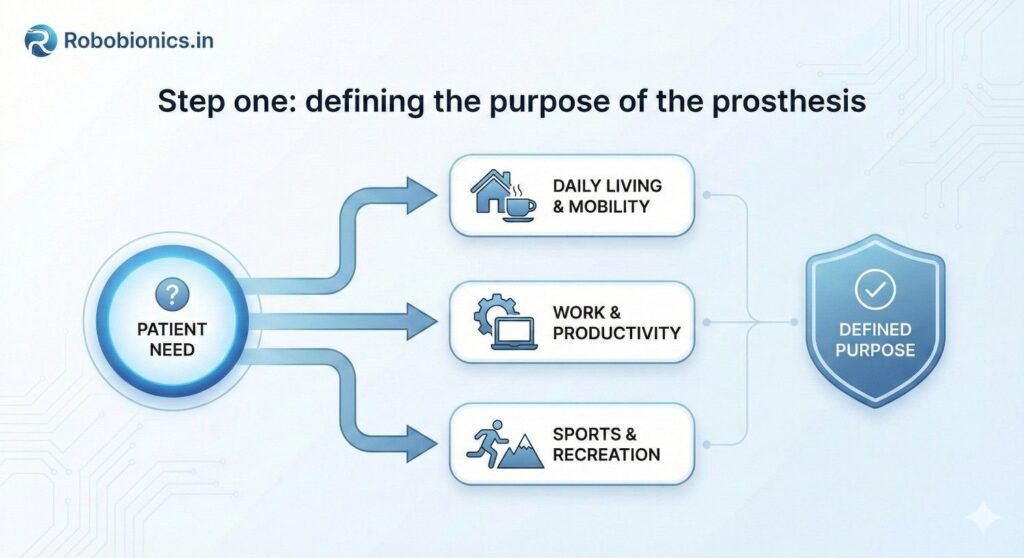
Every lower-limb prosthetic journey must begin with a clear purpose, because the reason for walking again shapes every medical and technical choice that follows.
Some patients want to walk short distances inside the home, some want to return to work, and some want to move freely outdoors, and these goals demand very different levels of strength, safety, and device design.
When the purpose is unclear, selection becomes risky and outcomes often disappoint both doctor and patient.
A patient may strongly want a prosthesis, but desire alone does not always mean readiness.
Your role is to gently separate emotional hope from medical safety, without reducing motivation or dignity.
When desire and medical readiness align, adherence and long-term use become far more likely.
Once the purpose is defined, convert it into clear clinical needs such as balance level, walking distance, terrain exposure, and daily wear time.
This translation helps you decide whether the patient needs basic stability or advanced mobility.
It also keeps the entire care team aligned on the same outcome.
No lower-limb prosthesis should be planned unless the patient is medically stable, because walking with a prosthesis places new stress on the heart, lungs, and joints.
Uncontrolled blood pressure, active infection, or unstable cardiac status must always be treated first.
A stable body learns faster and heals better.
Walking with an artificial limb requires more energy than natural walking, especially in above-knee amputations.
Patients with poor heart or lung reserve may fatigue early and lose confidence.
Simple bedside assessments of breathlessness and recovery time offer valuable insight before advanced tests.
Sedatives, strong pain medicines, or drugs that cause dizziness can increase fall risk during training.
Reviewing and adjusting medicines early prevents avoidable setbacks later.
This step is often overlooked but has a strong impact on safety.
A well-healed stump is the entry point into prosthetic care, because skin and soft tissue must tolerate repeated pressure and movement.
Any open wound, discharge, or spreading redness signals the need to pause the process.
Rushing this step often leads to breakdown and prolonged delays.
The length and contour of the residual limb influence balance, control, and socket comfort.
Very short or irregular limbs can still be fitted, but they demand more planning and patient education.
What matters most is whether the limb can safely bear weight without sharp pain.
Patients must be able to feel discomfort early so they can report pressure issues before skin injury occurs.
Complete loss of sensation raises risk and requires closer follow-up.
Pain that worsens with touch or movement needs evaluation before proceeding.
The non-amputated leg carries extra load during prosthetic walking and is often the first to fail if ignored.
Check for arthritis, weakness, deformity, or prior injury.
A weak sound limb can limit prosthetic success more than stump issues.
Lower-limb loss changes posture and load through the back.
Existing back pain or spinal deformity can worsen if gait is poorly supported.
Early attention to posture protects long-term mobility.
Ask the patient to stand, turn, and transfer safely using support.
These movements show baseline balance and confidence.
Poor balance at this stage signals the need for pre-prosthetic therapy.
Lower-limb prosthetic use involves risk, especially in the early phase.
The patient must understand when to stop, when to ask for help, and how to avoid falls.
This understanding is more important than speed or strength.
Learning a new walking pattern takes repetition and recall.
Patients who forget steps easily may still succeed, but training must be slower and more supervised.
Selection should adapt to learning style rather than exclude the patient.
Patients who underestimate danger or overestimate ability are at higher risk of injury.
Clear counseling and firm boundaries are needed before advancing.
Good judgment improves safety more than any component choice.

Amputation brings grief, even when medically necessary.
Patients who have not processed this loss may resist training or abandon the device.
Allowing time and offering support improves readiness.
Some patients fear falling more than they desire walking.
Others push too fast and ignore pain or warnings.
Your role is to balance courage with caution through steady guidance.
Prosthetic walking improves with daily practice, not occasional effort.
Assess whether the patient has the routine and support needed for consistent training.
Motivation rooted in daily life goals lasts longer than motivation driven by comparison.
Stairs, uneven floors, and narrow spaces change how safe prosthetic walking will be.
Simple home changes can greatly improve success.
Ignoring the home setting often leads to early falls or abandonment.
A patient who stands all day has different needs than one who walks short distances.
Travel by bus, train, or bike also changes risk and wear patterns.
Selection must match real life, not ideal scenarios.
Family members often influence practice, follow-up, and morale.
Supportive families increase success rates without extra cost.
Their role should be acknowledged early in the workflow.
Doctors often classify patients by how much and where they can walk safely.
This estimate guides component choice and training intensity.
Overestimating potential leads to frustration, while underestimating limits growth.
Some patients will walk mainly indoors, while others aim for community mobility.
Both are valid outcomes when chosen intentionally.
The algorithm must respect both paths equally.
Initial classification is not permanent.
Many patients improve with practice and confidence.
A good workflow allows reassessment and upgrade when appropriate.
This brings us close to the first major phase of the selection algorithm, where readiness is established across body, mind, and environment.
Before a lower-limb prosthesis is even tried, the body must be prepared to accept new loads, new balance demands, and new movement patterns.
Pre-prosthetic rehab reduces falls, shortens learning time, and improves comfort once the limb is fitted.
Skipping this step often leads to fear, pain, and poor early experiences that are hard to reverse.
Walking with a prosthesis relies heavily on the hips and trunk, especially in above-knee amputations.
Weak hip muscles lead to poor control, unsafe gait, and back pain.
Focused strengthening creates a stable base that allows the prosthesis to work as intended.
Patients must learn to trust their body again before trusting an artificial limb.
Simple balance drills, supported standing, and controlled weight shifts build confidence.
These exercises also reveal hidden risks that may not appear during seated exams.
The right time for a trial is when the residual limb volume is stable, the skin is tolerant, and the patient can stand and transfer safely with support.
Trying too early increases discomfort and fear, while waiting too long can reduce motivation.
Clinical judgment at this stage has a strong influence on final outcomes.
Patients often expect immediate smooth walking, which is rarely realistic.
Explaining that the first trial is about fit and safety, not perfection, reduces disappointment.
A calm mindset improves learning and cooperation during early sessions.
The first trial should focus on standing comfort, balance, and a few controlled steps.
Limiting goals prevents overload and builds confidence.
Early success, even if small, motivates continued effort.
As soon as the prosthesis is worn, observe how the patient stands and holds their body.
Poor alignment shows itself quickly through leaning, guarding, or uneven weight bearing.
Early corrections prevent strain and future pain.
Check the skin immediately after removal for redness patterns.
Red marks that fade evenly are expected, while sharp or dark spots signal concern.
Teaching the patient to observe these signs empowers safe home use.
The first standing experience often brings strong emotions, from joy to fear.
Acknowledging these feelings helps patients stay engaged.
Emotional support at this stage improves trust in the process.
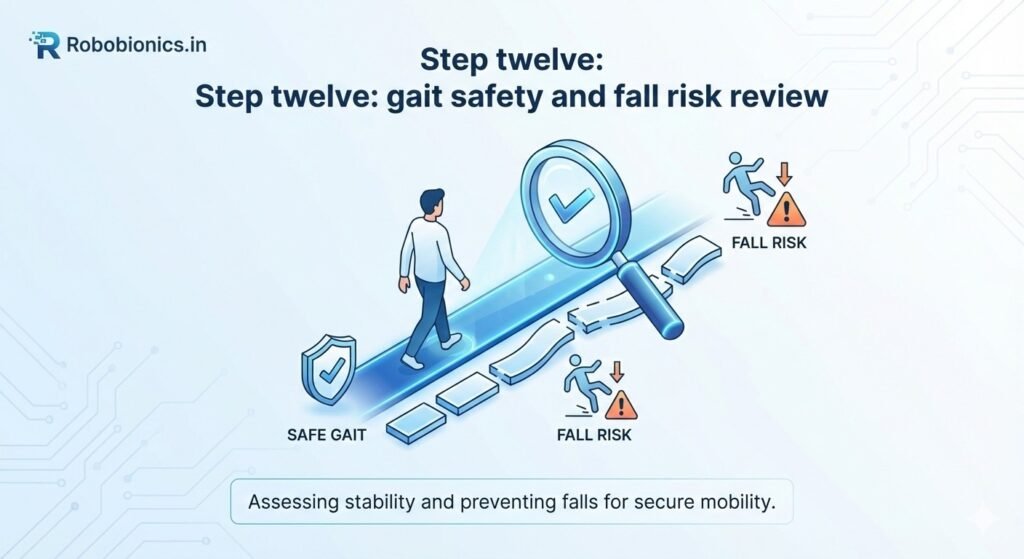
Short steps, wide stance, or stiff movements are common early signs of caution.
Sudden knee collapse, foot drag, or trunk sway raise safety concerns.
These patterns guide immediate adjustments in training and components.
Parallel bars, walkers, or crutches are tools, not failures.
Using aids appropriately improves safety and confidence.
Gradual reduction, not forced removal, leads to better independence.
Teaching how to fall safely, how to get up, and when to ask for help reduces fear.
Fear of falling is one of the biggest barriers to continued use.
Addressing it openly improves long-term adherence.
Not every trial leads directly to a final prosthesis.
Some patients need more rehab, medical treatment, or counseling before moving ahead.
A pause is not a failure but part of a safe algorithm.
Pain, fatigue, confusion, or anxiety each point to different solutions.
Understanding the root cause prevents wrong decisions.
This step protects patients from being labeled as poor candidates unfairly.
Patients should understand why the plan is continuing, changing, or pausing.
Clear explanations maintain trust and motivation.
Unclear decisions often lead to dropouts.
Every lower-limb prosthesis balances safety and freedom of movement.
Early users often need more stability, while experienced users can handle dynamic components.
Choosing stability first protects confidence and reduces falls.
Rough roads, slopes, and crowded spaces demand reliable footing.
Urban and rural environments place very different stresses on components.
Selection must reflect where the patient actually walks.
Heavier systems may offer durability but increase fatigue.
Lightweight systems improve comfort but may need careful handling.
The right balance depends on strength, endurance, and lifestyle.
Training should move from standing to short steps, then longer distances, and finally real-world tasks.
Skipping steps increases risk and fear.
A structured plan builds skill layer by layer.
Patients must learn to pace themselves to avoid exhaustion.
Teaching rest breaks and breathing control improves endurance.
Efficient walking is safer than fast walking.
Learning new movement patterns is mentally tiring.
Loss of focus often comes before physical fatigue.
Short, focused sessions often work better than long ones.
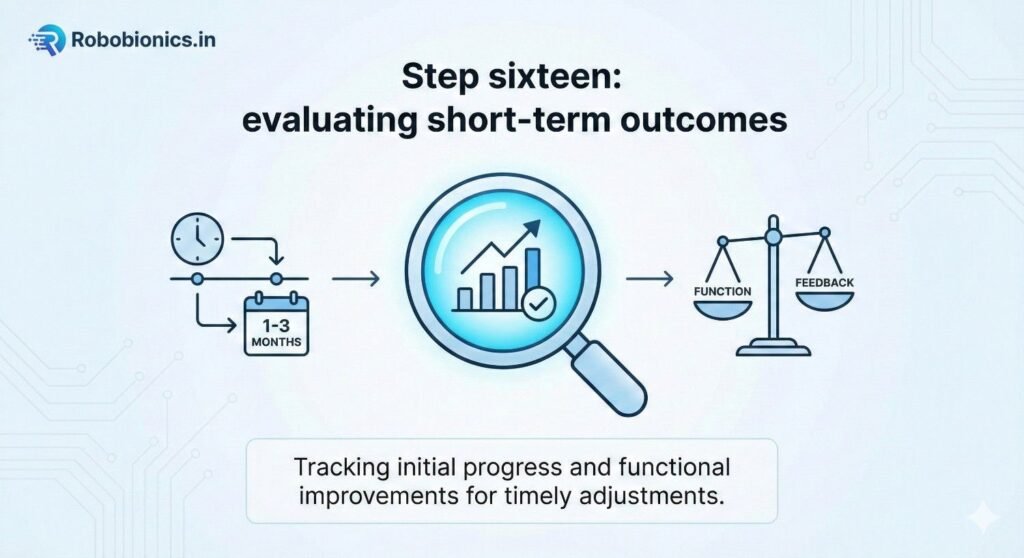
By the first few weeks, patients should tolerate the prosthesis for increasing hours.
Persistent discomfort suggests fit or alignment issues.
Comfort is the strongest predictor of continued use.
Walking to the bathroom, kitchen, or gate are meaningful milestones.
These tasks show real-world readiness better than clinic tests alone.
Celebrating these wins reinforces progress.
Near-falls are warning signs that need attention.
They often reveal balance or judgment issues.
Early correction prevents serious injury later.
True candidacy is confirmed over time, not in a single visit.
Patients who continue to practice and attend follow-ups show readiness for long-term use.
Declining motivation signals the need for review and support.
Weight change, aging, or new illness can alter prosthetic needs.
Regular reassessment keeps the device aligned with the body.
Flexibility in planning protects long-term success.
When the prosthesis becomes part of daily life rather than a medical device, success is near complete.
This stage reflects acceptance, confidence, and independence.
The algorithm aims to reach this point safely.
Some patients are not ready now but may be ready later.
Clear guidance on what must change keeps hope alive.
Temporary pauses are part of ethical care.
In rare cases, severe medical or cognitive issues prevent safe use.
Honest discussion protects the patient from harm.
Alternative mobility options should always be offered.
Not receiving a prosthesis does not reduce a person’s value or independence.
Respectful communication maintains trust and emotional well-being.
The doctor’s role is to protect life and quality, not only mobility.
The algorithm moves from purpose, to medical safety, to functional readiness, and finally to sustained use.
Each step builds on the last, reducing risk and uncertainty.
Following this flow saves time and improves outcomes.
A clear workflow allows more attention to the patient, not less.
When decisions are organized, conversations become calmer and more honest.
Structure supports compassion.
Your role is to guide patients through readiness, not simply approve or deny access.
Good selection empowers rather than restricts.
This mindset improves both outcomes and trust.
Even with good selection, skin problems can appear when walking load increases faster than tissue tolerance.
Early redness, pain, or blistering should never be ignored, as they often signal fit or alignment issues rather than patient failure.
Prompt response within the workflow prevents small problems from becoming reasons for long-term rejection of prosthetic use.
Lower-limb prosthetic users often shift load to the sound limb or back without realizing it.
This compensation can cause knee pain, hip strain, or back discomfort over time.
Regular review within the algorithm helps catch these patterns early and adjust training or components.
A single fall can undo weeks of confidence and progress.
After any fall, the workflow must briefly step backward to review balance, judgment, and safety strategies.
Addressing fear openly allows the patient to regain trust in both the limb and themselves.
Below-knee patients often progress faster, but they still face challenges with socket comfort and uneven ground.
The workflow should emphasize stump loading tolerance and ankle control during selection.
When these factors are respected, outcomes are usually strong and sustainable.
Above-knee prosthetic walking demands higher energy, balance, and learning capacity.
Selection must be more cautious, especially in older patients or those with heart or lung limits.
A slower, staged approach within the algorithm greatly improves long-term success.
These patients require exceptional planning, patience, and support.
The workflow often includes prolonged wheelchair use alongside gradual prosthetic training.
Success depends more on environment, motivation, and caregiver involvement than on strength alone.
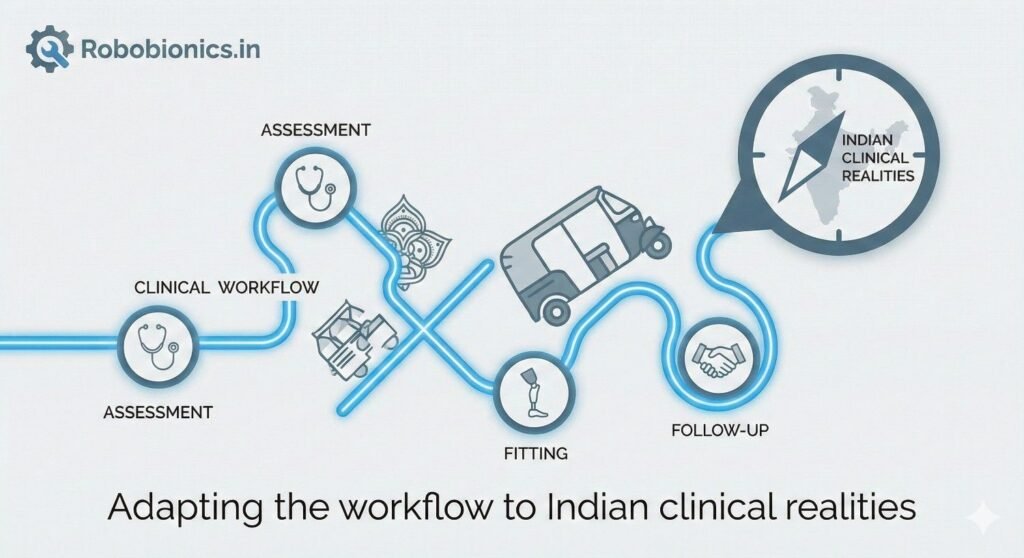
In busy clinics, long assessments are often not possible.
A structured algorithm allows quick yet safe decisions without skipping critical steps.
Consistency reduces errors even under pressure.
Cost concerns influence every decision for many patients.
The workflow must include early financial counseling to prevent dropouts later.
Affordable solutions improve adherence more than advanced features.
Patients traveling long distances may miss reviews and adjustments.
Selection should account for service access and ability to return for care.
A slightly simpler setup with reliable follow-up often works better than a complex system without support.
Recording who succeeds and why helps refine judgment over time.
Patterns often emerge around age, cause of amputation, or support systems.
This feedback strengthens future patient selection.
Patients who stop using their prosthesis offer valuable lessons.
Understanding their barriers improves counseling and screening for future candidates.
Non-use is data, not defeat.
No algorithm replaces experience, but experience improves with reflection.
Regular team discussions around outcomes sharpen selection skills.
This culture benefits both patients and clinicians.
When everyone follows the same selection flow, care becomes predictable and safer.
Junior doctors gain confidence faster when expectations are clear.
Patients also feel reassured by consistent messaging.
Reviewing real cases within the workflow teaches nuance better than theory alone.
Discussing why a patient succeeded or struggled deepens understanding.
This method keeps learning grounded in reality.
An algorithm guides but does not replace clinical sense.
Doctors must still adapt to individual situations.
Flexibility within structure defines good care.
Illness, surgery, or hospitalization may require stepping back in the workflow.
Reassessing readiness protects safety and confidence.
Re-entry is normal and expected.
Patients who stop using their prosthesis for months need reassessment.
Muscle strength, balance, and confidence may change.
Restarting from the right step prevents injury.
Changes in work, home, or age can alter prosthetic needs.
The workflow should be revisited during major transitions.
Adaptation keeps mobility relevant and safe.
Success is not only how far a patient walks but how safely and confidently they live.
Independence in daily tasks often matters more than speed or endurance.
The algorithm aims to support meaningful life outcomes.
Returning to social roles, work, and family activities marks deep success.
These outcomes reflect proper selection and timing.
Mobility should serve life, not replace it.
Good selection protects joints, spine, and cardiovascular health over years.
Preventing secondary problems is as important as restoring walking.
This long view defines quality prosthetic care.
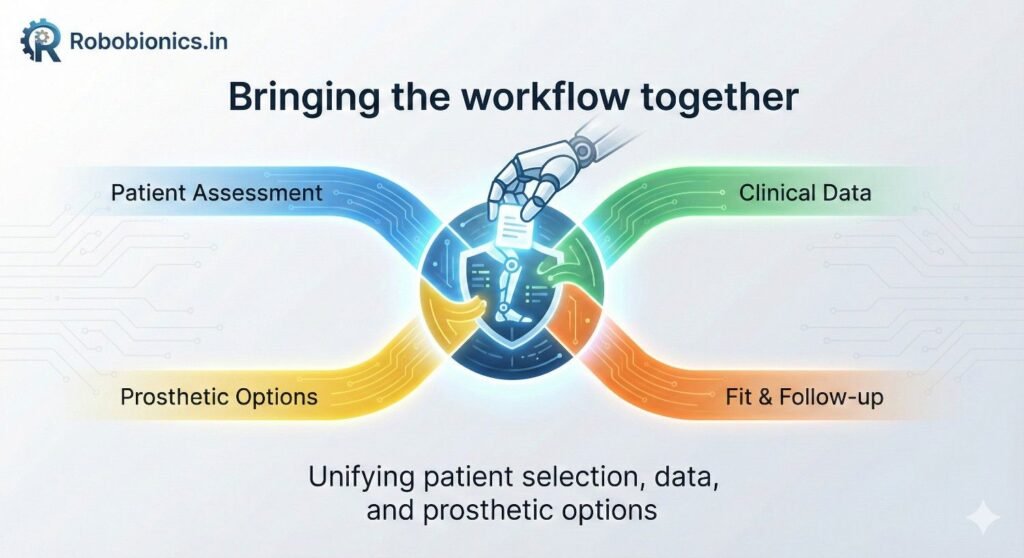
A patient selection algorithm does not remove compassion; it protects it.
When decisions are structured, doctors can focus more on listening and guiding.
Consistency improves trust and outcomes.
Most prosthetic failures come from poor timing, poor fit, or poor expectation setting.
A clear workflow addresses all three early.
This reduces emotional and financial loss for patients.
When patients understand the steps, they become partners in care.
Doctors gain confidence in their decisions.
This shared clarity strengthens the rehabilitation journey.
At Robobionics, we work closely with doctors across India who face these decisions every day.
We have seen that the best outcomes come not from rushing to fit a limb, but from following a thoughtful, patient-centered selection workflow.
By aligning medical readiness, functional goals, and real-world needs, lower-limb prosthetics can restore mobility with dignity, safety, and long-term success.
For many clinicians, the surgery is only the first step. What happens after the operation

For trauma amputees, the journey does not begin at the prosthetic clinic. It begins much

Amputation after cancer is not just a surgical event. It is the end of one

When a child loses a limb, the challenge is never only physical. A child’s body