
Post-Op Follow-Up Schedule That Prevents Prosthetic Delays (For Clinicians)
For many clinicians, the surgery is only the first step. What happens after the operation




Diabetic and dysvascular amputations are rarely sudden events. They are the result of years of disease, slow tissue damage, and repeated medical decisions. When these patients reach the stage of amputation, they often carry complex health risks that make prosthetic eligibility a careful clinical judgment rather than a quick choice. For doctors, the challenge is to balance safety, function, and quality of life without raising false hope or denying opportunity.
This article outlines clear prosthetic eligibility guidelines for diabetic and dysvascular amputees, designed for real-world clinical practice in India. It focuses on medical stability, wound healing, circulation, strength, cognition, and daily living needs, while respecting the emotional and social realities of chronic illness. The goal is to support doctors in making confident, ethical, and patient-centered decisions that lead to safe and meaningful prosthetic use.
Diabetic and dysvascular amputations usually happen after long periods of poor blood flow, nerve damage, and repeated infections, which means the body has already been under stress for years before surgery.
Unlike trauma patients, these individuals often have multiple health issues that affect healing, strength, and learning ability at the same time.
This complexity makes prosthetic eligibility a process that must move carefully and in stages.
Diabetes damages nerves and small blood vessels, leading to loss of sensation and poor healing.
Dysvascular disease mainly affects large blood vessels, reducing blood flow and oxygen to tissues.
Many patients have both conditions together, which increases risk and slows recovery.
Most patients want to walk again, but desire alone does not equal readiness.
Eligibility depends on whether the body can safely support a prosthesis and whether the patient can manage daily care.
Clear explanation at this stage prevents future disappointment.

Poorly controlled blood sugar delays wound healing and increases infection risk.
Before considering a prosthesis, glucose levels should show stable control over time, not just a few days.
This stability is a strong predictor of safe prosthetic use.
Many diabetic patients also have heart or kidney disease, which affects stamina and fluid balance.
Prosthetic walking increases physical demand, even for short distances.
Doctors must assess whether the heart and kidneys can tolerate this added stress.
Active infection anywhere in the body can slow healing at the amputation site.
Repeated infections in the past also raise concern for recurrence.
Prosthetic planning should wait until infection risk is clearly reduced.
Poor circulation means less oxygen reaches the wound, slowing repair.
Neuropathy reduces protective sensation, increasing the risk of unnoticed injury.
Doctors should expect longer healing timelines and plan accordingly.
The skin of diabetic patients is often thin, dry, and fragile.
It may break down easily under pressure from a socket.
Eligibility depends on whether the skin can tolerate gradual loading without damage.
Short or irregular stumps are common due to repeated surgeries or infection spread.
These limbs can still be fitted, but they require careful socket design and slower training.
The key question is safety, not perfection.
Many diabetic amputees have reduced or absent sensation in the residual limb.
This makes it harder to feel early warning signs of pressure injury.
Patients with severe sensory loss need closer monitoring and strong education.
Burning or tingling pain may continue even after amputation.
This pain can distract patients during training and reduce tolerance.
Pain control should be addressed before advancing prosthetic use.
Phantom pain is common and does not rule out prosthetic use.
However, severe or worsening phantom pain may signal nerve issues.
Managing this pain improves focus and comfort during rehabilitation.
Chronic disease often leads to general weakness even before amputation.
Bed rest after surgery further reduces strength.
Basic strength must be rebuilt before safe prosthetic walking.
Poor vision, neuropathy, and weak muscles increase fall risk.
Balance testing without a prosthesis gives early insight into safety.
High fall risk may delay or limit prosthetic goals.
Limited hip or knee movement can make walking unsafe or inefficient.
Stiffness is common due to inactivity and pain avoidance.
Pre-prosthetic therapy is often essential.
Diabetic amputees must inspect skin, manage hygiene, and report problems early.
If a patient cannot understand or remember these steps, risk increases.
Eligibility depends on the ability to participate in self-care or have reliable support.
Low blood sugar episodes, strokes, or age-related decline can affect cognition.
Learning new walking patterns requires focus and repetition.
Training plans should match learning capacity.
Some patients underestimate their limitations and attempt unsafe walking.
Clear boundaries and supervision are needed in early stages.
Judgment is as important as strength.
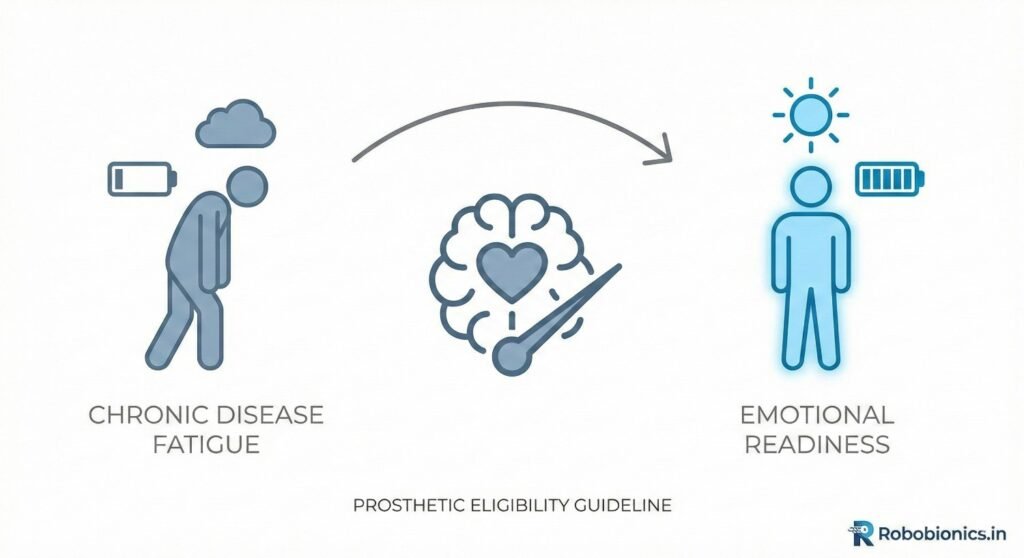
Many diabetic patients feel tired, frustrated, or emotionally worn down.
Amputation may feel like the final loss after years of struggle.
Emotional readiness should never be assumed.
Past experiences with ulcers and infections create fear of recurrence.
This fear can limit prosthetic use or cause avoidance.
Addressing these concerns openly improves trust.
Some patients seek a prosthesis to reduce dependence, not to walk far.
These goals are valid and should guide eligibility decisions.
Matching expectations to reality improves satisfaction.
The non-amputated leg often has the same vascular disease.
Increased load during prosthetic walking raises risk of ulcers or fractures.
Protecting the sound limb is a major eligibility consideration.
Regular foot checks, proper footwear, and education are essential.
Ignoring the sound limb can lead to bilateral disability.
Eligibility decisions must include a protection plan.
If the sound limb is weak or painful, prosthetic walking may not be sustainable.
Short-distance goals may be more realistic.
Doctors should prioritize safety over ambition.
Many patients live in homes with steps, narrow doors, or uneven floors.
These features affect safety and prosthetic suitability.
Home assessment helps set realistic goals.
Daily care and monitoring are often shared with family members.
Supportive families improve outcomes without extra cost.
Lack of support may limit eligibility or require simpler solutions.
Chronic illness often drains savings over time.
Cost concerns may affect follow-up and maintenance.
Affordable, serviceable solutions improve long-term use.
Not every patient needs or should aim for long outdoor walks.
Indoor mobility can greatly improve independence.
Eligibility should match actual daily needs.
Walkers, canes, or wheelchairs may still be needed.
Using aids does not mean prosthetic failure.
Combined strategies often work best.
Success may mean fewer falls, less dependence, or better hygiene access.
Doctors should redefine success beyond distance walked.
This mindset improves patient satisfaction.
Overpromising outcomes harms trust and morale.
Clear, honest discussions protect emotional well-being.
Ethical care values truth over optimism.
Some patients are excluded too quickly due to age or disease label.
Individual assessment often reveals safe opportunities.
Fair evaluation respects dignity.
Patients should understand risks and limits before choosing.
Shared decisions improve adherence.
Respect builds long-term trust.
In diabetic and dysvascular amputees, the decision to move toward a prosthesis must be guided by tissue behavior rather than emotional urgency, because wounds that appear stable today may fail under pressure tomorrow.
These patients often heal slowly due to poor circulation and metabolic stress, which means that rushing into prosthetic use can undo weeks or months of recovery.
Choosing the right moment protects not only the residual limb but also the patient’s confidence and trust in the care process.
True readiness is seen when the residual limb shows stable skin condition over several weeks, with no repeated redness, breakdown, or discharge after daily handling.
Swelling should be controlled and predictable, and gentle pressure should not cause pain or delayed skin changes.
The patient should also be able to sit, transfer, and stand with support in a consistent and safe manner, without excessive fatigue or fear.
Repeated small wounds, unstable blood sugar levels, or sudden changes in limb volume are strong clinical signals that the body is not ready for prosthetic stress.
Emotional distress, confusion, or inability to perform basic self-care tasks further increase risk during early prosthetic use.
Delaying in these cases prevents deeper tissue injury, infection, and long-term disappointment that can lead to permanent prosthetic rejection.
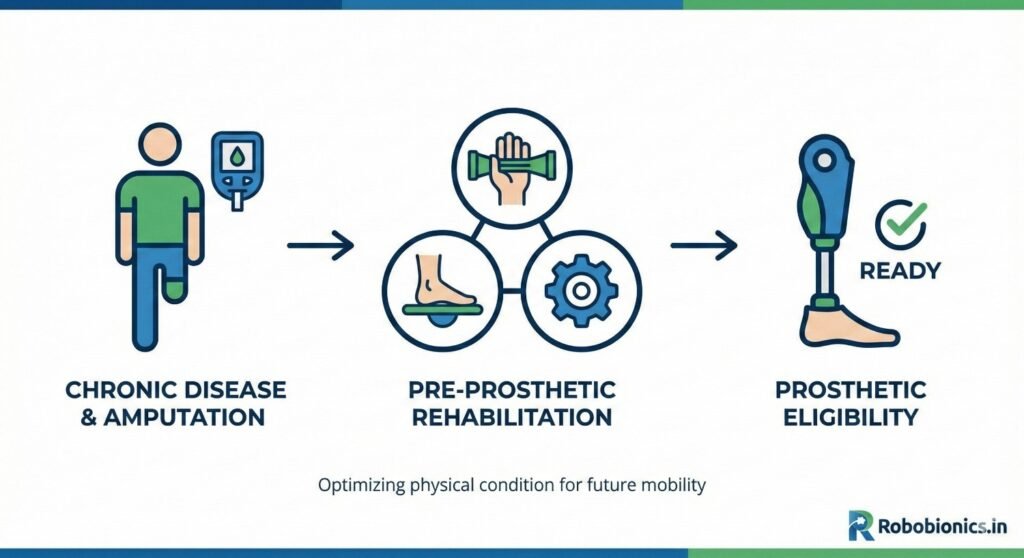
Rehabilitation for diabetic and dysvascular patients must progress slowly, because fragile skin, weak joints, and reduced circulation do not tolerate aggressive strengthening programs.
Exercises should focus on gentle, controlled movements that improve endurance and postural stability without creating shear or pressure.
This gradual approach allows tissues to adapt safely while maintaining patient confidence.
Loss of sensation, reduced vision, and muscle weakness place these patients at high risk of falls even before prosthetic fitting begins.
Supported balance training helps doctors and therapists identify limits early and adjust goals accordingly.
Fall prevention education should begin before prosthetic trials so that safety becomes a habit rather than a reaction.
The remaining limb often carries both disease burden and compensatory load, which makes it vulnerable to ulcers, joint pain, and fractures.
Strengthening and protecting this limb is essential for long-term mobility and independence.
Ignoring the sound limb often leads to secondary disability that limits prosthetic benefit.
The first prosthetic trial is not meant to prove walking ability but to observe how the body responds to controlled load and movement.
Patients should clearly understand that this phase is about learning, safety, and observation rather than performance.
Clear explanation reduces fear and prevents unrealistic expectations that can damage motivation.
Skin should be examined immediately after prosthetic use and again several hours later, because delayed breakdown is common in diabetic tissue.
Even small pressure marks are clinically important and should never be dismissed.
Teaching patients and caregivers what to look for is a core part of eligibility, not an optional step.
Some patients feel renewed hope when standing again, while others feel anxious or overwhelmed by the fear of injury.
Both responses provide valuable information about readiness and support needs.
Emotional comfort is part of prosthetic eligibility and must be respected alongside physical signs.
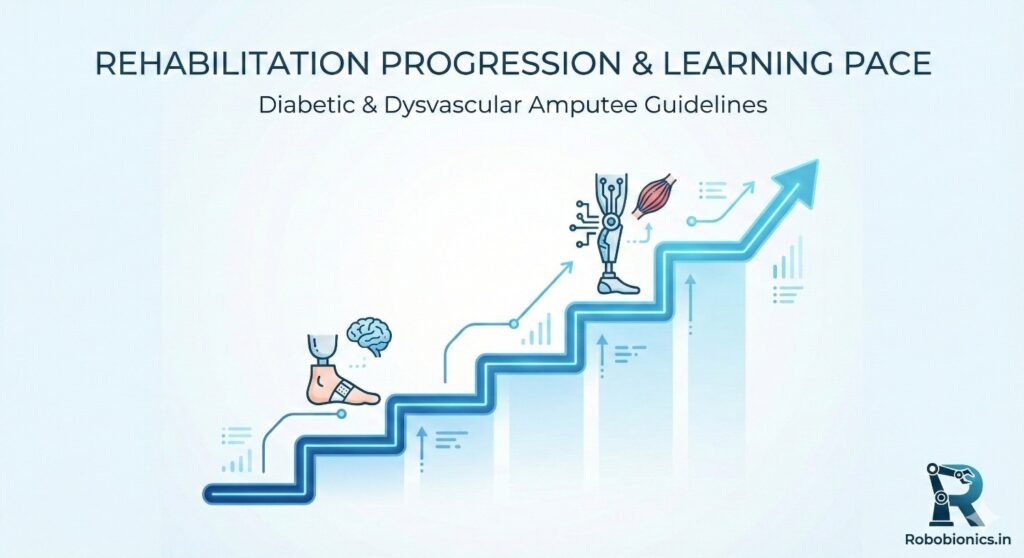
Diabetic and dysvascular patients often progress more slowly due to fatigue, sensory loss, and fear of wounds, but this does not mean they cannot succeed.
Progress must be measured in tolerance, confidence, and safety rather than speed.
Matching training pace to endurance protects both tissue and morale.
Physical activity can alter blood sugar levels, sometimes unpredictably.
Scheduling sessions around meals and medication improves safety and reduces medical complications.
Fatigue should be respected and managed, not pushed through.
Consistency in daily prosthetic use builds confidence and habit far more effectively than occasional long sessions.
Short, regular exposure allows the body and mind to adapt safely.
Irregular use increases injury risk and emotional hesitation.
Skin irritation, pain, or fear often emerge during the first few weeks of prosthetic use.
These signs call for adjustment and review rather than judgment of the patient.
Reassessment at this stage protects long-term success.
Poor socket fit, alignment problems, or inappropriate component choice can mimic poor candidacy.
Before questioning eligibility, all technical factors must be reviewed carefully.
This step prevents unfair exclusion and preserves patient trust.
Sometimes reducing wear time or pausing training is the safest clinical decision.
Clear communication helps patients understand that this step protects their future progress.
Stepping back is part of good medical care, not a setback.
Patients who use their prosthesis regularly, even for short periods, tend to achieve better long-term outcomes.
Comfort and confidence matter more than walking distance.
Regular follow-up supports safe consistency.
Long-term success depends on keeping the remaining limb healthy through footwear, skin checks, and education.
This care must continue even after prosthetic walking improves.
Failure to protect the sound limb often leads to bilateral disability.
True success is seen when the prosthesis supports real daily activities rather than clinic performance alone.
Transfers, self-care, and safe movement within the home are key markers.
Daily life function defines meaningful outcomes.
Assuming that healed skin can handle rapid loading is a common and costly error.
Gradual progression allows fragile tissue to adapt safely.
Patience prevents setbacks.
Even the most advanced prosthesis fails without daily inspection and hygiene.
Eligibility must include the ability to manage care independently or with support.
This factor is often underestimated.
Older age alone does not determine prosthetic success.
Overall health, motivation, and social support matter far more.
Individual assessment is essential.
Doctors must carefully weigh improved mobility against the risk of wounds, falls, and medical decline.
This balance is different for every patient.
Ethical care avoids extremes.
Patients deserve clear explanations without medical jargon or false reassurance.
Honesty builds trust even when limitations exist.
Trust supports adherence and long-term engagement.
Some patients value independence and safety over speed or distance.
These values should guide prosthetic decisions.
Respect improves satisfaction.
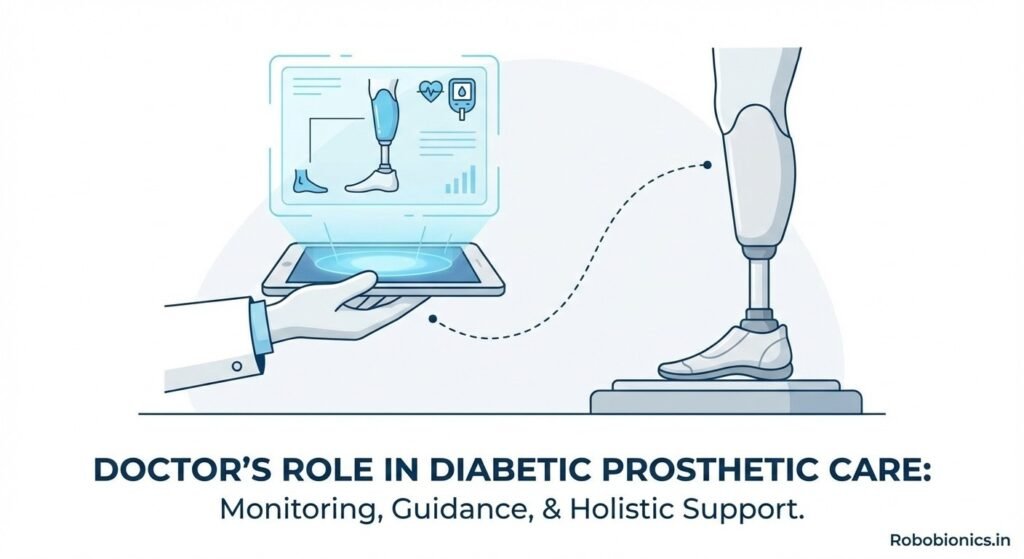
Eligibility is not a one-time decision but an ongoing process.
Doctors guide patients through changing health, ability, and confidence.
This relationship supports sustained use.
Endocrinologists, surgeons, therapists, and prosthetists must work together with shared goals.
Clear coordination prevents mixed messages.
Team care improves safety and outcomes.
Regular review allows early correction of small issues before they become serious.
Minor adjustments protect long-term function.
Ongoing care defines quality.
At Robobionics, we work closely with doctors across India who care for diabetic and dysvascular amputees every day.
We have learned that successful prosthetic use in this group depends on patience, realistic goals, and devices designed for fragile skin and long-term care.
By combining thoughtful eligibility decisions with affordable, serviceable prosthetic solutions, we aim to support doctors in restoring safe mobility, dignity, and confidence to patients living with chronic disease.
For many clinicians, the surgery is only the first step. What happens after the operation

For trauma amputees, the journey does not begin at the prosthetic clinic. It begins much

Amputation after cancer is not just a surgical event. It is the end of one

When a child loses a limb, the challenge is never only physical. A child’s body