Post-Op Follow-Up Schedule That Prevents Prosthetic Delays (For Clinicians)
For many clinicians, the surgery is only the first step. What happens after the operation



Advanced prosthetic devices promise precise movement, intuitive control, and a level of function that feels close to natural use. Technologies like EMG control and multi-grip hands have changed what is possible for upper limb amputees. Yet these devices do not work on technology alone. They depend heavily on the user’s manual dexterity, muscle control, and ability to learn fine movements consistently.
At Robobionics, we often meet patients who are excited about advanced devices but unsure if they are the right fit for them. Some struggle not because the device is faulty, but because their hands, muscles, or coordination cannot reliably support the control demands. Others may be excellent candidates but are never properly assessed before a decision is made. This gap leads to frustration, wasted effort, and sometimes device abandonment.
This article focuses on manual dexterity and EMG control as key selection criteria for advanced prosthetic devices. It explains what dexterity really means in daily life, how EMG systems work in practical terms, and how doctors and clinicians can assess readiness in a clear and structured way. The aim is not to limit access to advanced technology, but to match it correctly.
If you are a clinician, prosthetist, therapist, or an upper limb amputee exploring advanced options, this guide will help you make informed decisions. When dexterity and control are evaluated honestly, advanced devices become empowering tools rather than overwhelming ones.
Manual dexterity is the ability to make controlled, precise, and repeatable movements using the hands and fingers.
In prosthetic use, this does not only apply to the artificial hand, but also to the remaining limb, the opposite hand, and overall coordination.
It includes timing, pressure control, and the ability to switch between movements smoothly.
Dexterity is often confused with strength, but they are not the same.
A person may be strong yet struggle with fine control.
Advanced prosthetic devices rely far more on control than force.
Basic prosthetic devices usually perform one action at a time.
Advanced devices offer multiple grips, modes, and movement patterns.
Each option adds a layer of control demand.
Without adequate dexterity, users may activate the wrong grip or struggle to stop movement at the right moment.
This creates frustration and slows daily tasks.
Over time, confidence drops and device use declines.
Advanced technology amplifies both ability and limitation.
Good dexterity unlocks function.
Poor dexterity exposes difficulty quickly.
Dexterity is not entirely fixed at birth.
It can improve with practice, therapy, and consistent use.
However, the starting level matters greatly.
Patients with very low baseline dexterity face a steeper learning curve.
This does not mean advanced devices are impossible.
It means expectations and timelines must be realistic.
Assessment helps distinguish between potential and limitation.
This protects both patient and provider.
Preparation becomes purposeful rather than hopeful.
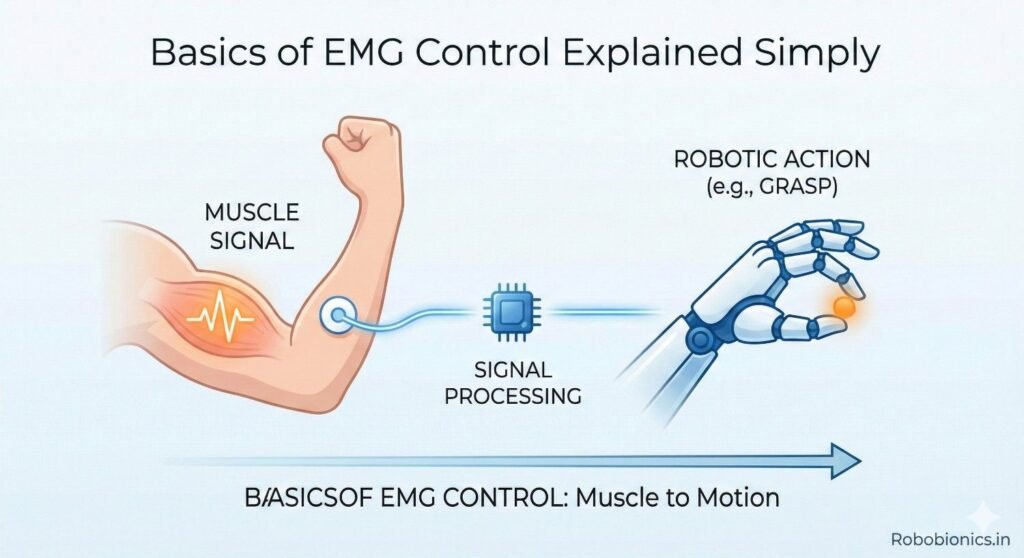
EMG control uses electrical signals from muscles to control a prosthetic device.
When a user contracts a muscle, sensors detect the signal and trigger movement.
Different muscle patterns correspond to different actions.
In daily life, this means the user must produce clean and consistent muscle signals.
Small variations can change the outcome.
Control depends on repetition and accuracy.
EMG systems do not read thoughts.
They respond only to muscle activity.
Understanding this prevents unrealistic expectations.
Single-site EMG systems use one muscle signal for control.
They are simpler but limited in function.
Switching between actions often requires mode changes.
Multi-site EMG systems use multiple muscle signals.
They allow more natural and faster control.
However, they demand higher dexterity and coordination.
The more signals involved, the more precise control must be.
This is where selection becomes critical.
Not every user benefits from added complexity.
Many patients believe EMG control is automatic once fitted.
In reality, it requires training and practice.
Early use often feels unnatural.
Another misconception is that stronger muscles give better control.
In fact, consistency matters more than power.
Over-contracting can confuse the system.
Clear education before selection prevents disappointment.
Understanding effort requirements builds readiness.
Honesty supports long-term success.
EMG systems respond best to steady and repeatable signals.
Users with good dexterity can reproduce the same muscle contraction reliably.
This leads to predictable movement.
Poor dexterity often results in noisy signals.
Movements may start and stop unexpectedly.
This makes daily tasks stressful.
Signal quality is not just a technical issue.
It reflects neuromuscular control.
Assessment must consider this link.
Gross control involves large, obvious movements.
Fine control involves subtle adjustments.
Advanced prosthetics require both.
Picking up a cup needs controlled grip force.
Typing or buttoning requires precise timing.
These tasks reveal dexterity limitations quickly.
Users who manage gross control but lack fine control may struggle.
Advanced devices expose this gap.
Selection should reflect real task demands.
Fatigue reduces signal clarity.
Muscle contractions become less precise over time.
This affects control accuracy.
Users with limited endurance may perform well briefly but decline quickly.
Advanced devices amplify this effect.
Fatigue management becomes essential.
Assessment should include repeated tasks.
Single trials are misleading.
Endurance matters as much as skill.
Simple daily tasks reveal a lot about dexterity.
Picking up small objects, turning keys, or handling coins are informative.
These actions reflect coordination and timing.
Doctors should watch how smoothly tasks are performed.
Hesitation and overcorrection are important signs.
Speed matters less than control.
Observation is often more useful than formal tests.
Real-world function tells the truth.
This guides better decisions.
Some clinics use basic dexterity tests for screening.
These tools measure coordination and precision.
They provide a structured baseline.
Scores should not be used in isolation.
How the patient approaches the task matters.
Frustration tolerance is also important.
Screening helps identify risk early.
It supports honest conversations.
Preparation can begin sooner.
Advanced prosthetic use often involves both hands.
The intact limb assists with positioning and task setup.
Poor coordination affects overall function.
Doctors should assess bilateral coordination.
Tasks requiring two-hand interaction are revealing.
Advanced devices increase this demand.
If coordination is limited, training must address it.
Ignoring this leads to poor outcomes.
Whole-body assessment is essential.
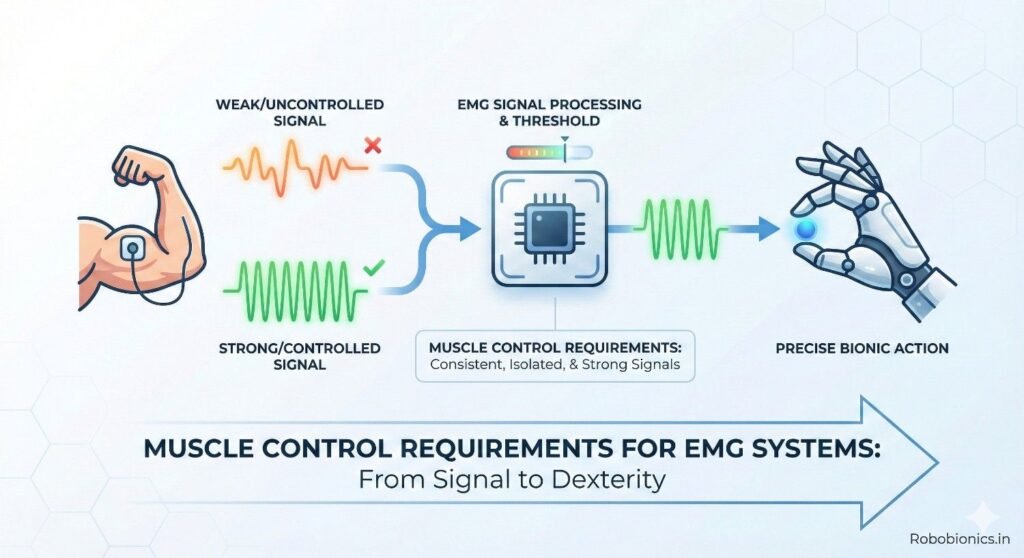
EMG control requires isolating specific muscles.
Users must activate one muscle without triggering another.
This is harder than it sounds.
Some patients naturally co-contract muscles.
This confuses the control system.
Training may improve isolation.
Assessment should include isolation testing.
Clear separation predicts success.
Poor isolation signals need for caution.
Consistency is more important than peak performance.
Advanced devices require reliable control all day.
Inconsistent signals lead to errors.
Doctors should observe repeated attempts.
Variability is a key indicator.
Stable patterns support advanced selection.
Consistency often improves with training.
Baseline level still matters.
Realistic timelines must be set.
Muscle quality affects signal strength.
Scarring, atrophy, or previous injury reduce control.
This is common in traumatic amputations.
Residual limb assessment is critical.
Healthy muscle tissue supports better EMG control.
Poor tissue limits options.
Prosthetic selection must respect anatomy.
Technology cannot overcome biology completely.
Matching matters.
Advanced devices require mental processing.
Users must decide which grip to use and when.
This adds cognitive load.
Dexterity and cognition work together.
Poor processing speed slows control.
Mistakes increase under stress.
Assessment should consider thinking speed.
Simple decision-making tasks help.
Cognition cannot be ignored.
Some users learn quickly.
Others need more time to adapt.
Learning speed affects satisfaction.
Slow learners may still succeed with patience.
However, advanced devices demand commitment.
Expectations must match reality.
Doctors should discuss learning timelines openly.
This prevents frustration.
Preparation supports persistence.
Errors happen even with good control.
Users must recover quickly and calmly.
This requires problem-solving ability.
Patients who panic during errors struggle more.
Advanced devices expose this.
Emotional regulation matters.
Assessment should include response to mistakes.
Calm correction predicts success.
Stress tolerance is important.
Patients with good baseline dexterity adapt faster.
They handle complex control schemes better.
Confidence builds quickly.
These users often benefit most from advanced features.
Multi-grip functions become useful.
Investment pays off.
Baseline assessment identifies these candidates.
Early success reinforces use.
Outcomes improve.
Advanced devices are best when precision is needed.
Work tasks, fine manipulation, or hobbies may demand this.
Goals should justify complexity.
Without clear use cases, advanced devices may be underused.
Simplicity may work better.
Function should drive selection.
Doctors should explore daily needs in detail.
Specific goals guide choice.
Purpose matters.
Advanced control requires practice.
Motivation sustains effort during learning.
Without it, frustration grows.
Patients who enjoy learning new skills do better.
Curiosity supports persistence.
Attitude influences outcomes.
Assessment should include motivation discussion.
Honesty prevents mismatch.
Commitment matters.
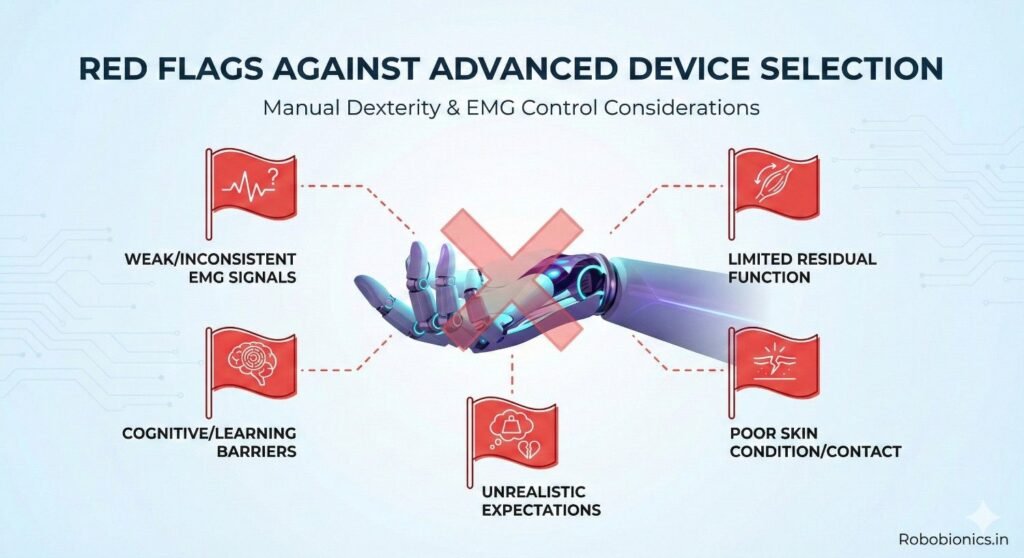
Some patients struggle to produce clean signals even with training.
This may be due to anatomy or neuromuscular issues.
Forcing advanced devices in such cases backfires.
Repeated failure reduces confidence.
Users may abandon the device.
Early recognition protects morale.
Alternative solutions may be more appropriate.
Simplicity can still offer function.
Success looks different for each user.
If control degrades quickly with fatigue, advanced devices become unreliable.
This limits practical use.
Daily life demands consistency.
Doctors should test endurance.
Short sessions hide problems.
Extended observation reveals truth.
Fatigue management strategies may help.
However, limits must be respected.
Safety and comfort come first.
Some users struggle to understand how control schemes work.
This leads to constant confusion.
Advanced devices increase this burden.
Education can help but has limits.
If confusion persists, simpler systems may be better.
Clarity supports confidence.
Doctors should watch for repeated misunderstanding.
This is a strong signal.
Appropriate matching avoids frustration.
Advanced EMG devices demand structured and progressive training rather than casual practice.
Users must learn how their muscle signals translate into movement, and this learning takes time and repetition.
Without a clear training plan, even capable users may feel lost and overwhelmed.
Training should start with basic control before introducing multiple grips or modes.
This builds confidence and reduces early errors.
Doctors and therapists should ensure that training intensity matches the user’s learning pace.
A well-structured program turns complexity into familiarity.
Users begin to trust their own control.
This trust is essential for daily use.
Occupational therapy plays a central role in improving manual dexterity for prosthetic users.
Therapists focus on fine motor tasks that mirror real-life activities.
This bridges the gap between clinic training and home use.
Therapy sessions also help users understand how much force is needed for different tasks.
Advanced devices respond to subtle changes, and therapy teaches this nuance.
Practice under supervision reduces fear of failure.
Doctors should encourage therapy as part of device selection, not as an afterthought.
Preparation improves outcomes.
Support reduces abandonment risk.
Clinic performance does not always reflect home performance.
Real-world environments introduce distractions, fatigue, and emotional stress.
Home practice is where true adaptation occurs.
Users should be guided on safe and effective home exercises.
Short, regular practice sessions work better than long, irregular ones.
Consistency reinforces learning.
Doctors should ask about home experiences during follow-up.
Challenges outside the clinic reveal important gaps.
Adjustment depends on honest feedback.
Not every user benefits from advanced EMG systems.
In some cases, simpler control offers faster and more reliable function.
Efficiency often matters more than technical sophistication.
Users with limited dexterity may complete tasks faster with fewer options.
Reduced cognitive load improves confidence.
Daily use becomes more predictable.
Doctors should not equate advanced technology with better outcomes.
Appropriate matching is more important.
Simplicity can be powerful.
Advanced devices offer many grip patterns and movements.
However, variety is useful only if it can be accessed easily.
Unused features add complexity without benefit.
Some users rely on only one or two grips despite having many options.
This is not failure, but a sign of practical preference.
Selection should reflect actual use patterns.
Doctors should explore which functions truly matter to the patient.
Quality of use outweighs quantity of features.
Purpose guides success.
Advanced EMG devices often involve higher cost and maintenance demands.
Users must be willing and able to manage charging, calibration, and care.
This adds another layer of responsibility.
Manual dexterity also affects device maintenance.
Tasks like donning, doffing, and cleaning require coordination.
Poor dexterity increases daily burden.
Doctors should discuss these realities openly.
Surprises reduce satisfaction.
Informed choices build trust.
Prosthetists play a key role in identifying suitable muscle signal sites.
Proper sensor placement improves signal clarity and control reliability.
This step directly affects user experience.
Socket fit influences how consistently signals are detected.
Poor fit causes shifting and signal loss.
Dexterity cannot compensate for mechanical issues.
Doctors and prosthetists must collaborate closely.
Technical setup and human ability must align.
Teamwork improves outcomes.
Trial sessions allow users to experience control demands before final selection.
Simulations reveal how intuitive the device feels.
This reduces guesswork.
Users often discover unexpected challenges during trials.
These insights are valuable.
They guide more accurate decisions.
Doctors should encourage trial periods when possible.
Hands-on experience is more telling than description.
Informed consent becomes meaningful.
Advanced device use evolves over time.
Initial control improves with practice, but adjustments are often needed.
This is a normal part of the process.
Prosthetists should expect to refine control settings as dexterity improves.
Sensitivity and thresholds may need tuning.
Adaptation supports growth.
Doctors should frame adjustment as progress, not problem.
This reassures users.
Patience improves outcomes.
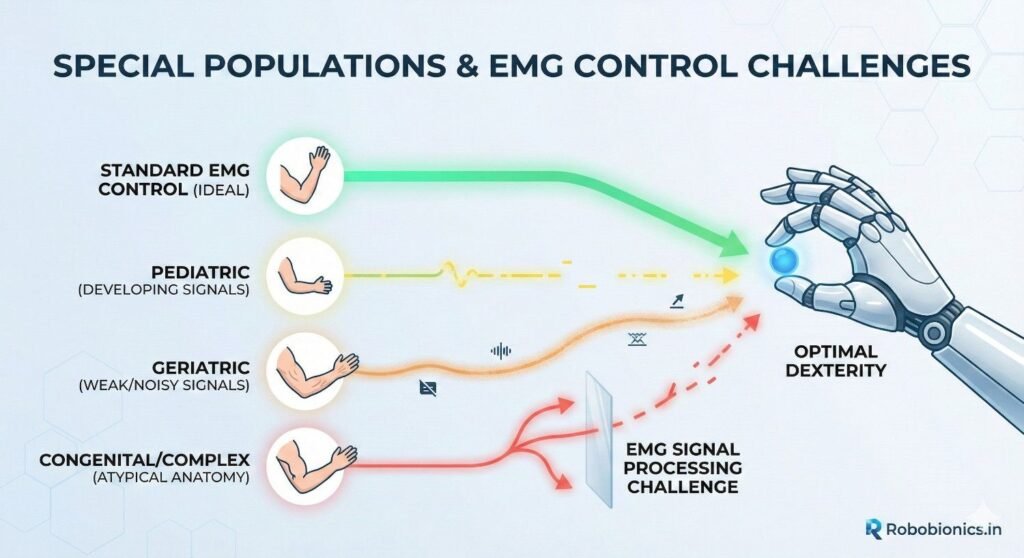
Higher-level amputations reduce available muscle sites for EMG control.
Signal options become limited.
Control demands increase.
Users may still succeed with advanced devices, but selection must be cautious.
Dexterity and learning ability become even more important.
Expectations should be realistic.
Doctors should consider staged progression.
Starting simple allows assessment.
Advancement can follow if appropriate.
Bilateral amputees rely heavily on prosthetic control for independence.
Dexterity demands are high because both limbs require learning.
Fatigue and frustration risk increase.
Advanced devices may offer great benefit, but only with strong support.
Training intensity must be carefully managed.
Emotional resilience plays a major role.
Doctors should involve multidisciplinary teams early.
Success depends on coordination.
Preparation is essential.
Younger users often have good learning capacity.
However, attention span and patience vary widely.
Dexterity development is ongoing.
Advanced devices may grow with the user.
However, initial simplicity is often better.
Gradual introduction supports learning.
Doctors should involve families in decision-making.
Support systems matter.
Long-term planning improves success.
Advanced EMG control requires experimentation.
Users must be willing to try, fail, and adjust.
Confidence supports this process.
Fear of mistakes slows learning.
Users may avoid using certain functions.
Encouragement and reassurance help.
Doctors should assess confidence during trials.
Emotional readiness matters.
Technical ability alone is not enough.
Learning advanced control can be frustrating.
Progress is rarely linear.
Persistence determines long-term success.
Users with low frustration tolerance may disengage early.
This is not a character flaw, but a real barrier.
Support strategies should be discussed.
Doctors should set realistic expectations from the start.
Normalizing difficulty reduces discouragement.
Honest framing improves adherence.
Stress affects muscle activation patterns.
Signals become inconsistent under pressure.
Control accuracy drops.
Users must learn to manage stress during tasks.
Breathing and pacing help.
Therapy can support this skill.
Doctors should consider stress factors in daily life.
Work and family demands matter.
Context affects performance.
Successful users develop consistent use routines.
They integrate the device into daily tasks naturally.
Reliability builds trust.
Inconsistent use often signals mismatch.
Fatigue or frustration may be present.
Early identification allows adjustment.
Doctors should ask about daily patterns, not just ability.
Consistency matters.
Habits predict longevity.
As dexterity improves, users often explore more functions.
This growth indicates comfort and confidence.
Advanced features become useful over time.
Rushing expansion can overwhelm.
Natural progression works best.
Patience supports mastery.
Doctors should encourage gradual exploration.
Celebrate small gains.
Progress builds motivation.
Users who view the device as a tool rather than a burden do better.
They accept limitations and work within them.
This mindset supports resilience.
Negative emotions often precede abandonment.
Frustration and disappointment are warning signs.
Open discussion helps.
Doctors should check emotional response regularly.
Well-being affects use.
Holistic care improves outcomes.
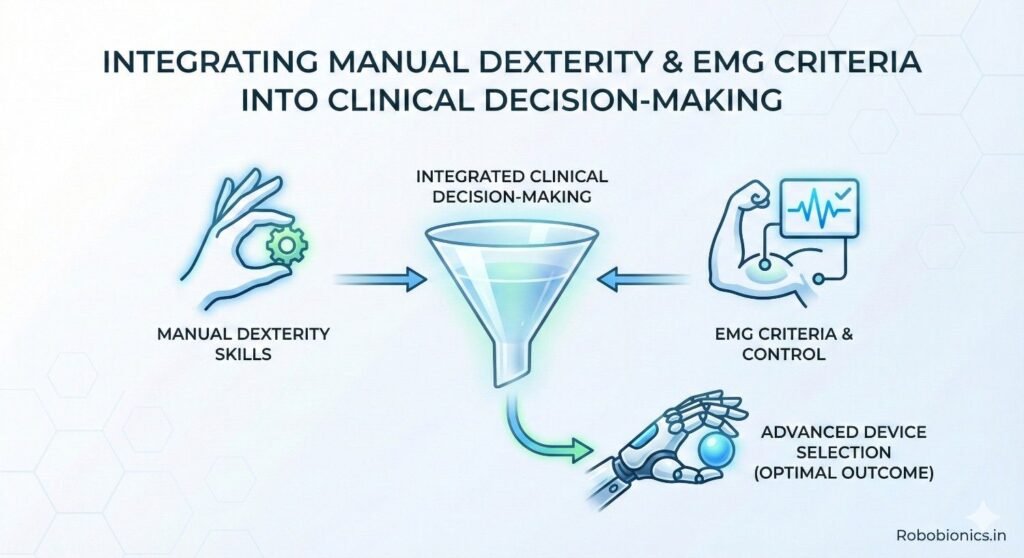
Manual dexterity should be assessed as early as possible in the prosthetic decision process.
When it is treated as a routine step rather than a special test, patients feel less judged and more supported.
Early assessment prevents unrealistic expectations and reduces the risk of mismatched device selection.
Doctors can integrate dexterity checks into regular clinical interactions.
Simple observations during conversation, object handling, or task simulation provide valuable insight.
Consistency across visits matters more than one-time performance.
Making dexterity assessment routine also improves team communication.
Therapists, prosthetists, and doctors work from the same understanding.
This alignment leads to safer and more confident decisions.
EMG trials should be framed as exploration rather than evaluation.
Patients learn how their muscles respond, and clinicians observe control patterns without pressure.
This reduces anxiety and encourages honest effort.
Trial sessions often reveal strengths and challenges that are not obvious on paper.
Some patients discover they enjoy the learning process, while others realize the demand is higher than expected.
Both outcomes are useful and valid.
Doctors should emphasize that trials inform planning, not judgment.
There is no pass or fail.
The goal is clarity.
Advanced devices should be selected based on how they will be used daily, not on their maximum capability.
If a patient’s routine requires only a few reliable actions, simpler systems may provide better overall function.
Complexity should serve purpose, not curiosity.
Doctors should explore daily tasks in detail.
Work, hobbies, and self-care routines reveal true needs.
This information helps match dexterity level to device demand.
When complexity matches lifestyle, devices feel empowering rather than burdensome.
This balance supports long-term use.
Function becomes sustainable.
Advanced prosthetic technology can create pressure to choose the most sophisticated option.
Patients may feel that accepting a simpler device means settling for less.
This mindset can lead to poor outcomes.
Doctors have a responsibility to guide decisions based on suitability, not novelty.
Explaining why a certain device fits the patient’s ability builds trust.
Ethical care prioritizes success over appearance.
Technology should adapt to the person, not the other way around.
Respecting this principle protects dignity.
Outcomes improve when choices are grounded.
Patients deserve clear and honest information about what advanced devices require.
This includes training time, effort, maintenance, and emotional investment.
Informed choice is meaningful choice.
Doctors should encourage questions and discussion.
Uncertainty should be addressed openly.
Transparency reduces regret.
When patients understand both benefits and demands, they engage more fully.
Ownership improves commitment.
Shared decision-making strengthens outcomes.
Dexterity and control are not static.
With therapy and experience, some patients improve significantly.
Others may find their needs change over time.
Ethical care includes revisiting decisions rather than locking them in permanently.
A patient who starts with a simpler device may later transition to advanced control.
Flexibility keeps options open.
Doctors should normalize progression and change.
Adaptation is part of rehabilitation.
Long-term planning benefits from this mindset.
Manufacturers play an important role in shaping how demanding a device is to use.
Designs that allow adjustable sensitivity and gradual learning support a wider range of users.
Human variability must be respected.
At Robobionics, we focus on building systems that can adapt as the user grows.
This includes scalable control options and intuitive feedback.
Technology should meet users where they are.
Listening to clinical feedback helps refine design.
Real-world use reveals true challenges.
Collaboration improves outcomes.
Manufacturers can support clinicians by offering clear training resources.
These materials help explain control logic and realistic expectations.
Education strengthens decision-making.
Patient-focused guides are equally important.
Understanding how a device works reduces fear.
Confidence improves engagement.
Training support should be ongoing.
Advanced devices evolve with use.
Resources must evolve too.
Advanced devices require long-term support to remain usable.
Maintenance, recalibration, and upgrades are part of the journey.
Accessibility matters greatly.
Users with limited dexterity may need additional support for daily care.
Design and service should account for this.
Reliability builds trust.
Manufacturers who commit to long-term partnership improve user confidence.
Support does not end at delivery.
This commitment defines quality care.
Manual dexterity and EMG control are not barriers to advanced prosthetic use, but they are essential guides.
When assessed honestly, they help match the right device to the right person at the right time.
This alignment protects confidence, safety, and long-term satisfaction.
At Robobionics, we have seen that advanced devices succeed best when human ability leads the decision, not technology alone.
Users who feel in control of their prosthesis develop stronger relationships with it and integrate it more naturally into daily life.
Preparation, patience, and proper matching make the difference.
Advanced prosthetic technology has immense potential, but its true power is unlocked only when manual dexterity and EMG control demands are respected.
When clinicians, patients, and manufacturers work together with clarity and care, advanced devices become tools of independence rather than sources of frustration.
For many clinicians, the surgery is only the first step. What happens after the operation
For trauma amputees, the journey does not begin at the prosthetic clinic. It begins much
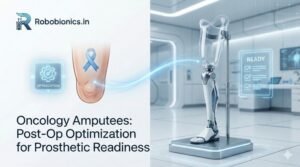
Amputation after cancer is not just a surgical event. It is the end of one
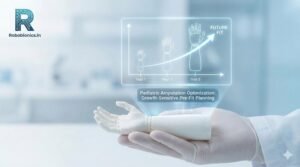
When a child loses a limb, the challenge is never only physical. A child’s body