Post-Op Follow-Up Schedule That Prevents Prosthetic Delays (For Clinicians)
For many clinicians, the surgery is only the first step. What happens after the operation



Prosthetic care does not begin in the workshop. It begins on paper. Before a patient ever receives a device, doctors must clearly explain why that prosthesis is medically necessary. This documentation affects approvals, funding decisions, rehabilitation planning, and long-term care outcomes. When medical necessity is poorly documented, even the right prosthetic solution can be delayed or denied.
At Robobionics, we regularly work with clinicians who know exactly what their patient needs but struggle to justify it in a way that decision-makers understand. Many rejections do not happen because the patient is unsuitable, but because the reasoning was incomplete, unclear, or too generic. Strong documentation bridges the gap between clinical judgment and administrative approval.
This article focuses on how doctors document medical necessity for prosthetic candidacy. It explains what decision-makers look for, how functional need should be described, and how clinical observations can be translated into clear justification. The goal is not to add paperwork, but to make documentation meaningful and effective.
If you are a doctor, rehabilitation specialist, or part of an amputee care team, this guide will help you write stronger, clearer justifications that reflect real patient needs. When medical necessity is documented well, patients move forward faster and care becomes smoother for everyone involved.
Medical necessity in prosthetic care is not proven by amputation alone.
Decision-makers want to know why a prosthesis is required for safe function, daily living, and health preservation.
A diagnosis explains what happened, but necessity explains what the patient cannot do without intervention.
Doctors must move beyond stating limb loss and describe functional loss.
Walking difficulty, balance risk, inability to perform work, or repeated falls all strengthen justification.
Necessity lives in impact, not labels.
Clear distinction between medical condition and functional consequence is essential.
This clarity prevents rejection based on incomplete reasoning.
Function tells the real story.
Reviewers often read documentation without seeing the patient.
They rely entirely on written explanation to judge urgency and appropriateness.
If impact is vague, necessity appears weak.
Statements like “patient needs prosthesis” are rarely sufficient.
Reviewers look for specific limitations and measurable risks.
Detail creates credibility.
Doctors must write with an external reader in mind.
Assume no prior knowledge of the patient.
Clarity replaces assumption.
Repeated phrases such as “for improved mobility” or “to enhance quality of life” are commonly rejected.
These phrases lack patient-specific detail.
They sound interchangeable and non-essential.
Strong documentation reflects the individual’s reality.
It ties need to daily safety, independence, and health risks.
Specificity signals genuine assessment.
Avoiding templates improves approval rates.
Each patient deserves a tailored explanation.
Individual stories carry weight.

The strongest documentation begins with limitation.
Doctors should clearly state what the patient is unable to perform without a prosthesis.
Examples include inability to walk safely, stand for work, or manage uneven surfaces.
These descriptions should reflect real situations.
Daily activities, job duties, and home mobility are relevant.
The closer the description is to real life, the stronger the case.
Avoid vague statements about difficulty.
Explain what fails, when it fails, and why it matters.
Precision strengthens necessity.
Functional loss often creates secondary medical risk.
Poor mobility increases fall risk, joint strain, and inactivity-related illness.
These risks justify intervention medically.
Doctors should explain how lack of a prosthesis worsens health outcomes.
Risk of falls, ulcers, back pain, or social withdrawal are all relevant.
Necessity grows when prevention is highlighted.
Reviewers respond strongly to safety concerns.
Clear risk explanation supports urgency.
Health protection is a strong argument.
Clinical observation adds authority to documentation.
Observed gait instability, poor balance, or unsafe transfers support written claims.
These are harder to dismiss than self-reported difficulty.
Doctors should describe what they personally observed.
For example, “patient required support to stand” is stronger than “patient reports difficulty.”
Direct observation carries weight.
Objective language builds trust.
It shows assessment, not assumption.
Trust improves approval likelihood.
Documentation must explain why no simpler alternative is sufficient.
Crutches, walkers, or wheelchairs may be inappropriate or unsafe long-term.
Doctors should explain why these options fail.
Long-term use of temporary aids may increase injury risk.
Upper limb strain, falls, or dependency are valid concerns.
Prosthetics often reduce these risks.
Justification should show that prosthesis is the safest option.
Not the most advanced, but the most appropriate.
Safety drives necessity.
If a specific prosthetic type is recommended, the reason must be clear.
For example, a stable foot may be required for uneven terrain or long standing.
An articulated system may reduce fall risk.
Doctors should connect features to patient needs.
Avoid listing features without purpose.
Every component must solve a problem.
Reviewers approve when logic is clear.
Feature without function raises questions.
Function-based justification succeeds.
Over-prescribing complex devices without justification weakens credibility.
Under-prescribing may limit function and appear careless.
Balance is essential.
Doctors should explain why the chosen level fits current ability and goals.
Future upgrades can be mentioned but not assumed.
Present need must be central.
Clear reasoning protects both patient and clinician.
Appropriate matching builds confidence.
Confidence improves outcomes.
Medical necessity includes readiness to use the device safely.
Strength, balance, healing, and skin condition should be noted.
This shows responsible timing.
Doctors should confirm that wounds are healed and infection risk is controlled.
This reassures reviewers that fitting will not fail.
Readiness supports approval.
If readiness is partial, planned rehabilitation can be mentioned.
This shows foresight.
Planning strengthens credibility.
Ability to understand and manage prosthetic use matters.
Doctors should briefly document cognitive ability and motivation.
This reassures long-term use.
Statements about patient engagement and learning capacity help.
They show investment and likelihood of benefit.
Reviewers consider sustainability.
Avoid judgmental language.
Focus on capacity and support.
Support enables success.
Prosthetic necessity is stronger when consistent use is likely.
Doctors can mention lifestyle, work needs, or caregiving roles.
These show daily reliance.
If a patient must walk for work or household duties, this matters.
Necessity increases with frequency of use.
Daily need outweighs occasional benefit.
Reviewers favor interventions that will be used.
Demonstrating this reduces doubt.
Use predicts value.
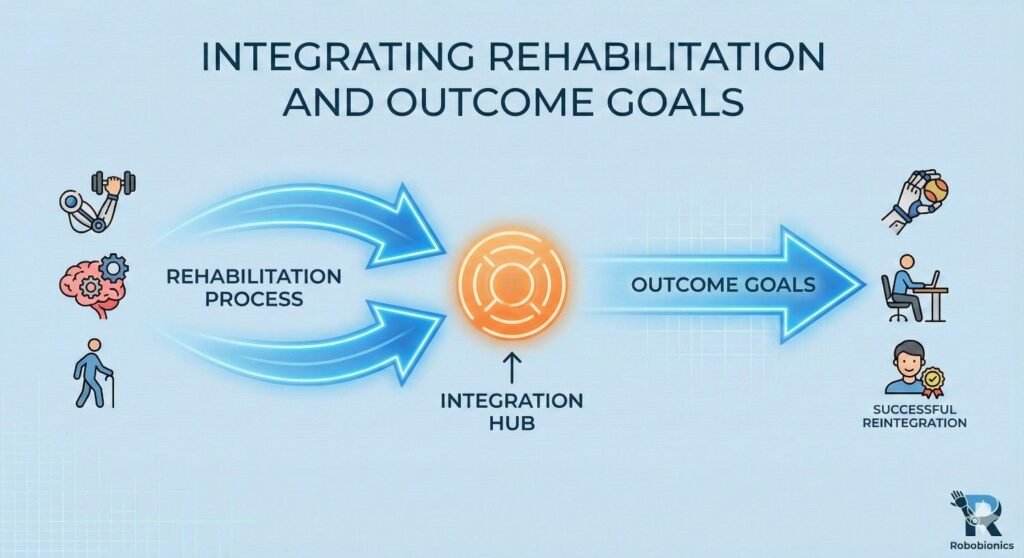
Documentation should show how the prosthesis fits into a larger care plan.
Rehabilitation goals provide context and direction.
They show purpose beyond fitting.
Doctors should describe how therapy will use the prosthesis.
Balance training, gait safety, or work reintegration are valid goals.
Goals show intent.
This integration signals structured care.
Not isolated intervention.
Structure improves approval confidence.
Clear outcomes strengthen necessity.
Improved walking distance, safer transfers, or return to work are examples.
Specific goals feel tangible.
Avoid vague improvement statements.
Describe what success looks like.
Measurement creates accountability.
Reviewers prefer outcome-oriented care.
It shows value.
Value supports approval.
Sometimes it is appropriate to explain what happens if a prosthesis is not provided.
Loss of independence, increased falls, or medical decline are valid concerns.
This highlights urgency.
This should be factual, not dramatic.
Explain consequences calmly and clearly.
Professional tone matters.
Non-approval consequences reinforce necessity.
They complete the picture.
Context drives decision-making.
Simple language improves understanding.
Complex terms often confuse non-clinical reviewers.
Clarity prevents misinterpretation.
Short, well-structured sentences work best.
Each sentence should add new information.
Redundancy weakens impact.
Doctors should write as if explaining to an informed layperson.
Not a specialist.
Accessibility improves outcomes.
Repeated phrasing across cases signals low individual assessment.
Reviewers notice patterns.
This reduces credibility.
Each patient’s story should feel unique.
Even similar cases have different contexts.
Uniqueness strengthens necessity.
Time invested in personalization saves time later.
Fewer rejections occur.
Efficiency improves.
Documentation should align across notes, referrals, and prescriptions.
Contradictions raise questions.
Consistency builds trust.
Doctors should review prior notes before final justification.
Alignment strengthens the case.
Errors weaken it.
Strong documentation is coherent.
Every part supports the same narrative.
Unity improves approval success.
Most prosthetic approval decisions are made by people who do not examine the patient and may not have deep clinical training in amputee care, which means they rely entirely on how clearly the medical necessity is written.
They read documentation looking for logic, sequence, and clear cause-and-effect rather than medical jargon or assumptions.
If the narrative jumps straight from diagnosis to prescription, reviewers often feel that an important step has been skipped.
They want to see how the condition creates a functional problem and how the prosthesis directly addresses that problem.
When this chain is clear, approvals are far more likely.
Doctors should imagine explaining the case to someone who has never met the patient and has limited time to decide.
Clarity and structure matter more than volume.
Well-organized reasoning stands out immediately.
Strong documentation tells a functional story rather than listing medical facts.
It explains how the patient’s day looks now, what goes wrong without a prosthesis, and how a prosthesis changes that outcome.
For example, describing how a patient cannot safely walk to the bathroom at night or cannot stand long enough to work adds urgency and realism.
These details make the need tangible rather than theoretical.
They help reviewers understand why delay or denial causes harm.
Functional storytelling should remain factual and professional.
It is not emotional language, but lived reality expressed clearly.
This balance is what makes documentation persuasive.
Reviewers often consider whether the request is appropriately timed.
Documentation should explain why now is the right moment for prosthetic fitting rather than earlier or later.
If the patient has healed, completed initial rehabilitation, and reached a stable condition, this should be clearly stated.
If delays occurred due to infection, trauma severity, or medical instability, this context should be included.
Timing justification reassures reviewers that the request is responsible.
Ignoring timing questions leaves room for doubt.
Addressing them proactively strengthens the case.
Preparation shows clinical judgment.
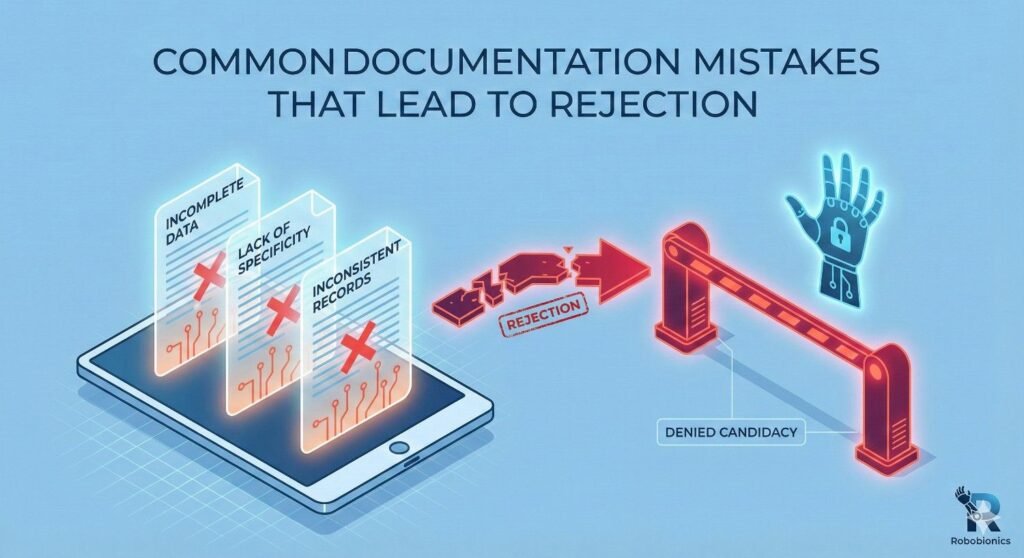
One of the most common mistakes is assuming that limb loss alone is enough to justify prosthetic provision.
While amputation explains why a prosthesis could be useful, it does not explain why it is medically necessary for this specific patient at this specific time.
Reviewers need to see functional loss and medical risk clearly tied to the absence of a prosthesis.
Without this link, requests are often seen as optional or premature.
Explicit explanation prevents this misunderstanding.
Doctors should never rely on diagnosis codes alone.
Narrative matters far more.
Diagnosis opens the door, but function carries the argument.
Phrases such as “improve mobility” or “enhance independence” are common but weak when used alone.
They do not explain what is currently unsafe, impossible, or harmful without intervention.
Reviewers may read such phrases as generic benefits rather than medical need.
Specificity transforms vague benefit into clear necessity.
Detail makes improvement measurable.
Doctors should replace general statements with concrete examples.
What improves, how it improves, and why it matters should always be stated.
Precision protects approval.
If other mobility aids exist, reviewers often expect to see why they are not suitable long term.
Failing to address this invites denial based on perceived alternatives.
Doctors should briefly explain why crutches, walkers, or wheelchairs are unsafe, impractical, or medically harmful for the patient’s condition.
Upper limb strain, fall risk, or inability to perform work are valid reasons.
This shows thoughtful consideration rather than default preference.
Addressing alternatives does not weaken the case.
It strengthens it by showing that prosthetic selection is deliberate.
Deliberation builds confidence.
One of the strongest arguments for prosthetic necessity is risk reduction.
If a patient is unstable, prone to falls, or overloading other joints, these risks should be clearly documented.
Falls are not minor events; they can lead to fractures, head injury, and prolonged disability.
Documentation should state whether balance has been observed to be unsafe or whether the patient relies heavily on support.
Observed risk carries weight.
Doctors should connect prosthetic use to improved safety.
Stability is a medical outcome, not just a functional one.
Safety-focused language resonates strongly with reviewers.
Long-term use of temporary aids often shifts strain to the shoulders, back, hips, or intact limb.
This can lead to chronic pain and secondary injury, which increases healthcare burden.
Documentation should explain how a prosthesis distributes load more evenly and protects the rest of the body.
Preventing future injury is a valid medical goal.
Reviewers recognize preventative value.
This framing positions prosthetic care as proactive rather than optional.
Prevention often justifies early intervention.
Foresight reflects good medicine.
Limited mobility often leads to isolation, depression, and loss of role in family or work.
While these factors should not be overstated, they are medically relevant when tied to functional limitation.
Doctors can document observed withdrawal, reduced participation, or emotional distress related to mobility loss.
This shows that the condition affects overall health, not just movement.
Holistic impact matters.
When framed carefully, mental and social health strengthen necessity.
They show that prosthetic care supports whole-person health.
Balanced inclusion adds depth.
Rehabilitation plans often require a prosthesis to progress.
Gait training, balance improvement, and functional strengthening depend on having the correct device.
Documentation should state that therapy goals cannot be met without prosthetic provision.
This links approval directly to ongoing medical care.
Reviewers understand therapy dependence.
Without this connection, prosthetic requests may appear isolated.
Integration strengthens justification.
Care pathways matter.
Doctors should outline realistic functional gains based on current assessment.
For example, improved indoor ambulation, safer transfers, or return to modified work duties.
These gains should be plausible, not aspirational.
Overpromising weakens credibility.
Realistic improvement builds trust.
Reviewers favor interventions with clear benefit.
Defined outcomes show value.
Value supports approval.
Including a plan for follow-up and reassessment reassures reviewers that care will be monitored responsibly.
It shows that prosthetic provision is part of an ongoing process rather than a one-time event.
Doctors can mention scheduled reviews, therapy milestones, or reassessment after adaptation.
This demonstrates accountability.
Accountability improves confidence.
Well-planned care appears safer and more justified.
Structure reduces perceived risk.
Risk reduction aids approval.
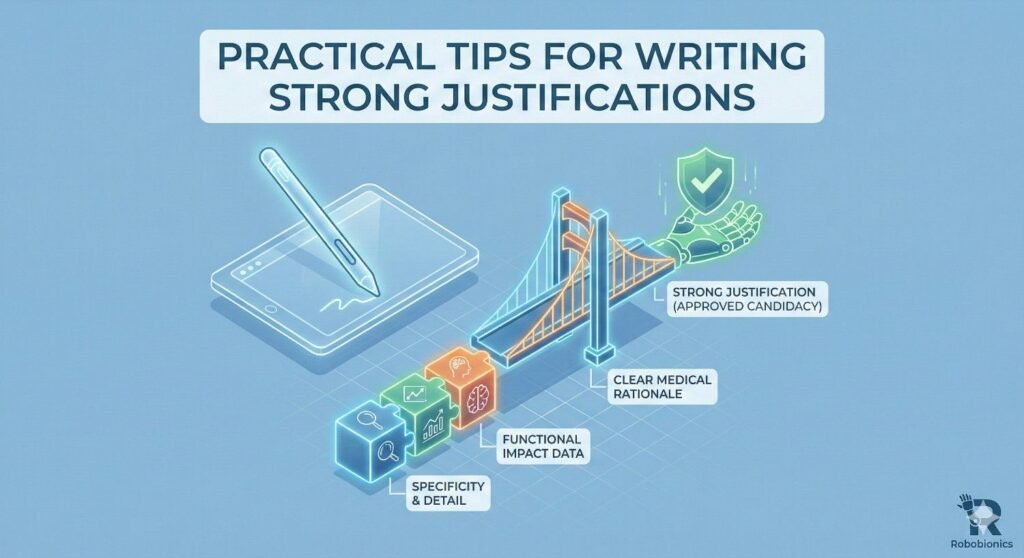
Strong documentation follows a clear sequence: condition, functional limitation, risk, solution, and expected outcome.
This logical flow makes it easy for reviewers to follow the reasoning without rereading.
Each paragraph should build on the previous one.
Avoid jumping between topics.
Flow improves understanding.
Doctors should review their own notes as if they were the reviewer.
If the logic is clear on first read, the documentation is likely strong.
Clarity predicts success.
Using the patient’s age, occupation, home environment, and daily responsibilities adds realism.
These details differentiate one case from another.
For example, stating that a patient must walk on uneven ground to reach work carries more weight than stating they need mobility.
Context transforms necessity into reality.
Reality persuades.
Consistency across notes reinforces credibility.
Details should align everywhere.
Alignment prevents doubt.
Taking time to review documentation before submission reduces avoidable rejection.
Small edits often make a big difference.
Doctors should check for vague phrases, missing links, or assumptions.
Refining language improves strength.
Precision saves time later.
Strong documentation is a clinical skill that improves with practice.
Each approval reinforces good habits.
Experience builds efficiency.
Doctors often struggle not with what to write, but how to structure it in a way that reviewers can follow without effort.
A strong structure moves logically from the patient’s condition to functional loss, then to medical risk, and finally to how the prosthesis directly reduces that risk and restores safe function.
For example, starting with the level of amputation and healing status sets the clinical base, but it must quickly move into what the patient cannot do safely without assistance.
Once the limitation is clear, the medical risks of leaving that limitation unaddressed should be stated plainly.
Only after this foundation is built should the prosthetic recommendation appear.
This structure mirrors how reviewers think.
When their questions are answered before they arise, approvals become smoother and faster.
Instead of stating that a patient has “reduced mobility,” strong documentation explains how that reduction plays out in daily life.
This could include inability to walk independently indoors, unsafe transfers from bed to chair, or inability to stand long enough to perform basic self-care.
Practical language grounded in observation carries more weight than abstract descriptions.
Saying that a patient required support during a short walk in the clinic is stronger than saying they “report difficulty walking.”
Observed limitations demonstrate clinical judgment rather than reliance on self-report alone.
When function is described clearly, the need for intervention becomes self-evident.
The prosthesis is no longer optional; it becomes necessary for safety and health.
One of the most effective documentation techniques is clearly linking each problem to a solution.
If the patient is unstable, explain how the prosthesis improves base of support.
If fatigue limits activity, explain how the prosthesis reduces energy cost compared to temporary aids.
Reviewers respond well to this kind of direct reasoning because it removes ambiguity.
They can see exactly why this device, at this time, for this patient, is appropriate.
Vague reasoning leaves room for doubt, while direct cause-and-effect closes that gap.
Every sentence should answer an implicit question: why does this matter medically?
When that question is consistently addressed, necessity becomes obvious.
Some patients present with complex medical profiles that make reviewers cautious.
Conditions such as diabetes, heart disease, or previous infections may raise concerns about prosthetic tolerance or long-term benefit.
In these cases, documentation should acknowledge the complexity rather than ignore it.
Explaining how these conditions have been assessed and stabilized reassures reviewers that risks have been considered.
Silence on these issues often triggers denial due to perceived oversight.
Doctors should also explain why, despite complexity, prosthetic provision is still safer than non-provision.
For example, limited mobility may worsen cardiovascular health or increase fall risk.
Balancing risk against benefit shows thoughtful clinical judgment.
Older patients or those with limited activity goals are often questioned more closely by reviewers.
Documentation must clearly explain that medical necessity is not limited to high activity or employment.
If a patient needs a prosthesis to move safely within the home, reduce fall risk, or maintain basic independence, this is medically valid.
Safety and prevention of decline are legitimate goals, even when activity levels are modest.
Doctors should avoid framing necessity around athletic or advanced function unless appropriate.
Instead, focus on essential mobility and health protection.
This framing aligns better with reviewer expectations for these populations.
If a patient has previously failed with a prosthesis, documentation must address why the current request is different.
Ignoring past failure often leads to rejection due to assumed repetition of the same outcome.
Doctors should explain what has changed, such as improved healing, better fit planning, different component choice, or enhanced rehabilitation support.
This shows learning and adaptation rather than repetition.
By clearly outlining how risks have been mitigated, the new request appears reasonable and justified.
Transparency strengthens trust.
Trust supports approval.
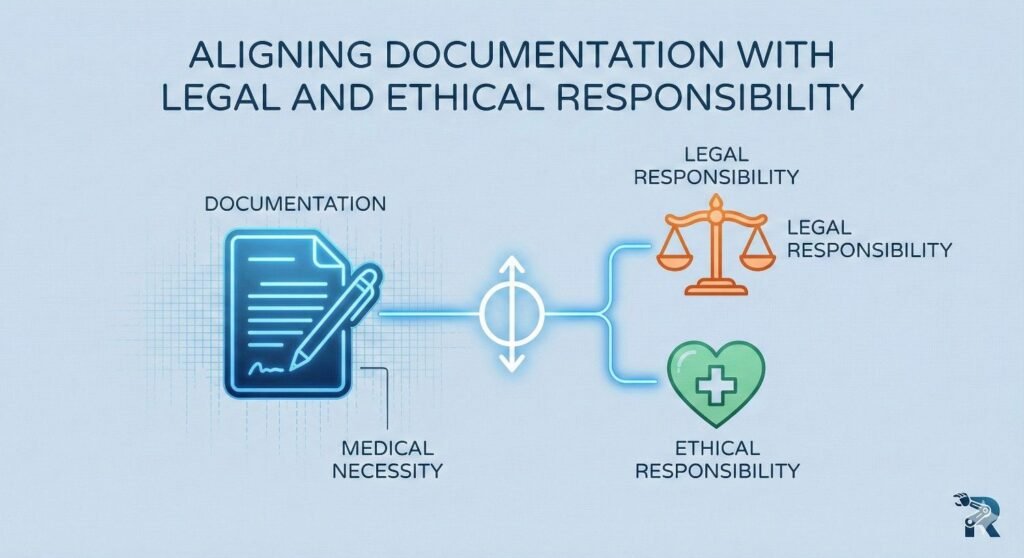
When doctors document medical necessity, they are making a professional statement that carries ethical and legal weight.
This is not simply a recommendation; it is an assertion that withholding the prosthesis would negatively affect the patient’s health or safety.
This perspective encourages careful, accurate writing rather than rushed or generic statements.
Every claim should be defensible based on examination and observation.
Honesty strengthens credibility over time.
Overstating necessity can be as harmful as understating it.
Balanced documentation reflects professional integrity.
Integrity builds long-term trust with payers and institutions.
Clear documentation protects patients beyond approval.
It provides a record that guides future care, supports appeals if needed, and explains decisions to other clinicians.
When records clearly show why a prosthesis was necessary, future providers can understand the rationale without repeating assessments.
This continuity benefits patient safety.
Doctors should view documentation as part of patient advocacy.
Strong records reduce delays and confusion.
Clarity serves the patient’s interests.
Even strong documentation may face initial denial.
In these cases, well-written records become essential for appeals.
Appeals are far more successful when the original documentation is detailed and patient-specific.
Weak initial notes are difficult to strengthen later.
Doctors who document thoroughly from the start save time and stress during appeals.
Preparation is the best defense.
Good writing reduces friction.
Instead of writing that a patient “requires a prosthesis for ambulation,” a stronger approach would describe that the patient is currently unable to walk independently indoors without risk of falling, as observed during clinical assessment, and cannot perform basic transfers safely using temporary aids.
This kind of language shows observation, risk, and daily impact in one sentence.
It makes the limitation concrete.
Concrete limitations justify intervention.
Such descriptions help reviewers visualize the problem.
Visualization supports understanding.
Understanding supports approval.
A strong risk-based statement might explain that continued reliance on crutches places excessive strain on the shoulders and intact limb, increasing the likelihood of secondary injury and long-term musculoskeletal pain.
This reframes the prosthesis as a protective intervention rather than an upgrade.
Protection is a medical priority.
This framing aligns well with reviewer logic.
When risks are described calmly and factually, they carry authority.
Dramatic language is unnecessary.
Professional tone is more persuasive.
Outcome-oriented documentation might state that with appropriate prosthetic fitting and supervised rehabilitation, the patient is expected to regain safe indoor mobility and reduce fall risk, allowing independence in essential daily activities.
This sets realistic expectations without exaggeration.
It shows benefit without overpromise.
Realism builds credibility.
Reviewers want to see benefit that matches the intervention.
Reasonable goals signal good judgment.
Judgment supports trust.
Documenting medical necessity is not about writing more; it is about writing better.
Clear, patient-specific explanations that link functional limitation to medical risk and then to prosthetic solution are far more effective than long, generic descriptions.
At Robobionics, we have seen that strong documentation often makes the difference between delay and timely care.
When doctors clearly explain why a prosthesis is needed now, for this patient, and for these reasons, the path forward becomes smoother.
Medical necessity documentation is a clinical skill, not an administrative burden.
It reflects careful assessment, ethical responsibility, and patient advocacy.
When done well, it accelerates care, reduces frustration, and ensures that prosthetic solutions reach the people who truly need them.
For many clinicians, the surgery is only the first step. What happens after the operation
For trauma amputees, the journey does not begin at the prosthetic clinic. It begins much
Amputation after cancer is not just a surgical event. It is the end of one

When a child loses a limb, the challenge is never only physical. A child’s body