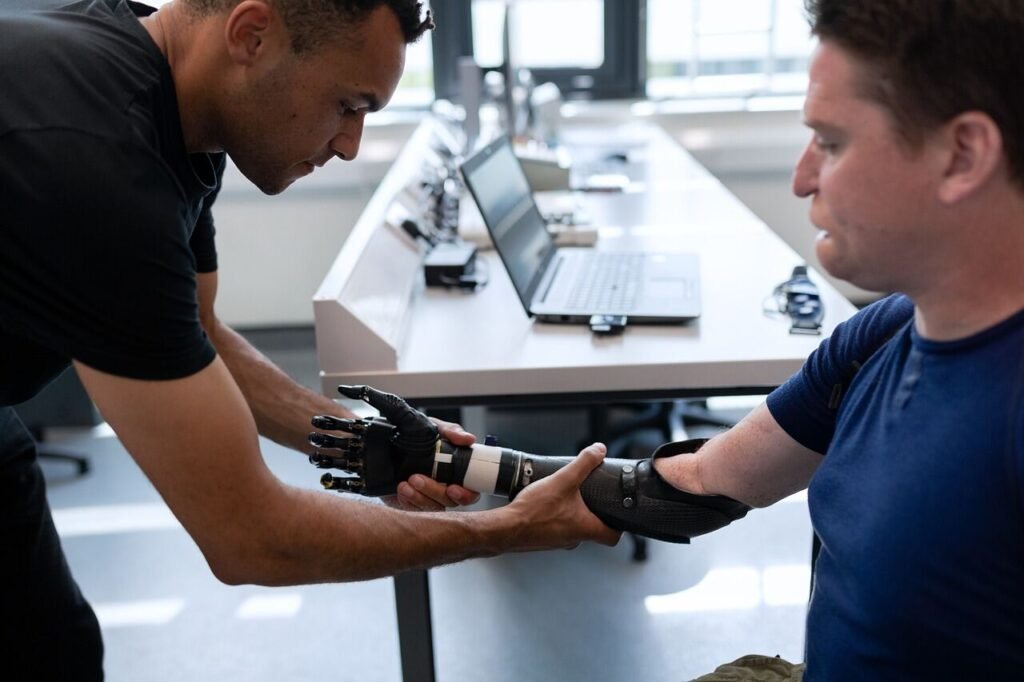
Fitting a bionic limb is just the beginning. What truly makes a difference in a user’s life is what comes after—the journey of learning, adapting, and regaining control. Rehab sessions are where this transformation happens. They’re not just about teaching movements. They’re about rebuilding confidence, rebuilding routines, and helping someone feel at home in their […]

Think about what it means to truly feel. Not just touching something, but really sensing it—knowing if it’s soft, hard, warm, or fragile. For most people, this happens naturally. For someone using a prosthetic hand, it doesn’t. Or at least, it didn’t. Now, imagine giving that feeling back. Imagine your patient not just holding a […]
When a person uses a bionic hand, they’re not just moving a machine. They’re entering a conversation with it. That conversation is what we call a feedback loop. At its simplest, it means the user sends a signal, the device responds, and the user reacts to that response. But in adaptive systems, this loop goes […]
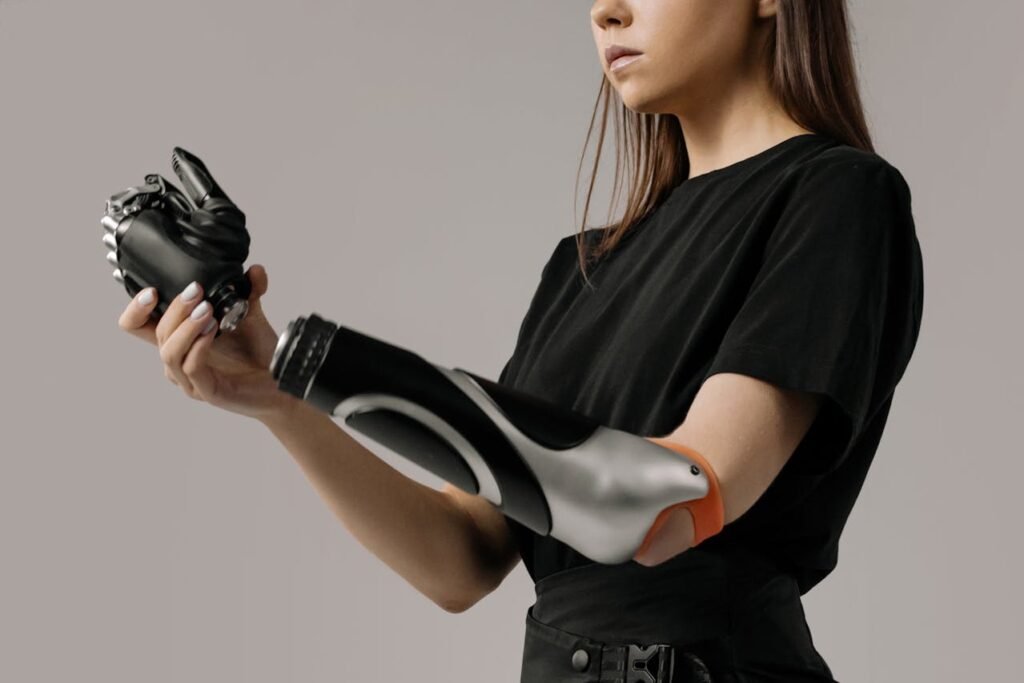
If you’re a clinician working with upper-limb amputees, you’ve likely heard the terms myoelectric control and adaptive control. At first glance, they may sound similar. After all, both involve a bionic hand responding to muscle signals. But the way they work—and the way they support the user—are very different. And those differences matter. The choice […]

Helping someone use a prosthetic hand is no longer just about fit and grip. Today’s smart bionic limbs come with something new—adaptive control. This feature allows the prosthetic to learn from the patient’s movements and adjust how it responds. It’s like teaching the hand how the user wants to move, one signal at a time. […]