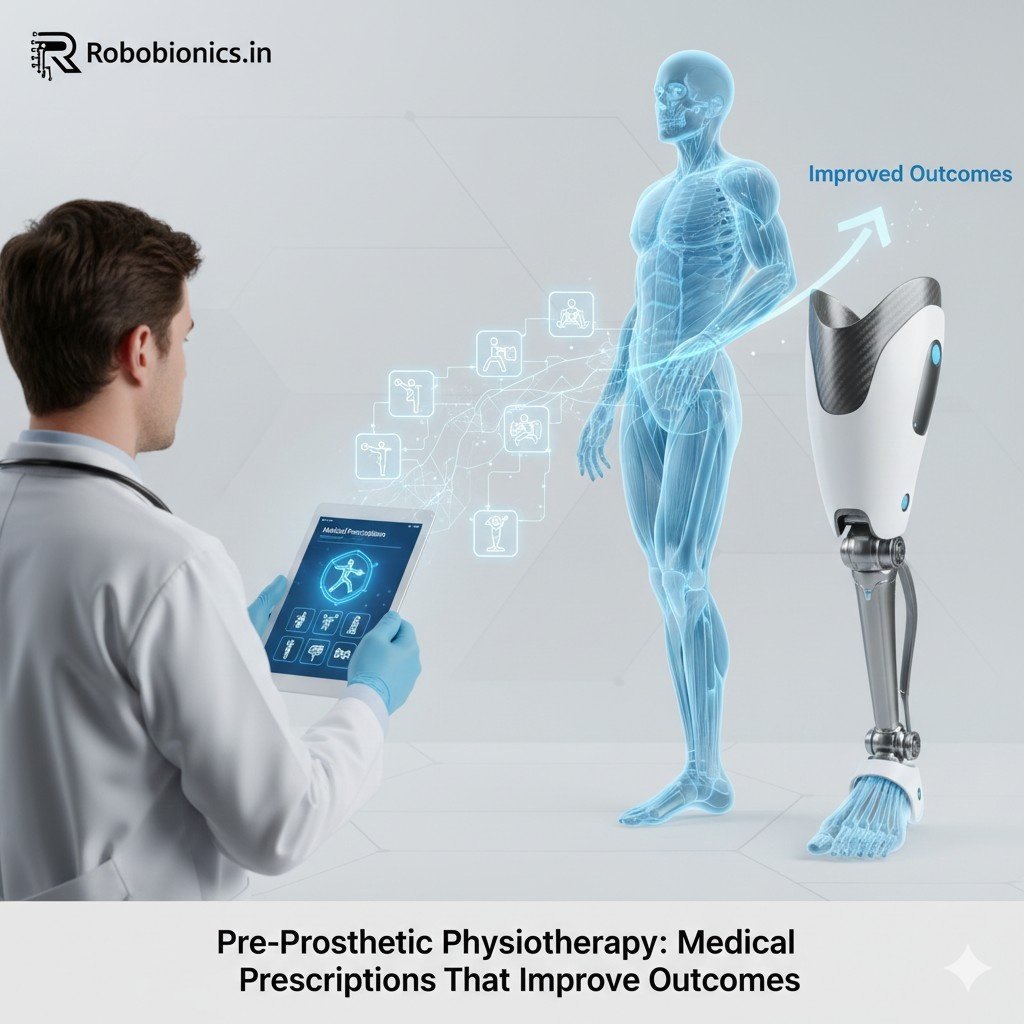
Physiotherapy before a prosthesis is fitted is one of the most powerful, yet most ignored, parts of recovery after limb loss. Many people believe therapy matters only after the prosthetic limb is given. In reality, what happens before fitting often decides how well the prosthesis will work later. Pre-prosthetic physiotherapy prepares the body and the […]
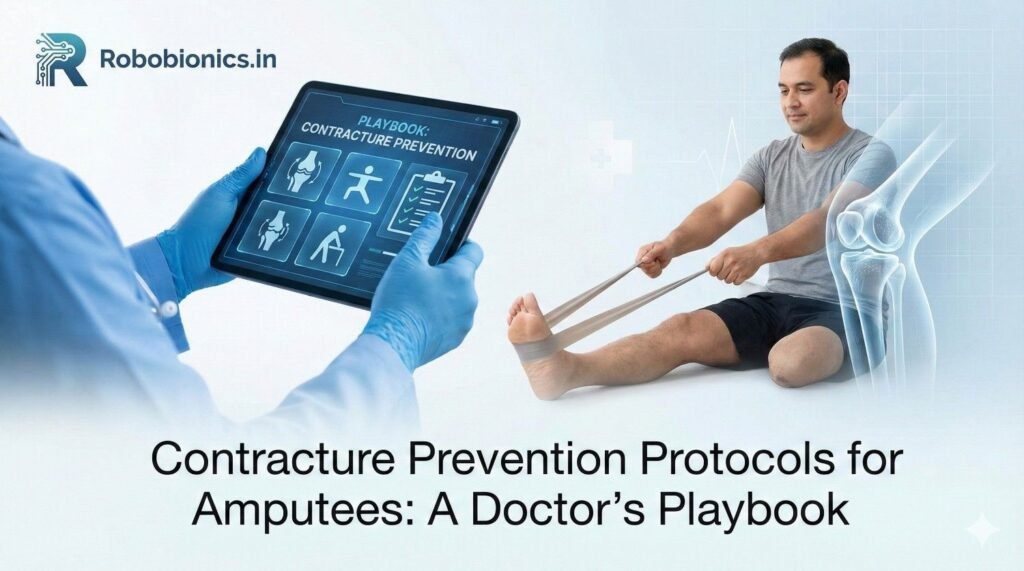
Contractures are one of the most preventable causes of poor prosthetic outcomes, yet they remain one of the most common. A stiff hip, a bent knee, or a fixed elbow can delay prosthetic fitting, limit walking or hand use, and frustrate patients who otherwise healed well. Once a contracture is established, correction becomes slow, painful, […]
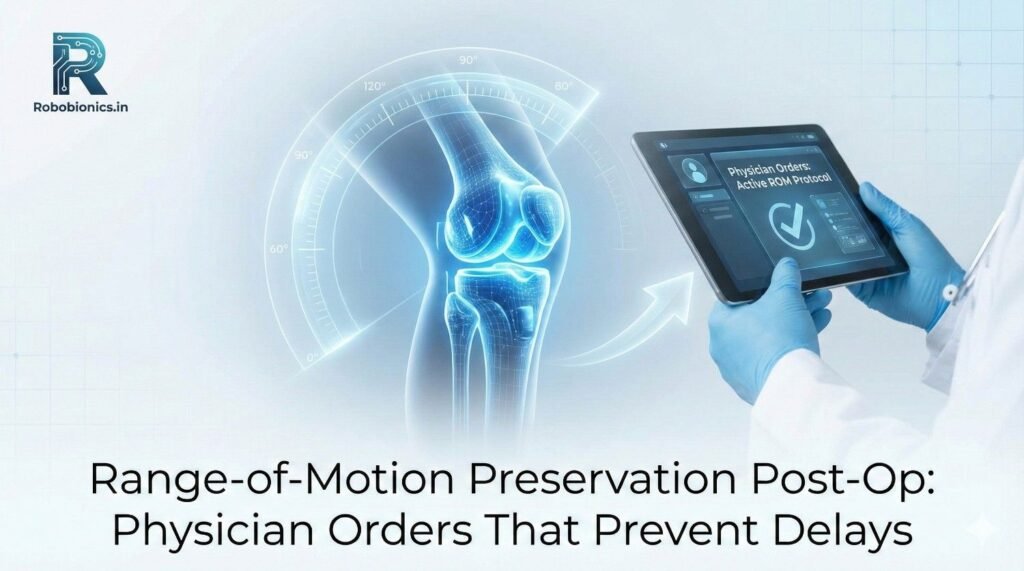
After surgery, the body heals in two ways at the same time. Tissues repair themselves, and movement patterns begin to change. If movement is not protected early, joints quietly stiffen, muscles shorten, and recovery slows down. These changes often go unnoticed until prosthetic training becomes difficult or delayed. At Robobionics, working closely with surgeons, physicians, […]
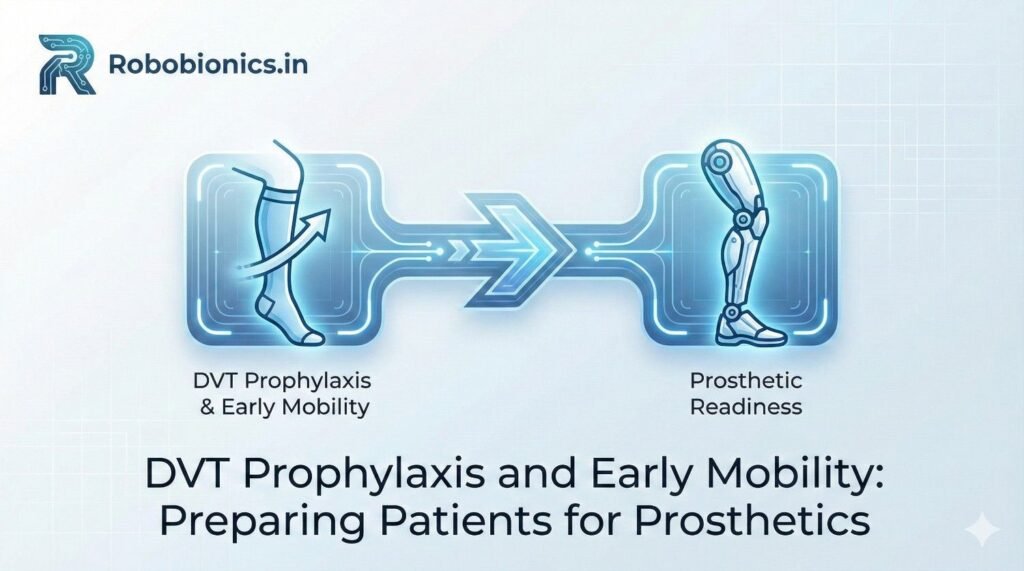
Blood clots and delayed movement are silent barriers to prosthetic success. Many patients recover from surgery but struggle later because their body was not protected and activated early. Deep vein thrombosis, or DVT, and long periods of bed rest can quietly steal strength, confidence, and readiness for a prosthetic limb. This article explains how DVT […]
Before a prosthesis can restore movement, the limb must be alive with good blood flow. This truth is simple, yet often overlooked in the rush to refer patients for prosthetic fitting. Vascular health decides whether wounds heal, skin survives pressure, and sockets feel comfortable or painful. When blood supply is poor, even the best prosthesis […]