
Post-Op Follow-Up Schedule That Prevents Prosthetic Delays (For Clinicians)
For many clinicians, the surgery is only the first step. What happens after the operation




Contractures are one of the most preventable causes of poor prosthetic outcomes, yet they remain one of the most common. A stiff hip, a bent knee, or a fixed elbow can delay prosthetic fitting, limit walking or hand use, and frustrate patients who otherwise healed well. Once a contracture is established, correction becomes slow, painful, and sometimes impossible.
This playbook is written for doctors who care for amputees from surgery to prosthetic use. It focuses on clear, practical protocols to prevent contractures before they start and to catch early stiffness before it becomes permanent. The approach is simple and realistic, built for busy clinics and wards. When doctors act early and guide positioning, movement, and habits with purpose, patients stay flexible, recover faster, and use their prosthesis with confidence.
A contracture is a loss of joint movement caused by muscle shortening and soft tissue stiffness. It develops slowly but becomes fixed if ignored. In amputees, contractures often form because muscles are no longer used in their full range.
This stiffness is not just a comfort issue. It directly limits how a prosthesis can be fitted and used. Even a small loss of motion can create large functional problems.
Doctors should see contractures as a mechanical barrier to recovery.
After amputation, pain, fear, and immobility lead patients to keep the limb in one position. Muscles adapt quickly to this shortened state. Within weeks, flexibility begins to reduce.
Swelling, poor positioning, and lack of guidance worsen the problem. Many patients are unaware that comfort positions today cause stiffness tomorrow.
This risk exists in both upper and lower limb amputees.
In lower limb amputees, hip and knee joints are most vulnerable. Hip flexion and knee bending contractures are especially common after below-knee and above-knee amputations.
In upper limb amputees, elbow, shoulder, and wrist stiffness are frequent. Poor shoulder movement often limits prosthetic control later.
Each joint requires targeted prevention strategies.
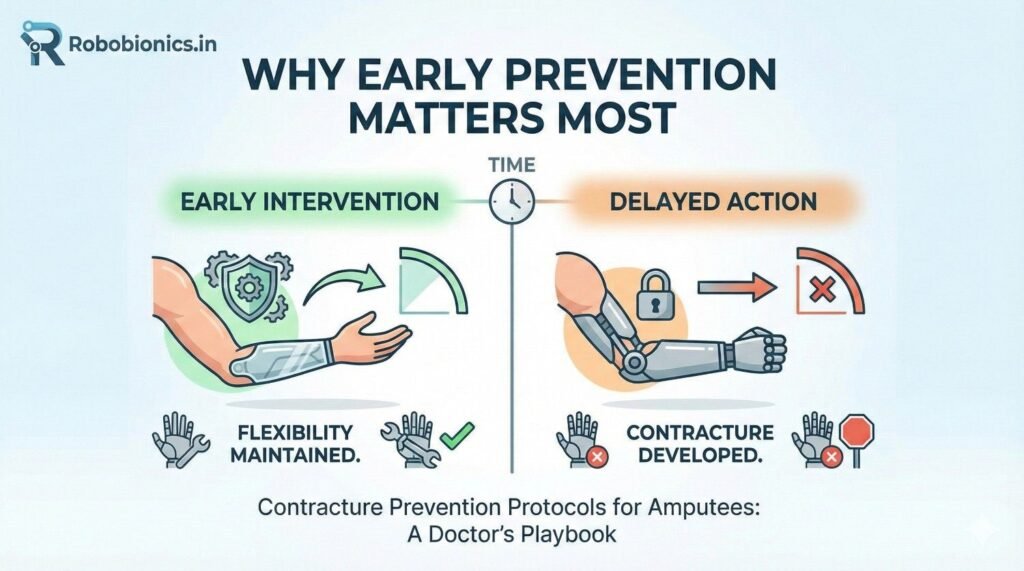
Muscle and soft tissue shortening can begin within days of reduced movement. Waiting for wounds to heal fully before addressing movement is often too late.
Early gentle positioning and movement prevent this process from taking hold. Once stiffness is present, reversal becomes slow and uncertain.
Prevention is far easier than correction.
A prosthesis is designed around expected joint positions. Contractures force awkward socket angles and poor alignment.
Patients with contractures often struggle to walk efficiently or control upper limb devices. Pain and fatigue increase quickly.
Doctors who prevent contractures protect future prosthetic success.
When patients are told they cannot be fitted due to stiffness, frustration and guilt follow. Many blame themselves.
Early guidance avoids this emotional burden. Patients feel supported rather than corrected later.
This improves trust and engagement.
Severe pain discourages movement. Patients instinctively protect the limb by keeping it still or bent.
Without reassurance and pain control, this behavior becomes habitual. Habitual positions shape muscle length.
Doctors should address pain and fear together.
Improper bed positioning is a major contributor to early contractures. Pillows under knees or elbows may seem comforting but encourage flexion.
When these positions are maintained for hours each day, stiffness follows quickly.
Clear instructions to staff prevent unintentional harm.
Many patients are never told why position and movement matter. Without understanding, compliance is poor.
Simple explanations early make patients partners in prevention.
Education should start before stiffness appears.
Joints should be positioned as close to neutral or slight extension as tolerated. This maintains muscle length and joint alignment.
Short comfort breaks in flexion are acceptable, but prolonged flexion should be avoided.
Consistency is more important than perfection.
Below-knee amputees should avoid prolonged knee bending. Lying flat with the knee extended several times a day helps maintain range.
Above-knee amputees should avoid constant hip flexion. Time spent lying prone helps stretch hip flexors safely.
Doctors should prescribe these positions clearly.
Elbows should not remain bent for long periods. Gentle extension positioning helps preserve range.
Shoulders should be supported in a natural position to avoid stiffness and subluxation.
Early shoulder movement is essential for later prosthetic control.
Movement can begin as soon as the surgical site is stable and pain is controlled. Waiting for complete healing delays prevention.
Doctors should guide therapists on safe ranges and precautions.
Early does not mean aggressive.
Partial movement is not enough. Joints must move through their full safe range to maintain flexibility.
Repeated small movements in one range still allow shortening elsewhere.
Doctors should emphasize quality of movement.
Short, frequent movement sessions work better than occasional long sessions. This reduces pain and builds routine.
Patients are more likely to comply with manageable tasks.
Regularity protects mobility.
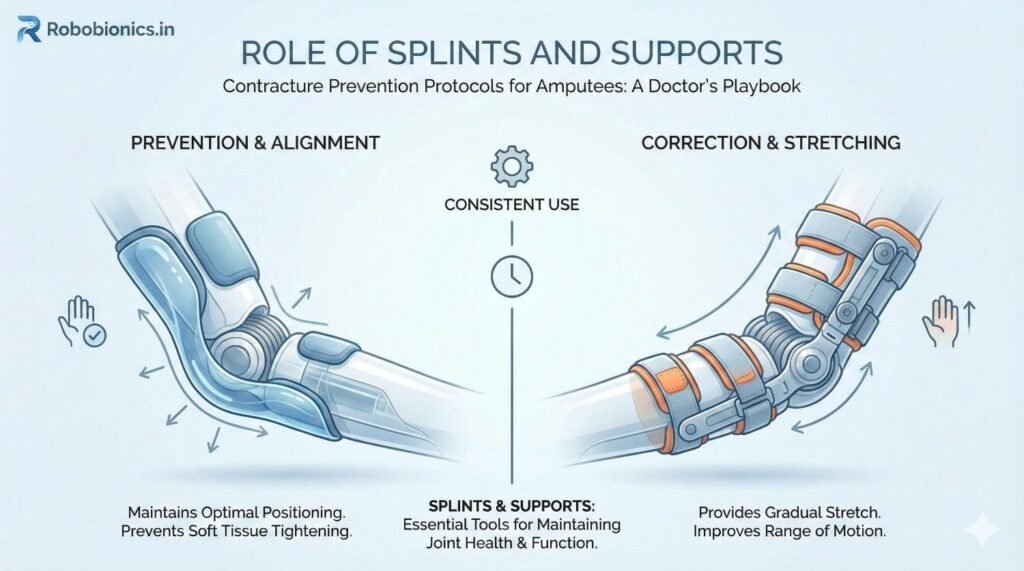
Splints help maintain joint position when patients cannot actively move well. They support proper alignment during rest.
Used correctly, splints prevent early stiffness without causing discomfort.
Doctors should prescribe splints thoughtfully.
Poorly fitted or overused splints can increase pain or pressure. This discourages use and movement.
Regular review ensures splints remain helpful.
Splints should support, not replace, movement.
Splints work best alongside active exercises. They hold gains made through movement.
Doctors should coordinate with therapists to balance both.
Integration improves outcomes.
Most contractures do not form at home or in rehab centers. They begin quietly in the ward, during the first days after surgery. This is when patients lie still for long hours and comfort becomes the main goal.
If positioning and movement are not guided here, stiffness sets in before anyone notices. By the time the patient reaches rehab, the damage may already be done.
Doctors who focus on ward routines prevent problems before they grow.
Positioning should be treated like medication, not a suggestion. It needs clear orders, repetition, and follow-up. When it is optional, it is often forgotten.
Simple instructions such as time spent lying flat, prone positioning schedules, or arm support positions make a real difference. These instructions should be written and reinforced verbally.
Consistency across shifts is what protects joints.
Nurses are key partners in contracture prevention. They adjust pillows, help with turns, and observe daily habits.
Doctors should explain why certain positions are discouraged, not just state rules. When nurses understand the reason, compliance improves.
Short team discussions prevent long-term stiffness.
Pain makes patients guard their limb. They avoid stretching and resist movement even when encouraged. Over time, muscles shorten around this guarded position.
If pain is not controlled, no positioning protocol will succeed. Patients will always choose comfort over instruction.
Doctors should see pain control as a mobility tool, not just relief.
Over-sedation can reduce movement just as much as pain. Patients who are too drowsy do not reposition or engage in exercises.
The goal is comfortable alertness. Patients should feel safe enough to move and participate.
Regular pain review helps find this balance.
Patients often fear that any stretch pain means harm. This fear leads to avoidance.
Doctors should explain the difference between harmful pain and safe stretching discomfort. This reassurance changes behavior.
Understanding reduces resistance.
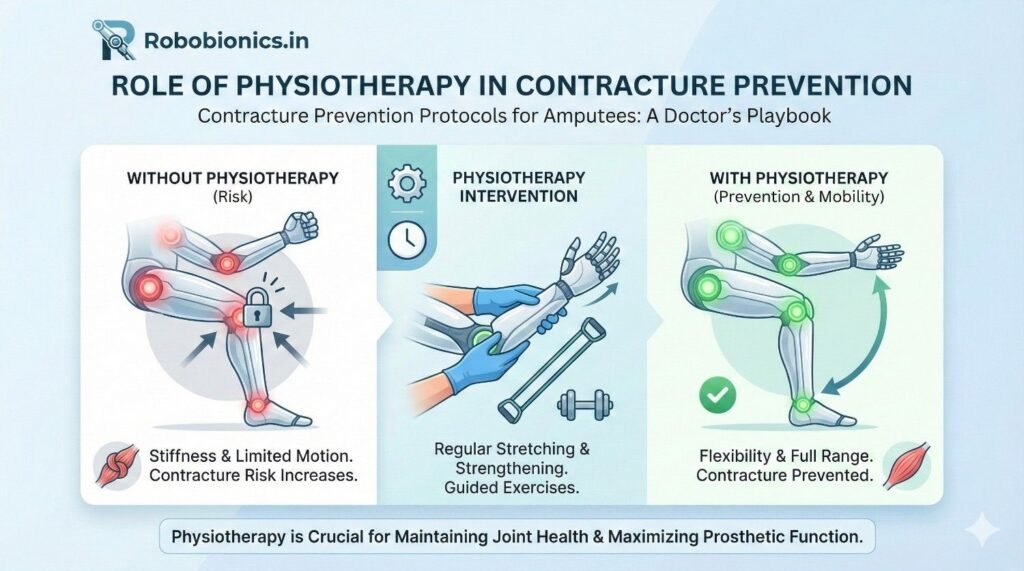
Physiotherapy should begin as soon as medically safe. Waiting until discharge planning is too late.
Early sessions focus on gentle range, positioning education, and habit building. These early lessons shape long-term behavior.
Doctors should prioritize early referrals.
Therapists need to know surgical details, precautions, and goals. Without this, therapy may be too cautious or too aggressive.
Regular communication avoids confusion and builds trust.
Clear goals lead to better movement plans.
Therapy works only if habits continue outside sessions. Doctors should reinforce exercises during rounds.
When patients hear the same message from doctors and therapists, compliance improves.
Unified messaging matters.
Family members often help reposition patients, especially in Indian settings. Their habits shape daily posture.
If caregivers place pillows for comfort without guidance, they may unknowingly cause harm.
Training families is essential prevention.
Caregivers do not need complex anatomy lessons. Simple guidance on what positions to avoid and which to encourage is enough.
Demonstration works better than instruction alone.
Doctors should involve families early.
Some caregivers fear causing pain and avoid moving the limb. This fear increases stiffness.
Doctors should reassure them that guided movement is safe and helpful.
Confidence improves care quality.
Knee flexion contracture is the most common risk. It often starts with pillows under the knee or prolonged sitting.
Even small degrees of knee stiffness affect walking efficiency. Energy use increases and prosthetic fit suffers.
Doctors should stress knee extension daily.
Hip flexion and abduction contractures are common. Sitting for long periods encourages these patterns.
Prone lying and neutral positioning help maintain hip range.
Early attention prevents major gait issues later.
Shoulder stiffness develops quickly due to pain and fear of movement. This stiffness limits reach and prosthetic control.
Early shoulder motion and proper support prevent long-term loss.
Doctors should not ignore the shoulder.
Early contracture does not always look dramatic. Slight resistance at end range or patient reluctance to straighten the limb are early signs.
Patients may say the limb feels “tight” rather than stiff.
These clues should trigger action.
Formal measurements are helpful but not always necessary. Simple observation of resting position and movement quality reveals a lot.
Comparing sides helps identify loss early.
Doctors should trust their clinical eye.
Early stiffness responds well to stretching and habit change. Waiting allows tissue to adapt permanently.
Immediate response saves weeks of rehab later.
Timing is critical.
Wound care is vital, but excessive immobilization delays recovery. Movement and healing are not opposites.
With guidance, both can progress together.
Doctors should balance both goals.
Positions meant for short comfort often become permanent habits. Temporary pillows turn into day-long supports.
Doctors should review positioning daily.
Temporary should remain temporary.
Once contractures form, rehab becomes corrective rather than preventive. Correction is slower and more painful.
Doctors should not pass this responsibility forward.
Early care defines later success.
Written positioning and movement orders reduce confusion. They guide staff across shifts.
Simple language works best.
Clarity improves compliance.
Doctors should check positioning during rounds, not just wounds and vitals. This reinforces importance.
Patients notice what doctors focus on.
Attention shapes behavior.
Contracture prevention does not stop at discharge. Instructions should continue at home.
Clear home guidance prevents regression.
Continuity protects progress.
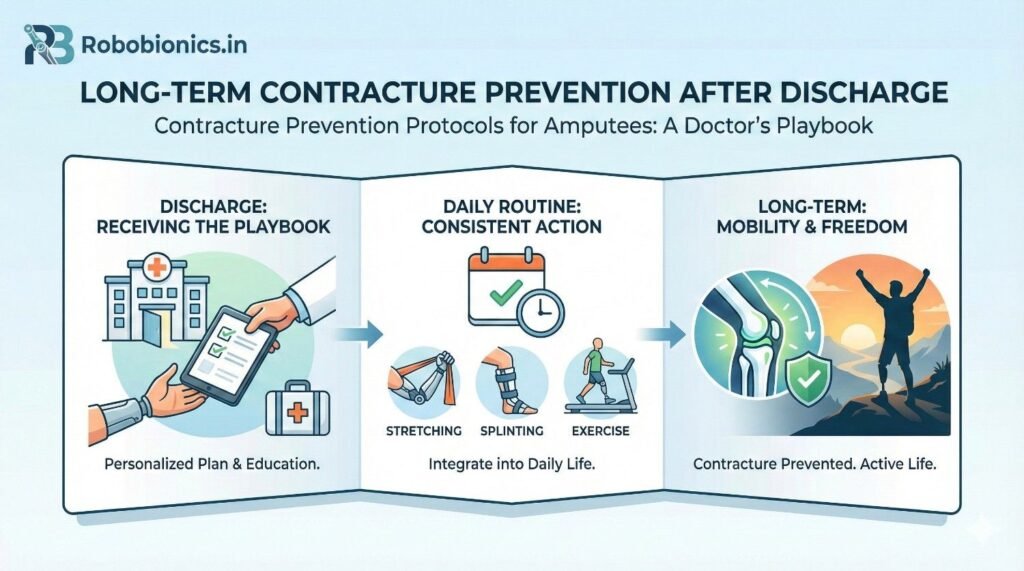
Contracture prevention does not end when the patient leaves the hospital. At home, routines change, supervision reduces, and comfort often becomes the priority again.
Patients may sit longer, skip exercises, or sleep in poor positions. Over weeks, these habits slowly undo early gains.
Doctors should prepare patients for this risk before discharge.
Long-term success depends on routines that are easy to follow. Complex plans fail once supervision ends.
Short daily positioning periods, gentle stretches, and regular movement work better than long sessions done rarely.
Doctors should help patients fit these habits into normal life.
Follow-up visits should include joint movement checks, not just wound or prosthetic review. Early stiffness often appears weeks after discharge.
Reinforcing correct habits during these visits keeps prevention active.
What doctors check is what patients maintain.
Once a prosthesis is fitted, patients may believe the risk is over. In reality, new risks appear.
Poor socket fit, fear of falling, or fatigue can reduce joint movement. Some patients walk with compensations that reinforce stiffness.
Doctors should remain alert during this phase.
A socket that limits movement or causes pain encourages avoidance of full joint use. Over time, this avoidance leads to stiffness.
Early reporting and adjustment prevent this cycle.
Doctors should encourage patients to speak up early.
Good prosthetic training promotes full joint movement. Therapists teach proper gait or hand use that keeps joints moving through range.
Doctors should support gradual progression rather than rushing performance.
Quality of movement protects flexibility.
In upper limb amputees, shoulder stiffness often appears months later due to overuse or poor posture.
Patients may protect the shoulder unconsciously, limiting range.
Regular shoulder checks prevent late contractures.
Overuse of certain muscles and neglect of others creates imbalance. This imbalance pulls joints into shortened positions.
Simple daily stretches maintain balance.
Doctors should emphasize symmetry where possible.
Heavy or poorly balanced prostheses increase fatigue. Fatigue leads to reduced movement and guarded posture.
Addressing weight and fit helps maintain motion.
Comfort supports prevention.
Prolonged sitting encourages hip flexion contractures, especially in above-knee amputees.
Doctors should advise frequent position changes and occasional prone lying if safe.
Awareness prevents slow stiffness.
Poor gait patterns can reinforce knee bending or avoidance of extension.
Early correction through therapy prevents these patterns from becoming fixed.
Doctors should monitor gait, not just distance walked.
Reduced activity during illness or travel can quickly reduce joint range.
Patients should be warned that even short periods of inactivity matter.
Preparation prevents setbacks.
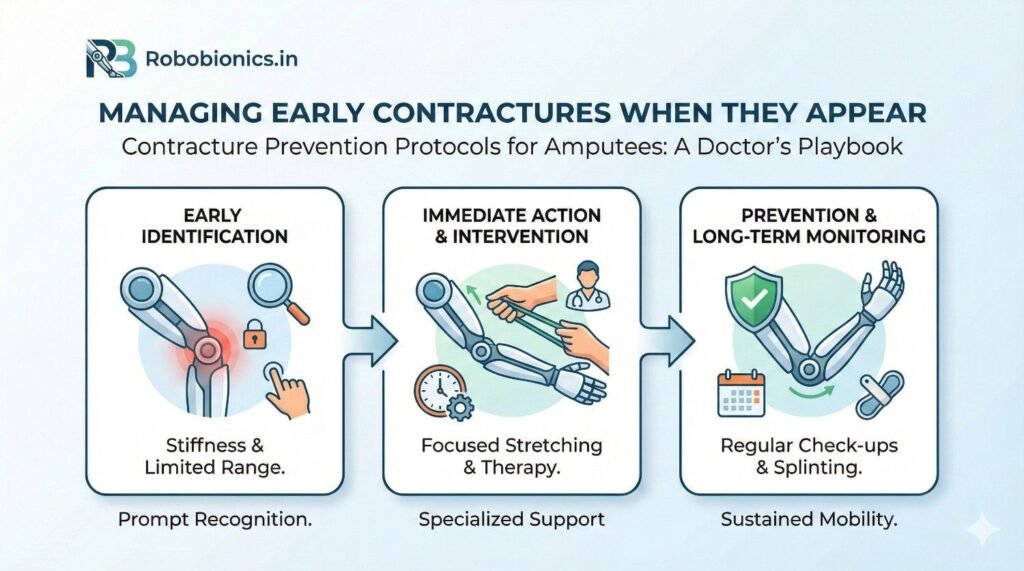
Despite best efforts, early contractures may still appear. This is not failure, but a signal to act.
Early stiffness often responds well to increased stretching and habit correction.
Doctors should address it promptly.
Increasing frequency rather than force is safer. Gentle, repeated stretching works better than aggressive sessions.
Doctors should guide therapists on safe progression.
Patience protects tissue.
Pain or discouragement often underlies poor compliance. Addressing these restores participation.
Doctors should ask why habits changed, not just instruct.
Understanding leads to solutions.
Older patients lose flexibility faster and recover slower. Even brief immobility can cause stiffness.
Doctors should be extra vigilant and simplify routines further.
Gentle consistency works best.
Stroke, spinal injury, or nerve damage increases contracture risk. Muscle tone changes complicate prevention.
These patients need closer monitoring and tailored plans.
Early specialist input helps.
Long admissions increase immobility risk. Prevention must be active throughout the stay.
Doctors should reset prevention plans after every complication.
Restarting is better than assuming continuity.
Success is not only about measured angles. Comfort, ease of movement, and confidence matter.
Patients who move freely and without fear are succeeding.
Doctors should value functional signs.
Perfect adherence is rare. Consistent effort over time matters more.
Doctors should encourage progress, not punish lapses.
Support sustains behavior.
Patients care about walking, working, or daily tasks. Linking prevention to these goals improves motivation.
Doctors should connect flexibility to real-life outcomes.
Meaning drives action.
Doctors should glance at limb position, ask about movement, and observe joint range briefly.
These quick checks signal importance.
Attention prevents neglect.
Document joint positions, movement tolerance, and education given. This keeps prevention visible.
Clear notes support continuity.
What is written gets followed.
Reinforce positioning, movement, and the reason behind them. Repetition is not wasted.
Patients remember what is repeated.
Consistency builds habits.
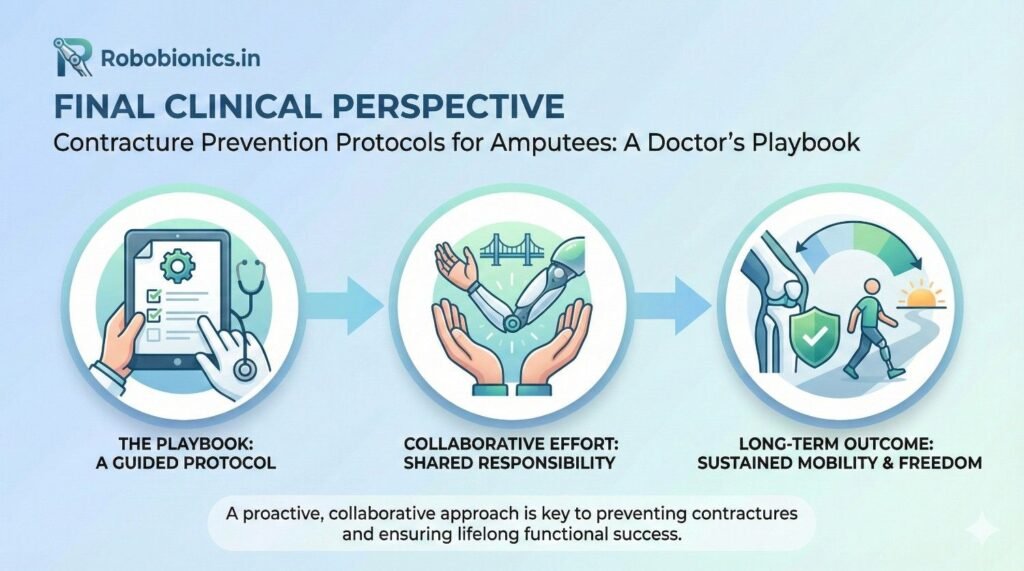
Prevention is not the therapist’s job alone. Doctors, nurses, patients, and families all play roles.
Doctors set the tone and priorities.
Leadership shapes outcomes.
A few minutes each day in early stages prevents months of correction later.
This effort protects function, dignity, and morale.
Prevention is efficient care.
Flexible joints allow better prosthetic fit, smoother movement, and less pain.
When doctors protect motion, they protect independence.
For many clinicians, the surgery is only the first step. What happens after the operation

For trauma amputees, the journey does not begin at the prosthetic clinic. It begins much

Amputation after cancer is not just a surgical event. It is the end of one

When a child loses a limb, the challenge is never only physical. A child’s body