
Post-Op Follow-Up Schedule That Prevents Prosthetic Delays (For Clinicians)
For many clinicians, the surgery is only the first step. What happens after the operation



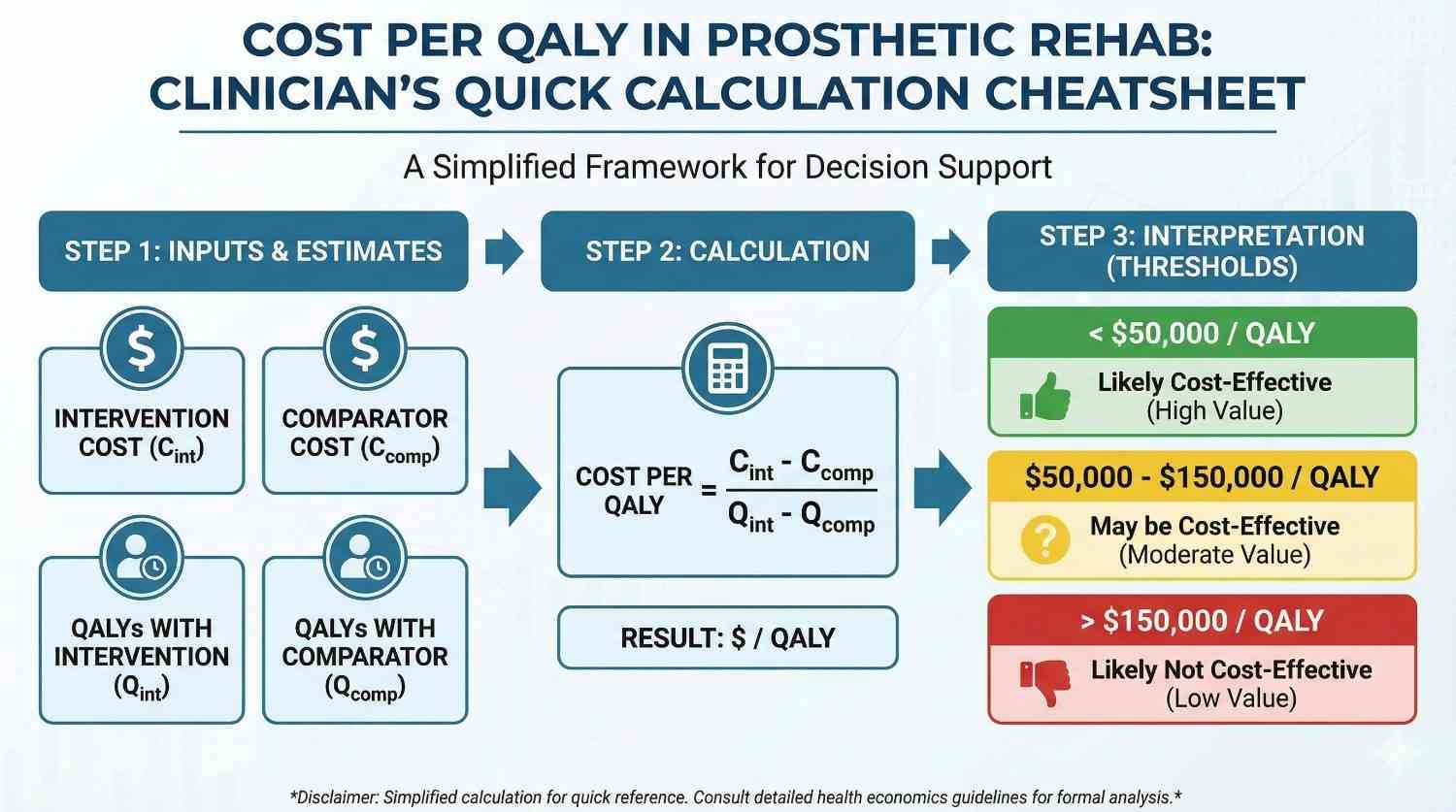
Cost per QALY sounds like something meant for economists, not busy clinicians. But in prosthetic rehabilitation, this single idea can quietly improve how you choose devices, plan rehab, and explain value to patients, hospitals, and funders. When understood simply, it becomes a practical thinking tool rather than a complex formula.
This article is written for clinicians who want a fast, clear way to estimate value in prosthetic rehab without getting lost in math. We will break down cost per QALY in plain language, show how it applies to real prosthetic cases in India, and offer a quick calculation cheatsheet you can actually use in clinics and case discussions. The aim is not academic perfection, but better everyday decisions.

Many prosthetic cases look successful on paper because the wound heals, the device fits, and rehab is completed.
However, real value is only seen when the patient’s daily life truly improves over time.
Cost per QALY helps clinicians connect clinical effort with long-term life improvement.
It shifts focus from short-term success to lasting benefit.
Prosthetic rehab is not a single event but a long journey.
Costs are spread across devices, therapy, follow-ups, and adjustments.
Outcomes also unfold slowly as patients adapt and regain confidence.
QALY thinking captures this long arc better than one-time measures.
Hospitals, insurers, and donors increasingly ask about value, not just outcomes.
Cost per QALY gives clinicians a simple way to explain why a choice makes sense.
It turns clinical intuition into structured reasoning.
This strengthens your voice in multidisciplinary decisions.
A QALY combines two ideas that clinicians already understand well.
First is quality of life, meaning how good or useful life feels to the patient.
Second is time, meaning how long that quality level lasts.
One QALY equals one year of life in perfect health.
Most prosthetic patients do not reach perfect health.
If a patient lives one year at half the quality of perfect health, that equals 0.5 QALY.
Two such years together equal one full QALY.
This makes QALY flexible and realistic.
Rehab outcomes are gradual and variable.
Patients improve step by step, not instantly.
QALY allows you to reflect partial gains honestly.
It respects both progress and limitation.
Cost per QALY simply asks how much money was spent to gain one unit of quality life.
It divides total cost by total QALYs gained.
The result shows value, not just expense.
Lower cost per QALY usually means better value.
Many clinicians fear that QALY is used to deny treatment.
In practice, it is meant to compare options, not restrict care.
It helps identify which path delivers more benefit for the same effort.
Used correctly, it supports better care choices.
You do not need perfect data to use cost per QALY.
Reasonable estimates are enough for clinical decision-making.
The goal is direction, not exact numbers.
This is why a cheatsheet approach works well.
Start with all costs directly linked to the patient’s rehab journey.
This includes surgery, prosthetic device, rehab sessions, and follow-ups.
It should also include major repairs or refits expected early on.
Ignoring known costs weakens the estimate.
You do not need accounting-level detail.
Use average hospital costs or package rates where available.
For prosthetics, use realistic market prices rather than list prices.
Consistency matters more than precision.
In India, patients often pay out of pocket.
Clinicians should consider what is actually spent, not what is billed.
This makes QALY discussions more honest and patient-centered.
Reality-based costing builds trust.
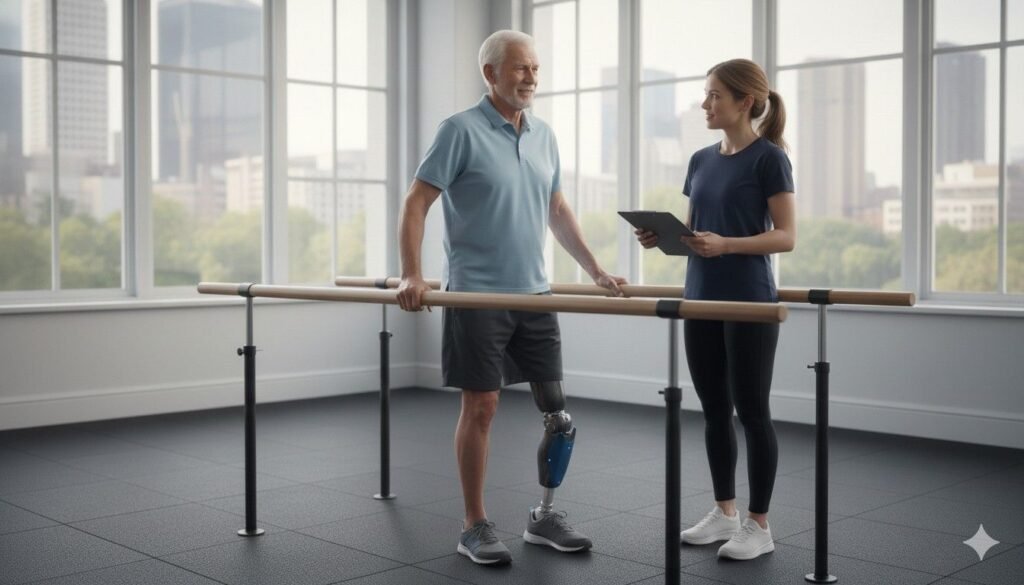
Quality of life is best understood through daily activities.
Can the patient walk safely, work reliably, and manage self-care?
Does pain reduce, and confidence improve?
These questions guide your estimate.
You can think in simple fractions instead of complex questionnaires.
For example, life improving from very limited to moderately independent may be a 0.3 to 0.5 gain.
These are judgment calls, not exam answers.
Clinical experience matters here.
It is tempting to assume best-case outcomes.
However, realistic estimates lead to better decisions.
Consider likely adherence, environment, and support.
Balanced judgment improves credibility.
A small improvement lasting many years can outweigh a big improvement lasting one year.
Duration is a critical part of QALY thinking.
Clinicians should estimate how long benefits are likely to last.
This depends on device durability and patient use.
For adults, five to ten years is a reasonable planning horizon.
For elderly patients, shorter durations may be realistic.
For children, reassessment is needed as they grow.
Time assumptions should match patient profile.
Not all benefits stay constant.
Some patients improve further, while others decline due to comorbidities.
You can average expected quality over time.
This keeps estimates grounded.
First, estimate total cost over the benefit period.
Second, estimate average quality of life gain per year.
Third, multiply quality gain by years to get QALYs.
Finally, divide cost by QALYs gained.
Suppose rehab costs ₹3 lakh in total.
If quality of life improves by 0.4 and lasts five years, that equals 2 QALYs.
₹3 lakh divided by 2 gives ₹1.5 lakh per QALY.
This number helps compare options.
Cost per QALY is most useful when comparing two paths.
For example, basic prosthesis versus advanced prosthesis.
The option with lower cost per QALY usually delivers better value.
Relative thinking is the key.
Patients often struggle to choose between options with different costs.
Explaining value in terms of life improvement over time helps clarity.
It shifts the discussion from price to benefit.
Patients feel more informed and respected.
Families worry about money and outcomes together.
Cost per QALY helps explain why a higher upfront cost may still be wiser.
It frames spending as investment in life quality.
This reduces regret later.
When clinicians explain decisions using QALY logic, alignment improves.
Rehab teams understand why certain intensity levels are chosen.
Administrators see structured reasoning.
Communication becomes smoother.
QALY is a guide, not a precise measurement.
Overprecision creates false confidence.
Simple, honest estimates work best.
Clinical judgment remains central.
Environment, family support, and work demands affect outcomes strongly.
Ignoring these leads to inflated QALY estimates.
Clinicians should include social reality in their thinking.
This improves accuracy.
Device abandonment or poor rehab adherence reduces QALYs sharply.
If risk of failure is high, expected QALY should be lower.
Being realistic protects patients and programs.
Risk awareness improves value.
When clinicians compare a basic prosthesis with a more advanced option, the first reaction is often to focus on the price difference.
A basic device may cost much less upfront, but it often delivers limited function, shorter daily wear time, and lower confidence in real-world use.
An advanced prosthesis may cost more initially, yet it can improve stability, reduce effort, and support fuller participation in work and social life.
Cost per QALY helps clinicians step back and ask which option delivers more meaningful life improvement over time for the money spent.
Quality of life gains are rarely equal across prosthetic choices.
A basic device might raise quality from very low to slightly better, while an advanced device may raise it from limited to moderately independent.
Even if the quality gain difference seems small in numbers, over several years it can translate into a large QALY gap.
This is why some higher-cost devices end up having a lower cost per QALY than cheaper alternatives.
Clinicians often overestimate how much patients use a basic prosthesis.
Discomfort, fear, or frustration may limit use to a few hours a day or only specific tasks.
Advanced devices that are more comfortable and intuitive are usually worn longer and used in more situations.
Higher wear time increases actual quality of life gain and improves QALY outcomes.

Rehab intensity decisions also affect cost per QALY significantly.
Low-intensity rehab costs less upfront but may lead to slower progress, poor technique, and lower confidence.
Structured rehab costs more initially but often produces faster and more durable functional gains.
QALY thinking helps clinicians justify why investing in rehab can deliver better value over time.
Short rehab programs may appear efficient, but they sometimes shift burden to later stages.
Patients may return with pain, poor gait, or device misuse that requires additional visits.
Longer, well-planned rehab can stabilize function early and reduce later costs.
This extended benefit improves total QALYs gained from the initial investment.
Not every patient benefits equally from high-intensity rehab.
Clinicians should adjust expectations based on age, motivation, and social support.
Overestimating benefit leads to inflated QALY estimates.
Realistic matching protects both value and patient trust.
Limb salvage versus amputation is one of the most complex decisions in orthopaedics.
Both paths involve high cost, long timelines, and uncertain outcomes.
QALY helps compare these paths in terms of life quality over years, not just immediate surgical success.
This broader view often clarifies difficult choices.
Successful limb salvage may preserve anatomy but still leave pain, stiffness, or limited function.
Quality of life outcomes vary widely and are difficult to predict early.
When salvage fails, patients may still require amputation later, reducing total QALYs gained.
Clinicians should reflect this uncertainty in their estimates.
Prosthetic rehab often offers more predictable functional outcomes.
While emotional adjustment takes time, many patients achieve stable independence.
Quality gains may be more consistent across patients.
This predictability improves cost per QALY reliability in planning.
Walking conditions, housing, and work environments in India are demanding.
Uneven surfaces and crowded spaces affect real-world function.
Devices that perform well in labs may struggle in daily life.
Clinicians should adjust expected quality gains accordingly.
Financial pressure affects follow-up, rehab attendance, and maintenance.
Patients who cannot sustain costs may abandon devices early.
This sharply reduces actual QALYs gained.
Honest discussion about affordability improves outcome prediction.
Family support plays a major role in rehab success.
Supportive families encourage use and follow-up.
Lack of support reduces confidence and consistency.
QALY thinking should include these social dimensions.
Cost per QALY provides a neutral framework for team discussions.
Surgeons, therapists, and administrators can align around shared value goals.
Disagreements shift from opinion to structured reasoning.
This improves care planning.
When seeking approvals or funding, clinicians can explain decisions clearly.
Instead of defending cost alone, they defend value delivered.
This approach resonates with payers and donors.
Clarity increases approval success.
Documenting QALY assumptions encourages better follow-up.
Clinicians can later reflect on whether expected gains were achieved.
This learning improves future estimates.
Experience refines judgment.
A young worker may need stable mobility for long hours.
An advanced prosthesis may cost more but support sustained employment.
Quality gains over decades can be significant.
Cost per QALY often favors higher-function options here.
An elderly patient may value safety and comfort over performance.
A simpler prosthesis with focused rehab may deliver sufficient benefit.
Quality gains may be modest but appropriate.
QALY helps avoid over-investment.
Limited access reduces benefit duration and quality.
Simpler, durable solutions may perform better in reality.
Clinicians should lower expected QALYs for complex options.
This protects both patient and program.

Clinicians do not need exact QALY figures.
Thinking in ranges helps guide decisions.
Comparing options directionally is often enough.
Confidence grows with practice.
Young clinicians benefit from early exposure to value thinking.
Discussing cases in QALY terms builds balanced judgment.
This prepares them for modern healthcare practice.
Teaching improves consistency.
QALY is useful after decisions as well.
Reviewing outcomes helps improve future choices.
Reflection strengthens clinical wisdom.
Value thinking matures over time.
Think of cost per QALY as a balance between three things you already assess every day: how much you spend, how much life improves, and how long that improvement lasts.
Whenever you face two treatment options, pause and mentally compare these three elements rather than focusing only on price or function.
This habit alone can change how clearly you see value in prosthetic rehab decisions.
You do not need numbers on paper every time; structured thinking is often enough.
First, ask what the total cost of the option will be over the period the patient is likely to use it.
Second, ask how much the patient’s daily life is likely to improve in a realistic, not ideal, scenario.
Third, ask how many years this improvement is likely to last given age, health, and support.
Fourth, ask how confident you are that this outcome will actually happen.
In busy OPDs, clinicians can use broad ranges instead of exact values.
For example, think in terms of small, moderate, or large quality gains and short, medium, or long durations.
When one option clearly offers more improvement for similar cost, the choice becomes obvious.
This fast method keeps QALY thinking practical.
Patients often fixate on the initial price of a prosthesis or rehab plan.
Clinicians can gently redirect the discussion toward what the patient will be able to do each day and for how long.
Explaining that a choice affects years of comfort, work, and independence helps patients think beyond the bill.
This approach builds trust and reduces later regret.
Instead of saying quality-adjusted life years, talk about easier walking, safer movement, or less dependence.
Relate these improvements to time, such as five or ten years of daily use.
Patients understand stories better than formulas.
Simple language strengthens understanding.
Families often worry about affordability and sustainability.
Clinicians can explain how some choices reduce future problems and hospital visits.
This framing shows that spending is not just cost, but prevention.
Families feel more comfortable supporting the decision.
When comparing two options, imagine a simple mental table.
On one side is total cost over time, and on the other side is total life improvement over time.
The option that gives more life improvement for similar or lower cost usually has a better cost per QALY.
This mental table avoids overthinking.
Some options cost more but deliver much larger and longer-lasting benefit.
In such cases, cost per QALY may still be lower than cheaper alternatives.
Clinicians should not shy away from these options when value is clear.
Confidence comes from structured reasoning.
Not all patients need the highest technology or longest rehab.
When goals are limited and duration short, simpler options may deliver adequate value.
QALY thinking protects against over-treatment.
Appropriateness matters.
If follow-up, rehab attendance, or maintenance is unlikely, expected QALYs drop sharply.
High-cost options in such cases often deliver poor value.
Clinicians should be cautious and adjust recommendations.
Realism protects patients.
When a treatment demands major effort for minimal daily improvement, value suffers.
Patients may feel disappointed even if technically successful.
Low QALY outcomes are common in such scenarios.
Honest counseling is essential.
If benefit is likely to last only a short time, high-cost interventions may not be justified.
QALY thinking helps align care with life stage.
This avoids unnecessary burden.
Compassion includes restraint.

Cost per QALY gives teams a shared framework.
Surgeons, therapists, and administrators can discuss value using the same language.
This reduces conflict and speeds decisions.
Alignment improves care quality.
Payers and donors often ask why certain choices are recommended.
QALY-based explanations show structured thinking and responsibility.
This improves credibility and approval chances.
Value-based narratives resonate.
When teams reflect on QALY outcomes, pathways improve.
Low-value steps can be redesigned or removed.
High-value interventions get reinforced.
Continuous improvement becomes possible.
Cost per QALY is not meant to turn doctors into economists.
It is meant to give clinicians a simple, honest way to think about value over time.
In prosthetic rehab, where costs are high and outcomes unfold slowly, this thinking is especially powerful.
It helps you protect patients from poor long-term choices while supporting sustainable care.
At RoboBionics, we work closely with clinicians across India and see how thoughtful value-based decisions change lives.
When cost, quality, and time are considered together, prosthetic rehab becomes clearer, fairer, and more patient-centered.
For many clinicians, the surgery is only the first step. What happens after the operation

For trauma amputees, the journey does not begin at the prosthetic clinic. It begins much

Amputation after cancer is not just a surgical event. It is the end of one

When a child loses a limb, the challenge is never only physical. A child’s body