Post-Op Follow-Up Schedule That Prevents Prosthetic Delays (For Clinicians)
For many clinicians, the surgery is only the first step. What happens after the operation



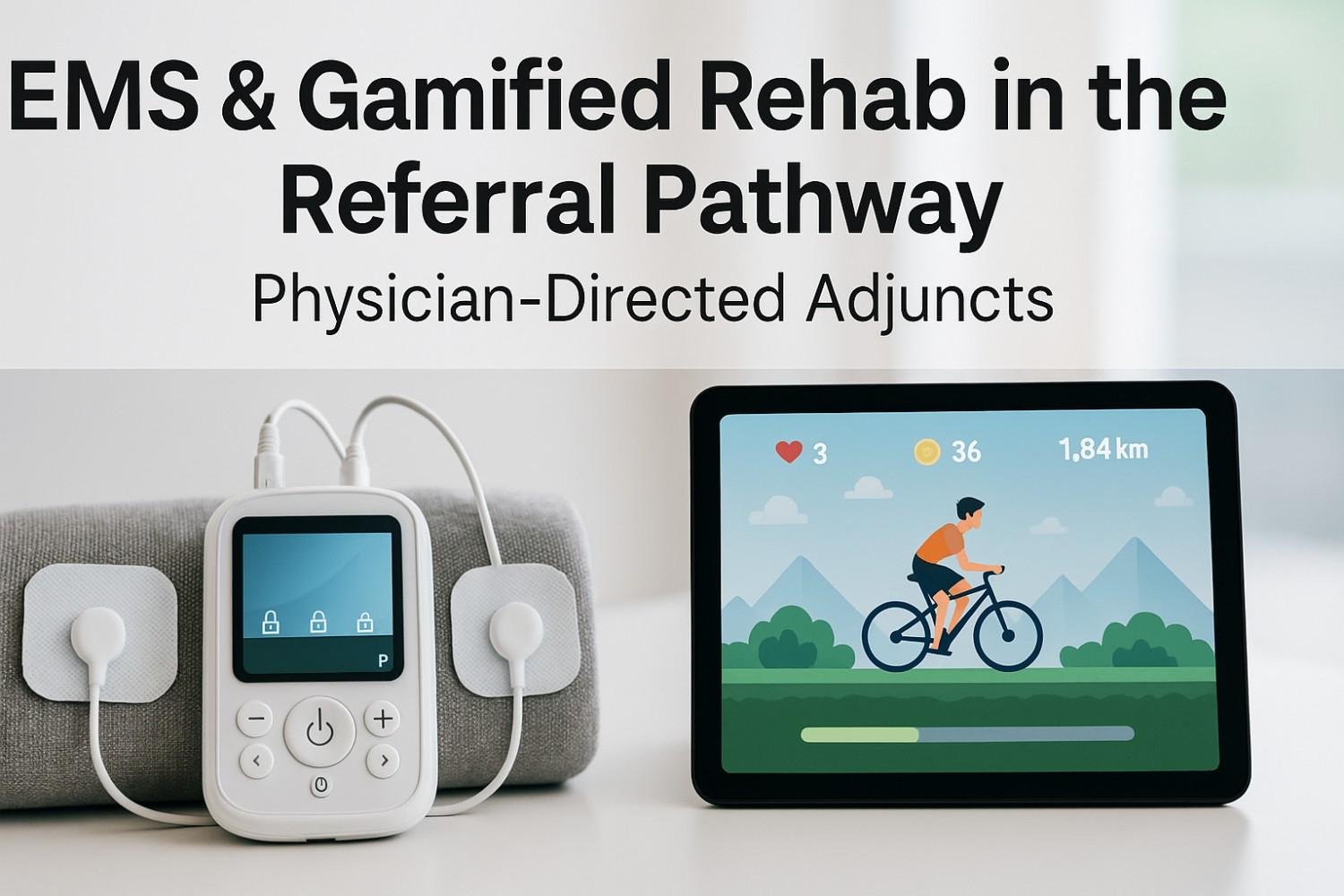
Before a patient reaches the stage of prosthetic fitting, their muscles, nerves, and confidence must all work together. This is often the part of care that doctors wish they could strengthen early, because the right preparation makes the entire journey smoother. Two tools that help in a powerful way—yet are often overlooked—are electronic muscle stimulation (EMS) and gamified rehabilitation. When guided by a physician, these tools prepare the limb, sharpen muscle signals, and build motivation long before the prosthesis is fit.
Many Indian patients arrive with weak muscles, low endurance, or fear about movement. Some feel disconnected from their limb after surgery. EMS helps wake the muscles gently. Gamified rehab helps rebuild movement through simple, enjoyable digital tasks. When used early, these tools make a major difference in how easily the patient adapts to a prosthesis.
This guide explains how physicians can use EMS and gamified rehab inside the referral pathway to improve outcomes, build stronger limb control, and create a more confident start to the prosthetic journey.
After an amputation, the muscles around the limb often become quiet. They shrink from lack of use. They lose tone. They forget how to contract with strength. This weakness makes it harder for the patient to control a future myoelectric prosthesis.
EMS gently activates these quiet muscles. It sends small electrical pulses that help the muscle remember how to work. Over time, the muscle becomes stronger and more responsive. This early stimulation makes the limb more prepared for signal training later.
A more active muscle leads to smoother prosthetic control.
Muscles that stay inactive become soft and small. When this happens, the shape of the limb becomes uneven. This uneven shape can create challenges during casting and fitting. A limb with better muscle tone creates a more stable foundation for a socket.
EMS helps slow down muscle loss. It keeps the tissue firm. It maintains muscle shape in a way that benefits both the prosthetist and the patient. The limb looks and feels more stable.
Stable muscle shape supports stable socket fitting.
After surgery, nerves need time to settle. They may fire irregularly. They may send unclear signals. EMS helps retrain the pathway between the nerve and muscle. It reminds the body how to coordinate contractions.
This improved communication becomes important later when the patient starts myoelectric training. With stronger nerve–muscle feedback, the patient feels more in control. They understand the limb better. They move with more confidence.
Better communication builds better control.
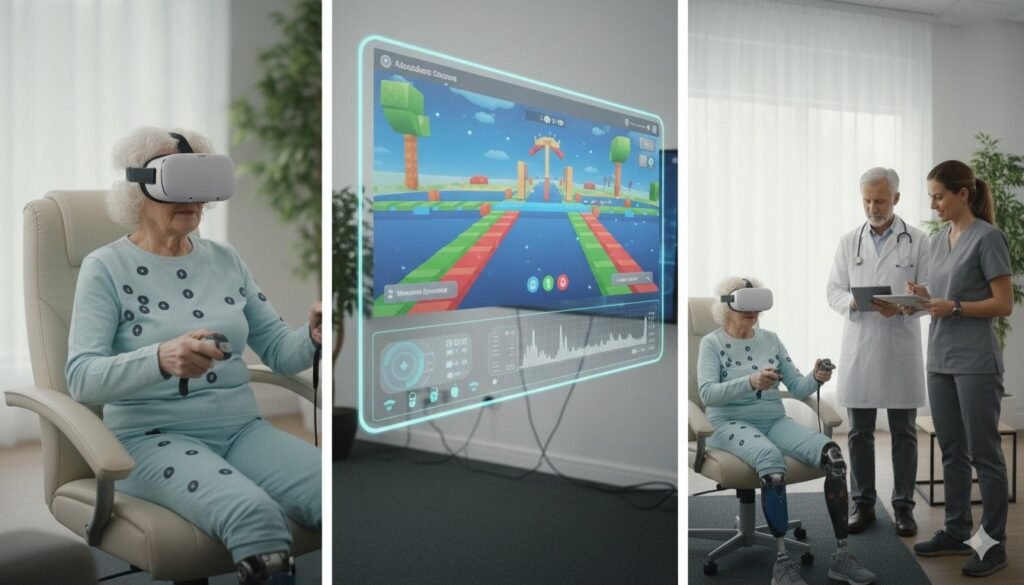
Many patients feel scared to move after surgery. They fear pain, swelling, or making a mistake. Gamified rehab reduces this fear. Games create a safe space where the patient can move gently, follow simple goals, and enjoy small wins.
These small wins slowly rebuild confidence. The patient sees progress on the screen. They feel movement in their body. They begin to trust their limb again. This emotional shift makes the prosthetic journey smoother.
Games transform fear into motivation.
A prosthesis requires coordination. The patient must learn timing. They must learn control. They must learn to move in new ways. Games help practice these skills in a fun and low-pressure environment.
Simple digital tasks guide the patient to lift, rotate, or stabilize the limb. These movements prepare their joints and muscles before fitting. They also build better balance and rhythm.
Coordination becomes easier through repeated, enjoyable practice.
Many patients lose interest in traditional exercises. They feel bored or overwhelmed. Gamified rehab keeps the mind active. It gives them goals. It celebrates progress. It keeps them curious about the next session.
This mental engagement encourages longer rehab sessions. When the mind enjoys the activity, the body benefits more. The patient sticks with the program. They build stronger habits.
Mental engagement leads to better physical outcomes.
Myoelectric prostheses rely on clear muscle signals. Weak muscles create weak signals. These weak signals make training difficult for both the patient and the prosthetist. Early EMS changes this outcome.
By stimulating the muscles before training begins, the patient enters signal training with stronger baseline contractions. The prosthetist receives cleaner data. The patient feels more in control.
This preparation shortens the learning curve.
Early movement training can feel tiring. The limb may feel heavy. The muscles may fatigue quickly. EMS helps reduce this strain by building a stronger muscular foundation first.
When the muscles are more conditioned, early exercises feel lighter. The patient completes more repetitions. Their confidence grows because they do not feel overwhelmed by fatigue.
The entire process becomes smoother, gentler, and more successful.
Not all muscles respond equally after an amputation. Some remain active. Some become dormant. EMS helps identify which muscles respond easily and which need more attention.
For the physician, this information shapes the referral plan. For the prosthetist, it helps design training around the strongest muscle groups. For the patient, it gives clarity on how their body is adapting.
Knowing the strong muscles makes targeted training easier.
A well-shaped limb supports a more comfortable socket. Weak muscles make the limb soft and unstable. Strong muscles create a smoother surface and more predictable contours.
EMS helps build and maintain this strength. Over several weeks, the patient sees the limb becoming firmer and more stable. This improved shape speeds up the casting stage and reduces the need for repeated adjustments.
A firm limb is a prosthetist’s ideal starting point.
Swelling is common after surgery. In some patients, it stays longer than expected. EMS creates a gentle pumping action in the muscles, helping move fluid away from the limb. This reduces swelling naturally.
A limb with controlled swelling behaves better during socket casting. It also makes early gait or upper-limb training safer.
Swelling control is a key milestone before referral.
Some patients develop hypersensitivity in the residual limb. Even light touch may feel uncomfortable. EMS can help by stimulating the area gently and repeatedly. This reduces nerve overreactivity and calms sensitivity.
When the limb becomes less sensitive, the patient handles casting, shaping, and fitting with more ease. Their emotional comfort improves too.
Reduced sensitivity builds readiness.
Before a prosthesis, the patient must relearn how to move freely. But many fear injuring their limb. Gamified rehab helps them try new movements in a controlled way. The game guides them. The device supports them. No movement feels dangerous.
This creates a safe learning space. The patient experiments more freely. They discover new strengths. They overcome hesitation.
Safety encourages exploration.
Body awareness often fades after surgery. Patients may not know how much force to use. They may not understand their balance. They may misjudge distances. Games help rebuild this awareness gently.
The screen responds to their movements. Points appear. Tasks complete. Feedback becomes instant. The patient adjusts their motion based on what they see.
This helps them build accurate movement patterns faster.
Rehab can feel long. It can feel tiring. It can feel repetitive. Gamified rehab brings a spark of joy back into the process. Each session feels purposeful. Each score feels rewarding.
This steady sense of achievement helps the patient stay emotionally strong. Resilience grows with each small victory. This emotional readiness is essential before a prosthesis is introduced.
Resilience shapes the patient’s entire recovery.
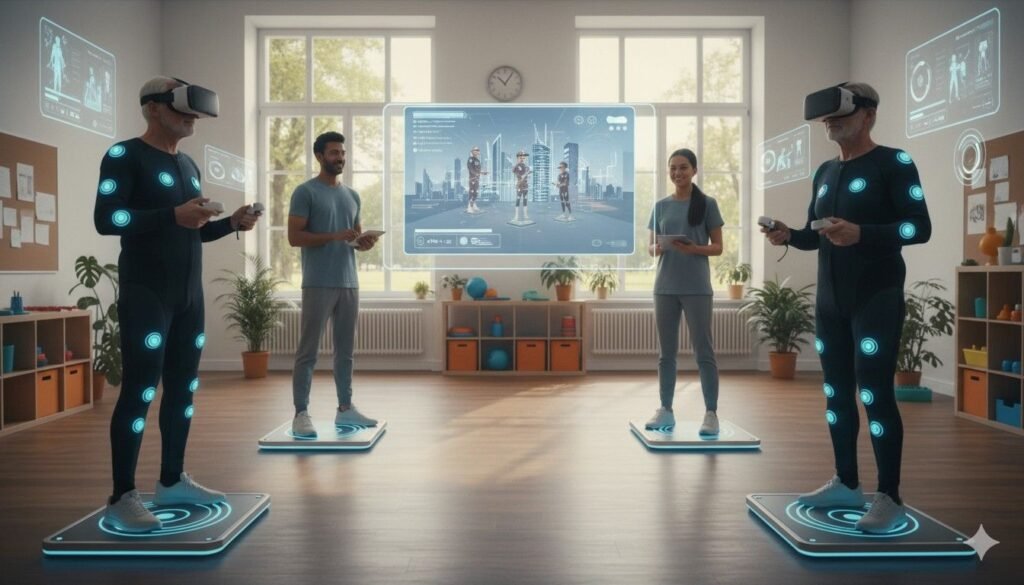
EMS and gamified rehab are powerful tools, but they must be directed properly. The physician understands the patient’s medical condition, wound status, circulation, and pain patterns. This knowledge ensures safe usage.
Without guidance, the patient may overstimulate the limb or choose movements that strain tissues. Physician oversight keeps the process balanced and aligned with healing.
Medical direction ensures safety.
Every patient is different. Some have strong muscle tone. Some have none. Some feel confident. Others feel frightened. The physician must assess these factors before choosing when to start EMS or gamified exercises.
Starting too early risks irritation. Starting too late slows progress. When the physician chooses the right moment, the patient benefits from optimal timing.
Good timing shapes better outcomes.
Muscle strength, signal clarity, coordination, and emotional response all change over time. Physicians observe these patterns to update the plan. They increase EMS intensity slowly. They adjust rehab tasks based on comfort.
These small adjustments guide the patient gently toward better readiness for prosthetic training.
Monitoring is part of healing.
Many patients are afraid to move their limb after surgery. They feel unsure about the strength of their muscles. They fear pain. They worry that movement may harm the wound. EMS helps them begin gently. It activates the muscle without asking the patient to exert effort.
When they see their limb move from EMS support, their confidence grows. They realize their body is still capable. This makes it easier for them to start simple motion tasks. Their fear reduces because movement no longer feels risky.
Confidence begins when the body responds safely.
Muscles need endurance for everyday prosthetic use. Whether it is opening a myoelectric hand, stabilizing a socket, or maintaining posture, muscles work throughout the day. Without early strengthening, these muscles fatigue quickly.
EMS builds endurance gradually. It conditions the limb before regular exercises begin. When the patient starts more active training, they feel less tired. Their body handles more repetition without strain.
Strong endurance makes transition to prosthetic control smoother.
Some patients struggle with voluntary contractions. They try to move, but the muscle remains quiet. This creates frustration. EMS bypasses this hurdle by initiating contraction for them. Over time, the brain begins to associate the electrical pulse with the movement.
This builds a mind–muscle connection slowly and safely. Eventually, the patient learns to contract the muscle voluntarily. This early assistance makes myoelectric training less intimidating later.
Assisted beginnings lead to independent control.
Traditional exercises can feel repetitive and tiring. Many patients lose interest and skip sessions. When they lose consistency, their muscles weaken, and their confidence drops. Gamified rehab changes this cycle.
Games capture attention. They give patients goals, scores, and visual progress. Each session feels different from the last. This variety keeps them engaged for longer sessions. Over time, consistent participation builds strength and skill.
Engagement is the fuel for consistent rehab.
Repetition is essential for recovery. Muscles learn through practice. Nerves adapt through repetition. But repetition without interest becomes a burden. Gamified rehab solves this by hiding repetition inside enjoyable tasks.
Patients do the same movement many times, but they focus on the game, not the exercise. The repetition happens naturally. Their body learns, adapts, and strengthens without emotional strain.
Repetition feels lighter when it feels fun.
Patients often miss subtle changes in their body. When improvement is slow, they assume nothing is happening. Gamified rehab makes progress visible. A higher score, a smoother movement, or a faster reaction becomes clear evidence.
These small achievements give emotional momentum. When patients see progress on the screen, they feel hopeful. They believe in the journey. They remain committed.
Small wins build long-term motivation.
A myoelectric prosthesis needs clean electrical signals from the limb. If the signals are weak or noisy, the device will not respond well. This creates frustration for both the patient and the clinician.
EMS improves signal clarity by training the muscle fibers to respond efficiently. Stronger fibers create stronger electrical activity. Over time, the signal becomes easier for the prosthetist to capture and interpret.
Clarity in early stages saves time in later training.
Learning to use a myoelectric prosthesis can be challenging. The patient must learn how hard to contract, how fast to respond, and how steady to hold the signal. With weak muscles, these tasks become difficult.
EMS strengthens the base. The patient enters myoelectric training with better muscle tone and clearer control. They learn faster because their muscles respond reliably.
A strong foundation simplifies advanced training.
After amputation, muscle patterns change. Some muscles take on new roles. Others become less active. EMS helps enforce new patterns that match future prosthetic demands.
By stimulating specific muscles, EMS guides the limb toward more functional movement. This targeted shaping creates a better match between the limb and the prosthetic system.
New patterns form when stimulation is steady and consistent.
Recovery does not depend only on muscle strength. It also depends on emotional strength. Patients who feel hopeful recover faster. Patients who feel discouraged move slowly. Gamified rehab supports emotional health by giving patients small, joyful experiences.
When they smile during a session, they relax. When they win a small challenge, they feel proud. These emotional shifts reduce anxiety and create a willingness to try harder.
Emotional readiness accelerates physical readiness.
Fear is common after an amputation. Patients fear pain. They fear infection. They fear the unknown. Gamified rehab provides a safe environment where they can move without risk. The game guides them. The tasks feel gentle. The feedback feels friendly.
This reduces fear. As fear fades, movement becomes easier. When movement becomes easier, rehab progresses faster.
Games calm the mind so the body can adapt.
Rehab is a long journey. Some days are easy. Some days feel heavy. Games provide consistency during ups and downs. Even on difficult days, a short game session lifts mood and restores confidence.
This ability to reset the emotional state is important. It prevents dropouts. It keeps the patient leaning forward. It teaches them how to stay motivated even when progress feels slow.
Resilience grows through joyful activity.
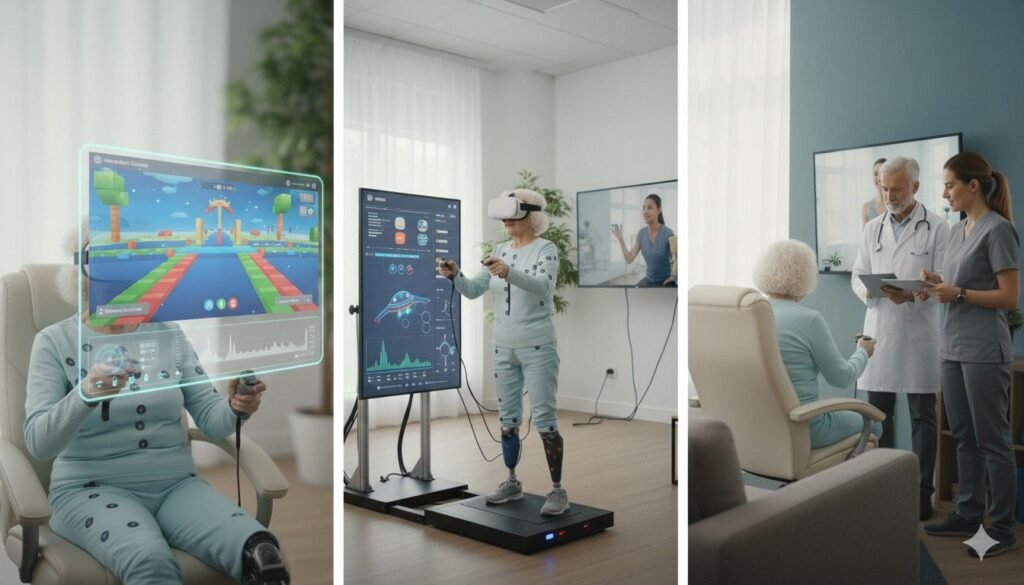
EMS strengthens the muscle. Gamified rehab strengthens the movement. Together, they create a complete preparation program. EMS builds power under the skin. Games build coordination in the brain. When used together, they support both body and mind.
This combination creates balanced readiness for the prosthetic stage. The patient enters fitting with stronger muscles, clearer signals, better coordination, and more confidence.
When tools work together, progress becomes smoother.
Timing matters. EMS can begin early, once the wound is stable and the physician approves stimulation. Gamified rehab can begin soon after, when movement becomes safe and comfortable.
Some physicians introduce both at the same time. Others start EMS first and add games later. The best timeline depends on the patient’s healing, emotional comfort, and limb sensitivity.
A flexible approach ensures safety.
Without guidance, the patient may overuse EMS or choose game tasks that strain the limb. Physician oversight keeps the plan safe. It ensures the patient progresses gradually. It ensures the tools support healing, not harm.
A structured approach creates predictable progress and avoids setbacks.
Guided use is protected use.
Patients often focus only on their limb—how it feels, how it heals, how it moves. But emotional readiness is just as important. A patient who feels calm, hopeful, and curious learns faster. A patient who feels anxious or lost may hesitate, even when their limb is strong enough.
EMS helps by creating early success. Gamified rehab helps by creating positive engagement. Together, they give patients moments of achievement. These moments rebuild confidence one step at a time.
When emotion steadies, the entire journey becomes smoother.
Some patients avoid touching or moving their limb because they fear pain or harm. When EMS creates gentle contractions, the patient sees the limb respond without effort. This gives them reassurance. They learn that the limb is safe to engage with.
This small realization lowers anxiety. When fear decreases, the patient participates more fully in the rehab pathway. They approach therapy with less doubt and more trust.
Relief creates space for progress.
Many patients worry they will not succeed with a prosthesis. They fear they will fail training or frustrate the clinician. Gamified rehab gives them control. Each game they complete, each score they improve, each movement they practice builds a sense of involvement.
This involvement becomes emotional investment. The patient begins to care about their progress because they see themselves improving in real time.
Engagement builds ownership of the journey.
The limb contains many muscles, but not all are equally important for prosthetic control. Some muscles generate useful signals. Some stabilize the limb. Some help refine movement. EMS helps target these groups with precision.
By stimulating specific muscles, the physician directs growth where it matters most. The patient gains functional strength instead of random activation. This targeted growth speeds up training and reduces early frustration.
Strong, purposeful muscles support effective prosthetic use.
After an amputation, certain muscles may overwork while others become inactive. This imbalance creates uneven movement and poor control. EMS corrects this imbalance by activating weaker areas.
As the weaker muscles strengthen, the limb becomes more balanced. This balance improves comfort during testing and lowers the risk of overuse pain. It also helps create more predictable signal patterns for myoelectric devices.
Symmetry leads to smoother movement.
Modern bionic hands, such as those made by leading Indian manufacturers, rely on distinct muscle activation patterns to switch between grips. These patterns require strength, timing, and precision. EMS prepares the limb by helping the muscle fibers respond evenly.
When the prosthetist trains the patient on grip control later, the task feels easier. Signals remain steady. The patient gains quicker mastery.
Preparation reduces friction during advanced training.
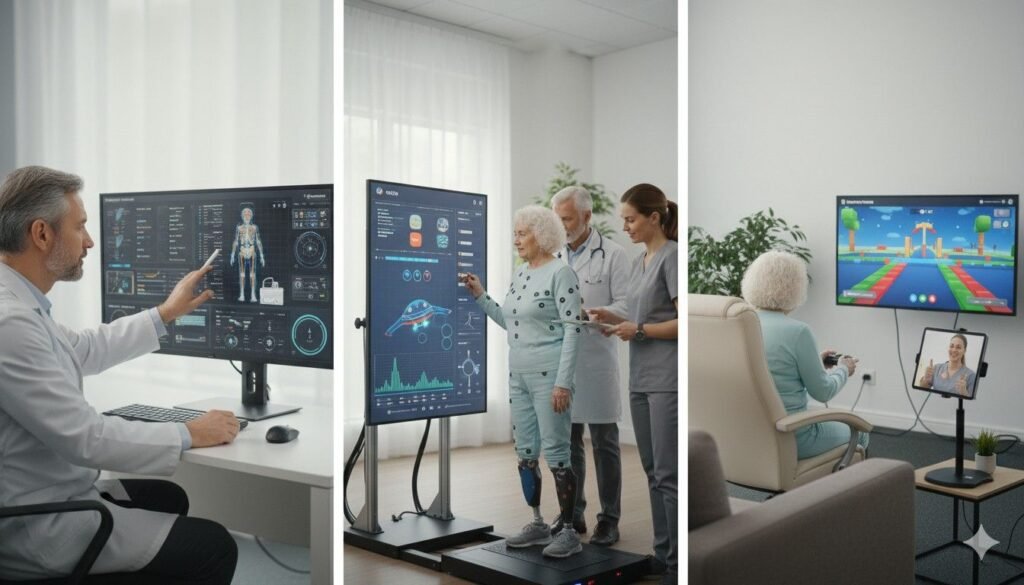
Even upper-limb users rely on body posture for smooth prosthetic control. Poor posture affects signal clarity. It strains muscles. It reduces accuracy during fine movements. Gamified rehab helps patients practice coordinated motions that improve posture naturally.
Games encourage reaching, rotating, and lifting in controlled ways. These movements re-align the shoulder, elbow, and torso. Over time, the patient gains better balance and alignment.
Good posture strengthens future control.
Motor planning is the brain’s ability to prepare and sequence movement. After surgery, this ability weakens because the patient avoids movement. Games help retrain motor planning gently.
Timed tasks, patterned motions, and on-screen cues encourage quick decisions. As reaction time improves, prosthetic learning becomes easier. The patient learns to anticipate movement instead of reacting slowly.
Better motor planning shortens the training phase.
Some patients tire quickly during traditional exercises. Repetition causes boredom. Effort feels heavy. But games feel lighter. They distract from fatigue by focusing on task completion rather than effort.
This helps the patient practice longer without feeling overwhelmed. More practice builds stronger neural pathways. These stronger pathways support smoother prosthetic control later.
Enjoyment extends endurance.
Timing EMS too early may irritate the limb. Starting too late may weaken early progress. The physician must judge the wound, skin quality, swelling, and pain. Once these stabilise, EMS becomes safe and effective.
The right moment allows the nerves to respond well and prevents overstimulation. When timed properly, EMS accelerates readiness for prosthetic control.
The physician’s timing protects long-term outcomes.
Gamified rehab begins when the patient can move comfortably without stressing the wound. It does not require perfect strength. It requires safety, calmness, and basic range of motion.
Once these conditions exist, games become a valuable tool. Starting early helps the patient overcome emotional barriers. Starting late slows engagement.
Proper timing shapes motivation and skill.
Some patients start EMS first. Some begin games first. Some begin both together. The physician must choose. A staged approach often works best—introducing one tool, watching progress, then adding the second.
This reduces overload and gives the patient time to adjust. It also helps identify which tool gives the strongest response in the early phase.
Staged pathways create steady progress.
Casting marks the beginning of socket creation. But if the limb is weak or unprepared, the fitting process becomes harder. Pre-prosthetic conditioning strengthens the limb and sharpens movement before casting begins.
EMS provides the power. Gamified rehab provides the coordination. Together, they create a limb that is ready to be shaped.
A conditioned limb improves socket comfort from day one.
Many patients feel surprised by how different a prosthesis feels the first time they use it. They feel pressure, weight, and new motion demands. Conditioning reduces this shock by preparing the muscles, nerves, and mind for these demands.
When the limb is ready, the early wearing phase becomes smoother. The patient feels less overwhelmed. They adapt with less frustration.
Conditioning softens the transition.
A strong limb handles long hours of prosthetic use better. It resists fatigue. It supports posture. It improves skin safety. Conditioning before referral builds resilience that lasts for months or years.
Patients who begin with a strong foundation often experience fewer issues later. They require fewer adjustments. They feel more satisfied with their device.
Conditioned limbs support long-term success.
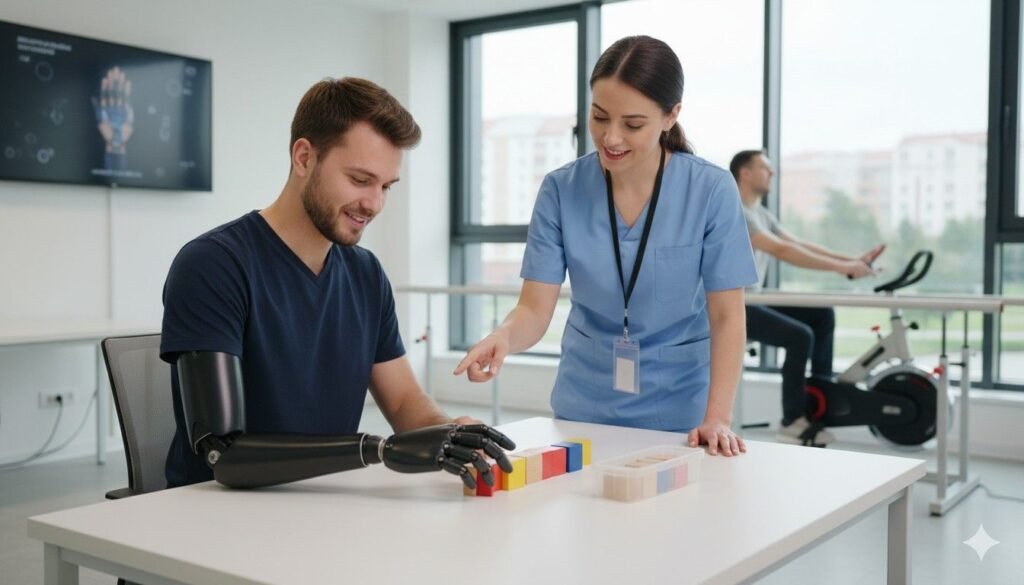
Some patients push themselves too hard. Others do too little. Both extremes slow recovery. Physician monitoring ensures the patient uses EMS and games in the right amounts.
When the physician sees signs of fatigue, they can adjust the level. When they see rapid improvement, they can increase difficulty. This creates balance in the patient’s pacing.
Balanced pacing supports healthy progress.
As the patient trains, their movement patterns change. Some patterns help. Others complicate future prosthetic control. Monitoring helps the physician catch these early.
If a pattern needs correction, the physician guides changes in the rehab routine. Early correction prevents habits that become difficult to change later.
Monitoring ensures quality of movement.
Some patients struggle silently. They may feel overwhelmed by the process. They may lose confidence. Monitoring helps catch these emotional dips early.
With a gentle conversation, the physician can reframe the journey. They can celebrate progress. They can reassure the patient that slow days are normal.
Emotional support helps the patient stay committed.
When patients see quick improvement—muscle activation from EMS, points rising in a game—they connect these wins to your guidance. They feel supported. They believe the process works.
This trust shapes the rest of the journey. It makes them more open to instructions. It helps them follow rehab routines more faithfully.
Trust grows through early progress.
Every patient experiences challenges—pain days, slow progress, emotional dips. When trust is strong, they do not panic. They do not withdraw. Instead, they discuss their concerns openly.
This openness helps you adjust the plan quickly. It also prevents emotional setbacks from turning into physical delays.
Trust becomes a steady anchor.
Once the prosthesis is introduced, the patient relies heavily on the care team. If trust is already built, acceptance becomes smoother. They follow training closely. They communicate issues early. They commit more fully.
Trust built through EMS and games becomes the foundation for a successful prosthetic future.
Strong relationships support strong outcomes.
EMS and gamified rehab do far more than build muscle or train movement. They shape the patient’s mindset. They strengthen confidence. They prepare the body and the mind for the complex journey of prosthetic use.
By adding these tools early, physicians create a smoother pathway. Muscles respond faster. Movements become easier. Fear decreases. Hope increases. The patient enters casting and fitting with a strong foundation rather than hesitation.
Preparation shapes everything that follows.
Physicians guide timing, intensity, and safety. They interpret the patient’s emotional state. They adjust the routine based on healing and readiness. Their decisions make EMS and gamified rehab not just helpful tools, but powerful allies.
When directed well, these tools reduce complications, shorten adjustment periods, and strengthen long-term prosthetic success.
Your guidance transforms tools into results.
A prosthesis does more than replace a lost limb. It restores independence, dignity, and identity. EMS and gamified rehab help patients start this journey with strength instead of fear.
Through your direction, the patient steps into fitting with courage. They approach training with readiness. They accept their new limb with confidence and hope.
A supported pathway creates a successful journey—one step, one contraction, one small victory at a time.
For many clinicians, the surgery is only the first step. What happens after the operation
For trauma amputees, the journey does not begin at the prosthetic clinic. It begins much
Amputation after cancer is not just a surgical event. It is the end of one

When a child loses a limb, the challenge is never only physical. A child’s body