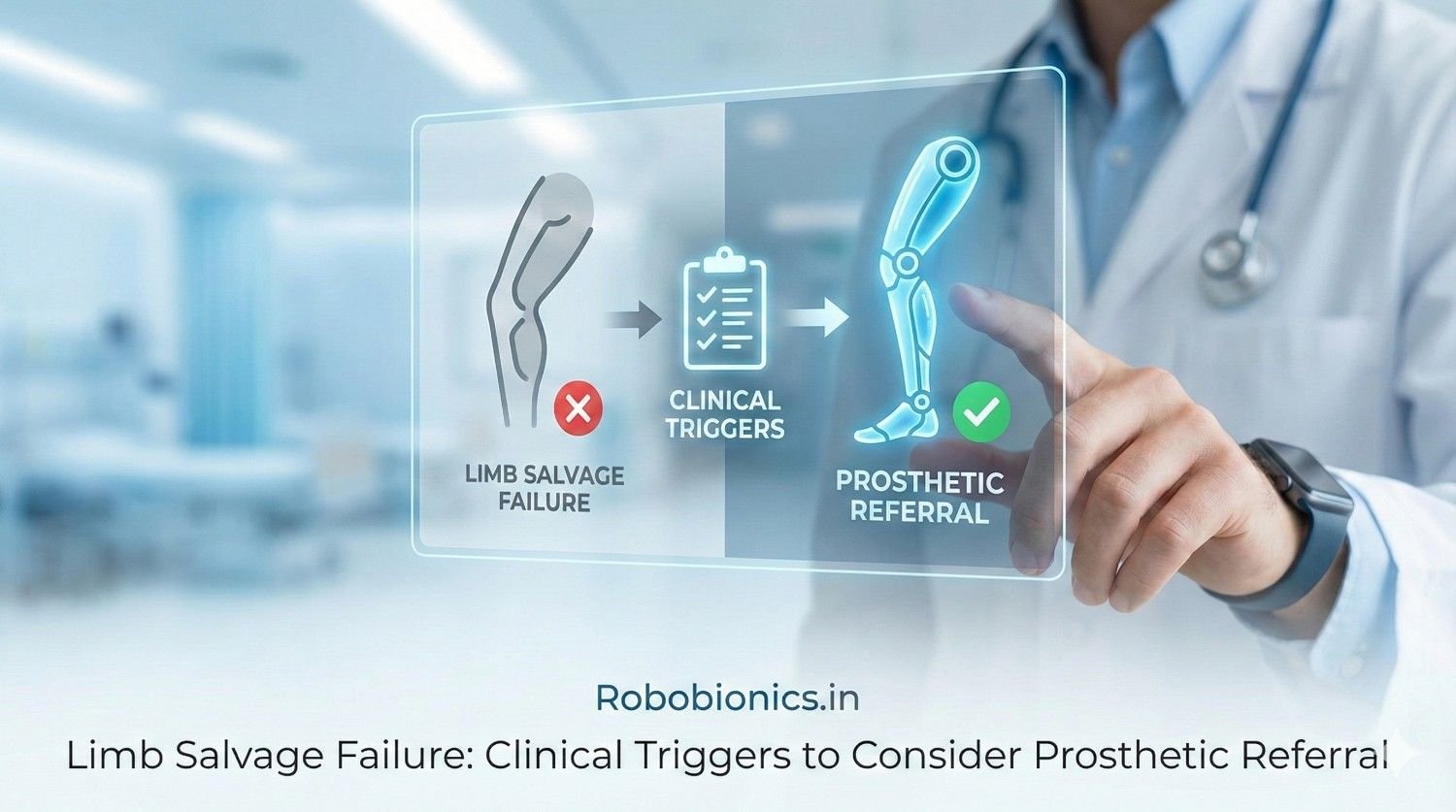
Limb Salvage Failure: Clinical Triggers to Consider Prosthetic Referral

Limb Salvage Failure: Clinical Triggers to Consider Prosthetic Referral

Limb salvage is often chosen with hope, patience, and the desire to preserve what remains, but there are times when continued salvage causes more harm than benefit. For doctors, the hardest part is knowing when to pause, reassess, and consider prosthetic referral without feeling that care has failed. This decision is not about giving up; it is about protecting life, function, and dignity.

This article explores the clinical triggers that signal limb salvage failure and the right time to discuss prosthetic referral. It is written for MDs who manage complex wounds, repeated surgeries, chronic infection, and long rehabilitation journeys. The focus is on clear medical signs, functional outcomes, and patient well-being, so that decisions are timely, ethical, and patient-centered.

Understanding limb salvage in real clinical practice

What limb salvage aims to achieve

Limb salvage is chosen to preserve anatomy, maintain sensation, and avoid the emotional impact of amputation, especially in younger or medically complex patients.
It often involves multiple surgeries, long wound care, and extended rehabilitation, all with the hope of restoring useful function.
Understanding this goal is important before defining when salvage stops being beneficial.

When salvage becomes a prolonged process

In many cases, limb salvage extends over months or even years, with repeated hospital visits and slow progress.
What begins as a reasonable attempt can quietly turn into a cycle of procedures with limited functional gain.
Doctors must recognize when duration itself becomes a clinical concern.

Differentiating effort from outcome

High surgical effort does not always translate into meaningful recovery.
A salvaged limb that cannot bear weight, tolerate load, or support daily activity may still limit independence.
Outcome, not intent, should guide next steps.
The biological limits of limb salvage

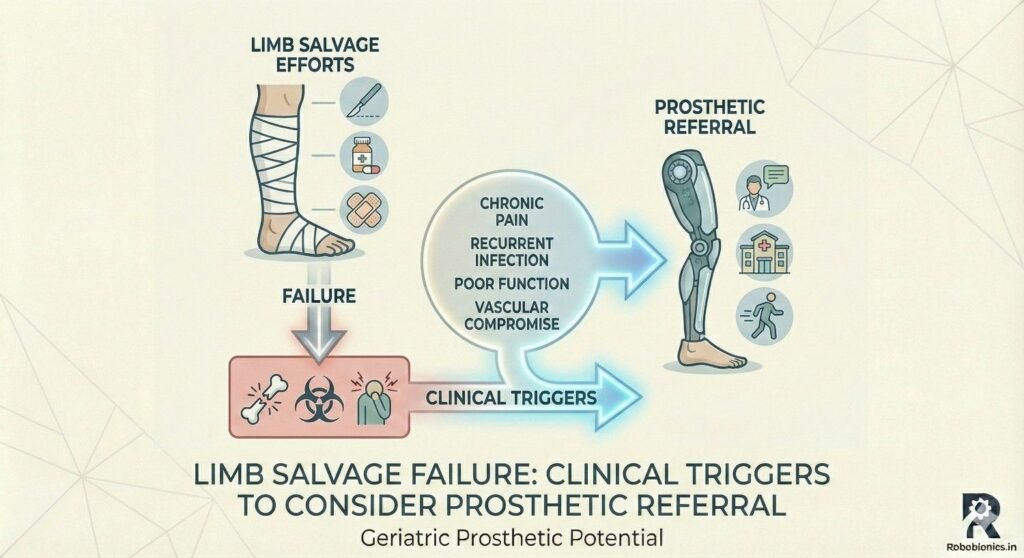
Compromised blood supply

Poor circulation reduces oxygen delivery and limits the body’s ability to heal despite optimal surgical technique.
Repeated failure of wounds to granulate or close often signals that vascular limits have been reached.
At this stage, continued salvage may increase infection risk without improving function.

Chronic infection and biofilm formation

Persistent infection that returns after debridement and antibiotics is a strong warning sign.
Biofilms protect bacteria and make eradication difficult even with aggressive care.
Ongoing infection increases pain, fatigue, and systemic risk.

Poor tissue quality over time

Repeated surgeries and inflammation weaken skin, muscle, and bone.
Over time, tissue becomes less tolerant of reconstruction or load.
This gradual decline is often subtle but clinically significant.

Repeated surgical interventions as a trigger

Increasing frequency of procedures

When surgeries become more frequent without proportional improvement, it suggests diminishing returns.
Each procedure carries anesthesia risk, healing delay, and emotional strain.
Doctors should pause and reassess after repeated interventions.

Escalating surgical complexity

Progression from simple closure to flaps, grafts, or staged reconstructions often reflects worsening tissue conditions.
While these techniques are valuable, their repeated need may signal that salvage is struggling biologically.
Complexity alone is not failure, but escalation without progress is concerning.

Loss of surgical options

When remaining options are limited or high risk, the margin for safe salvage narrows.
At this point, planning for prosthetic referral becomes part of responsible care.
Early discussion prevents crisis decisions later.

Functional decline despite salvage

Persistent inability to bear weight

A limb that cannot safely accept weight after prolonged treatment limits mobility and independence.
Repeated offloading, bracing, or non-weight-bearing instructions often reduce quality of life.
Function should be evaluated honestly, not optimistically.

Dependence on assistive devices

Reliance on walkers, crutches, or wheelchairs long term may indicate limited salvage benefit.
While aids are useful, permanent dependence after extensive salvage suggests restricted functional return.
This pattern should prompt reassessment.

Pain limiting daily activity

Chronic pain that persists despite healing attempts affects sleep, mood, and participation.
Pain-driven avoidance often reduces strength and balance further.
Uncontrolled pain is a major trigger for reconsidering goals.

Wound behavior and healing patterns

Recurrent wound breakdown

Wounds that reopen repeatedly despite care indicate poor tissue resilience.
Each breakdown increases infection risk and patient frustration.
This pattern is a clear clinical signal.

Delayed healing timelines

Healing that stretches far beyond expected timelines suggests systemic or local failure.
Prolonged open wounds affect nutrition, mobility, and mental health.
Delayed closure should always prompt broader discussion.

Dependence on advanced wound care

Long-term reliance on negative pressure therapy, dressings, or frequent debridement may signal limited progress.
While these tools support healing, indefinite use raises questions about endpoint.
Doctors should evaluate whether the plan is moving forward or standing still.
Systemic impact of prolonged salvage

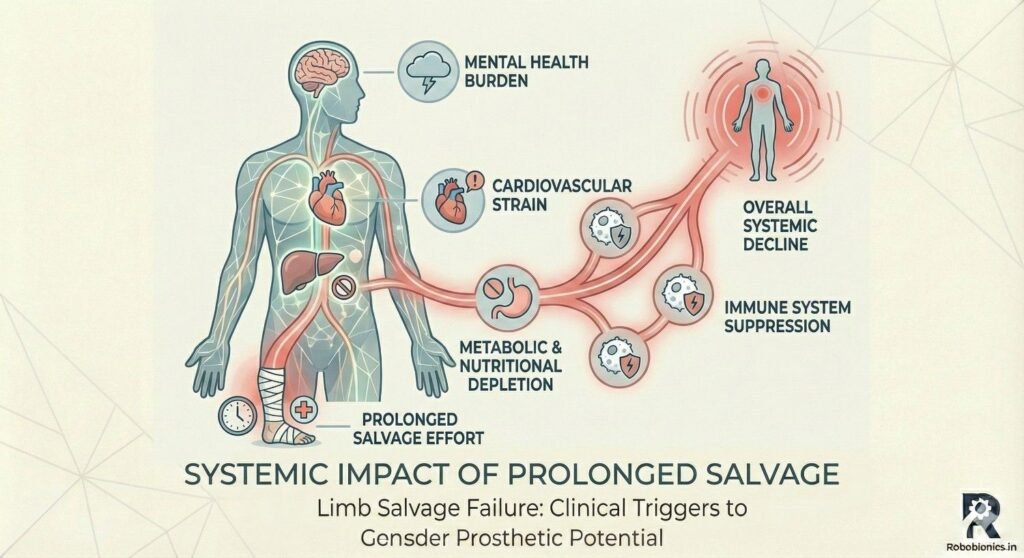
Decline in overall health

Extended immobility and repeated infections

Extended immobility and repeated infections can weaken cardiovascular and respiratory health.
Patients may lose muscle mass and endurance over time.
This decline affects future rehabilitation potential.

Nutritional depletion and fatigue

Chronic wounds increase metabolic demand.
Poor nutrition slows healing and reduces strength.
Fatigue becomes both a symptom and a barrier.

Psychological exhaustion

Long salvage journeys often lead to emotional burnout.
Patients may lose hope or trust in the process.
Mental fatigue should be taken seriously as a clinical factor.

Patient-reported signals doctors should not ignore

Expressions of hopelessness

Statements like “this will never heal” or “I am tired of surgeries” often reflect deep distress.
These words are clinical data, not complaints.
They should trigger careful conversation.

Avoidance of care or follow-up

Missed appointments or reduced engagement may indicate emotional overload.
This behavior often appears before physical decline becomes obvious.
Early recognition allows supportive intervention.

Desire for a different path

When patients ask about amputation or prosthetics, it often follows long reflection.
This question deserves respect and honest discussion.
Ignoring it can damage trust.

Comparing salvage outcomes with prosthetic potential

Functional trade-offs

A poorly functioning salvaged limb may limit mobility more than a well-fitted prosthesis.
Doctors should compare realistic outcomes, not ideal ones.
This comparison must be grounded in daily life needs.

Energy cost and efficiency

Salvaged limbs that require braces or altered gait often increase energy use.
Prosthetic walking may sometimes be more efficient.
Efficiency matters for long-term health.

Predictability of recovery

Prosthetic rehabilitation often follows a clearer timeline than prolonged salvage.
Predictability helps patients plan life and work.
This factor influences quality of life.

Ethical responsibility in referral decisions

Avoiding delayed referral harm

Late referral after physical decline can reduce prosthetic success.
Timely discussion preserves rehabilitation potential.
Delay can unintentionally limit future options.

Shared decision-making

Doctors should present prosthetic referral as a medical option, not a failure.
Patients deserve clear information about risks and benefits.
Shared decisions build trust.

Preserving dignity

Quality of life and independence matter as much as limb preservation.
Ethical care respects dignity over anatomy.
This principle should guide referrals.

Preparing the patient for prosthetic discussion

Framing the conversation

Language should focus on function, comfort, and future potential.
Avoid framing amputation as defeat.
Clear framing reduces fear.

Addressing myths and fears

Many patients fear prosthetics due to misconceptions.
Early education helps reset expectations.
Accurate information empowers choice.

Introducing the prosthetic team early

Early referral does not commit the patient to amputation.
It allows assessment and planning.
This approach reduces pressure later.
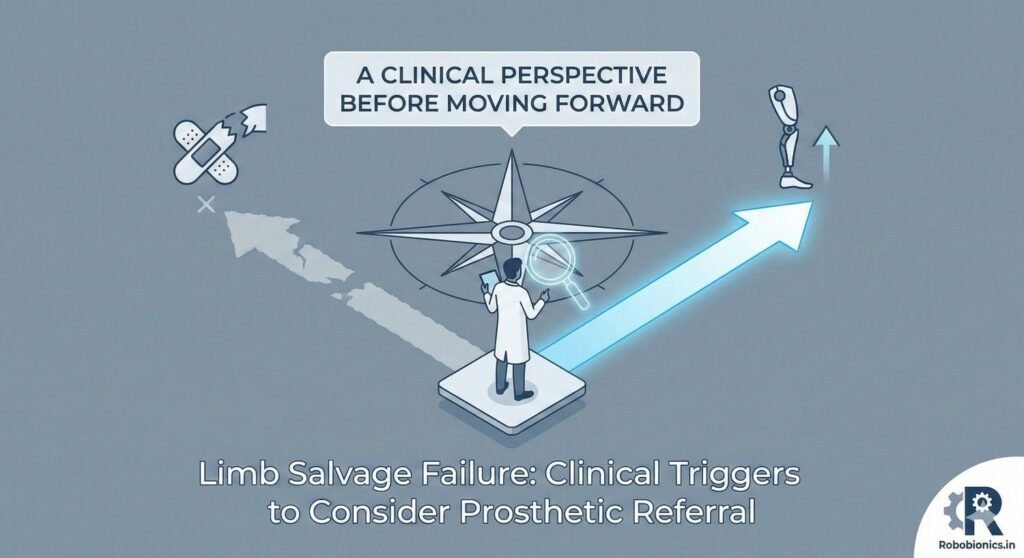
A clinical perspective before moving forward

Salvage and prosthetics are not opposites

Both aim to restore function and dignity.
They are parts of the same continuum of care.
Understanding this reduces emotional resistance.

Timing defines outcome

The same decision made earlier or later can lead to very different results.
Recognizing triggers early protects options.
Timing is a core clinical skill.

The doctor’s role as guide

Doctors help patients navigate uncertainty and change.
Guidance requires honesty, compassion, and courage.
This role shapes long-term outcomes.

We have now covered the key clinical triggers and decision points that indicate when limb salvage may be failing and when prosthetic referral should be considered.

Case-based patterns seen in limb salvage failure

Recurrent trauma with diminishing recovery

Some patients experience repeated fractures, soft tissue loss, or implant failure in the same limb, where each new injury compounds existing damage and reduces the chance of meaningful recovery.
Over time, healing slows, pain increases, and functional milestones move further away rather than closer.
This pattern often signals that the limb is no longer biologically or mechanically resilient enough for salvage.

Chronic infection following open injuries

Patients with open fractures or contaminated wounds may experience cycles of infection that respond briefly to treatment and then return.
Each recurrence weakens tissue quality and increases systemic risk.
When infection becomes a repeating pattern rather than a one-time event, prosthetic referral should enter the discussion.

Failed reconstruction after multiple revisions

When flap surgeries, grafts, or bone reconstructions repeatedly fail or provide only short-lived improvement, the likelihood of durable salvage decreases.
The limb may appear intact but remain painful, unstable, or nonfunctional.
Doctors should recognize this pattern early to prevent prolonged suffering.

Functional outcome mismatch

Anatomical success without functional gain

A limb may be surgically preserved yet unable to support standing, walking, or basic daily tasks.
This mismatch between appearance and function often leads to frustration and dependence.
Functional outcome should carry more weight than radiological or surgical success alone.

Inability to return to meaningful activity

When patients cannot return to work, self-care, or community mobility despite prolonged salvage efforts, the benefit of continued treatment must be questioned.
Extended inactivity often leads to muscle loss, social isolation, and mental decline.
Prosthetic referral may offer a clearer path back to participation.

Increasing reliance on caregivers

Growing dependence on family or caregivers for basic mobility and hygiene is a strong signal that current treatment is not restoring independence.
This dependence affects both patient dignity and family burden.
Restoring autonomy should be a core clinical goal.

Economic and time burden as clinical signals

Repeated hospital admissions

Frequent admissions for wound care, infection control, or revision surgery disrupt normal life and strain health systems.
These interruptions often erode patient morale and physical conditioning.
Cumulative burden should factor into decision-making.

Long absence from work or education

Extended time away from work or school affects financial stability and self-identity.
Delayed functional recovery often deepens these losses.
Earlier prosthetic planning may reduce long-term socioeconomic impact.

Treatment fatigue and burnout

Patients undergoing years of salvage may feel emotionally and physically exhausted.
Burnout reduces adherence and healing potential.
Recognizing fatigue early allows for more compassionate care choices.

Comparing future paths: salvage versus prosthetic referral

Predictability of rehabilitation timelines

Salvage often carries uncertain timelines with frequent setbacks.
Prosthetic rehabilitation, while challenging, usually follows clearer stages.
Predictability helps patients regain control over planning their lives.

Long-term physical health implications

Prolonged non-weight-bearing or altered gait can damage the spine, hips, and opposite limb.
Prosthetic walking may distribute load more evenly over time.
Long-term health should influence referral timing.

Psychological impact of prolonged uncertainty

Living without clear endpoints can be emotionally draining.
A defined prosthetic pathway may reduce anxiety and restore hope.
Mental well-being is a valid clinical outcome.
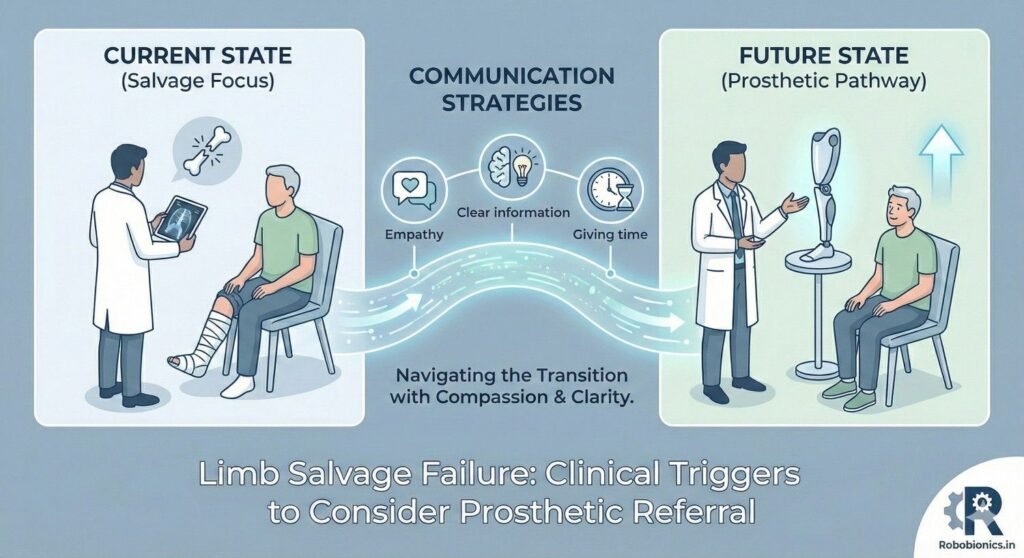
Communication strategies before referral

Introducing the idea early without pressure

Early mention of prosthetic options prepares

Early mention of prosthetic options prepares patients emotionally without forcing a decision.
This approach reduces shock if salvage later fails.
Early awareness preserves trust.

Using functional language rather than surgical terms

Discussing mobility, comfort, and daily life resonates more than technical details.
Patients relate better to function than anatomy.
Clear language supports shared understanding.

Allowing time for reflection

Patients need time to process the idea of change.
Rushed discussions increase resistance.
Respecting pacing improves acceptance.

Preparing for prosthetic referral clinically

Medical optimization before referral

Stabilizing infection, nutrition, and general health improves prosthetic outcomes.
Early optimization preserves future rehabilitation potential.
Referral should be planned, not reactive.

Coordinating with rehabilitation teams

Early involvement of rehab specialists helps set realistic expectations.
This coordination smooths transition if amputation becomes necessary.
Team-based planning improves outcomes.

Documentation and continuity

Clear documentation of salvage history helps prosthetic teams plan effectively.
Continuity prevents repetition of unsuccessful approaches.
Shared records support patient-centered care.

Red flags that demand urgent reassessment

Rapid deterioration of limb condition

Sudden increase in pain, swelling, or infection may indicate imminent failure.
Delayed action in such cases increases risk.
Urgent reassessment is essential.

Systemic illness linked to limb pathology

Fever, weight loss, or repeated sepsis episodes suggest that the limb is affecting overall health.
At this stage, limb preservation may threaten life.
Prosthetic referral becomes a protective measure.

Loss of patient trust

When patients lose confidence in the care plan, adherence drops.
Trust erosion often precedes medical decline.
Restoring trust may require changing direction.

Integrating prosthetic referral into the care pathway

Referral as a parallel process

Prosthetic assessment can occur alongside salvage efforts without committing to amputation.
This parallel approach keeps options open.
Early planning reduces crisis decisions.

Educating patients about modern prosthetics

Many patients hold outdated views of prosthetic function.
Education can shift fear into informed consideration.
Knowledge empowers choice.

Supporting family involvement

Families often influence major decisions.
Including them early reduces conflict and misunderstanding.
Shared understanding improves support.
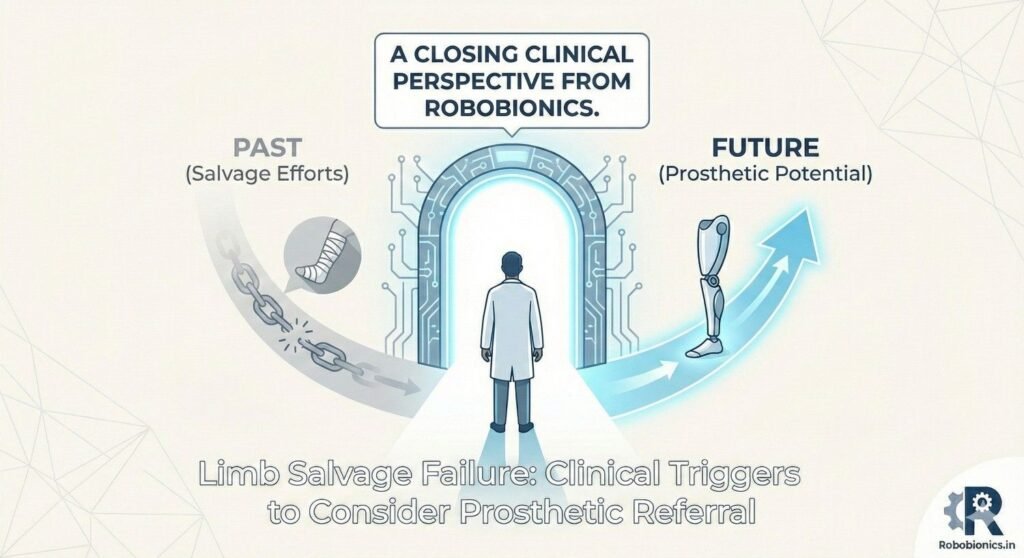
A closing clinical perspective from Robobionics

Reframing prosthetic referral as responsible care

At Robobionics, we have worked with many patients whose journeys began with limb salvage and eventually moved toward prosthetic rehabilitation, and one pattern is clear: timely referral is not a sign of failure, but a sign of clinical maturity and patient-centered thinking.
When salvage no longer restores comfort, function, or dignity, changing direction protects long-term health and independence.
Doctors play a critical role in helping patients see this transition as a step forward rather than an end.

The value of early and honest conversations

We have seen that patients cope better when prosthetic options are discussed early, even while salvage is ongoing, because it removes fear of the unknown and allows emotional preparation.
Honest conversations grounded in function, safety, and daily life outcomes build trust and reduce resistance.
These discussions give patients back a sense of control during uncertain times.

Protecting rehabilitation potential through timing

Delayed referral after prolonged infection, immobility, or systemic decline often limits what prosthetic rehabilitation can achieve.
When referral happens while the patient still has strength, motivation, and medical stability, outcomes are consistently better.
Timing, more than technology, defines success.

A shared goal across specialties

Surgeons, physicians, wound care teams, and prosthetic providers all work toward the same goal: restoring meaningful life participation.
Limb salvage and prosthetics are not opposing philosophies but connected paths within the same continuum of care.
Strong collaboration ensures that patients are not trapped between options but guided through them.

Our role as a prosthetic partner

As an Indian prosthetics manufacturer, Robobionics designs and delivers solutions that are affordable, serviceable, and suited to real-world clinical and social conditions.
We work closely with doctors to support early assessment, patient education, and smooth transition when prosthetic referral becomes the right choice.
Our aim is to help clinicians restore mobility with dignity, clarity, and long-term confidence.

Share:

More Posts

Partner With Us

REFUNDS AND CANCELLATIONS

Last updated: November 10, 2022

Thank you for shopping at Robo Bionics.

If, for any reason, You are not completely satisfied with a purchase We invite You to review our policy on refunds and returns.

The following terms are applicable for any products that You purchased with Us.

Interpretation And Definitions

Interpretation

The words of which the initial letter is capitalized have meanings defined under the following conditions. The following definitions shall have the same meaning regardless of whether they appear in singular or in plural.

Definitions

For the purposes of this Return and Refund Policy:

  • Company (referred to as either “the Company”, “Robo Bionics”, “We”, “Us” or “Our” in this Agreement) refers to Bionic Hope Private Limited, Pearl Haven, 1st Floor Kumbharwada, Manickpur Near St. Michael’s Church Vasai Road West, Palghar Maharashtra 401202.

  • Goods refer to the items offered for sale on the Website.

  • Orders mean a request by You to purchase Goods from Us.

  • Service refers to the Services Provided like Online Demo and Live Demo.

  • Website refers to Robo Bionics, accessible from https://robobionics.in

  • You means the individual accessing or using the Service, or the company, or other legal entity on behalf of which such individual is accessing or using the Service, as applicable.

Your Order Cancellation Rights

You are entitled to cancel Your Service Bookings within 7 days without giving any reason for doing so, before completion of Delivery.

The deadline for cancelling a Service Booking is 7 days from the date on which You received the Confirmation of Service.

In order to exercise Your right of cancellation, You must inform Us of your decision by means of a clear statement. You can inform us of your decision by:

  • By email: contact@robobionics.in

We will reimburse You no later than 7 days from the day on which We receive your request for cancellation, if above criteria is met. We will use the same means of payment as You used for the Service Booking, and You will not incur any fees for such reimbursement.

Please note in case you miss a Service Booking or Re-schedule the same we shall only entertain the request once.

Conditions For Returns

In order for the Goods to be eligible for a return, please make sure that:

  • The Goods were purchased in the last 14 days
  • The Goods are in the original packaging

The following Goods cannot be returned:

  • The supply of Goods made to Your specifications or clearly personalized.
  • The supply of Goods which according to their nature are not suitable to be returned, deteriorate rapidly or where the date of expiry is over.
  • The supply of Goods which are not suitable for return due to health protection or hygiene reasons and were unsealed after delivery.
  • The supply of Goods which are, after delivery, according to their nature, inseparably mixed with other items.

We reserve the right to refuse returns of any merchandise that does not meet the above return conditions in our sole discretion.

Only regular priced Goods may be refunded by 50%. Unfortunately, Goods on sale cannot be refunded. This exclusion may not apply to You if it is not permitted by applicable law.

Returning Goods

You are responsible for the cost and risk of returning the Goods to Us. You should send the Goods at the following:

  • the Prosthetic Limb Fitting Centre that they purchased the product from
  • email us at contact@robobionics.in with all the information and we shall provide you a mailing address in 3 days.

We cannot be held responsible for Goods damaged or lost in return shipment. Therefore, We recommend an insured and trackable courier service. We are unable to issue a refund without actual receipt of the Goods or proof of received return delivery.

Contact Us

If you have any questions about our Returns and Refunds Policy, please contact us:

  • By email: contact@robobionics.in

TERMS & CONDITIONS

Last Updated on: 1st Jan 2021

These Terms and Conditions (“Terms”) govern Your access to and use of the website, platforms, applications, products and services (ively, the “Services”) offered by Robo Bionics® (a registered trademark of Bionic Hope Private Limited, also used as a trade name), a company incorporated under the Companies Act, 2013, having its Corporate office at Pearl Heaven Bungalow, 1st Floor, Manickpur, Kumbharwada, Vasai Road (West), Palghar – 401202, Maharashtra, India (“Company”, “We”, “Us” or “Our”). By accessing or using the Services, You (each a “User”) agree to be bound by these Terms and all applicable laws and regulations. If You do not agree with any part of these Terms, You must immediately discontinue use of the Services.

1. DEFINITIONS

1.1 “Individual Consumer” means a natural person aged eighteen (18) years or above who registers to use Our products or Services following evaluation and prescription by a Rehabilitation Council of India (“RCI”)–registered Prosthetist.

1.2 “Entity Consumer” means a corporate organisation, nonprofit entity, CSR sponsor or other registered organisation that sponsors one or more Individual Consumers to use Our products or Services.

1.3 “Clinic” means an RCI-registered Prosthetics and Orthotics centre or Prosthetist that purchases products and Services from Us for fitment to Individual Consumers.

1.4 “Platform” means RehabConnect, Our online marketplace by which Individual or Entity Consumers connect with Clinics in their chosen locations.

1.5 “Products” means Grippy® Bionic Hand, Grippy® Mech, BrawnBand, WeightBand, consumables, accessories and related hardware.

1.6 “Apps” means Our clinician-facing and end-user software applications supporting Product use and data collection.

1.7 “Impact Dashboard™” means the analytics interface provided to CSR, NGO, corporate and hospital sponsors.

1.8 “Services” includes all Products, Apps, the Platform and the Impact Dashboard.

2. USER CATEGORIES AND ELIGIBILITY

2.1 Individual Consumers must be at least eighteen (18) years old and undergo evaluation and prescription by an RCI-registered Prosthetist prior to purchase or use of any Products or Services.

2.2 Entity Consumers must be duly registered under the laws of India and may sponsor one or more Individual Consumers.

2.3 Clinics must maintain valid RCI registration and comply with all applicable clinical and professional standards.

3. INTERMEDIARY LIABILITY

3.1 Robo Bionics acts solely as an intermediary connecting Users with Clinics via the Platform. We do not endorse or guarantee the quality, legality or outcomes of services rendered by any Clinic. Each Clinic is solely responsible for its professional services and compliance with applicable laws and regulations.

4. LICENSE AND INTELLECTUAL PROPERTY

4.1 All content, trademarks, logos, designs and software on Our website, Apps and Platform are the exclusive property of Bionic Hope Private Limited or its licensors.

4.2 Subject to these Terms, We grant You a limited, non-exclusive, non-transferable, revocable license to use the Services for personal, non-commercial purposes.

4.3 You may not reproduce, modify, distribute, decompile, reverse engineer or create derivative works of any portion of the Services without Our prior written consent.

5. WARRANTIES AND LIMITATIONS

5.1 Limited Warranty. We warrant that Products will be free from workmanship defects under normal use as follows:
 (a) Grippy™ Bionic Hand, BrawnBand® and WeightBand®: one (1) year from date of purchase, covering manufacturing defects only.
 (b) Chargers and batteries: six (6) months from date of purchase.
 (c) Grippy Mech™: three (3) months from date of purchase.
 (d) Consumables (e.g., gloves, carry bags): no warranty.

5.2 Custom Sockets. Sockets fabricated by Clinics are covered only by the Clinic’s optional warranty and subject to physiological changes (e.g., stump volume, muscle sensitivity).

5.3 Exclusions. Warranty does not apply to damage caused by misuse, user negligence, unauthorised repairs, Acts of God, or failure to follow the Instruction Manual.

5.4 Claims. To claim warranty, You must register the Product online, provide proof of purchase, and follow the procedures set out in the Warranty Card.

5.5 Disclaimer. To the maximum extent permitted by law, all other warranties, express or implied, including merchantability and fitness for a particular purpose, are disclaimed.

6. DATA PROTECTION AND PRIVACY

6.1 We collect personal contact details, physiological evaluation data, body measurements, sensor calibration values, device usage statistics and warranty information (“User Data”).

6.2 User Data is stored on secure servers of our third-party service providers and transmitted via encrypted APIs.

6.3 By using the Services, You consent to collection, storage, processing and transfer of User Data within Our internal ecosystem and to third-party service providers for analytics, R&D and support.

6.4 We implement reasonable security measures and comply with the Information Technology Act, 2000, and Information Technology (Reasonable Security Practices and Procedures and Sensitive Personal Data or Information) Rules, 2011.

6.5 A separate Privacy Policy sets out detailed information on data processing, user rights, grievance redressal and cross-border transfers, which forms part of these Terms.

7. GRIEVANCE REDRESSAL

7.1 Pursuant to the Information Technology Rules, 2021, We have given the Charge of Grievance Officer to our QC Head:
 - Address: Grievance Officer
 - Email: support@robobionics.in
 - Phone: +91-8668372127

7.2 All support tickets and grievances must be submitted exclusively via the Robo Bionics Customer Support portal at https://robobionics.freshdesk.com/.

7.3 We will acknowledge receipt of your ticket within twenty-four (24) working hours and endeavour to resolve or provide a substantive response within seventy-two (72) working hours, excluding weekends and public holidays.

8. PAYMENT, PRICING AND REFUND POLICY

8.1 Pricing. Product and Service pricing is as per quotations or purchase orders agreed in writing.

8.2 Payment. We offer (a) 100% advance payment with possible incentives or (b) stage-wise payment plans without incentives.

8.3 Refunds. No refunds, except pro-rata adjustment where an Individual Consumer is medically unfit to proceed or elects to withdraw mid-stage, in which case unused stage fees apply.

9. USAGE REQUIREMENTS AND INDEMNITY

9.1 Users must follow instructions provided by RCI-registered professionals and the User Manual.

9.2 Users and Entity Consumers shall indemnify and hold Us harmless from all liabilities, claims, damages and expenses arising from misuse of the Products, failure to follow professional guidance, or violation of these Terms.

10. LIABILITY

10.1 To the extent permitted by law, Our total liability for any claim arising out of or in connection with these Terms or the Services shall not exceed the aggregate amount paid by You to Us in the twelve (12) months preceding the claim.

10.2 We shall not be liable for any indirect, incidental, consequential or punitive damages, including loss of profit, data or goodwill.

11. MEDICAL DEVICE COMPLIANCE

11.1 Our Products are classified as “Rehabilitation Aids,” not medical devices for diagnostic purposes.

11.2 Manufactured under ISO 13485:2016 quality management and tested for electrical safety under IEC 60601-1 and IEC 60601-1-2.

11.3 Products shall only be used under prescription and supervision of RCI-registered Prosthetists, Physiotherapists or Occupational Therapists.

12. THIRD-PARTY CONTENT

We do not host third-party content or hardware. Any third-party services integrated with Our Apps are subject to their own terms and privacy policies.

13. INTELLECTUAL PROPERTY

13.1 All intellectual property rights in the Services and User Data remain with Us or our licensors.

13.2 Users grant Us a perpetual, irrevocable, royalty-free licence to use anonymised usage data for analytics, product improvement and marketing.

14. MODIFICATIONS TO TERMS

14.1 We may amend these Terms at any time. Material changes shall be notified to registered Users at least thirty (30) days prior to the effective date, via email and website notice.

14.2 Continued use of the Services after the effective date constitutes acceptance of the revised Terms.

15. FORCE MAJEURE

Neither party shall be liable for delay or failure to perform any obligation under these Terms due to causes beyond its reasonable control, including Acts of God, pandemics, strikes, war, terrorism or government regulations.

16. DISPUTE RESOLUTION AND GOVERNING LAW

16.1 All disputes shall be referred to and finally resolved by arbitration under the Arbitration and Conciliation Act, 1996.

16.2 A sole arbitrator shall be appointed by Bionic Hope Private Limited or, failing agreement within thirty (30) days, by the Mumbai Centre for International Arbitration.

16.3 Seat of arbitration: Mumbai, India.

16.4 Governing law: Laws of India.

16.5 Courts at Mumbai have exclusive jurisdiction over any proceedings to enforce an arbitral award.

17. GENERAL PROVISIONS

17.1 Severability. If any provision is held invalid or unenforceable, the remainder shall remain in full force.

17.2 Waiver. No waiver of any breach shall constitute a waiver of any subsequent breach of the same or any other provision.

17.3 Assignment. You may not assign your rights or obligations without Our prior written consent.

By accessing or using the Products and/or Services of Bionic Hope Private Limited, You acknowledge that You have read, understood and agree to be bound by these Terms and Conditions.