
Post-Op Follow-Up Schedule That Prevents Prosthetic Delays (For Clinicians)
For many clinicians, the surgery is only the first step. What happens after the operation



Hospitals today want to give safe, clear, and consistent care. When a patient comes in with limb loss or a limb difference, the support they receive must follow strong standards. NABH and NABL guidelines help hospitals build this kind of trusted, clean, and accountable system. But many teams still struggle when it comes to creating a smooth, compliant referral pathway for prosthetic care.
This article shows how to build an NABH/NABL-aligned prosthetic referral process that is simple for staff, safe for patients, and easy to follow every day. It breaks down what hospitals need to do, how to avoid common mistakes, and how to create a workflow that truly works. It also shows how partners like Robobionics can help hospitals meet standards without stress or confusion.
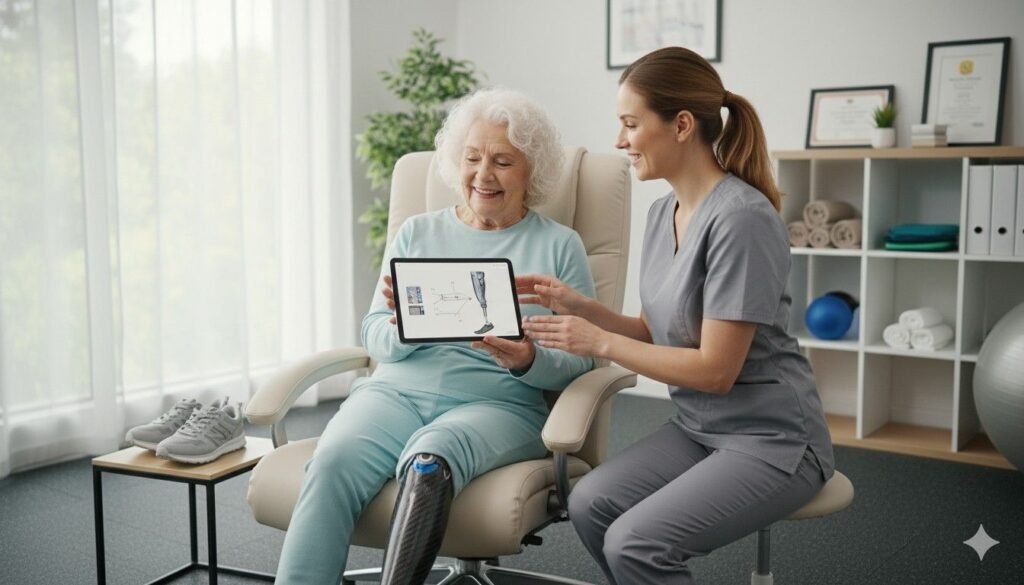
Hospitals today want their care to feel safe, predictable, and trustworthy.
NABH and NABL standards help make this happen by setting clear rules for how patients should be guided from one stage of care to the next.
When it comes to prosthetic referrals, these rules become even more important because the patient’s recovery depends on fast and accurate coordination.
A small delay or unclear instruction can slow healing, create confusion, or lead to poor outcomes.
Many hospitals focus on improving surgery or inpatient processes, but often overlook referral systems.
Yet prosthetic care sits right at the center of a patient’s long-term recovery.
If the referral pathway is weak, patients feel lost and hospitals risk non-compliance during audits.
A strong, documented referral process helps hospitals show that every step is planned, safe, and aligned with national standards.
NABH and NABL both look closely at how hospitals document each stage of care.
This includes conversations, decisions, hand-offs, follow-ups, and outcomes.
If these details are missing, unclear, or scattered, the hospital may face compliance issues even if the actual care was good.
Clear records help show that the team acted with intention and followed a safe path.
For prosthetic referrals, documentation becomes even more important because many departments are involved.
Doctors, nurses, physiotherapists, administrators, and prosthetic partners all play a part.
Without a unified record, information is lost between departments and patients end up waiting longer than they should.
Good documentation turns a confusing process into a clear, smooth journey.
Hospitals often handle limb-loss cases across many departments such as orthopedics, physiatry, trauma, and rehabilitation.
Because the patient travels through so many touchpoints, the risk of confusion is high.
A defined referral map shows every team member what needs to happen and when.
This brings order to an otherwise scattered process.
NABH assessors often ask hospitals to demonstrate their pathways for trauma care, rehabilitation, and follow-up.
A mapped prosthetic referral pathway helps satisfy these expectations.
It shows that the hospital has thought through each stage and that staff follow a predictable, safe system.
Patients also feel calmer when they know exactly what will happen next.
Hand-offs between departments are where most errors occur.
A delay, missing file, or unclear instruction can cause a patient to wait days or weeks.
NABH places strong emphasis on safe transfers of care to prevent such gaps.
A structured hand-off system ensures nothing gets lost along the way.
For prosthetic referrals, the hand-off must include details like stump condition, healing progress, and rehabilitation needs.
When this information moves cleanly from the hospital team to the prosthetic provider, the fitting becomes faster.
The patient receives a device that matches their needs rather than one chosen with guesswork.
This level of care improves outcomes and strengthens compliance.
Hospitals often work better when everyone follows the same routine.
A uniform referral protocol helps every staff member understand the process without needing long explanations.
This protocol becomes a part of daily hospital operations and ensures that patients never fall through the cracks.
The protocol does not need technical language.
It only needs to describe what happens, who is responsible, and what must be recorded.
With this simplicity, even new team members understand their roles from the first day.
NABH auditors appreciate this clarity because it shows that the hospital cares about consistent, safe care.
Often, hospitals fail to make timely referrals because staff members are unsure when to recommend prosthetic care.
This confusion leads to long delays in rehabilitation.
NABH encourages hospitals to train their teams so they know how to make fast, correct decisions for every patient.
Simple training sessions can help staff recognize the right moment to initiate a referral.
These sessions should focus on early signs of readiness, healing stages, and patient motivation.
When staff are confident, they act faster and help the patient begin recovery without delay.
Training is also a strong point during audits because it shows that the hospital stays committed to skill development.
Communication between hospitals and prosthetic centers must be direct and reliable.
If messages pass through too many layers, mistakes multiply and patients lose time.
NABH standards highlight the importance of coordinated care between external partners and the hospital team.
A clear line of communication makes this coordination easy.
Many hospitals use a single point of contact model where one person handles all prosthetic referrals.
This reduces confusion and creates accountability.
The prosthetic partner also knows exactly whom to call for updates, documents, or questions.
This closeness builds trust and ensures that each case moves forward with minimal friction.
NABH standards emphasize patient rights, education, and involvement.
Patients must know what is happening, why it matters, and what to expect next.
When hospitals keep patients informed, anxiety goes down and satisfaction goes up.
It also protects the hospital because the patient never feels misled or confused.
In prosthetic referrals, patients often have many questions about cost, timeline, training, and daily usage.
Hospitals can ease this by offering simple explanations at each stage.
Clear communication helps patients trust the process rather than fear it.
This also reflects well during audits because patient education is a key compliance area.
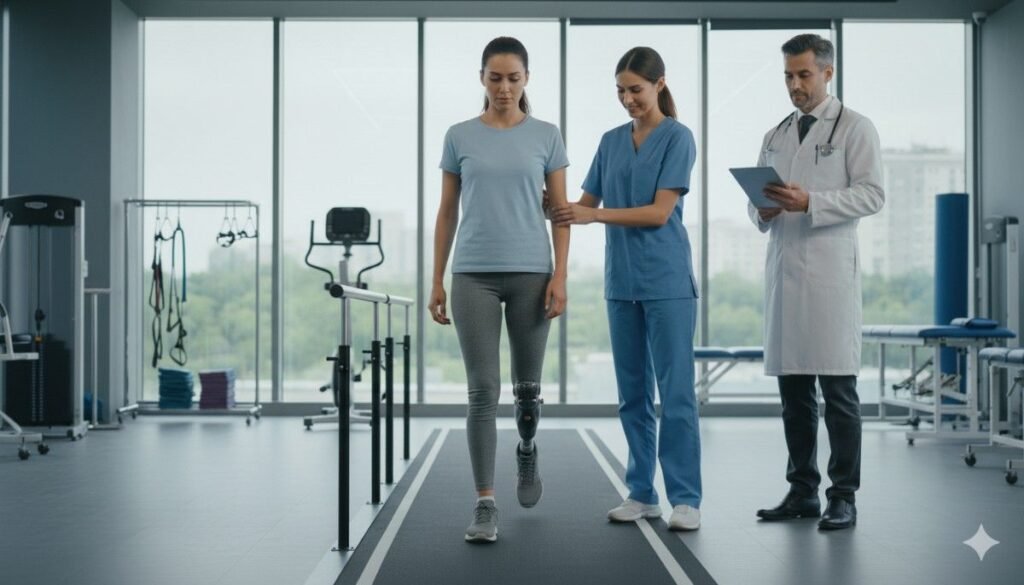
The stump must be in good condition before the patient meets the prosthetist.
NABH encourages hospitals to follow safe clinical steps before sending the patient forward.
When doctors and therapists perform clean checks, the fitting stage becomes smooth and predictable.
These checks often include healing status, shape stability, skin health, and muscle strength.
Hospitals do not need complex tools to carry out these assessments.
Simple observation and gentle measurements are enough.
A well-prepared stump reduces complications and supports long-term prosthetic use.
Rehabilitation begins long before the prosthetic hand is fitted.
Physiotherapists help patients regain strength and confidence during the early stages.
This preparation is essential for successful fitting and training.
NABH recognizes the importance of rehabilitation and encourages hospitals to integrate it into the referral pathway.
When the therapy team works closely with the prosthetic partner, the patient benefits in many ways.
The therapist helps the patient understand what will happen during fitting.
They also support the patient emotionally and physically.
This team approach makes the transition smoother and keeps the patient motivated.
A clean medical file is one of the strongest signals of compliance.
NABH expects hospitals to maintain complete and accurate records for every patient journey.
Incomplete files lead to confusion and delays, both for the hospital team and the prosthetic partner.
A complete file speeds up the process and protects the hospital during audits.
The file should contain details like injury type, treatment history, stump condition, healing progress, and therapy notes.
This information helps the prosthetist understand the patient’s background clearly.
It also prevents repeat assessments and unnecessary questions.
A complete file is a simple step that brings major benefits.
Hospitals often work with many external partners, but prosthetic care needs special attention.
The quality of the prosthetic provider directly affects patient safety, outcomes, and compliance ratings.
NABH encourages hospitals to choose partners based on capability, transparency, and ethical service.
A clear selection system removes guesswork and brings long-term stability.
When hospitals use simple, written criteria, they make safer choices.
These criteria help teams pick partners who communicate well, respond quickly, and maintain strong clinical standards.
Providers must also understand the hospital’s expectations and commit to meeting them.
This mutual clarity protects the patient and strengthens the referral system.
NABH values written agreements because they protect both the hospital and the patient.
A small agreement can outline roles, responsibilities, and communication expectations.
This document does not need legal complexity, but it should show how both parties will work together.
A clear agreement also prepares the hospital for audits, since it shows accountability.
Most agreements cover how to share patient details, how follow-ups will be handled, and how urgent cases will be managed.
This structure creates smoother experiences for patients and staff.
It also reduces misunderstandings that often slow down fittings.
A simple agreement becomes a strong foundation for long-term trust.
Good referral systems grow stronger with time.
Feedback from prosthetic providers helps hospitals understand where delays or misunderstandings are happening.
NABH encourages hospitals to use such feedback to improve their processes.
A healthy loop helps both sides work more effectively.
The feedback does not have to be formal or complicated.
Even a short call or monthly discussion can help identify useful improvements.
Hospitals can also share concerns or challenges they notice in patient experience.
This open communication builds partnership instead of one-sided interactions.
Patients feel most confident when they receive consistent guidance.
NABH emphasizes the importance of patient education across all stages of care.
Hospitals and prosthetic providers must work together to explain key points in simple language.
This avoids confusion and prevents patients from receiving mixed messages.
Many patients worry about cost, durability, training, and comfort.
When hospital staff and prosthetic partners explain these questions with the same approach, trust grows.
Patients feel assured that they are in safe hands.
This unified communication reflects well during audits and improves satisfaction.
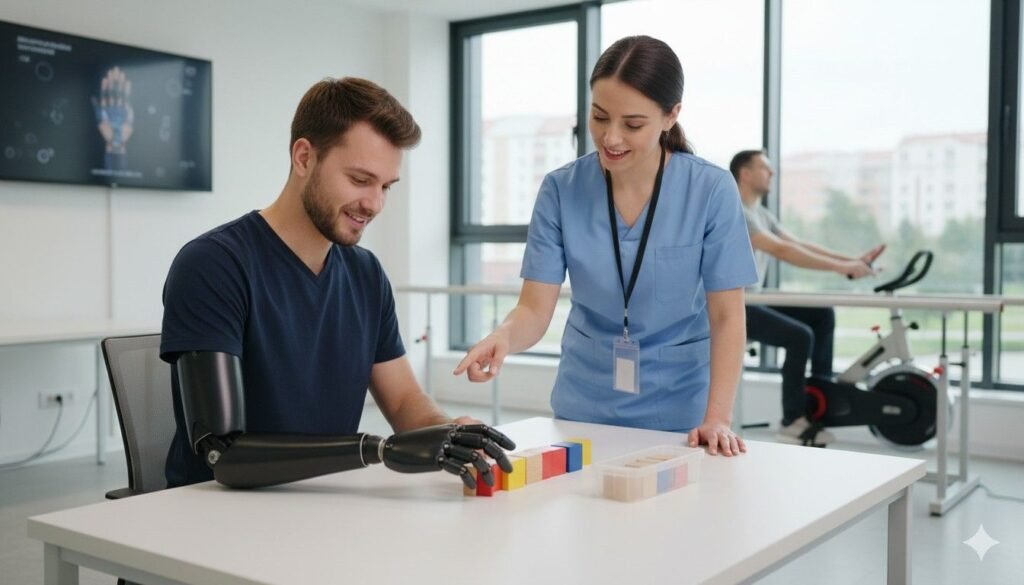
NABH looks at how hospitals continue to support patients after referral.
Simply handing the patient over to an external provider is not enough.
Hospitals must show that they stay involved in the patient’s journey.
A basic follow-up system helps demonstrate this responsibility.
Follow-up need not be heavy or time-consuming.
Even a few timely check-ins can show that the hospital is monitoring progress.
These check-ins help catch issues early and keep the patient motivated.
They also create a complete trail of documentation for auditors.
Patient feedback is an important part of compliance.
Hospitals must show that they listen to patient concerns and respond to them.
In prosthetic care, feedback is often rich and emotional because the device affects every part of daily life.
Recording this feedback helps the hospital understand real outcomes beyond clinical checklists.
Simple forms or brief notes work well.
The key is to be consistent and clear.
This record becomes valuable during audits, as it shows that the hospital takes patient voices seriously.
It also helps improve future referrals and partnerships.
Hospitals and prosthetic partners share responsibility for the patient’s journey.
Updates help both sides stay aligned and avoid misunderstandings.
When the hospital notices changes in the patient’s health or emotional state, sharing this information helps the prosthetist offer better support.
This collaboration reduces risk and improves results.
NABH values such coordination because it reflects a strong culture of communication.
It shows that the hospital is committed to the patient even after discharge.
This steady connection helps create a safer, more effective referral ecosystem.
The patient benefits the most from this teamwork.
Many hospitals struggle with scattered records.
Important details end up in personal files, WhatsApp messages, or separate department folders.
NABH expects organized, central documentation that anyone on the care team can access.
A simple digital or physical folder can meet this requirement.
Central storage reduces confusion during audits.
It also helps new staff understand past patient interactions.
When everything is easy to find, the hospital works more smoothly.
A clear record system also strengthens trust with prosthetic partners.
When too many people handle the referral process, mistakes slip in.
A small coordination team ensures that everything stays clear and consistent.
This team can include a doctor, therapist, and administrative member.
NABH appreciates clearly assigned roles because they prevent confusion and delays.
The coordination team becomes the backbone of the referral system.
They guide the patient, track progress, and communicate with the prosthetic provider.
Their consistent involvement supports accuracy and smooth communication.
This structure also helps hospitals prepare confidently for audits.
Review meetings keep the process healthy and up to date.
NABH encourages hospitals to check their systems regularly and make improvements when needed.
These meetings do not need to be long or formal.
A short monthly discussion is often enough to spot gaps.
During these reviews, the team can discuss patient feedback, documentation challenges, and partner communication.
They can also identify patterns such as common delays or patient concerns.
These insights help refine the workflow and make it more patient-friendly.
Meetings also show auditors that the hospital prioritizes quality improvement.
Hospitals run smoothly when each person knows their part.
NABH highlights the importance of role clarity because it protects the patient and the workflow.
When staff understand their tasks, work becomes faster and errors reduce.
Clear roles help maintain a sense of order and safety.
For prosthetic referrals, many small tasks matter, such as documentation, communication, and patient updates.
Each one must be handled carefully.
Simple orientation sessions help staff feel confident about their duties.
This confidence leads to better compliance and better patient care.
NABH requires hospitals to maintain unified policies across different departments.
Prosthetic referral protocols must match the hospital’s broader rules on documentation, communication, and patient safety.
This alignment prevents confusion and strengthens the hospital’s compliance structure.
It shows auditors that the hospital follows a professional, organized approach.
When protocols match, it becomes easier for staff to follow them.
They do not need to learn completely new systems or processes.
This reduces training time and improves daily efficiency.
Hospitals benefit from a smooth and predictable workflow.

Many patients entering prosthetic care feel unsure, scared, or overwhelmed by what comes next. Hospitals that follow NABH guidance understand that emotional comfort is part of safe care. When your team explains each step calmly, answers doubts without rushing, and offers clear direction, the patient feels grounded. This emotional support becomes a part of the compliance journey because it reflects how the hospital protects patient rights, dignity, and safety.
Hospitals can make the process feel easier by keeping the tone gentle and the instructions simple. A patient does not need complicated forms or technical words; they need a human voice guiding them forward. When they know there is a system, a partner, and a plan in place, their fear reduces and their trust rises. This trust directly improves cooperation, follow-ups, and long-term success with the prosthetic device.
Family involvement is one of the most powerful elements of a smooth prosthetic referral process. NABH encourages hospitals to engage families in all important conversations because a supportive home environment leads to better outcomes. When families understand the process, the cost, the timeline, and the benefits, they become calmer and more helpful to the patient. This emotional stability becomes a hidden part of the compliance structure because it reduces frustrations and delays.
Hospitals can gently guide families by explaining the basics in simple, clear ways. Most families only need reassurance that the path is safe and structured. When the hospital gives them this confidence, they become partners instead of observers. They help with follow-ups, support training, and encourage the patient during hard days. This involvement creates smoother referral journeys that are easier for the hospital to track and document.
NABH-aligned hospitals understand that patients must feel informed and empowered. Awareness builds confidence, and confidence leads to better participation in the referral process. Many patients do not know what a prosthetic hand can do, how much it costs, or how long training takes. Hospitals that take time to educate them create a stronger, more compliant pathway because fewer misunderstandings occur later.
Simple, friendly explanations work far better than technical lectures. When the hospital team uses calm language and shows real-life examples or photos, the patient begins to see what is possible. Once their mind shifts from fear to curiosity, the whole journey becomes smoother. This reduction in emotional stress makes documentation easier, communication clearer, and follow-ups more regular.
Many NABH requirements revolve around timely care, clear communication, and accountable coordination. Robobionics makes these expectations easier to meet because of its strong local presence across India. When a prosthetic provider operates close to the hospital, travel delays and communication gaps drop sharply. This supports the hospital’s efforts to show continuity of care, a key requirement during audits.
Local access also reduces patient anxiety. When families learn that the prosthetic team is not far away, they feel safer and more willing to proceed. This willingness supports quick referrals, smooth documentation, and stronger follow-up records. Hospitals benefit because they can maintain predictable timelines that match NABH expectations for coordination between clinical teams and external partners.
NABH encourages hospitals to work only with partners who follow ethical, transparent practices. Robobionics maintains direct communication, simple language, and clear explanations so hospitals always know what is happening at every stage of the patient’s journey. This transparency keeps both sides accountable and prevents any misunderstandings that could appear as compliance risks during audits.
Because of predictable communication, hospitals can store complete records, track patient progress, and present clean documentation when needed. Every update from the prosthetic team becomes a part of the patient’s medical journey, strengthening the hospital’s compliance story. This reduces the stress teams feel when preparing for NABH assessments.
NABH stresses that hospitals must guide patients toward safe and ethical care options. Robobionics aligns with this expectation by offering high-quality prosthetic hands at prices that feel realistic for Indian families. When the cost barrier reduces, patients do not delay treatment, and hospitals can maintain smooth referral timelines without long breaks caused by financial stress.
Affordability also helps patients trust the system. When they believe they can actually afford a functional prosthetic hand, they follow instructions more carefully, attend appointments, and participate fully in rehabilitation. This steady, reliable engagement becomes a strong foundation for a compliance-friendly referral pathway. Hospitals benefit because fewer cases stall midway, reducing paperwork complications and missed follow-ups.
NABH prioritizes patient safety and long-term outcomes. Robobionics designs prosthetic hands that are easy to use, simple to maintain, and intuitive for patients, especially those in tier-2 and rural settings. Features like smooth myoelectric control and touch feedback make daily tasks easier and help patients stay committed to rehabilitation. This long-term engagement proves that the referral system works well.
Hospitals that partner with reliable providers can show NABH auditors that they guide patients toward safe technology designed for real Indian conditions. This strengthens the hospital’s image as a responsible, future-ready center that cares deeply about outcomes, not just procedures.
Hospitals today face high expectations. They must offer safe care, follow clear rules, and maintain predictable systems that protect every patient who walks through their doors. When it comes to prosthetic referrals, the pressure grows even stronger because the journey continues long after discharge. A clean, NABH-aligned referral system brings order, confidence, and dignity into a patient’s recovery path.
By building simple protocols, training staff gently, keeping documentation organized, and choosing the right prosthetic partners, hospitals can create a smooth and safe workflow. This workflow not only supports compliance but also brings hope to patients who are starting a new chapter of life after limb loss. With calm communication, steady follow-ups, and thoughtful coordination, hospitals can transform a confusing process into a clear and empowering journey.
Robobionics stands ready to support hospitals in this mission. As a trusted prosthetics manufacturer rooted in India, we offer technology that fits local needs, communication that keeps everyone aligned, and prices that make advanced care accessible for thousands of families. Together, we can create referral systems that feel human, safe, and full of purpose — systems that honor NABH expectations while giving patients the confidence to move forward.
For many clinicians, the surgery is only the first step. What happens after the operation
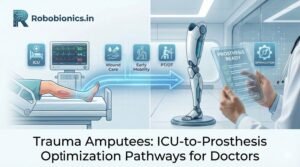
For trauma amputees, the journey does not begin at the prosthetic clinic. It begins much

Amputation after cancer is not just a surgical event. It is the end of one

When a child loses a limb, the challenge is never only physical. A child’s body