
Post-Op Follow-Up Schedule That Prevents Prosthetic Delays (For Clinicians)
For many clinicians, the surgery is only the first step. What happens after the operation



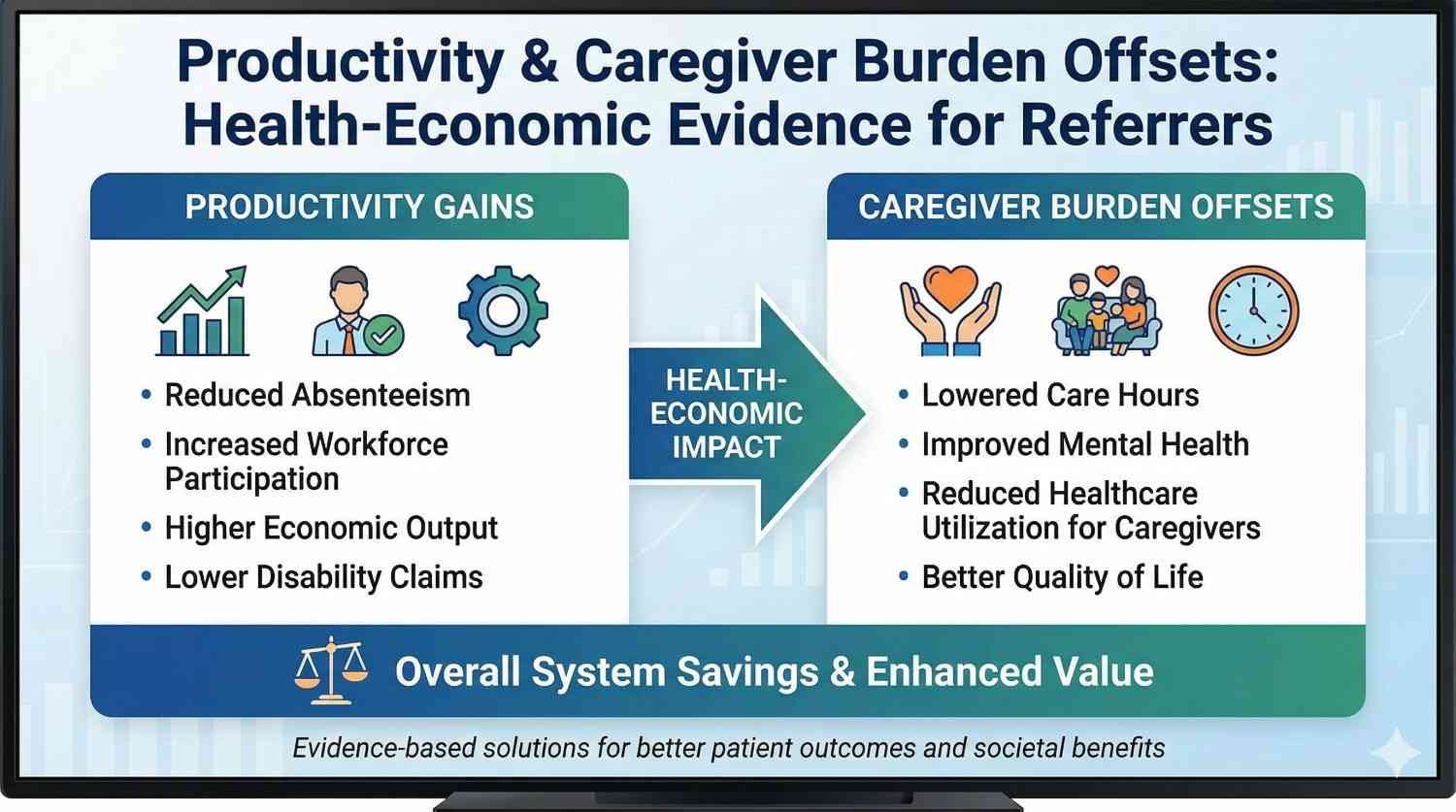
When referrers think about prosthetic care, the focus often stays on the device, the surgery, or the rehab outcome. What is discussed far less is what happens around the patient every single day. Who helps them dress, travel, work, and live? How many hours of productivity are lost, and how many family members quietly put their own lives on hold?
This article is written for referrers who want to see the full economic picture, not just the clinical snapshot. We will explore how better prosthetic care offsets productivity loss and reduces caregiver burden, using health-economic thinking that is simple, practical, and grounded in Indian realities. The aim is to help you make stronger referrals by understanding how mobility, independence, and dignity translate into real economic value for patients, families, and society.
Every patient lives inside a small economic system made up of work, family roles, and daily responsibilities.
When limb loss or mobility limitation enters this system, the impact spreads far beyond the patient alone.
Lost workdays, reduced income, and unpaid caregiving quietly accumulate over months and years.
Referrers who understand this hidden economy make more meaningful care decisions.
Productivity loss and caregiver burden do not show up on prescriptions or discharge summaries.
They sit outside hospital walls, in homes, workplaces, and family routines.
Because they are not billed or coded, they are easy to ignore.
Health-economic thinking brings these invisible costs into focus.
Referrers often shape the direction of care before the first prosthetic fitting even happens.
Your recommendation influences whether a patient regains independence quickly or remains dependent for years.
This makes referrers key drivers of long-term economic outcomes.
Understanding offsets strengthens the impact of your referrals.

Productivity is not limited to formal employment or office work.
It includes earning income, managing a household, caring for children, and participating in community life.
When a person loses functional ability, all these activities are affected.
Productivity loss is therefore broader than salary loss alone.
Many patients experience a sudden drop in work capacity after amputation or injury.
They may stop working entirely or shift to lower-paying roles.
This loss affects household income immediately.
Early functional restoration can shorten this gap significantly.
Even when patients return to work, reduced speed or endurance limits output.
Frequent medical visits and fatigue also reduce consistency.
Over time, these small limitations add up to large economic losses.
Better prosthetic outcomes reduce this long-term erosion.
In India, caregivers are usually family members rather than paid professionals.
Spouses, parents, children, or siblings step into this role without training or compensation.
This caregiving often becomes a full-time responsibility.
The economic cost is real, even if unpaid.
Caregiving consumes hours every day for dressing, mobility, travel, and supervision.
These hours are taken away from work, education, or rest.
Over months and years, this time loss reshapes entire lives.
Health-economic studies treat this time as a measurable cost.
Caregiver burden is not only about time.
Physical strain, stress, and emotional fatigue reduce caregiver health and productivity.
This can lead to secondary medical costs.
Good prosthetic care reduces both time and strain.
Independence is often discussed as a quality-of-life outcome.
It is also a powerful economic variable.
A patient who can dress, walk, and travel independently reduces caregiver hours dramatically.
This reduction has measurable economic value.
Partial independence still requires supervision and help.
Functional independence allows the patient to manage daily life alone.
The economic gap between these two states is large.
Referrers should aim for functional independence where possible.
A prosthesis that works well only sometimes does not reduce caregiver burden reliably.
Inconsistent function keeps caregivers on standby.
Stable, predictable function allows caregivers to resume their own routines.
Consistency drives true economic offset.
Health economists measure productivity through workdays gained or lost.
They also include reduced absenteeism and improved work capacity.
These measures are converted into economic value.
This method is widely used in global studies.
Caregiver burden is measured in hours of care per day or week.
Reductions in these hours are valued using average wage rates.
Even conservative estimates show significant savings.
These savings often rival direct medical cost differences.
Short-term gains appear in faster return to work.
Long-term gains appear in sustained employment and reduced dependency.
Studies show that early functional restoration multiplies long-term benefits.
Timing matters as much as technology.
India relies heavily on family-based care.
Formal caregiving services are limited and expensive.
This makes caregiver burden a major hidden cost.
Reducing dependency has outsized value in this setting.
Many patients work in informal sectors.
Productivity loss here is rarely documented but deeply felt.
Returning even partial function can restore income streams.
Health-economic value is high in these cases.
When caregivers stop working, household income drops.
At the same time, medical expenses rise.
This double pressure can push families into debt.
Better prosthetic outcomes help break this cycle.

The faster a patient regains usable function, the lower the productivity loss.
Delays extend dependency and income gaps.
Referrers should consider pathways that prioritize early function.
Speed has economic value.
Devices that are frequently abandoned do not deliver economic benefit.
Referrers should ask about long-term usage patterns.
Reliable daily use is more important than advanced features.
Use drives offsets.
Good outcomes depend on training, service, and follow-up.
Poor support increases abandonment and caregiver burden.
Referrers should value systems, not just devices.
Support sustains economic gains.
Patients often focus on device cost alone.
Referrers can explain how independence reduces long-term financial strain.
Framing care as an investment changes perception.
This supports better acceptance.
Caregivers understand the daily burden deeply.
Including them in discussions helps align expectations.
They often become strong advocates for better functional solutions.
Shared understanding improves decisions.
Economic benefits should be explained realistically.
Over-promising damages trust.
Clear explanation of potential offsets builds confidence without false hope.
Honesty strengthens referrals.
Clinical indication remains essential.
However, referrers can add value by considering life context.
This broader view improves long-term outcomes.
Referrals become more impactful.
Referrers often understand both medical and social aspects of care.
This position allows you to guide patients wisely.
Considering productivity and caregiver burden makes referrals more complete.
Bridges create better outcomes.
When referrers understand economic offsets, they can justify better solutions.
This helps in discussions with families, hospitals, and funders.
Value-based referrals gain stronger support.
Evidence empowers advocacy.
Consider a working-age adult who supports a family through daily wage or salaried work.
After limb loss, this person often stops working completely for several months.
A caregiver, usually a spouse or parent, also reduces or stops work to help with mobility and daily tasks.
The household suddenly loses two sources of productivity at once.
When prosthetic rehabilitation restores stable walking and confidence, the patient often returns to work first.
As independence improves, the caregiver also returns to their own routine.
This double return creates a strong economic offset that continues year after year.
Upper-limb loss affects tasks that are constant and repetitive, such as cooking, cleaning, and self-care.
In many homes, this shifts the burden to another family member, often a woman who already manages multiple roles.
Time spent helping with dressing, eating, and daily chores adds up to several hours each day.
A functional upper-limb prosthesis reduces this dependence steadily.
Over time, caregivers regain time for paid work, education, or rest.
This reclaimed time has both economic and health value.
When limb loss affects a student or young adult, productivity loss appears in delayed education.
Caregivers spend time accompanying the patient to classes, therapy, or daily activities.
Missed education has long-term income consequences that extend decades into the future.
Early functional restoration reduces dropout risk and dependency.
Health-economic studies place high value on these long-term gains.
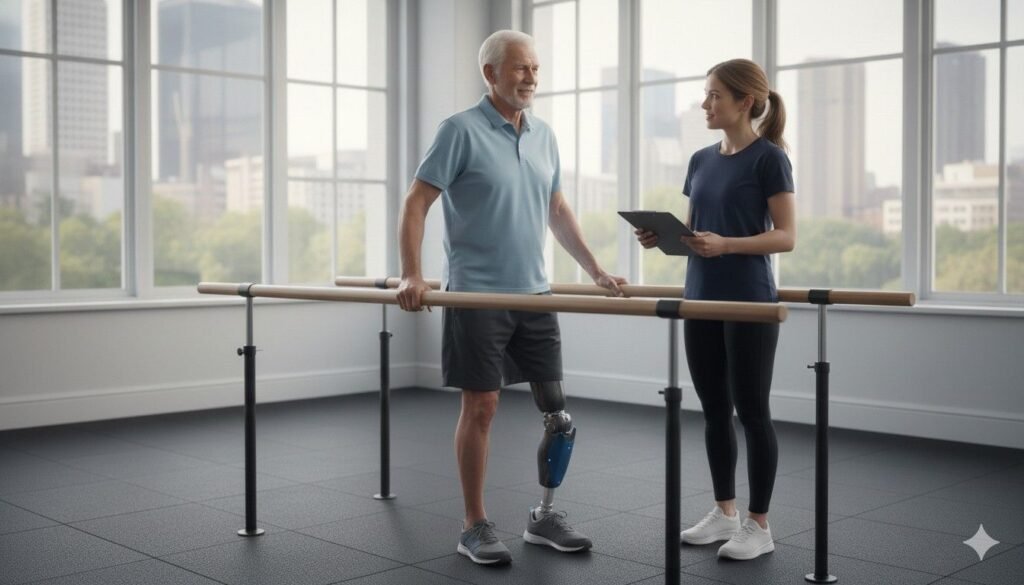
Referrers do not need complex formulas to understand offsets.
A simple way is to think in hours of help required each day.
If a patient needs four hours of daily help before prosthetic fitting and one hour after, three hours are saved every day.
Over a year, this time saving becomes substantial.
Those saved hours can be valued using local wage rates.
Even conservative estimates show meaningful economic benefit.
This approach helps referrers explain value clearly to families.
It also supports discussions with hospitals or funders.
Referrers can compare a basic outcome versus a functional outcome.
The question becomes how many months of dependency each pathway creates.
Longer dependency means higher productivity loss and caregiver burden.
This comparison often clarifies referral choices.
Returning to work earlier does more than restore income for that month.
It helps patients retain skills, confidence, and workplace relationships.
These factors protect long-term employability.
Health-economic models show that early gains compound over years.
Long periods of inactivity reduce confidence and opportunity.
Some patients never return to work after extended dependency.
Better prosthetic outcomes reduce this risk significantly.
Preventing permanent dependency is one of the largest economic offsets.
Even when patients do not return to paid work, productivity matters.
Managing a household, caring for children, or supporting elders has real value.
Prosthetic independence restores these roles.
Health economists increasingly recognize this broader view.
Caregiving often begins with willingness and care.
Over time, fatigue and stress accumulate.
This affects caregiver health, mood, and work ability.
Reducing burden early prevents this slow decline.
Caregivers under strain often develop back pain, stress-related illness, or depression.
These conditions create additional healthcare costs.
Good prosthetic outcomes reduce physical and emotional strain.
This secondary benefit is often overlooked.
High caregiver burden strains family relationships.
Conflict, resentment, and burnout affect household stability.
Restoring patient independence supports healthier family dynamics.
Social stability has economic consequences too.
Across countries and settings, studies show similar patterns.
Better functional outcomes reduce caregiver time and increase productivity.
These benefits often exceed differences in direct medical cost.
The pattern is robust and repeatable.
Many studies use conservative wage rates and time assumptions.
Even with cautious inputs, offsets remain significant.
This suggests real-world value may be even higher.
Referrers can be confident in the direction of benefit.
While many studies are global, the principles apply strongly in India.
High family involvement and informal work increase the value of independence.
Economic offsets may be larger here than in formal systems.
Context amplifies impact.
Beyond clinical suitability, referrers can ask one key question.
How much daily help does this patient currently need, and how much could be reduced?
This simple question brings productivity and caregiver burden into focus.
It sharpens referral quality.
Clear functional goals guide prosthetic choice and rehab intensity.
Goals tied to work or independence support better outcomes.
Documentation also helps align teams.
Clarity improves delivery.
Referrers who communicate economic goals help teams prioritize function.
This collaboration improves results.
Shared understanding reduces fragmented care.
Outcomes become more predictable.

Families often hesitate at upfront cost.
Referrers can explain how independence reduces ongoing strain.
Framing care as reducing years of burden resonates strongly.
This supports acceptance.
Hospitals and funders look for justification beyond emotion.
Economic offsets provide structured reasoning.
Referrers who understand these arguments strengthen proposals.
Evidence supports access.
Economic value should never override patient well-being.
It should complement clinical judgment, not replace it.
Balanced discussion builds trust.
Ethical care remains central.
Referrals are strongest when they begin with how limb loss affects daily life rather than the medical event alone.
Referrers should look at how the patient moves through their day, manages self-care, earns income, and participates in family roles.
This wider view reveals where productivity is lost and where caregiver burden builds quietly.
Life impact sets the direction for better care choices.
Every patient has specific moments where dependency peaks, such as bathing, travel, cooking, or work-related tasks.
These moments consume the most caregiver time and create the highest stress.
Referrers who identify these hotspots can guide care toward reducing them first.
Targeted independence delivers the largest economic offset.
Instead of referring broadly for a prosthesis, referrers can define clear functional goals.
Goals like independent travel, return to work, or self-care give teams a clear target.
When goals are explicit, outcomes improve.
Clear goals turn referrals into roadmaps.
Ask whether the patient has stopped working or reduced output.
Understand how many days or hours of work are being lost each week.
This gives a baseline for future improvement.
Baseline clarity supports outcome tracking.
Ask caregivers how much time they spend helping each day.
This question often reveals hidden strain.
Even rough estimates are useful.
Time is the core unit of caregiver burden.
Look at family structure, distance to care, and financial stability.
Patients with limited support suffer higher economic loss when dependency continues.
These cases benefit most from strong functional outcomes.
Context sharpens referral decisions.
Economic discussion should never feel cold or transactional.
Referrers can speak in terms of time, energy, and relief rather than money alone.
Families understand time loss deeply.
Human framing builds trust.
Examples like returning to work, cooking independently, or traveling alone make value real.
These examples connect care decisions to everyday life.
They help families visualize change.
Visualization supports acceptance.
Not every patient will regain full independence.
Referrers should acknowledge uncertainty honestly.
Even partial gains can reduce burden meaningfully.
Honesty strengthens long-term trust.
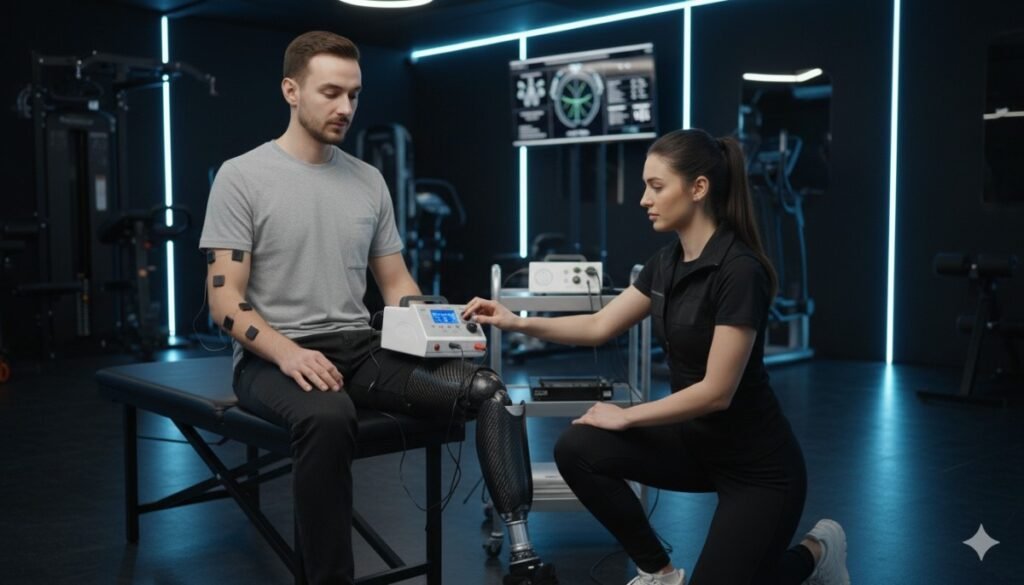
Referral notes that mention productivity and caregiver burden guide downstream teams.
Statements about work goals or dependency level add clarity.
This documentation aligns everyone toward meaningful outcomes.
Clear notes improve care coordination.
When referrers communicate economic goals, rehab and prosthetic teams can prioritize effectively.
This reduces fragmented care.
Alignment improves efficiency and results.
Shared goals matter.
Following up on outcomes helps referrers learn what works best.
Feedback improves future referrals.
Learning over time refines judgment.
Experience compounds value.
The referral sets expectations and direction.
It influences how aggressively function is pursued.
Early direction often determines long-term outcome.
Referrers shape the curve.
Choosing a pathway that restores independence sooner saves months or years of dependency.
These savings multiply across families and communities.
Small clinical decisions create large economic effects.
Impact grows quietly.
Referrers who understand economic offsets can advocate effectively.
They support access to better solutions when appropriate.
This advocacy improves equity and outcomes.
Knowledge empowers action.
Health-economic evidence should support clinical judgment, not replace it.
Patient well-being remains central.
Economic thinking adds depth, not pressure.
Balance protects ethics.
Each patient’s situation is unique.
Referrers should avoid applying economic arguments rigidly.
Flexibility preserves dignity.
Individual care always comes first.
Evidence shows strong patterns, not guarantees.
Referrers should present this nuance clearly.
Responsible use builds credibility.
Trust grows with care.
Productivity loss and caregiver burden are not side effects of limb loss; they are central outcomes that shape lives.
When these burdens continue unchecked, families pay a price every day, often in silence.
Better prosthetic care has the power to reverse this, restoring time, dignity, and participation.
These gains are not abstract; they are lived and felt.
At RoboBionics, we work closely with clinicians and referrers across India and see how thoughtful referrals change trajectories.
When independence is restored early and reliably, patients return to life faster and caregivers reclaim their own futures.
Understanding productivity and caregiver burden offsets allows referrers to see the full value of their decisions.
In doing so, referrals become not just clinical steps, but acts that reshape lives, families, and communities for the better.
For many clinicians, the surgery is only the first step. What happens after the operation
For trauma amputees, the journey does not begin at the prosthetic clinic. It begins much

Amputation after cancer is not just a surgical event. It is the end of one

When a child loses a limb, the challenge is never only physical. A child’s body