
Post-Op Follow-Up Schedule That Prevents Prosthetic Delays (For Clinicians)
For many clinicians, the surgery is only the first step. What happens after the operation



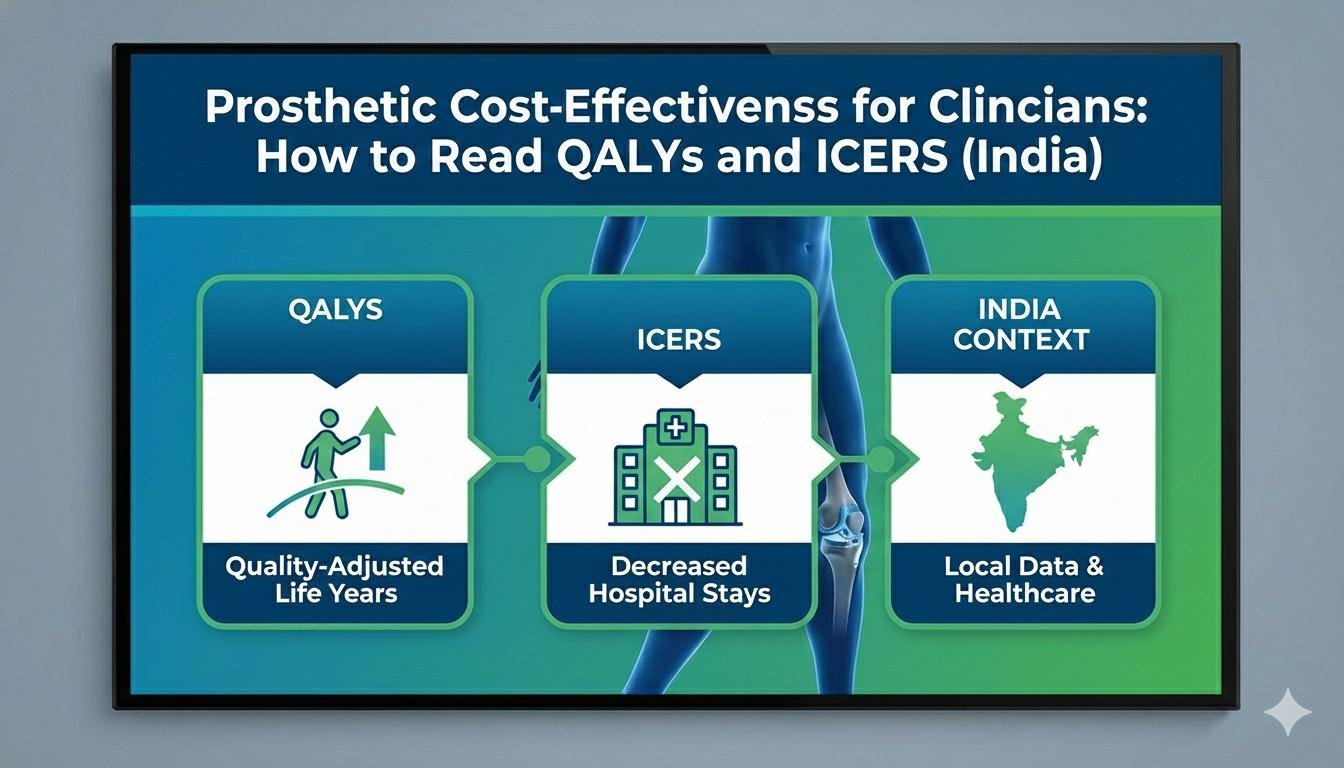
Cost-effectiveness should feel clear, not scary. As clinicians in India, you make tough choices every day. You want the right prosthesis for the right person at the right time. You also need to show value to patients, payers, and administrators. This guide is here to help. We will explain two tools you hear about but rarely get to unpack in plain words: QALYs and ICERs. We will keep the math simple, the language clean, and the focus on real clinic decisions.
At RoboBionics, we design and build advanced prosthetic solutions in India, at Indian prices, for Indian needs. We work with prosthetic centers across the country, so we see what works in busy OPDs and rehab rooms. In this article, we will turn abstract terms into practical steps. You will learn how to read a cost-effectiveness study, spot red flags, and apply results to your own cases. You will also see how local costs, GST, device life, maintenance, training time, and follow-ups change the numbers in the Indian setting. By the end, you will feel confident talking about value with your team and your patients—and making choices you can stand by.
When clinicians hear the word QALY, it often sounds distant and academic, but at its core, it is meant to reflect everyday life as lived by the patient, not just what shows up in a clinical chart.
A prosthetic device changes how a person eats, dresses, travels, works, and interacts with others, and all of these daily actions shape how meaningful their life feels to them.
QALYs attempt to capture this lived experience by combining survival with the quality of those years, which makes them especially relevant in prosthetic care where life extension is rarely the goal.
For example, a person with a functional prosthetic hand may return to work, feel less dependent on family members, and regain a sense of purpose, and these changes significantly raise their quality score even if their lifespan remains unchanged.
In prosthetics, even small functional improvements can have a large ripple effect across a patient’s life, which is why QALYs are often underestimated when viewed only through a medical lens.
A better grip strength may seem minor in isolation, but it can allow a person to cook independently, manage personal hygiene, and handle tools at work, all of which improve confidence and mental well-being.
These combined effects raise the overall quality of life score more than clinicians sometimes expect, especially when measured over several years of consistent use.
This is why devices that deliver reliable daily function often show strong cost-effectiveness, even if their initial price appears higher than simpler alternatives.
A prosthesis only creates value when it is worn regularly, and QALYs quietly assume that the device is actually being used in daily life.
If a prosthetic hand is uncomfortable, unreliable, or difficult to control, patients may abandon it, which drops quality scores close to baseline levels.
In contrast, a device that feels intuitive and dependable encourages long-term use, which steadily improves quality-adjusted life years over time.
Clinicians should therefore view comfort, ease of control, and patient confidence as core drivers of QALYs, not as secondary features.
Many clinicians first encounter ICERs as a mathematical formula, which can make the concept feel intimidating and disconnected from clinical judgment.
In reality, ICERs simply express a trade-off between extra cost and extra benefit when moving from one option to another.
When you choose a more advanced prosthetic over a basic one, you are already making an ICER-style decision, even if you do not calculate it formally.
The key is to understand whether the additional benefits justify the additional costs in the specific context of your patient and setting.
A low ICER suggests that a relatively small increase in cost leads to a meaningful improvement in quality of life, which is usually a strong argument for adoption.
A high ICER, on the other hand, indicates that large additional spending results in only marginal gains, which may be difficult to justify in resource-limited settings.
However, clinicians should avoid treating ICERs as absolute verdicts, because numbers alone cannot capture individual patient priorities or social realities.
For example, a slightly higher ICER may still be acceptable if the benefit allows a patient to return to employment or avoid lifelong dependence.
ICER values are not fixed truths, and they shift depending on costs, service delivery models, and patient populations.
In India, local manufacturing, lower service costs, and different patterns of use can dramatically alter ICERs compared to imported devices studied abroad.
This is why clinicians should be cautious when applying foreign cost-effectiveness data directly to Indian practice without adjusting assumptions.
Understanding this flexibility allows you to use ICERs as tools for reasoning rather than rigid rules imposed from outside.
In prosthetic care, the visible price of the device often receives the most attention, but it represents only one part of the total cost borne by the patient and the system.
Over the life of a prosthesis, expenses related to repairs, replacements, batteries, liners, and software updates can add up significantly.
When these recurring costs are ignored, cost-effectiveness analyses tend to favor cheaper devices that may perform poorly over time.
Clinicians who consider the full cost pathway are better positioned to guide patients toward sustainable choices.
Rehabilitation is not an optional add-on but a core component of successful prosthetic use, and its cost and availability influence real-world outcomes.
Devices that require excessive clinic visits or highly specialized training may impose hidden burdens on patients who live far from care centers.
Travel costs, missed workdays, and caregiver time all affect quality of life and adherence, even though they are rarely captured in formal studies.
When these factors are included, devices that support faster learning and stable long-term use often show better cost-effectiveness profiles.
Every day a prosthesis is non-functional due to repair or adjustment represents a day of lost independence and productivity for the patient.
Frequent breakdowns not only increase direct costs but also reduce trust in the device, which can lead to partial or complete abandonment.
From a QALY perspective, these interruptions lower quality scores and reduce the total benefit gained over time.
Clinicians should therefore view durability and service support as economic factors, not just technical specifications.
Most patients do not need to hear terms like QALY or ICER, but they do need help understanding how today’s decision will affect their life over many years.
Clinicians can translate cost-effectiveness into simple ideas, such as how often the device will need repairs, how easy it will be to use at work, and how long it is likely to last.
By framing value in terms of daily living and long-term stability, you help patients make informed choices without overwhelming them.
This approach strengthens trust and reduces the risk of regret or dissatisfaction later.
One of the biggest threats to cost-effectiveness is a mismatch between patient expectations and actual device performance.
If patients expect near-natural movement from a basic device, disappointment can reduce use and satisfaction, lowering quality of life outcomes.
Clear counseling about what a device can and cannot do helps align expectations, which supports consistent use and better QALY gains.
Clinicians play a central role in setting this foundation for success.
Hospitals, NGOs, and insurers increasingly ask clinicians to justify prosthetic choices in structured ways.
When you can explain how a device improves long-term function, reduces future costs, and supports social reintegration, your recommendations carry more weight.
Cost-effectiveness concepts provide a shared language for these discussions, even when formal calculations are not required.
This strengthens your position as a clinical leader and advocate for patient-centered care.
Advanced prosthetic technologies are often labeled as expensive luxuries, but this view ignores their potential to reduce long-term costs and improve sustained outcomes.
A device that offers intuitive control and sensory feedback may shorten rehabilitation time and reduce abandonment, which improves quality-adjusted life years.
When these benefits are spread over several years, the initial price difference may appear far less significant than expected.
Clinicians should therefore assess technology through a long-term value lens rather than a short-term affordability lens alone.
Devices manufactured locally in India benefit from lower production costs, easier servicing, and better alignment with local user needs.
These factors directly influence cost-effectiveness by reducing downtime, repair expenses, and logistical delays.
Locally made prosthetics also support faster customization and follow-up, which improves patient satisfaction and sustained use.
All of these elements strengthen both QALYs and ICER outcomes in the Indian context.
Technology alone does not create value; the surrounding ecosystem determines whether that technology succeeds in real life.
Strong clinician training, responsive service teams, and accessible rehabilitation programs amplify the benefits of advanced devices.
When this ecosystem is in place, cost-effectiveness improves because patients achieve better outcomes with fewer setbacks.
Clinicians should evaluate not just the device, but the support structure that comes with it.
Every cost-effectiveness study is written with a specific goal, and clinicians should begin by asking what question the authors were trying to answer.
Some studies aim to guide national policy, others are designed to support reimbursement decisions, and a few are influenced by product positioning.
When you understand the intent behind the study, it becomes easier to judge how much weight its conclusions should carry in your own clinical setting.
A paper written for a high-income insurance system may not fully address the realities of Indian outpatient prosthetic care.
Funding sources do not automatically make a study biased, but they do shape priorities, design choices, and interpretation.
Industry-funded studies may focus on favorable comparators, while publicly funded studies may emphasize budget control.
Clinicians should always note who paid for the research and remain alert to selective reporting or optimistic assumptions.
This awareness does not dismiss the study but helps you read it with informed caution.
Cost-effectiveness results depend heavily on who was studied, including age, cause of limb loss, activity level, and access to rehabilitation.
A study conducted on young, highly active users may show higher QALY gains than one conducted on older or less active populations.
If your patient population differs significantly, the results may not translate directly into your practice.
Always ask whether the people in the study resemble the people you treat every day.
Many cost-effectiveness analyses use short time horizons because they are easier to conduct and cheaper to publish.
In prosthetics, this approach often undervalues devices that are designed to last and deliver benefits over many years.
Short-term studies may capture initial training costs but miss long-term stability, reduced repairs, and improved confidence.
Clinicians should be cautious when studies stop at one year, as this rarely reflects real prosthetic use.
A longer time horizon allows quality improvements to accumulate and initial costs to spread out over time.
This is especially important for myoelectric and bionic devices, where learning curves exist but rewards grow with experience.
Studies that follow patients for five or more years often show very different cost-effectiveness results than short-term analyses.
When possible, clinicians should favor evidence that mirrors the expected life of the device.
Another time-related issue is how studies handle device replacement and upgrades.
Some analyses assume a single device lasts indefinitely, which is unrealistic, while others assume frequent replacements that inflate costs.
Understanding these assumptions helps you judge whether the cost projections match your clinical experience.
Realistic replacement cycles make cost-effectiveness conclusions far more trustworthy.
Direct medical costs usually include the device, fitting, and clinical follow-up, but even here definitions can vary widely.
Some studies include only the prosthetic hardware, while others include clinician time, therapy sessions, and consumables.
If major cost components are missing, the analysis may favor one option unfairly.
Clinicians should always look for a clear cost breakdown before accepting conclusions.
Non-medical costs such as travel, accommodation, and lost wages are especially relevant in India, where patients often travel long distances for care.
Indirect costs like caregiver time and reduced productivity can be substantial but are frequently ignored.
When these costs are excluded, studies underestimate the true burden on patients and families.
Including them often improves the apparent value of durable, reliable prosthetic solutions.
Few studies fully account for the cost of prosthetic abandonment, yet it represents one of the biggest economic losses in care.
A device that is rejected after a few months delivers almost no QALY benefit despite full upfront costs.
Clinicians know that comfort, usability, and trust strongly influence long-term use.
Studies that ignore abandonment risk tend to overestimate the value of poorly adopted devices.
Functional outcome measures provide useful structure, but they often capture only what can be easily measured.
Simple task completion does not always reflect how natural or effortless the movement feels to the user.
Two devices may score similarly on basic tests but feel very different in daily life.
Clinicians should look for studies that include patient-reported outcomes alongside functional scores.
Quality of life tools aim to capture emotional well-being, social participation, and self-esteem.
These dimensions are critical in prosthetic care but are sometimes treated as secondary outcomes.
When quality of life gains are substantial, QALY improvements tend to be higher and more meaningful.
Clinicians should value studies that treat quality of life as central, not optional.
Returning to work or maintaining employment has profound effects on independence and dignity.
Studies that track employment outcomes provide strong evidence of real-world value.
In India, where manual and informal work is common, this factor is especially important.
Cost-effectiveness analyses that include work outcomes often align better with clinical intuition.
Good studies acknowledge uncertainty and explore how results change when assumptions vary.
Sensitivity analysis shows whether conclusions remain stable when costs, outcomes, or time horizons shift.
If small changes dramatically alter results, the findings should be treated with caution.
Clinicians should look for transparency, not false precision.
An ICER or QALY figure should never be the sole basis for a clinical decision.
Numbers summarize trends but cannot capture individual goals, fears, or social pressures.
Clinicians must integrate evidence with judgment and patient preference.
This balanced approach leads to better care and stronger trust.
Cost-effectiveness studies should support your reasoning, not replace it.
When used thoughtfully, they strengthen discussions with stakeholders and patients.
When used blindly, they risk oversimplifying complex human experiences.
Clinicians who understand this balance use evidence wisely and ethically.
Indian patients often focus on immediate affordability, which is understandable given financial pressures.
Clinicians can gently guide conversations toward long-term value by explaining how durability, service, and function affect future costs.
This approach helps patients see beyond the initial price tag without feeling pushed or judged.
Clear explanations empower patients to make decisions they can live with.
Shared decision-making means combining clinical evidence with patient values and circumstances.
Cost-effectiveness concepts help structure these discussions in a transparent way.
When patients understand trade-offs, they feel more confident and engaged.
This engagement improves adherence and long-term outcomes.
Hospitals and prosthetic centers benefit from consistent frameworks for evaluating devices.
Cost-effectiveness thinking supports fair, repeatable decisions rather than ad hoc choices.
Clinicians who contribute this perspective elevate the quality of institutional planning.
This leadership role benefits both patients and care teams.
Prosthetic solutions designed in India are often better aligned with local lifestyles, climates, and work patterns.
This alignment improves comfort, durability, and acceptance, which directly affects quality-adjusted life years.
When devices fit real lives, they deliver more value over time.
Local insight is a powerful driver of cost-effectiveness.
Quick service and easy access to support reduce downtime and frustration.
Locally available teams can address issues faster than distant suppliers.
This responsiveness maintains quality of life and prevents abandonment.
Clinicians should view service networks as part of the value equation.
True cost-effectiveness extends beyond individual devices to the systems that support them.
Training programs, clinician partnerships, and patient education all amplify outcomes.
When ecosystems are strong, even advanced technologies become practical and affordable.
This systemic view is essential for long-term impact in India.
Cost-effectiveness concepts only become truly useful when they can be applied to real patients sitting in front of you, not just to abstract averages in published papers.
Every patient brings a unique mix of age, occupation, family support, financial capacity, and personal goals, all of which influence how much value a prosthetic device will actually deliver.
When clinicians think in terms of real cases rather than ideal models, QALYs and ICERs become practical tools that support judgment instead of replacing it.
This approach respects both evidence and humanity, which is essential in prosthetic care.
Consider a young adult who works with tools and relies on physical labor for income, which is a very common scenario in India.
A basic body-powered device may appear cost-effective at first glance because of its low price, but frequent cable issues, discomfort, and limited function may reduce long-term use.
If the device is worn inconsistently or abandoned, the quality-adjusted life years gained are minimal despite the low cost.
In contrast, a well-supported myoelectric hand that enables stable grip and smoother control may support continued employment and daily use, leading to higher QALY gains over several years.
The ICER here reflects the extra cost of the advanced device divided by the extra quality of life gained through sustained work ability and independence.
When framed this way, the additional cost may appear reasonable, especially when compared to the long-term economic loss from unemployment or underemployment.
This is a clear example of how ICERs should be interpreted alongside real-life consequences rather than in isolation.
Clinicians who articulate this logic can confidently justify their recommendations to patients and funders.
An older patient with limited activity demands and strong family support may value comfort and simplicity over advanced features.
In such cases, a simpler prosthetic solution may deliver sufficient quality of life improvement without the learning burden of complex control systems.
Here, the QALY gain from an advanced device may be modest because the patient’s daily activities do not require fine motor control.
As a result, the ICER for moving to a more expensive option may be high and harder to justify.
Cost-effectiveness thinking helps clinicians avoid over-prescribing technology that does not align with patient goals.
This protects patients from unnecessary financial strain and reduces the risk of device rejection.
Value-based decisions are not always about choosing the most advanced option, but about choosing the most appropriate one.
This balance builds trust and long-term satisfaction.
Pediatric prosthetic cases introduce a very long time horizon, which significantly affects cost-effectiveness analysis.
Children may outgrow devices quickly, leading to higher replacement costs, but early functional training can have lifelong benefits.
Quality gains in childhood can influence education, social integration, and self-esteem well into adulthood.
When these long-term effects are considered, QALY gains may be substantial despite higher upfront and ongoing costs.
Devices that are adaptable, easy to service, and supported locally tend to perform better over long periods.
Frequent breakdowns or delays in service can disrupt development and reduce consistent use.
Clinicians should factor ecosystem strength heavily when considering cost-effectiveness in pediatric cases.
Strong support often improves outcomes more than marginal feature differences.

Before thinking about devices or costs, clinicians should clearly understand what the patient hopes to regain or achieve.
Is the priority returning to work, managing daily self-care, or reducing social stigma?
These goals determine what kind of quality improvements matter most.
Clear goals provide a strong foundation for cost-effectiveness reasoning.
Clinicians should realistically assess whether the patient is likely to use the device daily over several years.
Factors such as comfort, training support, family involvement, and work environment all influence adoption.
High adoption rates translate directly into higher QALY gains.
Low adoption undermines even the most affordable solutions.
Rather than focusing on initial price, clinicians should think through the entire lifecycle of the prosthesis.
This includes fitting, rehabilitation, maintenance, repairs, replacements, and service access.
When these elements are considered together, the true cost becomes clearer.
This clarity improves both clinical and ethical decision-making.
Hospital administrators and procurement teams often focus on budgets and predictability.
Clinicians can frame cost-effectiveness in terms of reduced rework, fewer complaints, and better long-term outcomes.
When administrators see stability and reduced downstream costs, they are more open to supporting higher-value solutions.
Clear, calm explanations carry more weight than emotional appeals.
Non-profit funders want to maximize impact per rupee spent.
Cost-effectiveness language aligns well with this goal because it emphasizes long-term benefit and sustainability.
Clinicians who can explain how a device improves years of productive life strengthen funding proposals.
This increases access to advanced care for underserved patients.
Institutions benefit from having clear criteria for evaluating prosthetic options.
Incorporating cost-effectiveness principles into these frameworks promotes fairness and consistency.
Clinicians play a key role in shaping these systems through their expertise and experience.
This leadership improves care quality across the organization.
Clinicians often feel tension between what is best for one patient and what is feasible for the system.
Cost-effectiveness does not remove this tension but helps navigate it transparently.
By articulating trade-offs openly, clinicians can make decisions that are ethically defensible.
Transparency builds trust with patients and institutions alike.
While QALYs and ICERs use numbers, patients are not numbers.
Clinicians must ensure that these tools do not override compassion or individual context.
Evidence should inform care, not dictate it blindly.
This balance is at the heart of ethical prosthetic practice.
Ultimately, patients live with the outcomes of these decisions.
Providing clear information about costs, benefits, and trade-offs supports informed choice.
When patients feel respected in the decision process, satisfaction and adherence improve.
This respect enhances both outcomes and value.
As insurance coverage and public funding for prosthetics expand in India, cost-effectiveness will play a larger role in decision-making.
Clinicians who understand these concepts will be better prepared to influence policy in patient-centered ways.
Early engagement ensures that rules reflect clinical realities rather than abstract models.
This involvement protects quality of care.
Better local data will improve the accuracy of cost-effectiveness analysis in India.
Clinics that track outcomes, usage, and patient satisfaction contribute to stronger evidence.
Over time, this data can guide smarter decisions and better resource allocation.
Clinicians are central to this progress.
Future prosthetic innovation will increasingly focus on delivering measurable value rather than adding complexity.
Designs that improve adoption, durability, and serviceability will perform better in cost-effectiveness terms.
Indian manufacturers are well positioned to lead this shift.
Clinicians who collaborate with innovators shape better solutions.

Clinicians do not need spreadsheets or advanced software to apply cost-effectiveness thinking in daily practice.
What is needed instead is a clear mental model that helps you consistently evaluate value across different prosthetic options and patient profiles.
These models act as internal checklists that guide reasoning without slowing down clinical flow.
Over time, they become intuitive and strengthen decision confidence.
Before finalizing a prosthetic recommendation, pause and ask three simple but powerful questions.
Will this device be used regularly by this patient in their real life, not just in the clinic setting?
Will this device reduce future problems such as repairs, follow-up visits, or frustration that leads to abandonment?
Will this device meaningfully improve how the patient lives, works, or participates in society over several years?
If the answer to all three is yes, the cost-effectiveness is likely strong, even if the upfront price feels high.
One of the most common clinical traps is focusing on the first few months after fitting.
Cost-effectiveness improves dramatically when you shift your thinking to a three-year or five-year horizon.
A device that performs reliably over time delivers steady quality gains that accumulate into meaningful QALYs.
This long view aligns better with patient outcomes and ethical care.
While formal QALY calculations require validated tools, clinicians can estimate quality improvement using structured reflection.
Ask how the patient’s life will change across key areas such as self-care, work, mobility, and social interaction.
Then consider how strong and consistent these improvements are likely to be.
This qualitative approach mirrors QALY logic and is often sufficient for clinical decision-making.
Visualize the patient’s daily routine before the prosthesis and after successful adaptation.
Consider the effort required for basic tasks, the emotional burden of dependence, and the limits on work or travel.
Then imagine the same routine with improved function and confidence.
The greater the contrast, the higher the implied quality gain.
Quality improvements only matter if they last.
Clinicians should consider whether the initial gains are likely to persist or fade due to discomfort, breakdowns, or poor support.
Sustained gains over years matter far more than dramatic but short-lived improvements.
This focus protects against overestimating value.
When choosing between two prosthetic options, place them side by side mentally or on paper.
List the extra costs of the more advanced option, including training and maintenance.
Then list the extra benefits, focusing on function, durability, and patient independence.
This comparison reflects the essence of ICER without formal math.
Ask whether the additional benefits will change the patient’s life in a meaningful way.
Will they enable work, reduce caregiver dependence, or improve social confidence?
If the benefits address core life goals, the extra cost is often justified.
If benefits are marginal or rarely used, the ICER is likely unfavorable.
This structured comparison works well in multidisciplinary meetings.
It encourages transparent discussion and reduces subjective bias.
When teams share a common framework, decisions become more consistent and defensible.
This consistency benefits both patients and institutions.
Clear documentation protects clinicians and supports patient advocacy.
When cost-effectiveness reasoning is recorded, it strengthens funding requests and audit reviews.
It also helps future clinicians understand why a specific choice was made.
Good documentation is a professional asset, not a burden.
Clinicians do not need to document QALYs or ICERs explicitly.
Instead, record patient goals, expected long-term use, and reasons for choosing a particular device.
Note considerations such as durability, service access, and work needs.
These notes implicitly capture cost-effectiveness reasoning.
When patients move between providers or return after long gaps, documentation becomes invaluable.
Future decisions benefit from understanding past reasoning and outcomes.
This continuity supports better long-term value delivery.
It also reduces repeated trial-and-error costs.
Prosthetic abandonment is not just a clinical failure but a major economic loss.
All costs are incurred, but benefits are not realized.
From a QALY perspective, abandonment delivers almost zero return.
Preventing abandonment is one of the strongest ways to improve cost-effectiveness.
Clinicians can often predict abandonment risks early.
Discomfort, unrealistic expectations, poor family support, and complex controls are common warning signs.
Addressing these early improves adoption and long-term use.
This proactive approach protects value.
Highly advanced devices require motivation and cognitive engagement.
Not every patient wants or needs this level of involvement.
Matching device complexity to patient readiness improves satisfaction and outcomes.
This alignment strengthens both ethics and economics.
A well-designed prosthesis without proper training delivers limited benefit.
Rehabilitation converts device potential into real-life function.
When rehab is strong, quality gains rise sharply.
This improves cost-effectiveness even if rehab adds short-term costs.
Training does not need to be long to be effective.
Focused, goal-driven sessions often deliver better outcomes than prolonged generic programs.
Gamified and home-based training can reduce travel and time burdens.
These models improve adoption and value.
Clinicians who reinforce training during follow-ups improve retention and confidence.
Small adjustments and encouragement prevent frustration.
This ongoing support protects long-term QALY gains.
Consistency matters more than intensity.
Clinics that focus only on upfront cost risk higher long-term expenses and poorer outcomes.
A value-based culture encourages thoughtful selection and patient-centered care.
This shift requires leadership and shared understanding.
Clinicians are central to this transformation.
Cost-effectiveness concepts should be shared with therapists, coordinators, and counselors.
When everyone understands value drivers, care becomes more aligned.
This alignment reduces mixed messages to patients.
Clear communication improves trust and outcomes.
Clinics should periodically review outcomes and device performance.
Patterns of success and failure reveal true value.
This feedback loop strengthens future decisions.
Learning from experience is a powerful cost-effectiveness tool.
As coverage expands, insurers will ask about value and outcomes.
Clinicians who can explain long-term benefits clearly will influence policy positively.
Cost-effectiveness language provides structure to these discussions.
Preparation reduces friction and delays.
Policies should reflect real-life use, not just device categories.
Clinicians can advocate for criteria based on function, adoption, and support.
This ensures that funding decisions align with outcomes.
Engaged clinicians shape better systems.
Understanding cost-effectiveness empowers clinicians rather than limiting them.
It allows you to defend nuanced decisions with evidence.
This protection is vital as systems grow more complex.
Knowledge strengthens autonomy.
Cost-effectiveness is often treated as an external concept, something meant for economists, policy makers, or insurance teams.
In reality, it is a clinical skill, shaped every day by the choices you make in assessment rooms, fitting labs, and follow-up visits.
Each time you match a device to a patient’s life, you are shaping quality-adjusted life years, whether you name it or not.
Recognizing this gives you confidence and clarity in your professional role.
Many clinicians hesitate around QALYs and ICERs because they seem numeric and abstract.
But at their heart, these tools are about meaning, not math.
They ask whether a person’s life truly improves and whether that improvement lasts long enough to justify the effort and cost involved.
When viewed this way, cost-effectiveness aligns naturally with good clinical practice.
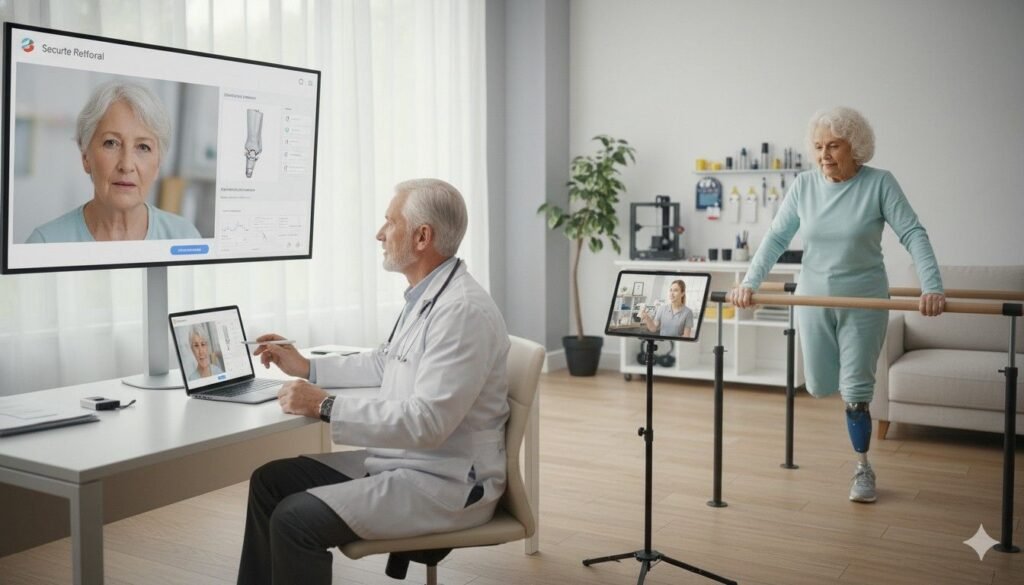
Always begin with the human question, not the device question.
Ask what the patient wants to do, who they want to be independent from, and what they fear losing most.
This anchors your decision in quality of life rather than technical features.
Strong outcomes start with strong understanding.
Prosthetic value unfolds over years, not weeks.
Train yourself to picture the patient’s life three to five years ahead, including work, family roles, and health changes.
This perspective naturally favors durable, adoptable, and well-supported solutions.
Long arcs reveal true cost-effectiveness.
Instead of asking whether something is expensive, ask what happens if it fails.
Loss of work, dependence on caregivers, emotional withdrawal, and device abandonment all carry real costs.
When consequences are weighed honestly, many value decisions become clearer.
This balance is the core of ICER thinking.
In modern prosthetic care, clinicians are no longer just device providers.
You are guardians of value, protecting patients from poor long-term choices and systems from wasteful spending.
This role requires judgment, empathy, and structured reasoning.
Cost-effectiveness tools strengthen this responsibility rather than restricting it.
Patients trust clinicians who explain not just what they recommend, but why.
When you openly discuss trade-offs, limitations, and long-term implications, patients feel respected.
This transparency reduces regret and increases satisfaction.
Trust itself improves adherence and outcomes.
Clinicians who understand cost-effectiveness speak confidently with administrators, funders, and policy makers.
You can explain why certain investments save money and suffering over time.
This leadership helps shape systems that support better care.
Clinical voices matter most when they are informed.
India’s resource constraints make cost-effectiveness more important, not less.
When every rupee matters, choices must be thoughtful and justified.
This environment rewards solutions that deliver real-world durability and adoption.
Clinicians who master value thinking thrive in this context.
Indian prosthetic innovation has matured rapidly, focusing on affordability without sacrificing function.
Locally built solutions often align better with patient lifestyles, work demands, and service access.
These factors directly improve quality-adjusted life years.
Cost-effectiveness improves when solutions fit reality.
When clinicians share feedback and outcome data, innovation improves.
Manufacturers design better, more usable devices when grounded in clinical truth.
This partnership strengthens the entire ecosystem.
Better ecosystems deliver better value.
Access to prosthetics is only the first step.
True success lies in access to outcomes that last.
Cost-effectiveness thinking helps move systems from counting devices delivered to lives improved.
This shift benefits patients, clinicians, and funders alike.
India needs its own data, reflecting its own realities.
Clinics that track outcomes and adoption create powerful evidence for change.
Over time, this evidence will shape better policies and coverage.
Clinicians are the foundation of this progress.
Responsible excellence means offering the best possible care within real-world limits.
It means neither under-serving nor over-promising.
Cost-effectiveness tools support this balance with structure and clarity.
This culture honors both science and dignity.
As prosthetic manufacturers working closely with Indian clinicians, we see the impact of thoughtful decisions every day.
We see patients who return to work, regain confidence, and rebuild identity because the right choice was made at the right time.
We also see how affordability, service, and training shape long-term success.
Cost-effectiveness is not a barrier to care; it is a bridge to better care when understood deeply.
As clinicians, your judgment remains central.
QALYs and ICERs are simply lenses that sharpen that judgment, helping you deliver care that lasts, matters, and respects the lives entrusted to you.
For many clinicians, the surgery is only the first step. What happens after the operation
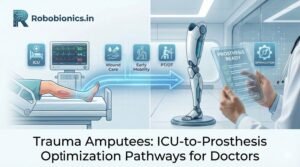
For trauma amputees, the journey does not begin at the prosthetic clinic. It begins much
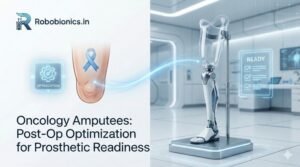
Amputation after cancer is not just a surgical event. It is the end of one

When a child loses a limb, the challenge is never only physical. A child’s body