
Post-Op Follow-Up Schedule That Prevents Prosthetic Delays (For Clinicians)
For many clinicians, the surgery is only the first step. What happens after the operation



The skin on the residual limb works harder than most people realize. It carries weight, handles pressure, absorbs friction, and responds to constant changes in movement and temperature. For many patients, this skin becomes the first line of struggle when using a prosthetic limb. Even a small area of redness or irritation can grow into pain, swelling, or days without the prosthesis.
For clinicians, protecting skin integrity is not just a part of care—it is essential for comfort, confidence, and long-term mobility. When the skin is healthy, patients walk more, stay active, and progress faster. When it breaks down, everything slows. Understanding the rates of breakdown, knowing how to prevent problems early, and tracking the right KPIs can transform patient outcomes.
This article explores the science behind skin integrity, the practical steps clinicians can take to protect it, and the simple metrics that show when patients are truly safe and stable.
The skin on a residual limb carries constant pressure from the socket.
With each step, it stretches, compresses, and shifts against the walls of the prosthesis.
Even simple daily movements create friction that the skin must tolerate again and again.
Unlike other areas of the body, this skin cannot fully rest during the day.
It works every moment the prosthesis is worn.
This constant load makes it easier for small irritations to grow into larger problems.
Understanding this vulnerability helps clinicians intervene before breakdown begins.
Inside the socket, heat builds quickly.
Sweat collects, and moisture becomes trapped against the skin.
This creates a warm, damp environment where irritation forms easily.
Moisture softens the skin and reduces its natural strength.
When soft, the skin rubs more easily and becomes prone to redness, blisters, or peeling.
For many patients, heat and moisture are the first warning signs of trouble.
Managing temperature and moisture becomes a key part of prevention.
Pressure is not harmful when distributed evenly.
Trouble appears when certain points carry too much load or absorb force in the wrong way.
These pressure peaks create soreness, bruising, or deeper tissue stress.
Even a small misalignment can shift pressure dramatically.
The body compensates, the socket presses harder in certain spots, and the skin absorbs the impact.
Clinicians can often predict breakdown simply by identifying pressure patterns.
Balanced pressure protects skin and promotes safe walking.
Skin exposed to repeated stress thickens to protect itself.
This thickening creates calluses, which are normal at first but can hide deeper problems.
Under the thick layer, pressure may still be damaging sensitive tissues.
If calluses crack, bacteria can enter and cause infection.
If they grow too fast, they indicate that pressure is not balanced.
These changes give clinicians valuable clues about underlying issues.
The skin often speaks before the patient feels pain.

Many patients experience skin irritation within the first year of prosthetic use.
Redness, swelling, or small sores appear frequently when the socket fit changes or activity increases.
Breakdown becomes especially common when a patient receives a new prosthesis or adjusts to new components.
These episodes slow rehabilitation and reduce confidence.
Some patients stop wearing the prosthesis temporarily, leading to muscle weakness and reduced mobility.
Understanding how common breakdown is helps clinicians respond without panic.
Frequent breakdown does not mean failure—it means the skin needs guidance.
Redness is often dismissed as a small or harmless sign.
But redness is the skin’s first warning that pressure or friction is rising.
When redness lasts longer than a few hours, it signals deeper stress.
If ignored, redness turns into swelling, blistering, or breakdown.
At this stage, pain rises and mobility drops.
Clinicians must treat early redness as a valuable alert, not an afterthought.
Small color changes carry large meaning.
Patients who walk more, stand longer, or return to work often experience more friction.
The more the prosthesis moves, the harder the skin must work to stay healthy.
This makes breakdown common during periods of increased activity.
At the same time, inactivity weakens the skin.
When patients become sedentary, blood flow decreases, and skin becomes more fragile.
A quick jump back into activity can overwhelm vulnerable tissue.
Skin thrives with steady, balanced movement.
Switching to a new socket, liner, or suspension system changes how forces interact with the limb.
Even helpful upgrades can confuse the skin if introduced too quickly.
It takes time for the skin to adapt to new patterns of pressure or movement.
During these transitions, irritation becomes more common.
Clinicians must watch closely during the first few weeks of change.
This period often reveals whether adjustments are needed.
Transitions require patient, attentive care.
A quick glance may show redness, but it rarely reveals what lies beneath.
Some areas look normal while deeper tissues experience pressure.
Other areas look irritated simply because the skin is adapting normally.
Clinicians use both sight and touch to assess skin.
They note warmth, thickness, moisture, and sensitivity.
These details show whether the skin is coping or struggling.
The best assessments go beyond surface appearance.
Patients often feel discomfort long before visible changes appear.
They may describe rubbing, pinching, or pressure that signals early stress.
This feedback gives valuable clues about socket problems.
Clinicians encourage open conversation about sensations.
When patients feel heard, they report issues early instead of hiding them.
This honesty prevents minor irritation from becoming major breakdown.
Patients feel their skin before clinicians see it.
Skin problems often show up during specific movements.
A patient may feel fine while standing but struggle during walking.
Certain steps expose pressure peaks that remain invisible at rest.
Clinicians observe how the limb moves inside the socket.
They watch for rotation, pistoning, or instability that strains the skin.
Movement patterns predict breakdown far more accurately than still images.
Dynamic assessment uncovers true risk.
Skin changes can appear suddenly, sometimes within hours.
Daily checks allow clinicians and patients to catch problems before they escalate.
Doctors teach patients how to observe color, texture, and temperature.
This empowers them to manage skin proactively rather than reactively.
Daily checks become part of a healthy routine.
Consistency protects skin better than any product alone.
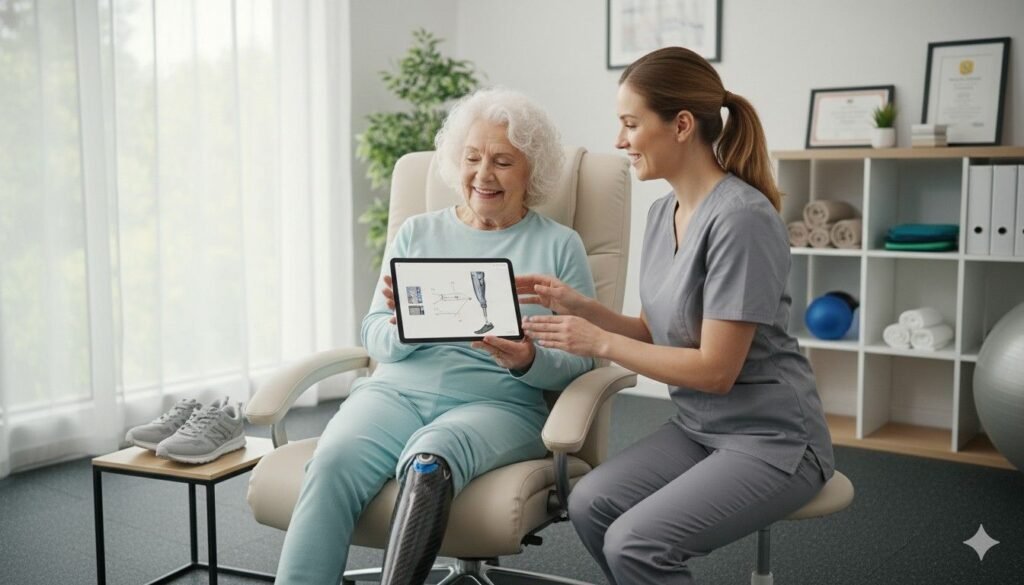
Moisture trapped inside the socket makes the skin softer and more fragile.
Sweat builds quickly during activity, especially in warm climates.
If not managed, moisture leads to irritation and breakdown.
Clinicians teach patients how to clean the limb gently, dry it completely, and use suitable products.
This simple practice strengthens the skin’s ability to handle pressure.
It also reduces bacterial growth and lowers infection risk.
Dry skin is strong skin.
A dirty or worn liner can cause friction, odor, or trapped moisture.
These issues irritate the skin and create a cycle of discomfort.
Patients learn to wash liners daily, rotate pairs when possible, and check for damage.
A clean, intact liner makes the skin feel secure and safe inside the prosthesis.
This care becomes part of maintaining long-term comfort.
A cared-for liner protects a cared-for limb.
New patients often try to wear their prosthesis for long hours immediately.
But the skin needs time to adapt to pressure, heat, and movement.
Clinicians create wearing schedules that increase time slowly.
This allows the skin to strengthen naturally without becoming overwhelmed.
It also helps patients learn their own limits.
Slow adaptation builds durable skin.
Strong muscles help stabilize the limb inside the socket.
Better stability reduces pressure peaks and prevents unwanted movement.
Clinicians guide patients through targeted exercises for hips, core, and residual limb muscles.
These exercises create smooth, controlled movement that protects the skin.
As strength improves, irritation decreases.
Strong muscles make soft tissue safer.
Redness is often the first clue that the skin is struggling.
It shows where pressure is rising or where the limb and socket are not working together smoothly.
If redness fades within a short time, it usually reflects normal adaptation.
When redness lingers for hours or grows darker, it signals deeper stress.
This stage warns that the skin is no longer coping well.
Clinicians step in quickly to prevent swelling or blistering.
Redness speaks early so breakdown does not have to.
Swelling creates a painful cycle inside the socket.
As the limb swells, the fit becomes tighter.
This tighter fit then increases friction and pressure, which worsens the swelling.
If swelling continues, the patient may struggle to insert the limb into the socket.
They may feel sharp pain, heat, or throbbing that limits walking.
Clinicians break the cycle by identifying the cause and adjusting the schedule or fit.
Quick action prevents small swelling from turning into big setbacks.
Blisters form when friction overwhelms the skin.
They can appear suddenly after long walks or during hot weather.
Even a small blister can make socket wear extremely uncomfortable.
When blisters burst, they create open areas that are vulnerable to infection.
Patients must often stop wearing the prosthesis to allow healing.
Clinicians guide them through protection, cleaning, and temporary movement alternatives.
Blisters demand gentle, immediate care.
Skin tears often happen when the skin becomes dry, fragile, or irritated.
They may appear near bony areas or areas exposed to repeated rubbing.
These tears heal slowly because the skin must continue working inside the socket.
Clinicians teach protective routines, adjust pressure points, and support healing with dressings.
This helps reduce the chance of infection or widening of the tear.
Patients learn to protect vulnerable areas with mindful care.
A tiny tear can interrupt weeks of progress if not managed well.
Residual limb volume changes throughout the day.
Heat, activity, and hydration all influence how the limb expands or shrinks.
These changes affect how the socket fits at each moment.
When volume increases, pressure rises sharply and irritates the skin.
When volume decreases, the limb moves more inside the socket, increasing friction.
Clinicians help patients balance these shifts with sock adjustments and daily monitoring.
Volume awareness protects daily comfort.
Gaining or losing weight changes limb shape, even when the patient feels the same.
These small shifts alter how pressure distributes inside the socket.
Over time, these changes can create pressure peaks and new areas of irritation.
Clinicians reassess fit during weight changes to prevent breakdown.
They adjust the socket or suspension system so pressure stays even.
This keeps skin from working harder than it should.
Fit must grow with the patient.
Increased walking, running, or lifting changes how the limb moves inside the socket.
More activity usually brings more friction, heat, and sweating.
If the skin is not prepared, breakdown becomes more likely.
Clinicians monitor socket interaction during activity progressions.
They support the patient with strengthening routines and wearing schedules.
This prevents discomfort from rising during high-activity phases.
Activity and fit must evolve together.
Patients may think the socket is defective when swelling makes it feel tight.
But once the swelling fades, the socket may feel normal again.
This confusion creates anxiety about fit and safety.
Clinicians help patients understand these temporary changes.
They teach ways to respond with adjustments, rest, or controlled activity.
This understanding helps patients stay calm and confident.
Knowledge prevents unnecessary worry.
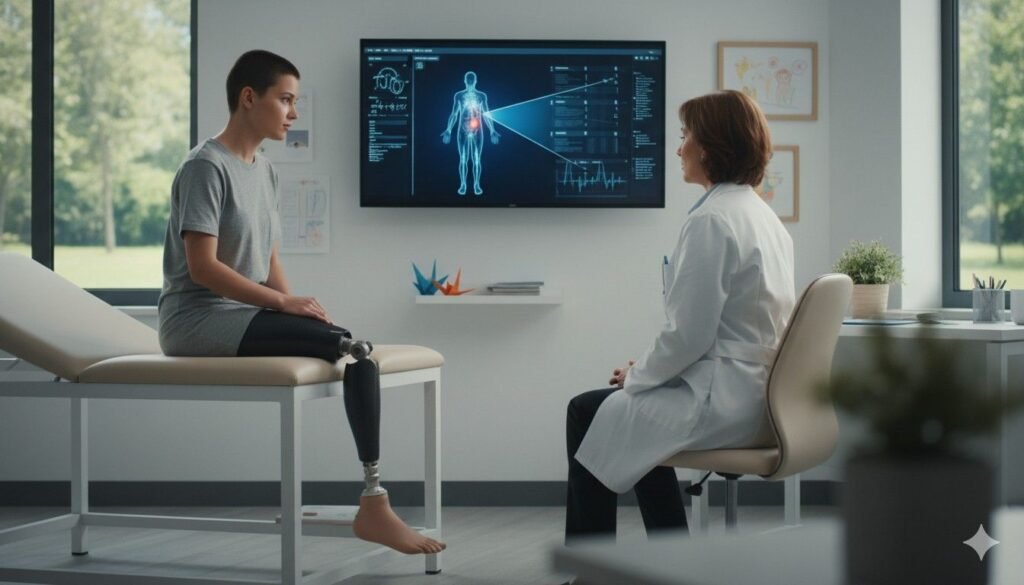
When gait is uneven, the limb shifts unpredictably inside the socket.
This causes higher shear forces that rub, pinch, or twist the skin.
Even small deviations—like shorter steps or leaning—can increase risk dramatically.
Clinicians watch for these early gait changes.
They adjust alignment, strengthen weak muscles, and teach smoother patterns.
These changes reduce stress on sensitive areas.
Smooth gait creates smooth pressure.
Weak hips and core muscles cause the body to compensate in ways that strain the skin.
The limb may press harder on one side or twist during steps.
These compensations cause irritation even with a well-fitting socket.
Physicians prescribe strengthening routines to stabilize the body.
As muscles strengthen, gait becomes more symmetrical.
This reduces rubbing and keeps the skin healthier.
Strength stabilizes both movement and skin.
When patients are tired, they lose control of their movement.
Steps become less stable, weight shifts unevenly, and balance becomes harder to maintain.
This increases skin stress dramatically.
Clinicians watch how fatigue affects gait during long sessions.
They teach pacing, rest strategies, and energy-saving techniques.
These habits prevent irritation during long days of activity.
Fatigue management protects skin as much as technique.
Even a small misalignment in the socket or foot can increase pressure in one area.
This pressure creates redness, calluses, or deeper tissue stress.
Clinicians use alignment adjustments to distribute pressure evenly.
These adjustments reduce friction and allow the skin to rest during movement.
Patients often notice immediate relief.
Alignment is a quiet but powerful protector.
Sweat softens the skin and reduces its durability.
Once softened, the skin tears more easily and becomes more irritated.
Patients in warm climates experience this more intensely.
Heat inside the socket can build quickly, especially during long walks.
Clinicians help by recommending breathable liners and moisture-control routines.
Managing sweat helps the skin stay firm and resilient.
High temperatures weaken the skin’s outer layers, making them more likely to break.
Cold temperatures reduce circulation, slowing healing and increasing stiffness.
Clinicians help patients adapt to seasonal changes with proactive strategies.
They offer guidance for hot months, cold periods, and humid environments.
These seasonal adjustments protect comfort all year.
Temperature awareness supports healthier tissue.
Warm, moist environments encourage bacterial growth.
This increases the risk of odor, irritation, and infection.
Daily hygiene routines help control bacteria.
Clinicians also teach patients how to care for liners, socks, and socket interiors.
This reduces the risk of skin complications.
Clean environments support clean, calm skin.
The wrong clothing traps heat and sweat around the limb.
Thick or non-breathable materials make the limb feel hotter inside the socket.
Clinicians guide patients toward simple, breathable fabrics.
These small choices create cooler environments that reduce irritation.
Clothing becomes part of long-term skin strategy.
Comfort starts with the fabric the patient wears.
Patients often feel unsure about how to care for their skin.
They fear doing something wrong or causing damage.
Clear instructions help remove this fear.
Clinicians break routines into easy steps.
Patients learn how to clean, dry, inspect, and protect their skin with confidence.
This independence empowers them to manage their health proactively.
Confidence reduces anxiety and anxiety reduces irritation.
Patients who know what normal looks like can identify abnormal signs quickly.
They report redness, swelling, or pain earlier than those who are unsure.
This quick reporting prevents escalation.
Clinicians reinforce awareness through follow-up visits.
This constant feedback loop strengthens the patient’s skill.
Awareness prevents small problems from becoming crises.
Education builds early action.
Anxious patients often check the skin too often or worry about every small mark.
This stress increases muscle tension and sweat, which worsens irritation.
Doctors help patients approach skin care with calmness.
They reassure them that the body is capable and resilient.
This helps the patient relax into healthy habits.
Emotional ease supports physical ease.
Skin care routines must evolve over time.
As the patient becomes more active, new challenges appear.
Clinicians guide these transitions through simple conversations.
These check-ins catch new problems early.
They also help patients feel supported from day one.
When support is steady, skin remains steady.
Conversation becomes its own form of prevention.

Skin issues can change quickly.
Without clear measurement, it is easy to miss early warnings.
KPIs give clinicians a structured way to track what matters.
These indicators show when the skin is adapting well and when it is struggling.
They highlight subtle shifts before breakdown appears.
This allows clinicians to intervene early and protect long-term comfort.
KPIs turn observation into meaningful action.
Redness that fades within a short time suggests the skin is coping.
Redness that lingers signals deeper irritation or pressure imbalance.
This duration becomes a simple yet powerful KPI.
Clinicians track how long redness lasts after socket removal.
Shortened duration suggests improvement in pressure distribution.
Prolonged duration calls for immediate investigation.
Time reveals what the skin cannot say directly.
Wearing time reflects how well the skin tolerates pressure.
If patients reduce wear time due to discomfort, something is wrong.
Clinicians track the number of hours patients wear their prosthesis each day.
Consistent increases show progress, while decreases signal stress.
This KPI guides adjustments in fit, routine, or activity.
Wearing time is a window into comfort.
Activity increases friction, heat, and load.
Tracking how much activity the skin tolerates helps clinicians understand stability.
If patients tolerate longer walks without irritation, adaptation is improving.
If irritation appears during short walks, activity levels need adjustment.
This KPI helps balance progression and safety.
Activity tolerance shows the skin’s true resilience.
Breakdown frequency tells the story of overall limb management.
Frequent breakdown suggests deeper issues with fit, gait, or hygiene.
Clinicians track the number of breakdown episodes across weeks or months.
A decreasing trend shows healing and adaptation.
An increasing trend shows the need for broader intervention.
Fewer breakdowns mean stronger, healthier skin.
Skin does not strengthen overnight.
It adapts slowly through steady, repeated exposure to pressure.
Clinicians guide patients through gradual increases in socket wear and activity.
This progression helps the skin become more durable without becoming overwhelmed.
Slow progress leads to permanent resilience.
Patience keeps the skin safe.
Daily routines create stability for the limb.
Cleaning, drying, moisturizing, and inspecting become habits that protect the skin.
Clinicians help patients build these gentle routines into their daily lives.
Over time, these small steps prevent irritation, infection, and discomfort.
Routine becomes a foundation for independence.
Consistency is a quiet form of strength.
Life brings changes—weather shifts, stress, workload, and health fluctuations.
These changes affect the skin more than patients realize.
Clinicians teach patients how to adapt their routines when changes appear.
This flexibility prevents unexpected flare-ups.
It helps the skin stay healthy through all seasons of life.
Adaptation protects comfort every day.
Skin health changes over months and years.
Even stable limbs can develop problems when routines shift or activity increases.
Regular follow-ups allow clinicians to catch issues early.
They adjust fit, check alignment, and review care habits.
These visits keep patients safe as their lives evolve.
Ongoing care makes long-term success possible.
Prosthetic technology has advanced to distribute pressure more evenly.
Sockets now shape around sensitive areas with greater precision.
Suspension systems stabilize the limb with less friction.
Clinicians use these innovations to protect the skin during daily movement.
The right design reduces hotspots and minimizes mechanical stress.
Design becomes a partner in skin protection.
Better technology brings gentler support.
Advanced components allow smoother, more controlled movement.
This reduces sudden shifts that irritate the skin.
Clinicians consider these components when stability or balance is a concern.
When movement becomes more natural, friction decreases.
This improvement protects the residual limb.
Smooth motion supports quiet skin.
Soft liners cushion the skin and absorb shear forces.
Breathable materials reduce heat and moisture.
Clinicians choose materials based on the patient’s lifestyle and sensitivity.
A well-chosen liner makes the skin feel safer inside the socket.
Material selection becomes a clinical tool.
Comfort begins with what surrounds the limb.
Adjustable sockets help match daily volume changes.
This customized fit prevents pressure spikes when the limb swells or shrinks.
Clinicians use adjustable systems for patients with fluctuating volume patterns.
These designs reduce friction and allow the skin to rest.
Adjustment becomes part of stability.
A flexible fit supports flexible comfort.
Protocols turn good intentions into consistent action.
They guide patients through clear routines that protect the skin every day.
Clinicians design protocols based on individual needs, lifestyle, and limb condition.
These protocols help patients feel safe and supported.
They also prevent gaps in care that lead to irritation.
Structure creates safety.
The earlier a problem is found, the easier it is to fix.
Small issues rarely become painful when caught early.
Clinicians teach patients how to identify early signs.
They create simple steps for reporting concerns without delay.
Together, this teamwork prevents complications.
Early discovery protects long-term stability.
Strong muscles reduce unpredictable limb movement.
This protects the skin from rubbing and pressure.
Clinicians build strengthening routines that match the patient’s ability.
These routines support smoother gait and better alignment.
Strength becomes a shield for the skin.
Muscle consistency protects tissue consistency.
Weather affects sweat, dryness, and swelling.
Clinicians prepare patients for these seasonal changes before they begin.
Summer protocols manage heat and moisture.
Winter protocols protect dry skin and circulation.
Balanced guidance keeps the limb safe in every season.
Preparing early prevents surprises.
Patients often worry when they see small changes in the skin.
This fear can make them hesitant to wear their prosthesis.
Clinicians explain what is normal and what needs attention.
This clarity reduces stress and builds trust.
When fear fades, care routines become easier.
Guidance opens the door to confidence.
Patients are more willing to follow routines when they feel supported.
Empathy helps them stay engaged and hopeful.
Clinicians use calm, kind communication to encourage healthy habits.
This emotional bond leads to better compliance and stronger outcomes.
Support makes routines sustainable.
Kindness strengthens healing.
Patients who understand their body become better caregivers to themselves.
They learn to adjust socks, clean liners, and manage comfort.
Clinicians teach these skills step by step.
Over time, patients become confident in their own care.
Independence becomes part of daily life.
Education transforms the patient’s relationship with their limb.
Activity increases blood flow and builds resilience.
The skin adapts more quickly when used regularly.
Clinicians help patients choose safe activities and progress slowly.
This builds a healthy balance between challenge and protection.
Activity becomes a friend rather than a threat.
Movement teaches the skin how to thrive.
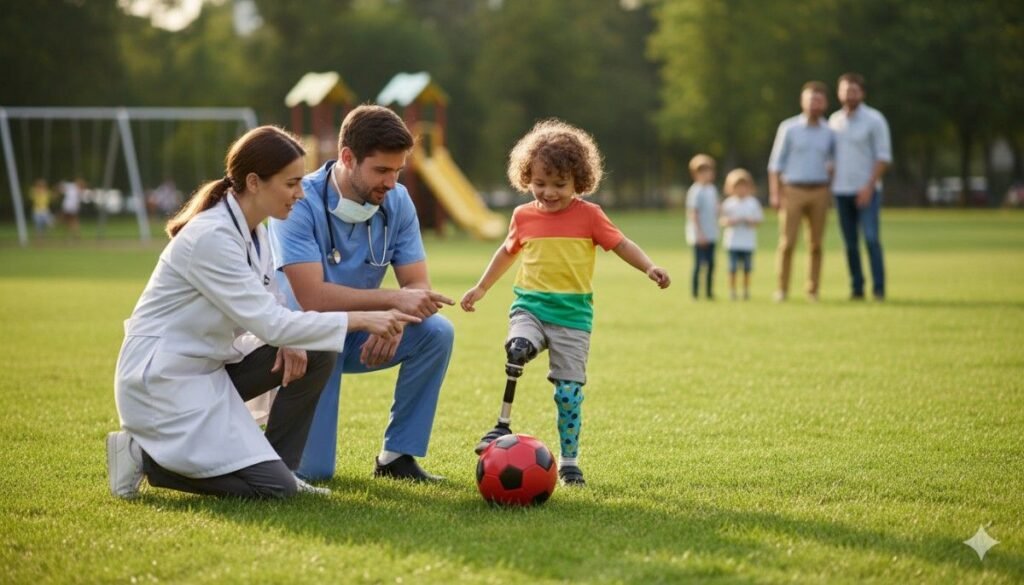
Residual limb skin integrity is the foundation of comfortable, confident prosthetic use.
When the skin is healthy, patients move with ease, trust their prosthesis, and progress through rehabilitation without fear.
But when the skin breaks down, everything slows — walking becomes painful, confidence fades, and long-term goals move further away.
Clinician-led strategies make all the difference.
With careful assessment, gentle communication, and thoughtful prevention protocols, clinicians can help patients avoid unnecessary discomfort.
KPIs bring clarity to the process, showing when the skin is adapting well and when it needs support.
With consistent care, early intervention, and guided routines, patients learn how to protect their skin and keep it strong for years.
At Robobionics, we understand how fragile skin can feel and how deeply it affects daily life.
Our prosthetic solutions — from advanced liner systems to carefully engineered components — are designed to reduce friction, balance pressure, and support healthy movement.
We work closely with clinicians across India to ensure every patient receives safe, personalized care that protects both their skin and their confidence.
If you would like to explore how Robobionics can support your patients through better skin health, more stable mobility, and a smoother prosthetic journey, we welcome you to schedule a demo anytime.
Together, we can help every patient step forward with comfort, clarity, and hope.
For many clinicians, the surgery is only the first step. What happens after the operation

For trauma amputees, the journey does not begin at the prosthetic clinic. It begins much

Amputation after cancer is not just a surgical event. It is the end of one

When a child loses a limb, the challenge is never only physical. A child’s body