
Post-Op Follow-Up Schedule That Prevents Prosthetic Delays (For Clinicians)
For many clinicians, the surgery is only the first step. What happens after the operation



Scar care after amputation is often treated as a small detail. In reality, it plays a major role in how comfortable, stable, and successful a prosthetic limb will be. A scar is not just a mark on the skin. It affects movement, pressure, pain, and how well a socket fits the body.
Many delays in prosthetic fitting happen not because of the prosthesis itself, but because the scar is tight, painful, or poorly healed. When scar care is done early and done right, the limb accepts a prosthesis faster and with fewer problems.
In this article, we will explain scar management after amputation in a clear and practical way. We will focus on why scars behave the way they do, how they affect prosthetic fit, and what patients and doctors can do every day to improve outcomes. Everything shared here is based on real clinical experience and real prosthetic challenges, explained in simple words that are easy to understand.
Scar care is not about perfection. It is about comfort, confidence, and long-term success with a prosthetic limb.
A scar is the body’s natural way of closing a wound. After amputation, the skin and deeper tissues repair themselves by forming scar tissue. This tissue is strong, but it is different from normal skin.
Scar tissue is often thicker and less flexible. It does not stretch or move in the same way as healthy skin. This difference is what creates many problems during prosthetic use.
During healing, the body focuses on speed, not comfort. It lays down fibers quickly to seal the wound. These fibers often grow in tight and uneven patterns.
Because of this, scars may feel hard, raised, or tight. Some scars also stick to the tissue below, limiting smooth movement of the skin.
Some scars heal flat and soft. Others become thick, sensitive, or painful. The way a scar heals depends on surgery, skin type, blood flow, and early care.
Problem scars are not a failure. They are a sign that the scar needs attention and guidance to heal better.
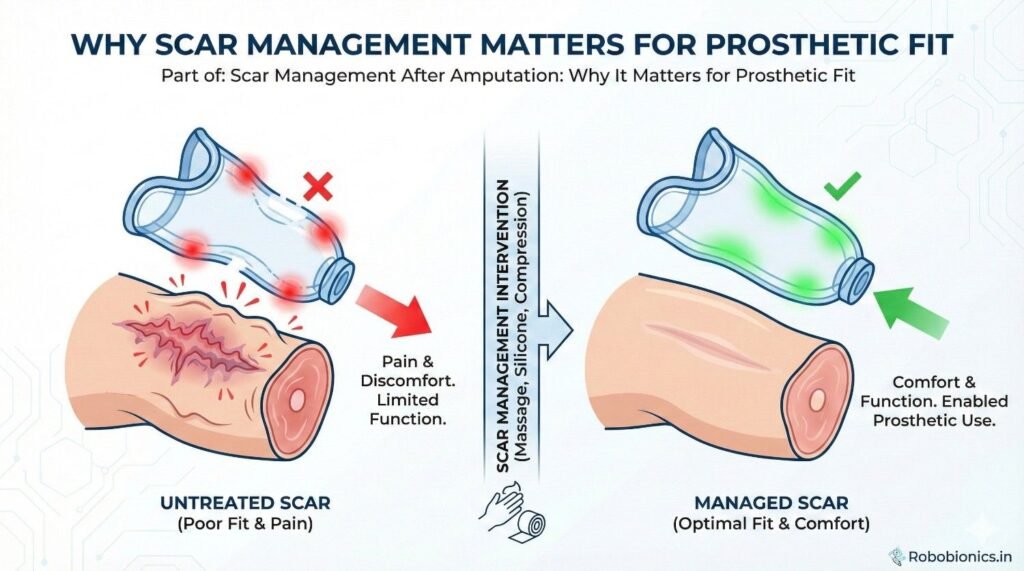
A prosthetic socket applies pressure to the residual limb to provide support. The scar sits directly under this pressure.
If the scar is tight or painful, even a well-made socket can feel uncomfortable. This often leads to reduced wear time or rejection of the prosthesis.
Scar tissue handles pressure differently than normal skin. It can become sore or break down more easily when rubbed.
Without proper scar care, friction inside the socket can cause skin injury and repeated pain.
Scars that pull the skin inward can change the shape of the limb. This affects how the socket fits and how weight is spread.
Restricted skin movement can also limit comfort during walking or hand use.
These scars follow the line where the surgeon closed the skin. They are usually straight but can become tight if not cared for.
Even clean surgical scars need regular attention to stay flexible.
Some scars stick to the tissue or bone underneath. This limits skin movement and increases pain during prosthetic use.
Adherent scars often need focused therapy to loosen them safely.
Some scars become raised or hard over time. These scars are more sensitive to pressure and touch.
Early care helps reduce thickness and improve comfort.
In the first few weeks, scars are fragile. Swelling and scabbing are common during this stage.
Gentle care during this period sets the foundation for long-term comfort.
As healing continues, scars may feel tight or itchy. This is when many problems start if care is ignored.
This stage is ideal for starting guided scar management.
Even months later, scars continue to change. Without care, they may remain stiff or painful.
Scar management remains useful long after the wound closes.
Physicians play a key role in explaining scar healing. When patients know what to expect, they are more likely to follow care steps.
Clear guidance early prevents fear and confusion.
Doctors check color, thickness, movement, and pain levels. These signs show how the scar is healing.
Early detection of problems allows timely correction.
Scar care often involves physiotherapists or occupational therapists. Physicians guide this teamwork.
Proper coordination leads to better outcomes and fewer delays.
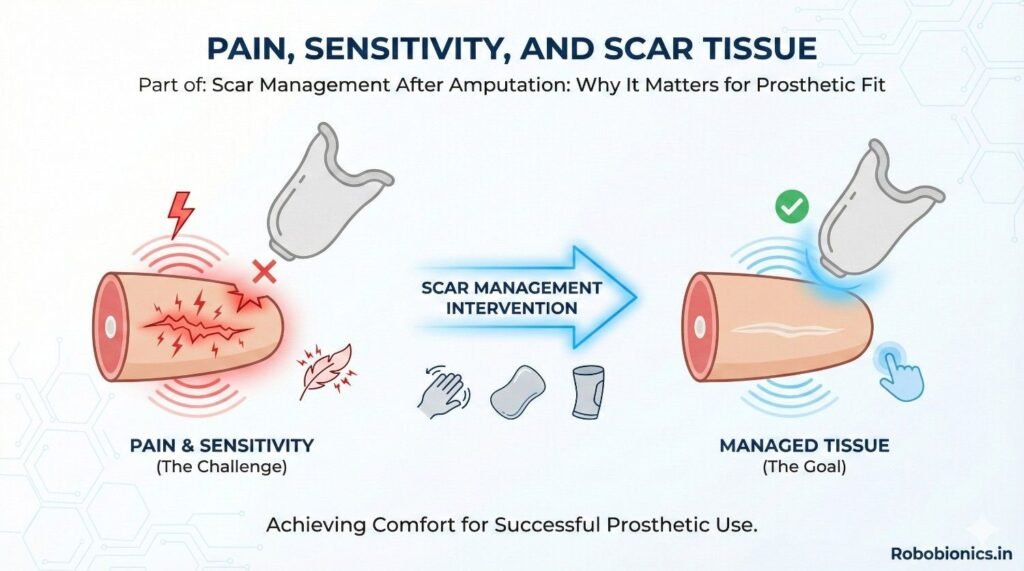
Nerves near the surgical site may heal unevenly. Scar tissue can trap or irritate these nerves.
This causes sharp pain, burning, or discomfort during pressure.
Some scars react strongly to light touch or pressure. This makes wearing a prosthesis difficult.
Gradual exposure and care help reduce sensitivity over time.
Pain leads patients to avoid using their prosthesis. Avoidance slows recovery and reduces confidence.
Managing scar pain early supports better prosthetic use.
Persistent scar pain can frustrate patients. Many fear that the prosthesis will never feel right.
These emotions affect motivation and healing.
Scars that limit movement or cause pain reduce confidence in daily tasks.
Scar care helps restore trust in the body.
Patients often need reassurance that scar problems are common and treatable.
Physicians who offer support improve both emotional and physical recovery.
Scar care does not begin the day stitches are removed. It begins with careful observation from the early healing stage. Physicians guide patients on when the skin is ready to be touched and worked on safely.
Starting too early can harm healing, while starting too late can allow stiffness to settle in. The right timing makes scar care effective and safe.
Many patients avoid touching their scar due to fear or discomfort. This avoidance often increases sensitivity over time. Physicians encourage gentle touch once healing allows it.
Slow and light contact helps the skin and nerves adjust. Over time, the scar becomes less reactive and more comfortable inside a prosthetic socket.
Scar care works best when done daily in small amounts. Strong or painful methods do not speed healing and may cause setbacks.
Physicians stress regular, gentle care rather than forceful techniques. This steady approach improves comfort and flexibility.
Scar massage helps loosen tight tissue and improves skin movement over deeper layers. This movement is essential for comfort during prosthetic use.
When the skin moves freely, pressure spreads evenly inside the socket, reducing pain.
Regular massage helps soften thick scars over time. This makes the scar feel closer to normal skin.
Softer scars handle pressure better and reduce the risk of skin breakdown.
Not all scars need the same massage approach. Physicians guide patients on direction, pressure, and duration based on scar type.
Correct technique prevents injury and improves results.
Dry skin becomes stiff and cracks easily. Physicians often recommend simple moisturizers to keep scar tissue flexible.
Healthy moisture supports skin movement and comfort during prosthetic wear.
Not all creams are suitable for healing scars. Fragrance-free and gentle products are preferred.
Physicians guide patients to avoid products that irritate or clog the skin.
Moisturizers are usually applied after cleaning and before rest. This allows better absorption and skin recovery.
Proper timing improves skin health and comfort.
Sensitive scars need slow exposure to touch and pressure. Physicians recommend starting with soft materials and light contact.
Over time, stronger textures are introduced as comfort improves.
Scar desensitization prepares the skin for socket contact. This reduces pain when prosthetic fitting begins.
Early preparation prevents rejection of the prosthesis.
Sensitivity reduces slowly. Patients are encouraged to stay patient and consistent.
Small improvements add up over time.
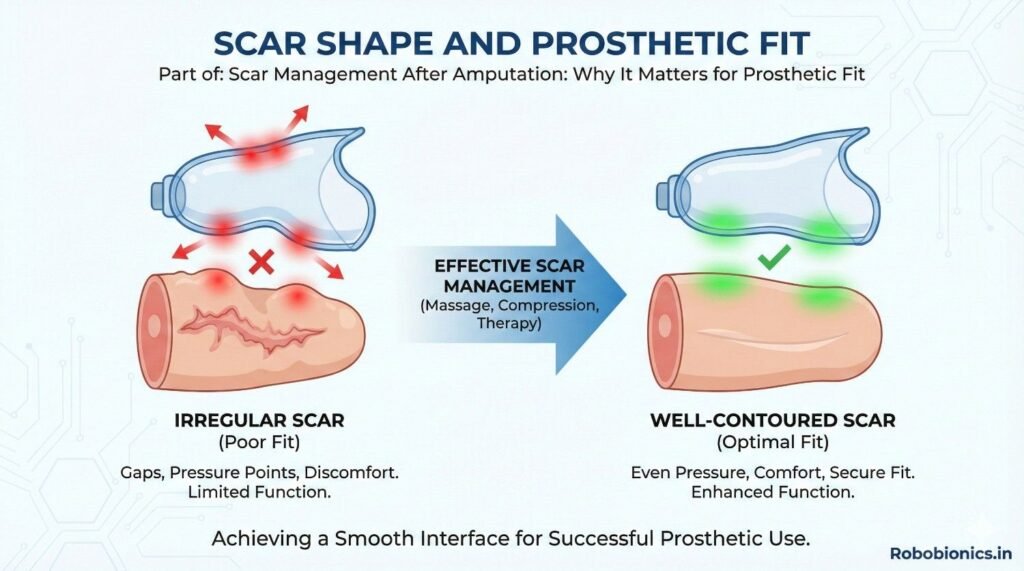
Flat scars spread pressure evenly. Raised or sunken scars create pressure points.
Physicians focus on shaping the scar area to support better socket fit.
Scars that pull the skin inward affect limb shape. Early care helps reduce this pulling effect.
Better shape leads to more stable prosthetic fitting.
Scars continue to change for months. Ongoing care helps guide these changes in a positive way.
This long-term approach improves prosthetic comfort.
Many patients stop care once the wound closes. This is when problems often begin.
Physicians remind patients that scar care is still important long after healing.
Pain does not mean progress. Pain often means damage.
Scar care should feel firm but comfortable, not painful.
Self-guided care without guidance can cause harm. Physicians and therapists provide safe direction.
Professional input improves outcomes.
Healthy scars allow faster prosthetic casting. There is less pain and fewer skin issues.
This speeds up the entire fitting process.
Well-managed scars reduce pressure problems. This lowers the need for socket adjustments.
Fewer changes save time and effort.
A comfortable first prosthetic experience builds trust and confidence.
Scar care plays a key role in this success.
Scar care works best when it becomes part of everyday life rather than a special task done once in a while. Physicians often advise patients to link scar care with daily habits such as bathing, dressing, or bedtime routines. This makes it easier to remember and easier to follow over long periods.
At home, the focus is not on doing many things, but on doing the right things regularly. Gentle cleaning, light massage, and checking the skin daily help the scar stay soft and healthy. When these steps are done consistently, problems are noticed early and managed before they grow.
Home settings can affect scar healing more than people realize. Rough surfaces, tight clothing, and poor hygiene can irritate scars. Physicians guide patients to create a clean and comfortable space for limb care.
Simple changes like using soft towels, clean bedding, and loose clothing reduce irritation. These small adjustments support healing and improve comfort during recovery.
As scars start to feel better, many patients reduce their care routine. This often leads to setbacks. Physicians remind patients that scar tissue continues to change for many months.
Continuing care even when the scar feels normal helps maintain flexibility and comfort. This discipline protects long-term prosthetic success.
Scar tissue does not stay the same. It can tighten, soften, or become sensitive again depending on activity and health. Physicians monitor scars over time to catch changes early.
Regular follow-ups allow small problems to be corrected before they affect prosthetic use. This long-term view is critical for lasting comfort.
As patients become more active and start using a prosthesis, scar demands change. Increased movement and pressure require adjusted care strategies.
Physicians update scar care plans to match new activity levels. This keeps the scar protected while allowing progress.
Ignoring scars after prosthetic fitting can lead to breakdown and pain later. Ongoing monitoring prevents these issues.
Long-term scar care protects skin health for years of prosthetic use.
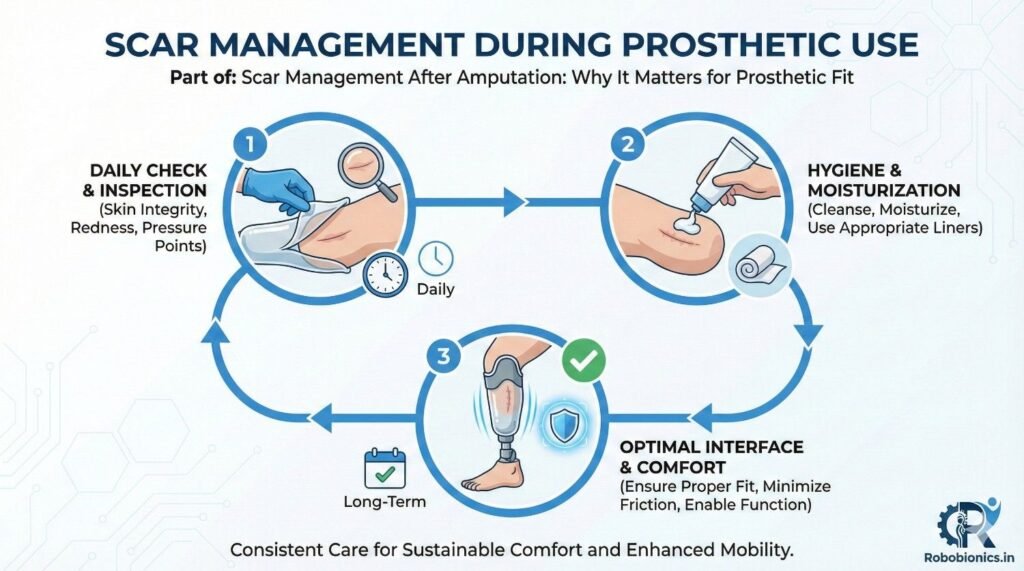
The early phase of prosthetic use is demanding for scars. New pressure and friction can expose weaknesses in scar tissue.
Physicians guide patients to limit wear time initially and check the scar often. This careful approach prevents injury and builds tolerance.
Pain, redness, or tightness are signs the scar needs attention. Physicians teach patients to listen to these signals instead of pushing through pain.
Early response prevents long breaks from prosthetic use later.
Using a prosthesis builds strength and confidence, but rest allows skin recovery. Physicians help patients find the right balance.
This balance supports steady progress without setbacks.
Modern prosthetics are designed to fit closely and respond to small movements. This close fit means scars feel pressure more directly.
Healthy scars allow these devices to work as intended. Poor scar health limits performance and comfort.
For advanced prosthetics, stable skin improves control and reduces fatigue. Scar tightness or pain can reduce signal quality and movement accuracy.
Good scar care supports better daily use and longer wear time.
Prosthetic devices are valuable tools. Scar problems can shorten their effective use.
Proper scar care protects both the limb and the prosthesis.
Physicians continue to educate patients even after prosthetic fitting. Scar care remains part of every follow-up visit.
This ongoing support builds confidence and trust.
Patients may hide discomfort to avoid seeming ungrateful or difficult. Physicians encourage honest feedback about scar pain or tightness.
Open communication leads to better care decisions.
Scar care is not a short phase. It is a long-term practice that supports lifelong mobility.
Physicians help patients understand this broader picture.
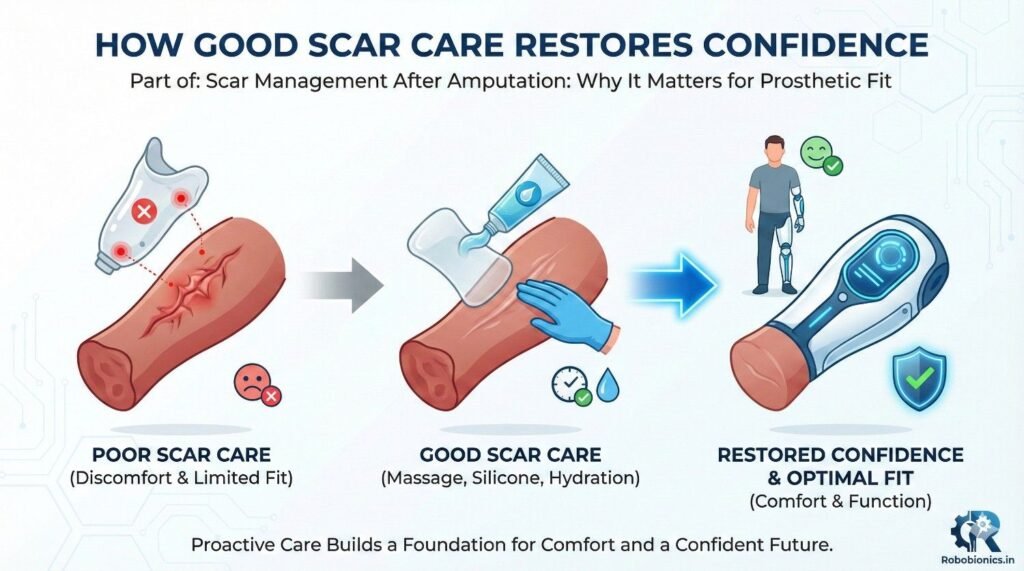
When scars are comfortable, patients trust their bodies again. This trust encourages movement and independence.
Scar care supports both physical and emotional recovery.
Fear of pain limits activity. Good scar management reduces this fear and improves participation.
Patients move more freely and confidently.
Comfortable scars make daily tasks easier. Independence grows naturally from this comfort.
Scar care plays a quiet but powerful role in this process.
A scar affects every step of prosthetic use. Comfort, fit, and confidence all depend on scar health.
Ignoring scars often leads to avoidable problems.
Scar care should begin early and continue long term. This approach saves time, pain, and effort.
Physicians who focus on scar management improve overall outcomes.
When scars are soft, flexible, and comfortable, prosthetic use becomes easier. Life feels more normal again.
Scar management is not just about skin. It is about restoring comfort, dignity, and independence.
At Robobionics, we work closely with people who are preparing for prosthetic limbs and those who are already using them. Across clinics and cities, one pattern is very clear. When scar care is done well, prosthetic fitting becomes smoother. When scar care is ignored, even the best prosthesis struggles to perform.
Many users come to us with discomfort that is blamed on the prosthetic device. But after careful review, the root cause is often a tight, sensitive, or poorly managed scar. This is why we place strong importance on scar health from the very beginning.
Modern prosthetics, especially lightweight and advanced systems, are designed to fit closely and move naturally with the body. This close fit means the skin and scar must handle pressure well.
A soft and flexible scar allows even pressure spread inside the socket. This reduces pain, improves balance, and allows longer wear time. On the other hand, a tight or painful scar can limit use no matter how advanced the technology is.
Bionic and myoelectric prosthetics depend on stable contact between the limb and the socket. Scar tightness, skin pulling, or sensitivity can affect signal quality and control.
When scar care is done properly, users experience smoother movement, better control, and less fatigue. This is especially important for hand prosthetics, where small movements matter greatly.
One of the biggest reasons prosthetic fitting is delayed is poor scar readiness. Open areas, pain, or skin breakdown force clinicians to wait.
Good scar care reduces these delays. When the scar is healthy, fitting can begin sooner and with more confidence.
Poor scars often lead to repeated socket changes. Each change costs time and effort and affects morale.
Healthy scars reduce pressure complaints and allow the prosthesis to fit well from the start. This improves the overall experience for the user.
The first few weeks with a prosthesis shape long-term acceptance. Pain or discomfort during this stage often leads to rejection.
Scar management helps ensure the first experience is positive, comfortable, and encouraging.
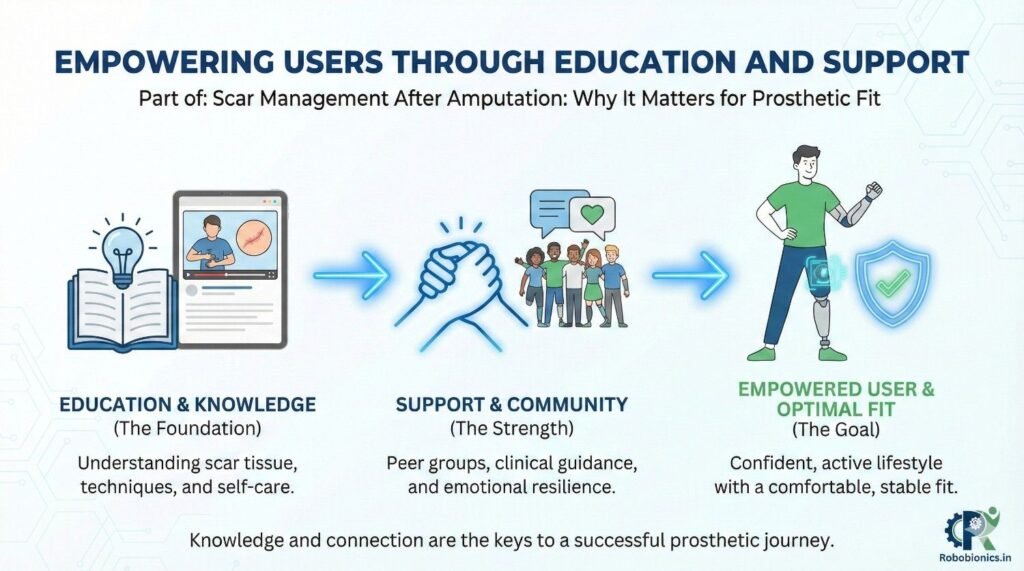
Many people fear touching their scar or applying pressure. This fear slows recovery. Education replaces fear with confidence.
At Robobionics, we believe that when users understand their bodies, they recover better and adapt faster.
Scar care is not only the doctor’s responsibility. It is a shared effort between the user, the clinician, and the prosthetic team.
When everyone works together, outcomes improve and recovery feels less overwhelming.
Prosthetic life is long-term. Scar care supports comfort not just today, but years down the line.
This long view is essential for lasting mobility and independence.
Scar care may feel small compared to surgery or prosthetic fitting, but its impact is large. It affects comfort, confidence, and daily life.
Giving scar care the attention it deserves can change the entire recovery journey.
If something feels tight, painful, or unusual, speak up. Early attention prevents long-term problems.
Active involvement leads to better outcomes.
Every body heals at its own pace. Patience, consistency, and care lead to the best results.
Scar care supports steady and safe progress.
Scar management after amputation is not about cosmetic appearance. It is about comfort, movement, and dignity. A well-managed scar allows the body to accept a prosthesis as a natural extension, not a burden.
At Robobionics, we see scar care as a foundation for prosthetic success. When scars are soft, flexible, and healthy, technology performs better and lives improve faster.
Good scar care shortens recovery time, improves prosthetic comfort, and restores confidence. It is one of the simplest steps that creates one of the biggest differences.
If you or your loved one is preparing for a prosthetic limb, start with scar care. It is the quiet step that opens the door to a stronger, more comfortable, and more independent future.
For many clinicians, the surgery is only the first step. What happens after the operation

For trauma amputees, the journey does not begin at the prosthetic clinic. It begins much

Amputation after cancer is not just a surgical event. It is the end of one

When a child loses a limb, the challenge is never only physical. A child’s body