
Post-Op Follow-Up Schedule That Prevents Prosthetic Delays (For Clinicians)
For many clinicians, the surgery is only the first step. What happens after the operation



The fit of a prosthetic socket can shape a person’s whole day. When the socket feels right, life feels easier. Walking, moving, working, and even small daily tasks become smoother. But when the socket hurts or feels loose, everything becomes harder. This is why the Socket Comfort Score, or SCS, matters so much. It gives clinicians a clear and simple way to understand how a person feels in their socket. And it helps them know when to adjust, when to refit, and when to check deeper issues.
The SCS may look like a small number on a chart, but behind that number is a real person trying to live their life with comfort and confidence. For clinicians, this score is a guide. For users, it becomes a voice—an easy way to say what their body feels. In this article, we explore how the SCS works, how clinicians can use it in daily practice, what thresholds truly mean, and how to catch early signs that a refit may be needed.
The Socket Comfort Score is a simple rating from 0 to 10.
A score of 0 means the socket feels unbearable.
A score of 10 means it feels perfectly comfortable.
This simple range helps clinicians understand the user’s daily experience.
It also gives users an easy way to explain what they feel without needing medical terms.
The SCS focuses mainly on comfort.
But comfort connects to many deeper things like fit, pressure, skin condition, limb volume, and movement.
So even though the score is simple, the meaning behind it is rich and useful.
People using prosthetic limbs deal with many changes each day.
Their limb volume may shift in the morning or evening.
Sweat, temperature, movement, and activity levels can all change comfort fast.
A long form or complex survey would slow down the process.
The SCS works because it is quick.
A user can share their score in seconds, and the clinician can respond right away.
This quick exchange builds trust.
It helps the user feel heard.
And it allows the clinician to catch small issues before they become big problems.
The body reacts quickly to pressure.
If the socket presses too hard in one area, the skin becomes tender.
If the socket is too loose, the limb moves inside, causing rubbing.
These small problems can grow over time.
Tender spots turn into blisters.
Blisters turn into open skin.
And open skin can bring pain or risk of infection.
That is why the SCS matters.
It becomes a daily check-in between the person and their prosthetic device.
It keeps both user and clinician aware of changes in comfort and safety.
Clinicians often rely on tests, scans, and measurements.
But many of those tools cannot fully capture how the user truly feels.
Comfort is personal.
Only the person wearing the socket can explain it.
The SCS gives clinicians a dependable, user-centered measurement.
It brings a balance between clinical judgment and personal experience.
It lets the clinician connect the user’s story with technical understanding.
This clarity helps shape better care, better outcomes, and better long-term socket health.

Clinicians can collect the score at every visit.
Some ask during follow-up calls.
Others ask users to track it at home and send updates.
The best time to ask is when the user has been active.
After walking, working, or moving for a while, they can share a more accurate score.
This helps clinicians understand real-life performance, not just clinic-room comfort.
Asking for the score regularly also shows patterns.
If the score drops over a week or month, the clinician knows something is changing.
The SCS is not just a number.
It is a conversation starter.
A low score opens the door for questions like where it hurts, when it hurts, or what movement triggers the issue.
These small details guide the clinician toward the root problem.
Maybe the limb volume has changed.
Maybe the socket is worn.
Maybe the liner is old.
Or maybe the user needs training in certain movements.
Each detail helps create a clear plan for improvement.
Comfort changes through the day.
Some users feel better in the morning.
Others feel relief only after moving for a while.
Many feel more discomfort when it is hot or humid.
Clinicians who understand these patterns can plan better timing for adjustments.
They can also teach users how to manage volume changes with socks, gel liners, or minor habits.
Tracking how the score shifts through seasons also helps.
Hot summers, cold winters, and rainy months all affect the skin.
The SCS makes these seasonal changes visible and easy to discuss.
When a clinician sees a low SCS, they act.
But the action depends on the pattern.
A sudden drop might mean a new issue.
A slow decline might mean the socket is wearing out.
Sometimes the problem is small, like a pinch point.
Sometimes it signals deeper issues like alignment or suspension.
The SCS helps clinicians decide which path to take.
It makes decisions quicker and more accurate.
And users feel safer knowing their comfort is the center of the discussion.
A score in this range means the user feels good.
There may be small pressure points, but nothing that affects daily life.
Clinicians usually do not need to adjust the socket right away.
This range is ideal when the user is active, stable, and happy with their prosthesis.
But the clinician still tracks changes, because even small shifts can grow over time.
This range shows mild discomfort.
The user may feel rubbing, warmth, or uneven pressure.
It is not painful, but it is distracting or annoying.
Clinicians often inspect the socket more closely at this range.
They check skin marks, alignment, and limb volume.
Small corrections can bring the score back up.
This is also a good time to ask lifestyle questions.
Has the user increased activity?
Has the weather changed?
Are they using socks correctly?
Understanding the cause helps guide the next steps.
Now the discomfort is significant.
The user may limit walking or avoid wearing the prosthesis for long.
They may complain of pressure or soreness.
This range often signals a real issue that needs a quick fix.
The clinician may adjust the socket, change padding, trim edges, or realign components.
If the issue is deeper, the clinician may begin planning a future refit.
The priority is to prevent skin breakdown and restore mobility.
This is a warning zone.
The user feels strong pain or cannot wear the socket for long.
Skin damage is likely or already present.
At this point, clinicians usually stop the user from wearing the socket until the issue is fixed.
A detailed inspection follows.
The prosthesis may need a major adjustment or even a complete remake.
Safety becomes the top priority at this stage.
A low SCS is never ignored.
Thresholds help clinicians make quick decisions without guessing.
They protect the user from worsening pain.
And they help plan follow-ups, adjustments, and preventive care.
When the clinician knows the score and its meaning, the user receives timely help.
This creates a sense of trust, safety, and comfort.
If a user jumps from an 8 to a 4 within a week, something changed fast.
Maybe the limb is swollen.
Maybe they walked more.
Maybe a liner tore or a sock got old.
Sudden drops are red flags.
Clinicians act quickly to understand what happened.
These fast changes often need immediate adjustments.
If a user says their comfort shifts too quickly during the day, it may signal volume fluctuation.
Morning comfort becoming evening pain is worth checking.
The SCS helps track these shifts.
Clinicians then teach users how to manage volume with sock plies or hydration.
If variations grow too large, a refit may be needed.
Some marks are normal.
But marks that stay for hours or cause redness indicate pressure problems.
If the SCS is dropping along with these marks, refit is likely needed.
Clinicians check which part of the socket is causing the issue and adjust accordingly.
If pain appears in a new place, the socket may no longer match the limb shape.
This often happens months after fitting.
Limb shape changes naturally over time.
A drop in SCS combined with new pain almost always signals a need for adjustment.
If a user used to wear the prosthesis all day but now wears it for only a few hours, the score will reflect it.
This drop in wear time is one of the clearest signs a refit may be necessary.
The SCS tells the clinician how much the comfort loss affects daily life.
If the score stays below 5 for weeks, even after small adjustments, the socket may no longer be suitable.
In such cases, the clinician begins planning a new socket.
The SCS proves useful here because it shows whether earlier corrections worked or not.

Many users are new to rating comfort on a number scale.
They may feel unsure about choosing the right number.
Clinicians can guide them with simple examples.
For instance, they can say that a score of 10 means they forget the socket is there.
A score of 5 means they notice discomfort but can manage.
A score of 0 means they cannot wear the socket at all.
Giving these simple descriptions helps users choose numbers confidently.
Over time, they become better at rating with accuracy.
Clinicians can also remind users that there is no right or wrong score.
The number simply reflects how they feel in that moment.
This honesty helps capture real comfort levels.
To help users give better ratings, clinicians can ask short, clear questions.
Questions like when did the discomfort start or what activity increased the pain help users think more clearly.
Some users may say they are fine even when they are not.
They may not want to trouble the clinician.
These gentle questions help draw out the truth.
Clinicians can also ask whether the discomfort feels sharp, dull, or burning.
This helps the user break down their feelings.
These details make the SCS more meaningful.
A single score tells only part of the story.
Tracking scores over weeks gives the full picture.
Users can write scores in a notebook, a phone note, or even a simple printed chart.
This habit builds awareness.
Users start recognizing patterns in their comfort.
Clinicians can then see if comfort is stable, improving, or declining.
This long-term tracking makes decisions easier and more accurate.
Some users worry that low scores mean they are “complaining”.
Clinicians can reassure them that low scores are helpful.
They show where support is needed.
When users learn that low scores lead to better adjustments, they speak honestly.
This honesty leads to safer and more comfortable outcomes.
The human limb changes size during the day.
It may swell in the morning and shrink in the evening.
It may also shift with weather, activity, and hydration.
These changes affect socket comfort.
A snug fit in the morning can become loose later.
A loose fit can lead to rubbing and pressure.
The SCS helps track when these changes cause discomfort.
Clinicians then guide users on how to add or remove socks to control the fit.
Healthy skin is key to long-term success with prosthetic use.
When the skin is stressed, the comfort score drops.
Redness, blisters, dry patches, or warmth all reduce the SCS.
Clinicians check the skin wherever the score drops.
This helps find problem spots early.
A user may say the socket hurts at the bottom.
But the issue may be on the side.
Inspecting the skin reveals the exact point of trouble.
Every limb has its own shape.
Over time, that shape changes.
Muscles gain or lose strength.
Soft tissue adapts to activity.
When the limb changes shape, the socket may no longer match well.
A mismatch can make the comfort score fall gradually.
This slow decline is often the first clue that a new socket may be needed.
By tracking the SCS, clinicians can plan ahead rather than reacting to an emergency.
If the prosthesis is not aligned properly, pressure shifts.
This can make walking uneven or tiring.
The comfort score may drop even if the socket itself is fine.
Suspension issues also matter.
If the prosthesis feels loose or unstable, the user may tense their muscles.
This strain lowers comfort.
Clinicians check alignment and suspension whenever the score drops without clear skin issues.
A user who walks more will feel different than a user who sits most of the day.
Activity shapes comfort.
If a user begins a new job or hobby, their SCS may change.
A desk job may bring sweating inside the socket.
A field job may increase movement and pressure.
By combining lifestyle changes with SCS trends, clinicians make accurate adjustments.
If the SCS moves from 8 to 6, small fixes often help.
Clinicians may adjust padding or add soft layers.
They may guide users on adding proper sock thickness.
These small steps often bring comfort back quickly.
Users feel supported and reassured.
A drop from 7 to 3 is more serious.
This usually means a bigger problem like shape mismatch or pressure imbalance.
Clinicians may reshape parts of the socket.
They may grind tight areas or smooth rough edges.
Sometimes, they adjust alignment to balance pressure.
These adjustments take more time but bring lasting relief.
If many adjustments do not fix the issue, a new socket may be the right solution.
A stable limb needs a stable socket.
If the SCS stays low for many weeks, the clinician begins planning a remake.
This prevents long-term pain and skin damage.
A new socket helps users regain confidence and daily comfort.
After any adjustment, clinicians ask for the SCS again.
This confirms whether the solution worked.
If the score rises, the adjustment helped.
If it stays the same, more work is needed.
This cycle of adjust, recheck, and confirm builds a system that works well for both user and clinician.

The SCS encourages honest discussions.
Users feel safe sharing discomfort.
Clinicians respond with empathy and action.
This trust makes long-term care smoother.
Users stay more engaged in their prosthetic journey.
Life changes affect comfort.
New jobs, weight changes, stress, or illness all shape the limb.
By using the SCS regularly, clinicians can support users through these shifts.
The user does not have to explain everything in detail.
A number tells the story.
The comfort score reveals early warning signs.
Small declines show early issues.
Sudden changes reveal urgent problems.
Clinicians who watch patterns closely can act early.
This prevents pain, injury, or long breaks in wearing the prosthesis.
When users track their SCS, they become more in tune with their limb.
They learn what causes comfort and what causes pain.
This awareness helps them make better daily choices.
Small habits like drinking water, using socks correctly, and cleaning the socket become natural.
These habits improve comfort and raise the score over time.
Clinicians guide the user on how to rate comfort.
They explain the scale, its purpose, and its importance.
Clear education builds confidence in using the SCS.
The SCS is not only the clinician’s tool.
It is a shared tool between the user and clinician.
Both work together to improve comfort.
This teamwork leads to better care and stronger outcomes.
Clinicians who track the score consistently build strong data.
Patterns become obvious.
Trends guide decisions.
Consistency helps clinicians catch small issues early.
It also helps users feel heard and supported.
Some users stay silent even when they feel discomfort.
Clinicians can reassure them that sharing low scores is important.
It helps prevent pain and keeps the prosthesis comfortable.
This encouragement leads to honest and open communication.
Not every user can visit the clinic often.
Distance, work, or travel make it difficult.
The SCS helps clinicians check comfort from far away.
Users can send their score through calls or messages.
Clinicians then guide them with simple steps until the next in-person visit.
If a user sends a low score, clinicians can advise them on sock use, limb care, or activity adjustments.
These small tips help maintain comfort until the next appointment.
If a remote user reports very low scores, the clinician knows the issue is serious.
This helps plan urgent visits or rapid support.
Users in rural regions may have fewer clinics nearby.
The SCS gives them a way to stay connected.
They can still receive guidance and feel supported.
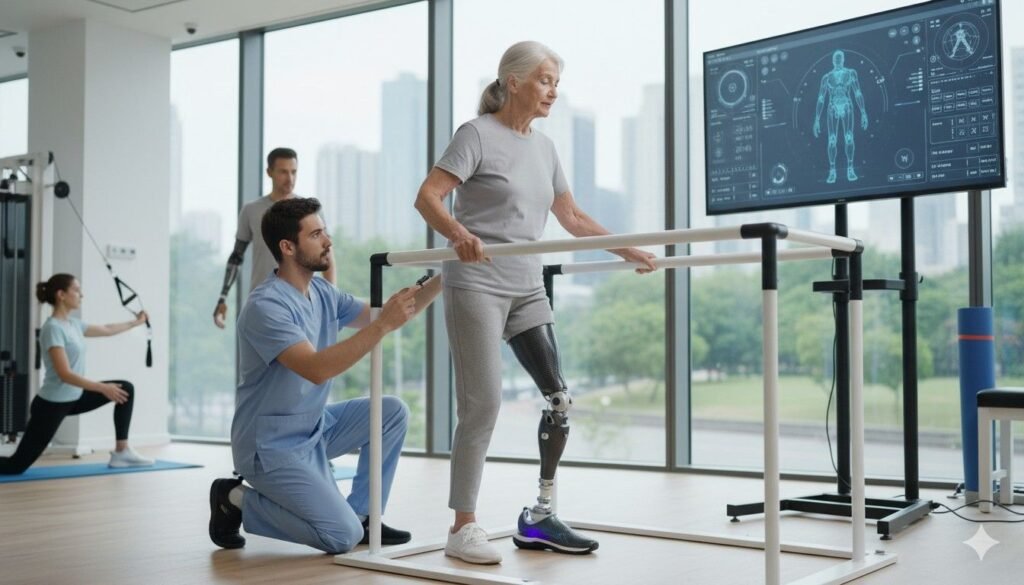
When someone first starts using a prosthetic socket, every sensation feels new.
They may not know what is normal pressure and what is harmful pressure.
They may not notice small changes from morning to evening.
But over time, they start recognizing patterns.
They learn how their limb feels after walking, after resting, or after standing still.
They notice how certain movements push the limb in certain directions.
They become more aware of where the socket holds them well and where it presses too much.
This awareness grows slowly, like learning a new language of touch and pressure.
The SCS helps guide this learning process.
Each number encourages users to think about what their body is telling them.
It helps them turn vague feelings into clear messages for the clinician.
With practice, users become experts in their own comfort.
They can describe changes more confidently.
They can notice discomfort earlier.
They can react faster and prevent small issues from turning into large problems.
Comfort is not just physical.
It also affects how someone feels emotionally through the day.
A well-fitted socket makes a person feel steady, safe, and ready to move.
A painful socket can make them feel tired, anxious, or discouraged.
When users give a low SCS score, they are not just reporting pain.
They are sharing how their day is going.
They may feel frustrated about their mobility.
They may feel worried that something is wrong.
Clinicians who listen with empathy help users feel understood.
This emotional support matters just as much as the technical work on the socket.
The SCS becomes a bridge between the user’s inner experience and the clinician’s medical understanding.
It helps users open up.
It helps clinicians respond with care.
And it brings humanity into every conversation.
Not everyone can easily explain what they feel.
Some users may say “it hurts,” but they may not know how to describe the type of pain.
Others may use one word for many sensations — pressure, rubbing, burning, pulling, or tingling.
Clinicians can gently guide them with simple questions:
Does it feel sharp like a needle?
Does it burn like heat?
Does it rub like a shoe that is too tight?
Does it feel heavy like weight on one side?
These comparisons help users express their feelings clearly.
They learn how to turn sensations into words.
And these words, paired with the SCS number, help clinicians find solutions faster.
Over time, users become more confident.
They begin using clearer terms.
They become active partners in their own care.

When a user rates their comfort between 8 and 10, it means more than “no pain.”
It means the socket supports their life fully.
They move freely without thinking about discomfort.
Their day flows smoothly.
They do not avoid tasks or change their movement to escape pressure.
A high score often means the socket is well-aligned, the limb is stable, and the suspension is secure.
It means the skin stays healthy and dry.
It also means the user trusts their prosthesis.
Trust is very important.
When someone trusts their prosthesis, they take bold steps.
They walk confidently on uneven roads.
They try new activities.
They feel less held back by fear or doubt.
This trust grows when the SCS stays consistently high.
It shows that the prosthesis is not just a device — it is a reliable part of the user’s day.
Scores between 5 and 7 may seem acceptable, but they often carry deeper messages.
They tell the clinician that comfort is changing, but not yet alarming.
They show that the user is managing, but making small compromises.
Maybe the user feels pressure after long walks.
Maybe they notice rubbing when it is hot outside.
Maybe swelling makes the socket tight at certain times of day.
These scores reveal early signs of trouble.
They warn the clinician that the socket needs attention soon.
They help avoid major discomfort by catching issues early.
In this range, users often hesitate to speak up.
They may think the issue is too small to mention.
But these small issues can grow quickly.
The SCS helps clinicians spot them without waiting for pain to get worse.
Scores between 3 and 4 paint a clear picture.
The user is struggling.
They feel discomfort that limits their movement or confidence.
They may walk less, rest more, or avoid wearing the prosthesis for long hours.
The user might notice redness that does not fade.
They might feel pinching during every step.
They may feel the limb shifting inside the socket.
These scores alert the clinician that immediate care is needed.
The socket may need reshaping, padding changes, or alignment correction.
If unaddressed, this range can quickly lead to skin breakdown.
A score between 0 and 2 is not just a discomfort rating — it is a warning sign.
It means the user is in real pain.
Wearing the prosthesis feels difficult or impossible.
Users may remove the socket multiple times a day.
They may avoid daily tasks.
They may feel frustrated or discouraged.
These scores often come with visible issues: swelling, blisters, open skin, or sharp stress points.
In such cases, the clinician must act quickly.
The user may need to stop wearing the prosthesis temporarily.
The socket may require major adjustments or total replacement.
These low scores protect users from serious complications.
They ensure clinicians prioritize safety above all else.
The SCS is powerful, but it does not stand alone.
Clinicians combine it with their observations, tests, and experience.
A user may report a score of 6, but the clinician might see deep pressure marks.
Or a user may report a 9 even though the liner is worn out.
The clinician’s eye helps balance the user’s words with physical signs.
Together, the score and the clinical exam paint a full picture of the user’s limb health.
Professional clinicians rely on patterns, not single moments.
A user may rate an 8 one day and a 5 the next, but the reason matters.
Did they change jobs recently?
Did weather become hotter or more humid?
Did they walk more than usual this week?
Did their limb shrink because they lost weight?
Clinicians read these patterns like chapters in a story.
They help users understand changes that may otherwise feel confusing.
This guidance creates a smooth path through long-term use.
The SCS helps clinicians decide how often the user needs follow-up visits.
A stable high score means fewer clinic visits.
A falling score means more frequent check-ins.
By using the score as a guide, clinicians protect the user from surprises.
They plan refits at the right time, not too early and not too late.
They also prevent unplanned breaks in prosthetic use.
Some users struggle to explain their comfort.
Others feel shy or nervous about reporting low scores.
A clinician’s tone, patience, and warmth help users feel safe.
When users feel safe, they speak honestly.
When they speak honestly, clinicians make better decisions.
This emotional aspect is one of the strongest benefits of the SCS system.
When the socket fits well, movement feels natural.
Walking feels smoother.
Steps feel lighter.
Users move without hesitation.
But when the socket hurts, every step feels tense.
A small shift in pressure can change the entire walking pattern.
Users may lean to one side or shorten their stride.
These changes look small, but over time they affect the hips, back, and knees.
Comfort protects the whole body, not just the limb.
A comfortable socket helps users participate in life fully.
They feel confident attending work, going to school, or meeting friends.
They engage without worrying about discomfort or pain.
A painful socket can make someone avoid long outings.
They may fear the pain returning.
They may feel distracted or frustrated in social situations.
Comfort gives users freedom.
Pain takes that freedom away.
For many users, the prosthesis can feel like something controlled by the clinician.
But the SCS flips that idea.
It gives users a voice in their care.
It gives them power to influence decisions.
Each number they share becomes a message that shapes their treatment.
This involvement builds confidence.
It makes users feel like partners, not patients.
The Socket Comfort Score may look like a simple number, but behind every rating is a full story about a person’s daily comfort, confidence, and well-being.
It helps users express what they feel.
It helps clinicians understand what needs attention.
And it brings both together in a shared journey toward better mobility.
Over time, the SCS becomes more than a tool.
It becomes a language that both user and clinician understand.
A language that turns sensations into clear messages and emotions into practical actions.
A language that protects the limb, safeguards the skin, and prevents small issues from growing into major pain.
True comfort in a prosthetic socket is never accidental.
It comes from honest communication, careful observation, steady follow-up, and a willingness to adjust as the limb and lifestyle change.
It comes from knowing when to act quickly and when to plan ahead.
And it comes from treating the user not just as a patient, but as a partner.
When used consistently, the SCS guides every step of this process.
It helps clinicians make precise decisions.
It helps users feel heard and supported.
And it creates a smoother, safer, and more confident prosthetic experience.
In the end, the goal is simple:
A socket that feels good.
A limb that stays healthy.
And a person who can move freely, live fully, and trust their prosthesis every single day.
For many clinicians, the surgery is only the first step. What happens after the operation

For trauma amputees, the journey does not begin at the prosthetic clinic. It begins much

Amputation after cancer is not just a surgical event. It is the end of one

When a child loses a limb, the challenge is never only physical. A child’s body