
Post-Op Follow-Up Schedule That Prevents Prosthetic Delays (For Clinicians)
For many clinicians, the surgery is only the first step. What happens after the operation



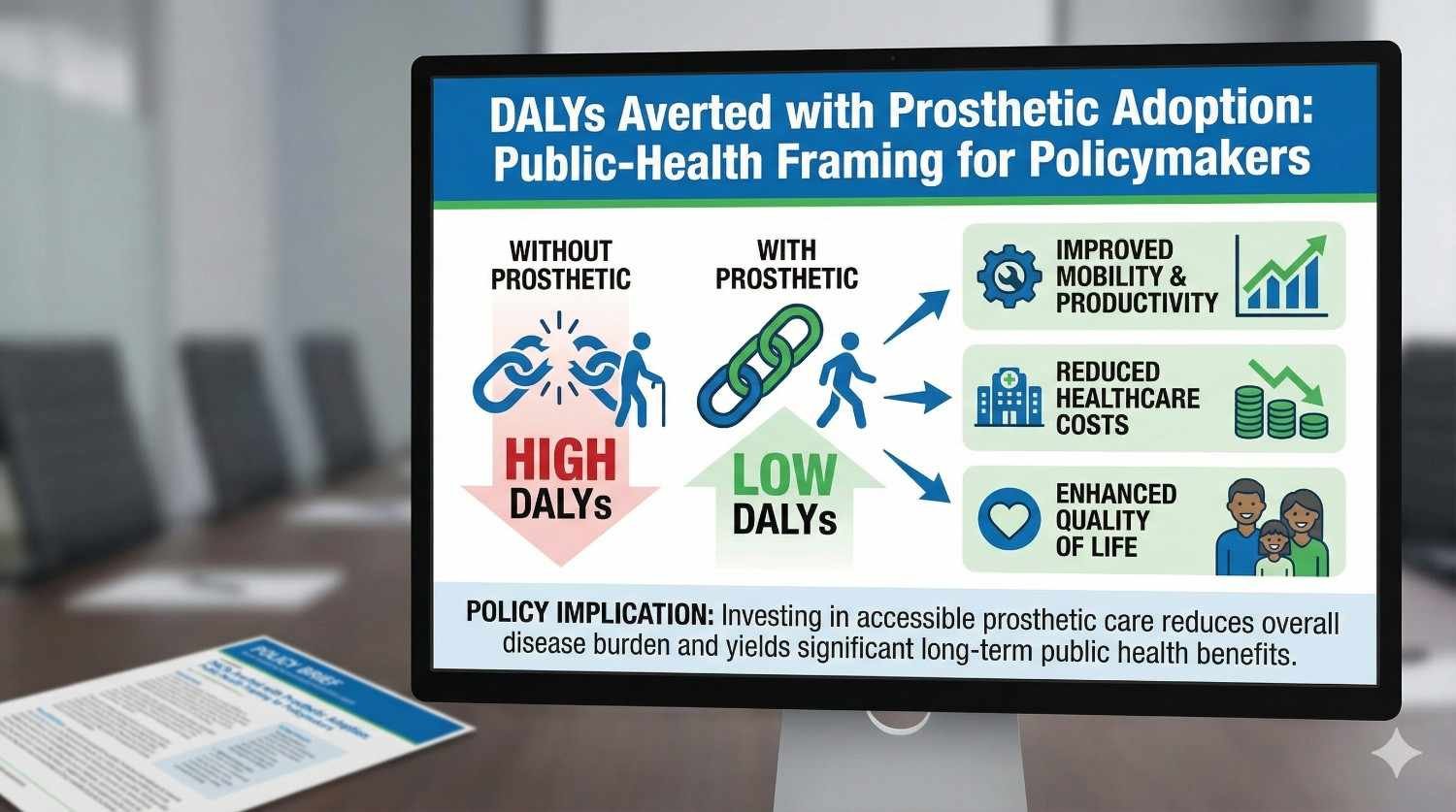
Public health decisions are often guided by numbers that explain human suffering in a clear way. DALYs, or disability-adjusted life years, are one such measure. They show how much healthy life is lost due to illness or disability. Limb loss carries a heavy DALY burden, yet prosthetic care is rarely framed as a public health solution.
This article looks at prosthetic adoption through a DALY lens, written for policymakers and public health leaders. It explains how timely, affordable prosthetics reduce disability, restore productivity, and return healthy years of life to individuals and communities. The aim is to shift prosthetics from a charity or welfare view to a core public health investment with measurable impact.
A DALY measures years of healthy life lost.
It combines early death and years lived with disability.
One DALY equals one lost year of full health.
For policymakers, DALYs allow comparison across diseases.
They show where suffering and loss truly sit in society.
Budgets are limited and needs are many.
DALYs help decide where investment brings the biggest return.
When DALYs reduce, people live healthier and work longer.
This benefits families, economies, and health systems together.
In limb loss, death is not the main driver.
Long years lived with disability dominate the DALY burden.
This makes rehabilitation and prosthetics powerful tools.
They directly reduce the disability part of DALYs.
Amputation is often seen as rare.
In reality, diabetes, trauma, cancer, and infection drive many cases.
In low- and middle-income countries, numbers are rising.
Most amputees live decades after limb loss.
Those decades carry heavy disability weight without prosthetics.
Limb loss affects work, travel, and self-care.
It also affects mental health and social participation.
When people withdraw from society, disability deepens.
DALYs increase quietly year after year.
Prosthetics interrupt this downward spiral.
When people cannot work, households suffer.
Children leave school. Caregivers lose productivity.
These effects are not always counted in health budgets.
But they reflect real loss of healthy life.
Reducing disability restores economic participation.
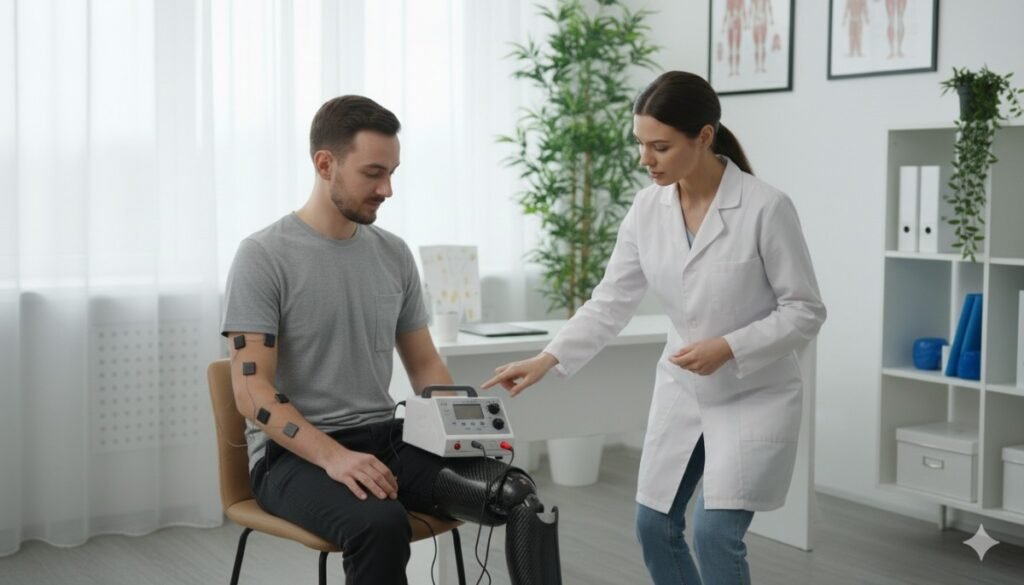
A well-fitted prosthesis restores mobility.
Mobility enables work, education, and independence.
Daily function improves across many activities.
Each improvement reduces disability weight.
Over time, this saves many healthy years.
Early prosthetic access prevents long-term decline.
Delayed access allows disability habits to set in.
The longer a person stays immobile, the higher the DALY cost.
Early adoption maximizes years of benefit.
Policy that speeds access multiplies impact.
Not all prosthetics deliver the same benefit.
Poor fit or poor support leads to abandonment.
Abandoned devices do not reduce DALYs.
Sustained use is what matters.
Systems must support long-term adoption, not just delivery.
Many public health programs are judged by cost per DALY saved.
Prosthetic rehabilitation often performs very well by this metric.
One device can restore function for years.
The cost spread over time becomes low.
This makes prosthetics a high-value investment.
Vaccines and treatments may act once.
Prosthetics act every day the person uses them.
Each day of mobility adds healthy life.
The cumulative DALY reduction is large.
Few interventions offer such sustained benefit.
DALY reduction through prosthetics affects more than health.
It impacts labor, education, and social welfare.
Cross-sector benefits strengthen the policy case.
One investment serves many goals.
Prosthetics are often framed as personal aids.
This places them outside population-level planning.
DALY framing brings them back into public health.
It shows aggregate impact, not individual stories alone.
Language shapes policy attention.
Health, social welfare, labor, and disability often act separately.
Prosthetic care falls between these domains.
Without ownership, investment stays low.
DALYs continue to accumulate.
Integrated policy reduces fragmentation.
Policymakers rely on numbers.
Prosthetic impact is rarely presented in DALYs.
Without familiar metrics, benefits feel unclear.
DALY-based framing fixes this gap.
Clarity enables action.

Amputation in working age causes major productivity loss.
Each year without mobility adds disability.
Prosthetic adoption restores earning capacity.
DALYs averted extend to families and dependents.
This group delivers strong economic return.
Rural livelihoods depend on physical mobility.
Without prosthetics, disability is more severe.
Access gaps increase DALYs disproportionately.
Targeted prosthetic programs close equity gaps.
Equity-focused policy maximizes impact.
Children and young adults face decades of disability.
Early prosthetic adoption changes life trajectory.
Each year of function gained compounds over time.
DALYs averted are very high.
Early investment yields lifelong return.
DALY calculation starts with disability weight.
Limb loss has established weights in global studies.
Without prosthetics, disability remains high.
With prosthetics, weight reduces significantly.
This difference represents DALYs saved.
The longer a prosthesis is used, the greater the impact.
Programs must track sustained use, not just delivery.
Maintenance and follow-up matter for DALY outcomes.
Abandonment reduces benefit.
Policy should fund continuity, not one-time supply.
Mobility reduces secondary illness.
Heart disease, depression, and obesity risk fall.
These effects further reduce DALYs.
Indirect benefits strengthen the case.
Universal health coverage aims for meaningful health.
Function is a core part of that goal.
Prosthetics restore function directly.
Excluding them leaves coverage incomplete.
DALY framing aligns prosthetics with UHC ideals.
When families pay out of pocket, care is delayed.
Delayed care increases disability years.
Public funding reduces delay.
Reduced delay reduces DALYs.
Financial protection and health outcomes align.
When systems support disabled citizens, trust grows.
Trust improves care-seeking and adherence.
Stronger systems reduce long-term burden.
DALYs fall as systems mature.

Small programs help individuals.
Large programs shift population DALYs.
Government involvement enables scale.
Scale unlocks real public health impact.
Policy leadership is essential.
Local production reduces cost and delay.
Faster access means earlier adoption.
Earlier adoption means more DALYs averted.
Industrial policy supports health goals.
Health and manufacturing can align.
Clear standards reduce variation and waste.
Efficient systems reach more people.
More reach equals more DALYs saved.
Standardization supports sustainability.
Welfare language suggests cost without return.
DALY language shows measurable benefit.
Prosthetics return healthy years.
That is an investment, not an expense.
Framing changes priorities.
Disability care framed as charity is fragile.
Rights-based framing is durable.
DALYs provide objective justification.
They support long-term policy commitment.
Rights-based systems last longer.
Policy should focus on outcomes, not objects.
The outcome is reduced disability.
Prosthetics are the means.
DALYs capture the result.
Outcome focus strengthens accountability.
DALYs are already used worldwide.
Prosthetics can fit easily into this framework.
No new metric is needed.
Only a new application.
This lowers adoption barriers.
Healthier citizens work more and depend less.
This supports economic growth.
DALY reduction aligns with development goals.
Prosthetics contribute directly.
Health and development move together.
Programs justified by DALYs are easier to defend.
They show impact clearly.
Clear impact attracts funding and support.
Sustainability improves.
DALYs often feel abstract to policymakers because they are presented as global numbers rather than local realities. Prosthetic programs provide a rare opportunity where the link between intervention and DALY reduction is direct and visible. When a person receives a functional prosthesis and uses it daily, the reduction in disability is immediate and sustained.
This direct link makes prosthetics easier to justify than many other long-term health investments. The challenge is not proving impact, but translating individual improvement into population-level planning language that governments already use.
Not all prosthetic programs generate the same public health return. Programs that focus only on device distribution often fail to reduce DALYs in a meaningful way because devices are abandoned or underused. Programs that include assessment, fitting, training, follow-up, and maintenance achieve much stronger outcomes.
From a policy perspective, this means funding models must support the full care pathway. DALYs are reduced not by the object itself, but by sustained functional use over time.
A single prosthesis changes one life. A national or state-level prosthetic program changes population health statistics. DALYs are sensitive to scale, which is why government involvement matters so much.
When programs move beyond pilots and charity-driven camps into structured systems, the cumulative years of disability avoided become large enough to influence national health indicators.
Health ministries face constant pressure to choose between competing priorities. DALYs offer a common language to compare very different interventions, such as maternal health, infectious disease, and disability care.
When prosthetic adoption is presented in DALYs averted per unit cost, it becomes comparable to other well-funded programs. This comparison often reveals that prosthetics deliver strong value, especially in working-age populations.
One of the strengths of prosthetic programs is that benefits spill beyond health. Restored mobility improves employment, reduces dependency, and lowers demand on social welfare systems.
DALY framing allows policymakers to justify blended funding models, where health, labor, and social protection budgets contribute together. This reduces pressure on any single ministry while increasing overall impact.
Short-term funding cycles limit DALY impact because disability is lifelong. Prosthetic care requires continuity to sustain function across years.
DALY-based planning supports multi-year funding commitments because it values long-term disability reduction. This approach aligns better with the real needs of amputees and produces more stable outcomes.
DALYs are not evenly distributed across populations. Rural residents, low-income groups, and informal workers carry a higher disability burden when prosthetic access is limited.
Public prosthetic programs that prioritize these groups achieve higher DALY reduction per person because baseline disability is greater. Equity-focused targeting is not only ethical, but also efficient from a public health perspective.
Women with limb loss often face greater social restriction and reduced access to care. This increases years lived with disability beyond the physical impairment alone.
Inclusive prosthetic policies that address gender barriers reduce hidden DALYs that are otherwise ignored. When women regain mobility, household and community health also improve.
DALY impact is shaped by where services are available. Centralized urban centers leave large populations underserved.
Decentralized service delivery, supported by regional prosthetic centers and outreach, increases uptake and sustained use. Wider reach directly translates to more DALYs averted at population level.
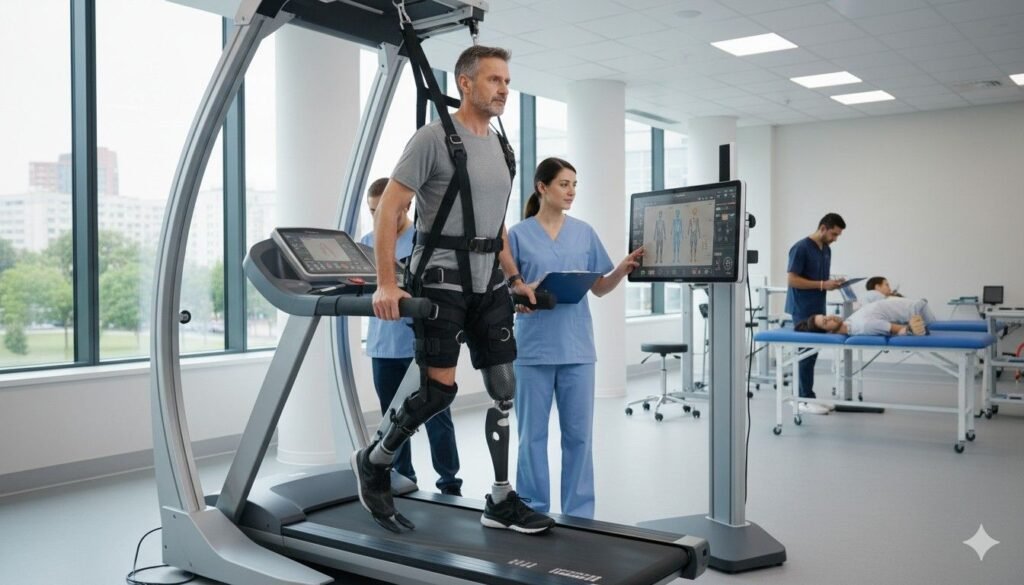
High-cost imported prosthetics limit scale. Locally designed, affordable devices expand access without sacrificing function.
When more people receive usable prosthetics earlier, the total DALYs averted increase sharply. Cost reduction is therefore not just an economic goal, but a public health strategy.
A prosthesis that breaks frequently or cannot be serviced locally leads to abandonment. Abandonment returns disability levels close to baseline.
Technology choices that emphasize durability and easy maintenance protect DALY gains over time. Policymakers should value reliability as much as innovation.
Technology can also support monitoring of prosthetic use and outcomes. Simple digital follow-up systems help track continued use and identify problems early.
Better follow-up sustains functional benefit and prevents DALY loss due to device abandonment or complications.
Many national health dashboards track mortality and disease incidence but ignore functional outcomes. This omission hides the true burden of disability.
Including prosthetic-related indicators linked to DALYs makes disability visible in routine reporting. Visibility drives accountability and sustained investment.
DALYs allow policymakers to assess whether prosthetic programs are actually reducing disability over time. This shifts evaluation from counting devices to measuring outcomes.
Outcome-based evaluation strengthens governance and helps refine program design for better impact.
Countries already report DALYs to global institutions. Including prosthetic interventions in these reports highlights progress in disability reduction.
International recognition can attract technical and financial support, reinforcing national efforts.
When amputees regain mobility, many return to work or education. This reduces dependency and increases productivity.
DALYs capture health gain, but the economic return extends further. Healthier, mobile citizens contribute to national income and reduce long-term public spending.
In many countries, amputees work in agriculture, transport, or manual trades. Without prosthetics, these livelihoods collapse.
Restoring function in these sectors has outsized economic impact. DALYs averted here translate directly into food security and local economic stability.
When a breadwinner regains mobility, children are more likely to stay in school and families avoid poverty-related health decline.
These intergenerational effects extend the true value of DALYs averted far beyond the individual.
Delays increase years lived with disability. Policies that shorten waiting times maximize DALYs averted.
Streamlined referral, funding approval, and fitting processes are as important as device availability.
DALYs are reduced only when function is sustained. Policies must support follow-up, refitting, and replacement as needed.
Continuity ensures that early gains are not lost over time.
Clear responsibility for outcomes improves performance. When agencies are accountable for functional improvement, DALY reduction becomes a shared goal.
Accountability aligns incentives with public health impact.
Mobility is foundational to health, just like vision or hearing. Prosthetics restore this foundation for amputees.
Treating prosthetics as essential infrastructure rather than optional support aligns policy with DALY realities.
Separating disability from health weakens both. DALY framing brings them together under a common outcome measure.
Integrated policy reduces fragmentation and improves efficiency.
Many disabilities cannot be fully reversed. Limb loss is different. Prosthetics can restore a large portion of lost function.
From a DALY perspective, this makes prosthetic adoption one of the most powerful disability interventions available.
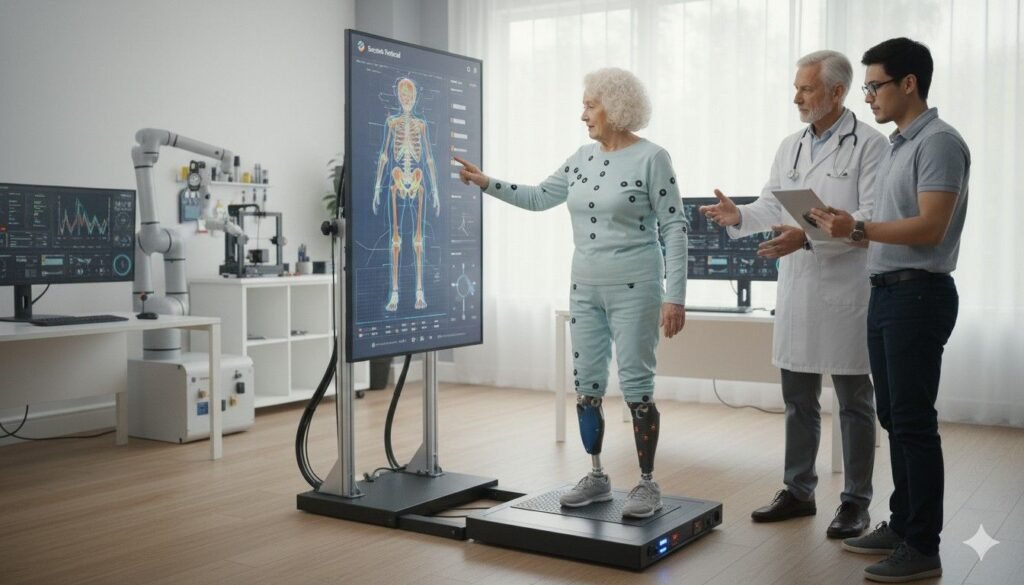
Years lived with disability often remain hidden behind mortality statistics. DALYs bring these years into focus.
Prosthetic adoption directly reduces this hidden burden.
Unlike short-term treatments, prosthetics deliver daily benefit over many years. This sustained impact accumulates into large DALY reductions.
Few interventions offer such durable return.
By framing prosthetics through DALYs, policymakers gain a familiar, defensible way to invest in disability reduction.
The result is healthier citizens, stronger economies, and fairer health systems.
India carries a large and growing burden of limb loss driven by diabetes, road traffic injuries, infections, cancer, and occupational hazards. Most amputees are of working age and live in semi-urban or rural settings where physical mobility is essential for earning a livelihood. This means the years lived with disability after amputation are long and economically significant.
From a DALY perspective, this creates both a challenge and an opportunity. The challenge is the sheer number of people affected. The opportunity lies in the fact that restoring mobility in this population can avert a very large number of disability-adjusted life years at relatively low cost when compared to many other health interventions.
India’s public health goals increasingly focus on non-communicable diseases, injury prevention, and universal health coverage. Limb loss sits at the intersection of all three. Prosthetic adoption directly addresses disability caused by diabetes and trauma, while also supporting the broader aim of functional health under universal coverage.
When prosthetics are framed as tools to reduce long-term disability rather than as assistive devices alone, they align naturally with national health missions. DALY framing helps place prosthetic care alongside other priority interventions rather than outside the core system.
India already has a wide network of district hospitals, medical colleges, and rehabilitation centers. Many of these facilities perform amputations but lack structured prosthetic integration pathways. Strengthening prosthetic services within existing infrastructure is far more cost-effective than building parallel systems.
By embedding prosthetic assessment, fitting, and follow-up into current hospital workflows, policymakers can increase coverage without massive capital investment. This approach accelerates DALY reduction by shortening the time between amputation and functional recovery.
Public budgeting discussions often focus on the cost of a single prosthetic device. This narrow view limits investment because it ignores long-term health gain. DALY-based justification reframes the discussion around cost per healthy year restored rather than cost per device delivered.
When policymakers see that one prosthetic can restore productive life for ten or twenty years, the annualized cost becomes far more acceptable. DALY framing turns prosthetic spending into a high-value investment rather than a discretionary expense.
India already funds interventions that cost more per DALY averted than prosthetic rehabilitation, especially when long-term productivity gains are considered. However, prosthetics are rarely compared using the same framework.
Presenting prosthetic programs alongside other public health initiatives using DALYs creates a level playing field. In many cases, prosthetics perform very well, particularly for working-age adults and younger amputees.
Short-term funding limits DALY impact because disability is lifelong. DALY-based planning supports multi-year budgeting by highlighting the long duration of benefit. This approach aligns well with national planning cycles and medium-term expenditure frameworks.
Multi-year commitments also allow better procurement, local manufacturing partnerships, and service quality improvements, all of which further increase DALYs averted.
Locally manufactured prosthetics lower costs related to import duties, logistics, and servicing delays. Lower cost increases coverage, and increased coverage directly increases DALYs averted at population level.
Affordable does not mean inferior when devices are designed for local conditions and user needs. Technology tailored to Indian terrain, climate, and lifestyles often delivers better sustained use than generic imports.
Waiting months for imported devices increases years lived with disability. Domestic manufacturing shortens delivery timelines and enables faster fitting.
From a DALY perspective, every month of delay represents avoidable loss of healthy life. Faster access is therefore a public health gain, not just an operational improvement.
Supporting domestic prosthetic manufacturing aligns health goals with industrial growth. Job creation, skill development, and innovation reinforce each other.
This alignment makes prosthetic programs politically and economically attractive, increasing the likelihood of sustained policy support.
Schemes aimed at universal health coverage often prioritize lifesaving interventions while underfunding rehabilitation. DALY framing helps correct this imbalance by showing that disability reduction is as important as mortality reduction.
Including prosthetic care as a standard benefit reduces financial barriers and accelerates adoption. Faster adoption leads to larger cumulative DALY reduction across the population.
Administrative delays increase disability duration. Simplifying referral, approval, and funding flows ensures that amputees receive prosthetics when benefit is highest.
Policy attention to process efficiency can deliver DALY gains without increasing per-patient spending.
One-time device provision is not enough. Policies must support follow-up, refitting, and replacement over time to sustain function.
Sustained function preserves DALY gains and prevents regression into disability. Continuity should be built into program design and funding models.

Tracking prosthetic use, functional mobility, and return to work does not require complex systems. Even simple reporting structures can provide valuable insight into disability reduction.
Linking these outcomes to DALY estimates allows policymakers to demonstrate impact clearly and credibly.
DALY analysis can reveal which regions, age groups, or causes of amputation deliver the highest return on investment. This supports smarter targeting of limited resources.
Targeted programs achieve higher impact with the same budget.
Public reporting of disability outcomes increases accountability and transparency. When DALY reduction becomes a visible goal, programs receive sustained attention and improvement follows.
Accountability strengthens long-term success.
Limb loss creates long-lasting disability that affects health, productivity, and social participation. Prosthetics directly reduce this burden and restore years of healthy life.
Through a DALY lens, prosthetic adoption emerges as one of the most effective disability-reducing interventions available.
With a large affected population, growing domestic manufacturing capacity, and expanding health coverage, India is well positioned to lead in prosthetic-based disability reduction.
Strategic policy choices can convert individual rehabilitation into measurable population health gains.
DALYs translate human recovery into numbers that guide decision-making. They allow prosthetics to compete fairly for attention and funding.
When prosthetic care is framed in DALYs averted, it moves from the margins of policy to the center of public health planning.
Invest early, invest at scale, and invest with continuity. Support affordable technology, strengthen service delivery, and measure outcomes that matter.
Doing so will not only restore mobility to millions, but also return vast amounts of healthy life to the nation. That is the true public health value of prosthetic adoption.
For many clinicians, the surgery is only the first step. What happens after the operation
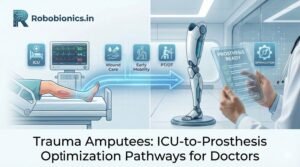
For trauma amputees, the journey does not begin at the prosthetic clinic. It begins much

Amputation after cancer is not just a surgical event. It is the end of one

When a child loses a limb, the challenge is never only physical. A child’s body