Post-Op Follow-Up Schedule That Prevents Prosthetic Delays (For Clinicians)
For many clinicians, the surgery is only the first step. What happens after the operation



Prescribing a prosthesis is not just about replacing a missing limb. It is about deciding when, why, and how a patient can safely return to daily life with confidence and dignity. For doctors, this decision sits at the crossroads of healing, function, and long-term outcomes. A clear understanding of clinical indications helps ensure that the right patient receives the right prosthesis at the right time.
This guide is written for doctors who want practical clarity. It focuses on real clinical judgment, simple language, and day-to-day decision-making, not theory. The goal is to support better prescriptions that improve outcomes and make prosthetic care a natural part of modern treatment pathways.
A prosthesis should be seen as an extension of medical treatment rather than a final step after surgery. The goal is not only to replace form but to restore function, independence, and confidence. When doctors view prosthetics this way, prescriptions become more thoughtful and timely.
In many cases, early consideration of prosthetic options influences surgical planning, wound care, and rehabilitation goals. This integrated approach leads to smoother recovery and better long-term use.
Seeing prosthetics as part of the care continuum helps align teams and set realistic expectations for patients.
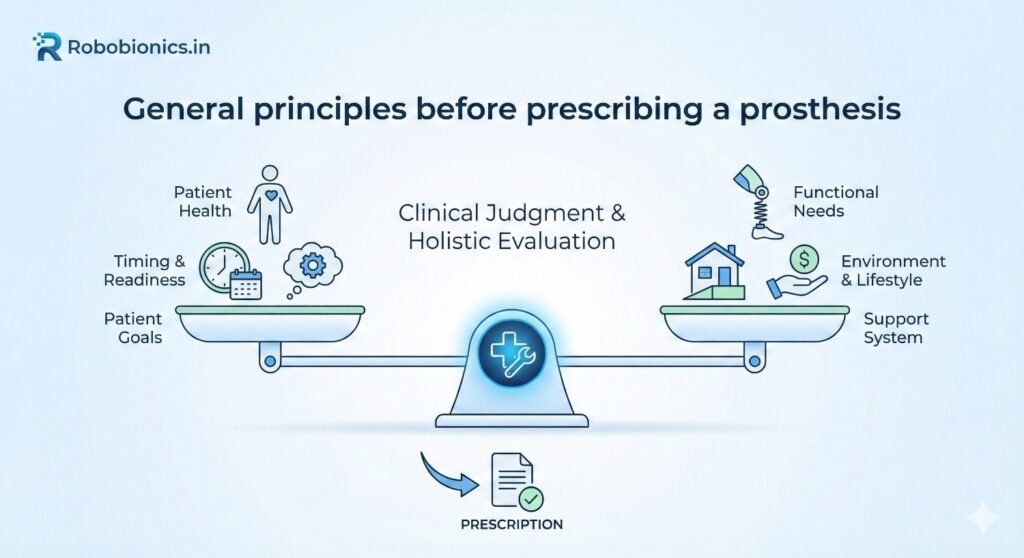
Doctors play a central role in deciding whether a patient is ready for a prosthesis and what type is appropriate. This includes assessing medical stability, healing status, cognitive ability, and overall health. The doctor’s judgment shapes the success of everything that follows.
While prosthetists design and fit devices, the prescription defines the clinical intent. Clear prescriptions guide the prosthetic team and prevent mismatches between patient needs and device complexity.
When doctors stay involved beyond the initial prescription, outcomes improve and complications reduce.
Prescribing a prosthesis too early can risk wound issues or poor acceptance. Prescribing too late can delay rehab and reduce motivation. Clear clinical indications help strike the right balance.
Indications also protect patients from inappropriate devices that may be too complex, too heavy, or unsuitable for their condition. A well-judged prescription respects both the patient’s potential and their limits.
This clarity builds trust between doctors, patients, and prosthetic teams.
The first requirement for prosthetic prescription is medical stability. The patient should have stable vital signs, controlled infection risk, and manageable pain. Unstable medical conditions often lead to poor prosthetic tolerance and increased complications.
Wound healing is equally important. The residual limb should show signs of healthy tissue, no active infection, and acceptable scar condition. Minor issues may be managed, but active breakdown is a clear reason to delay.
Doctors should work closely with surgeons and wound care teams to judge readiness accurately.
The shape, length, and skin condition of the residual limb strongly influence prosthetic success. Excessive swelling, fragile skin, or severe contractures can limit early fitting.
Doctors should assess limb sensitivity, scar mobility, and joint range. Early identification of problems allows targeted therapy before prosthetic fitting begins.
This step prevents frustration and reduces the need for repeated adjustments later.
A prosthesis requires learning, patience, and active participation. Cognitive ability and motivation are therefore key clinical considerations. Patients should understand basic instructions and be willing to engage in training.
This does not mean only young or highly educated patients qualify. Many older or less literate patients succeed when expectations are clear and support is strong.
Doctors should assess understanding, not intelligence, and involve family where needed.
The goal of prosthetic use should match the patient’s overall health and lifestyle. A patient with severe cardiac or neurological disease may not tolerate a high-energy prosthesis even if the limb is healed.
Functional potential includes balance, strength, endurance, and vision. Doctors should consider whether the prosthesis will meaningfully improve daily life or add burden.
Honest assessment helps avoid unrealistic goals and disappointment.
Below-knee amputations generally have strong potential for prosthetic use because the knee joint is preserved. Indications include good wound healing, stable knee function, and reasonable balance.
Patients with controlled diabetes, trauma-related amputations, or vascular causes can all benefit if healing is adequate. Early referral to prosthetic services often improves rehab speed.
Doctors should ensure knee range is maintained and flexion contractures are prevented before prescription.
Above-knee prosthetic prescription requires careful evaluation because energy demands are higher. Indications include good hip strength, stable cardiovascular status, and motivation for training.
Patients with bilateral above-knee amputations or severe comorbidities may still benefit, but goals should be realistic. Household ambulation may be more appropriate than community mobility.
Clear communication with patients about effort and training needs is essential at this stage.
Partial foot amputations are often overlooked but have clear prosthetic indications. Custom prosthetic solutions can restore gait and reduce pressure on the remaining foot.
Indications include unstable gait, recurrent ulcers, or difficulty wearing regular footwear. Without proper prosthetic support, these patients often develop secondary problems.
Doctors should not assume that partial amputations do not need prosthetic care.
Bilateral amputees require a cautious and staged approach. Indications depend heavily on overall strength, balance, and support systems.
Early rehab focus may be on transfers and wheelchair mobility, with prosthetic goals introduced gradually. Prescription should be phased and reviewed regularly.
Strong team coordination is vital for these cases.
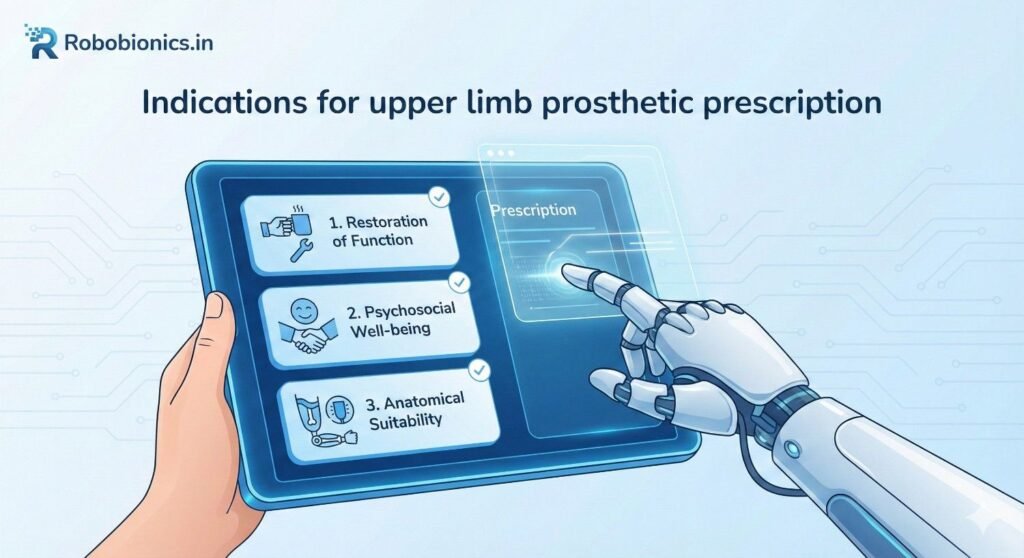
Below-elbow amputations often have good potential for functional prosthetic use due to preserved elbow movement. Indications include healed residual limb, good shoulder and elbow range, and desire for functional improvement.
Upper limb prosthetics can improve independence in daily tasks, even if they do not fully replace natural hand function. Early training improves acceptance.
Doctors should discuss realistic function and avoid promising complete restoration.
Above-elbow prosthetic prescription is more complex. Indications include stable shoulder function, good cognitive ability, and strong motivation.
Energy demands and training requirements are higher, and some patients may prefer cosmetic solutions initially. Functional devices may be introduced later as confidence grows.
Doctors should respect patient choice while providing clear guidance.
Partial hand and finger prosthetics are increasingly important. Indications include difficulty with grip, fine motor tasks, or work-related demands.
Even simple mechanical devices can restore meaningful function. Early referral prevents long-term compensation patterns that strain other joints.
Doctors should consider occupational needs and hobbies when prescribing.
Early prescription can motivate patients and guide rehab, but it should not rush fitting before healing. In many cases, early assessment with delayed fitting works best.
Delayed prescription may be appropriate in cases of poor healing, infection, or unstable medical conditions. However, long delays without planning can reduce outcomes.
Doctors should balance readiness with momentum.
Temporary prostheses allow early training while the residual limb shape changes. Indications include expected volume changes or uncertain long-term tolerance.
These devices help patients learn basic skills and provide valuable feedback for final prescription.
Doctors should understand that temporary does not mean low value.
Prosthetic needs change over time. Indications for revision include discomfort, skin problems, or changes in activity level.
Doctors should schedule periodic reviews and remain open to updating prescriptions as the patient’s life evolves.
A prescription is a living decision, not a one-time act.
Age alone should never decide whether a prosthesis is prescribed. What matters more is how the patient moves, thinks, and manages daily life. Many older patients do very well with prostheses when goals are set correctly and support is in place.
Doctors should look at muscle strength, balance, vision, and endurance rather than date of birth. An active sixty-five-year-old may perform better than a sedentary forty-year-old. Age becomes relevant only when it reflects other health limits.
Clear, age-appropriate goals improve acceptance and long-term use.
Conditions such as diabetes, heart disease, kidney disease, and stroke affect prosthetic success. They do not automatically rule it out, but they shape the type of device and training pace.
For example, a patient with cardiac limits may need a simpler, lighter prosthesis with lower energy demand. A patient with neuropathy may need extra skin monitoring and socket design care.
Doctors should document comorbidities clearly in the prescription so prosthetists can plan safely.
Skin health is central to prosthetic tolerance. Fragile skin, grafted areas, or areas with poor sensation need special attention.
Indications for prescription remain valid if skin issues are manageable and monitored. However, repeated breakdown without clear cause is a sign to pause and reassess.
Doctors should encourage early reporting of skin issues and normalize follow-up visits.
Limited joint range or weakness affects prosthetic control. Contractures, especially at the knee, hip, elbow, or shoulder, can reduce function significantly.
Doctors should ensure that physiotherapy is actively addressing these issues before and during prosthetic fitting. In some cases, short delays to improve range can greatly improve outcomes.
A prosthesis should support movement, not fight against stiff joints.
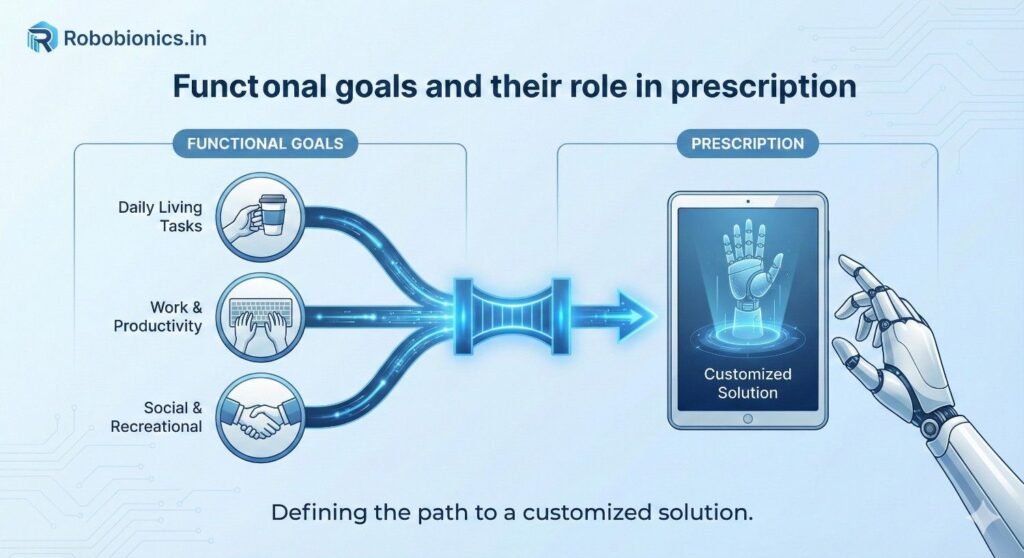
Functional goals guide prosthetic choice more than device features. Doctors should ask simple questions about what the patient wants to do each day, such as walking to the bathroom, cooking, returning to work, or caring for family.
These answers shape the level of function needed. A patient aiming for indoor mobility needs a different solution than one aiming for long outdoor walks.
Clear goals prevent overprescription and underuse.
For lower limb amputees, the distinction between household and community mobility is important. Household mobility focuses on safety and short distances, while community mobility includes uneven ground and longer walks.
Doctors should be honest about what is achievable and safe. Prescribing a complex device for a patient who rarely leaves home may not add value.
Matching the prosthesis to real life improves satisfaction.
Work demands often drive prosthetic success. A manual worker, driver, or office employee may have very different needs.
Doctors should ask about current work, future plans, and physical demands. This information helps prosthetists design solutions that support long-term independence.
Ignoring vocational needs can limit rehabilitation success.
Cultural habits such as sitting on the floor, squatting, or barefoot walking influence prosthetic design and use. Social expectations may also affect acceptance.
Doctors should consider these factors openly and without judgment. A prosthesis that fits cultural life is more likely to be worn.
Clinical success includes social comfort, not just medical fit.
Mechanical prostheses are often reliable, durable, and easier to maintain. Indications include patients who need simple function, live in resource-limited settings, or prefer low maintenance.
They are also suitable for patients with limited training time or lower cognitive load tolerance.
Doctors should not view mechanical devices as inferior, but as appropriate choices in many cases.
Powered prostheses are indicated when patients have good muscle signal control, cognitive ability, and motivation for training. They can offer improved function for certain tasks.
However, they require regular charging, maintenance, and training. Doctors should ensure that patients understand these demands before prescription.
Clear indication prevents disappointment and misuse.
Cosmetic prostheses have value beyond appearance. Indications include patients who prioritize body image, social comfort, or balance.
They may be used alone or alongside functional devices. Doctors should respect these preferences and avoid dismissing cosmetic needs as secondary.
Psychological comfort is a valid clinical outcome.
Many patients benefit from a staged approach, starting with a simple device and progressing to more advanced options later. Indications include uncertain tolerance, evolving goals, or changing health status.
Doctors should frame this as a planned journey, not a compromise.
Staged care reduces risk and builds confidence.
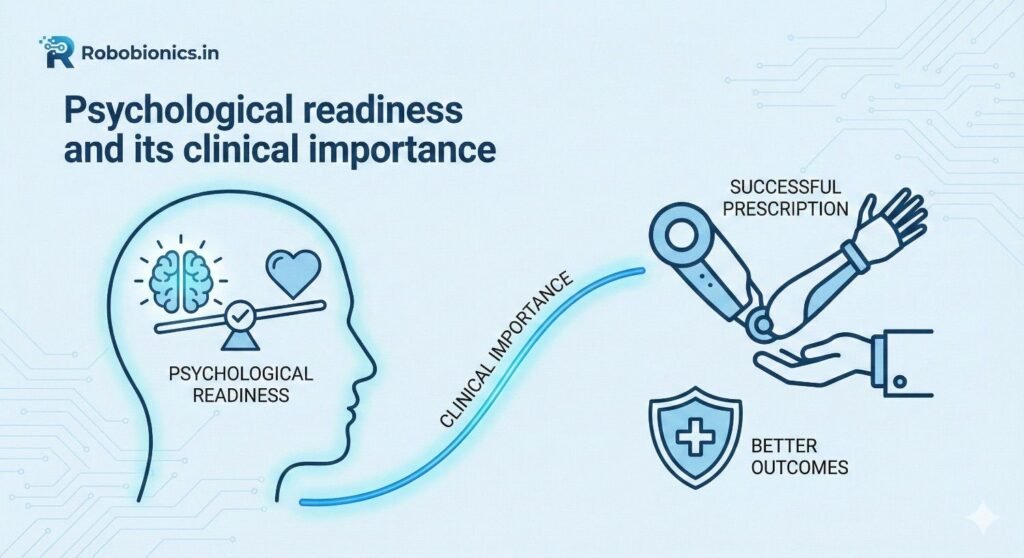
Limb loss often brings grief, anger, or fear. These emotions affect prosthetic acceptance and use.
Doctors should assess emotional readiness as part of clinical indication. This does not mean waiting for perfect acceptance, but recognizing when extra support is needed.
Early counseling and peer support can make a major difference.
Unrealistic expectations can harm outcomes. Some patients expect a prosthesis to function exactly like a natural limb, while others doubt it will help at all.
Doctors play a key role in shaping balanced expectations. Honest, simple explanations build trust and long-term satisfaction.
Expectation management is a clinical skill.
Support systems influence prosthetic success. Patients with engaged family members often adapt faster and manage care better.
Doctors should involve caregivers in discussions when appropriate. Clear guidance reduces fear and improves adherence.
Prosthetic care is rarely a solo journey.
Active infection at the residual limb site is a clear reason to delay prosthetic fitting. Severe uncontrolled medical illness may also require postponement.
These are usually temporary rather than permanent. Doctors should explain this clearly to avoid loss of hope.
Delay does not mean denial.
Severe cognitive impairment, uncontrolled psychiatric illness, or repeated non-adherence are relative contraindications. They require careful judgment rather than automatic exclusion.
In some cases, simplified devices or strong caregiver involvement can still allow safe use.
Doctors should document reasoning clearly in these cases.
In rare cases, a prosthesis may add more burden than benefit. Severe pain, minimal functional gain, or high risk of injury may guide this decision.
Doctors should approach this conversation with sensitivity and respect. Alternative mobility or assistive options should always be discussed.
Good care includes knowing when not to intervene.
A good prescription includes limb level, side, diagnosis, and healing status. It should also include functional goals, weight-bearing status, and any precautions.
Doctors should avoid vague terms and be as specific as possible. This helps prosthetists design safely and efficiently.
Clarity saves time and improves outcomes.
Prescriptions should explain the clinical intent, such as improving safe transfers or enabling return to work. This context guides device choice better than brand or model names.
Doctors should focus on function rather than technology.
Intent-driven prescriptions lead to better collaboration.
Prescription is the start of a conversation, not the end. Doctors should remain available for clarification and review.
Regular feedback between doctors and prosthetists improves fit, comfort, and safety.
Team-based care is the standard, not the exception.
The period immediately after prosthetic fitting is critical. Many problems that lead to abandonment begin in the first few weeks. Doctors should schedule early follow-up to assess comfort, skin condition, pain, and functional use.
This review does not need to be long or complex. Simple questions about daily wear time, confidence, and difficulties provide valuable insight. Early intervention prevents small issues from becoming reasons to stop using the prosthesis.
Regular early contact also reassures patients that support is ongoing.
Skin breakdown and pain are common early challenges. Doctors should educate patients on daily inspection and encourage reporting even minor redness.
Pain may come from poor fit, overuse, or unrelated conditions such as neuromas or back strain. Each cause requires a different response, and early identification improves outcomes.
Ignoring pain often leads to reduced use and loss of confidence.
Doctors should track whether the patient’s functional goals are being met. Improvement should be gradual but noticeable. If progress stalls, reassessment is needed.
Plateaus may signal the need for device adjustment, additional therapy, or revised goals. They do not always mean failure.
Open discussion helps patients stay engaged rather than discouraged.
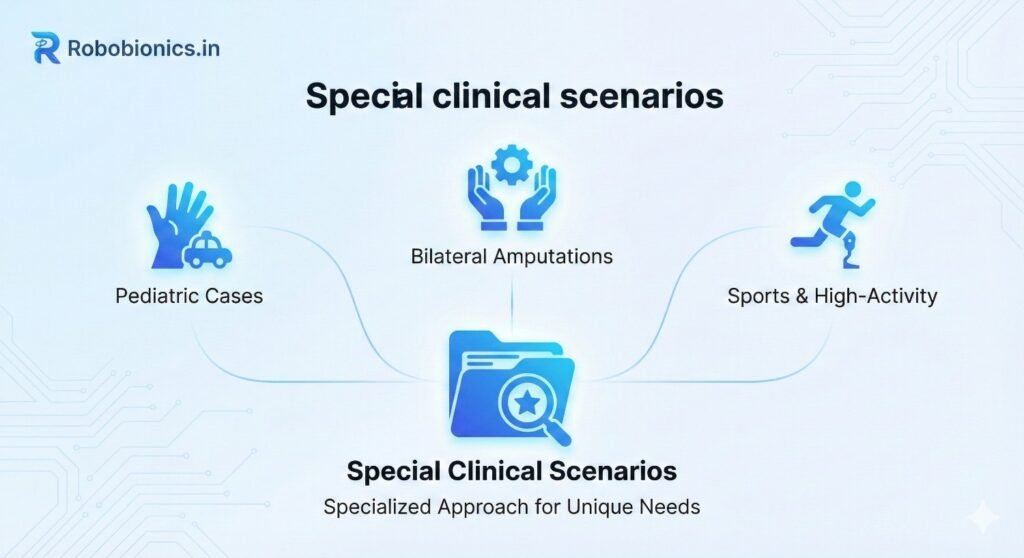
Children require a different approach. Indications include not only physical readiness but also developmental stage. Prostheses should support growth, play, and learning.
Early exposure can help normalize prosthetic use, but devices must be simple and safe. Frequent review is needed as children grow and their needs change.
Doctors should work closely with families and schools in these cases.
Older patients may face balance issues, slower healing, or fear of falls. Indications focus on safety, independence in basic tasks, and quality of life.
Simpler devices and slower training often work best. Success should be measured in confidence and comfort, not distance walked.
Respecting pace improves acceptance.
Multiple limb loss presents complex challenges. Indications depend on overall health, support systems, and realistic goals.
Staged prescription is often needed, with focus on transfers and basic function first. Coordination across specialties is essential.
These cases require patience and careful planning.
Sensory or vision deficits increase risk during prosthetic use. Indications may still exist, but device choice and training must adapt.
Doctors should ensure extra safety measures and caregiver involvement where needed.
Risk awareness protects patients from harm.
Weight changes, limb volume changes, or discomfort may indicate the need for socket revision. Doctors should recognize these signs early.
Functional decline or skin issues are also reasons to reassess. Revision is a normal part of long-term prosthetic care.
Patients should not feel that revision means failure.
As patients recover or change lifestyle, their prosthetic needs may increase. Indications for upgrade include return to work, improved strength, or new activity goals.
Doctors should balance benefits against cost, training needs, and maintenance capacity.
Upgrades should be purposeful, not automatic.
In palliative or end-of-life care, prosthetic goals shift. Indications may focus on comfort, transfers, or body image rather than mobility.
Doctors should approach these decisions with sensitivity and align them with patient wishes.
Quality of life remains the priority.
Doctors must be aware of unconscious bias related to age, gender, income, or disability. These factors should not determine access to prosthetic care.
Clinical indication should guide decisions, supported by patient values and context.
Equity is a clinical responsibility.
Cost is a real concern, but it should be discussed transparently. Doctors should help patients understand options and trade-offs.
Prescribing the most expensive device is not always best care. Prescribing the most appropriate one is.
Honesty builds trust.
Patients should be involved in prosthetic decisions. Clear explanation of benefits, limits, and responsibilities is essential.
Shared decision-making respects autonomy and improves adherence.
Doctors should document these discussions clearly.

Prosthetic success depends on coordination. Surgeons, therapists, and prosthetists each contribute unique expertise.
Doctors should encourage regular communication and shared planning.
Team alignment reduces errors and improves outcomes.
Prosthetists often see functional issues first. Doctors should welcome their feedback and integrate it into care plans.
Mutual respect improves patient experience.
Care improves when voices are heard.
Psychological support is often overlooked. Indications for referral include anxiety, depression, or poor adjustment.
Mental health care supports prosthetic success.
Holistic care matters.
Doctors can use simple questions to screen prosthetic readiness, such as asking about daily goals, confidence, and support at home.
These questions save time and guide referrals.
Simple tools are effective.
Early referral to prosthetic services allows planning even before final readiness. Indications include stable wounds and clear functional goals.
Early referral does not mean immediate fitting.
Planning reduces delays.
Doctors should plan follow-up as part of the prescription. Prosthetic needs evolve over years.
Scheduled reviews prevent neglect and abandonment.
Continuity improves care.
At RoboBionics, we work closely with doctors to align device design with real clinical needs. Our focus is on function, comfort, and affordability.
We understand that a good prosthesis must fit the patient’s body, life, and health status.
Clinical insight guides innovation.
We support training, follow-up, and patient education so doctors are not alone in care delivery.
This partnership helps translate clinical intent into real-world success.
Support strengthens outcomes.
Affordable, locally made prosthetics allow more patients to receive timely care. This improves equity and long-term outcomes.
Doctors play a key role in guiding appropriate use.
Access and quality can coexist.
Clinical indications for prosthetic prescription are not rigid rules. They are guides that support thoughtful, patient-centered decisions. When doctors consider medical readiness, functional goals, psychological factors, and long-term support together, prosthetic care becomes more effective and humane.
A well-timed, well-considered prescription can restore more than movement. It can restore independence, dignity, and hope.
Prescribing a prosthesis is not a checklist exercise. It is a clinical art shaped by science, experience, and empathy. Two patients with the same level of amputation may need very different solutions based on health, goals, and support systems. This is why the doctor’s role remains central, even as technology advances.
When doctors slow down to understand the person behind the condition, prescriptions become more accurate and more humane. The best outcomes come from decisions that respect both medical facts and human realities.
Good prosthetic outcomes depend on three things working together. The timing must be right, so healing and readiness are respected. The intent must be clear, so every team member understands the goal of the prosthesis. The follow-through must be consistent, so problems are addressed early and confidence grows.
When any one of these is missing, patients struggle. When all three align, prosthetic care becomes a powerful tool for recovery.
Doctors are uniquely placed to hold these elements together.
Every indication discussed in this guide points back to one core idea. Prosthetic prescription should serve the patient’s life, not just the clinical record. Function matters, but so does comfort, dignity, and the ability to participate in family and community life.
Listening carefully to patients often reveals what no test can measure. Their fears, hopes, and daily challenges guide better decisions than technology alone ever could.
Patient-centered care is not slower care. It is smarter care.
No doctor prescribes prosthetics alone. Surgeons, prosthetists, therapists, nurses, and caregivers all shape success. Open communication and shared respect turn individual expertise into collective strength.
When doctors invite collaboration and remain engaged beyond the first prescription, patients feel supported rather than passed along. This continuity builds trust and improves long-term use.
Strong teams create strong outcomes.
Prosthetic care is evolving rapidly, with better materials, smarter devices, and improved rehab approaches. Yet the core clinical principles remain unchanged. Right patient. Right time. Right support.
As access improves and technology becomes more affordable, doctors will play an even greater role in guiding appropriate use. Thoughtful prescription will be the difference between widespread benefit and wasted potential.
The future belongs to care that is both advanced and grounded.
At RoboBionics, we believe that clinical judgment and compassionate care are the foundation of effective prosthetic use. Our work is guided by close partnership with doctors who place patient well-being first.
By combining clear indications, honest communication, and practical support, prosthetic care can reach more people and change more lives.
Thank you for your commitment to thoughtful, patient-centered medicine.
For many clinicians, the surgery is only the first step. What happens after the operation
For trauma amputees, the journey does not begin at the prosthetic clinic. It begins much
Amputation after cancer is not just a surgical event. It is the end of one

When a child loses a limb, the challenge is never only physical. A child’s body