Post-Op Follow-Up Schedule That Prevents Prosthetic Delays (For Clinicians)
For many clinicians, the surgery is only the first step. What happens after the operation



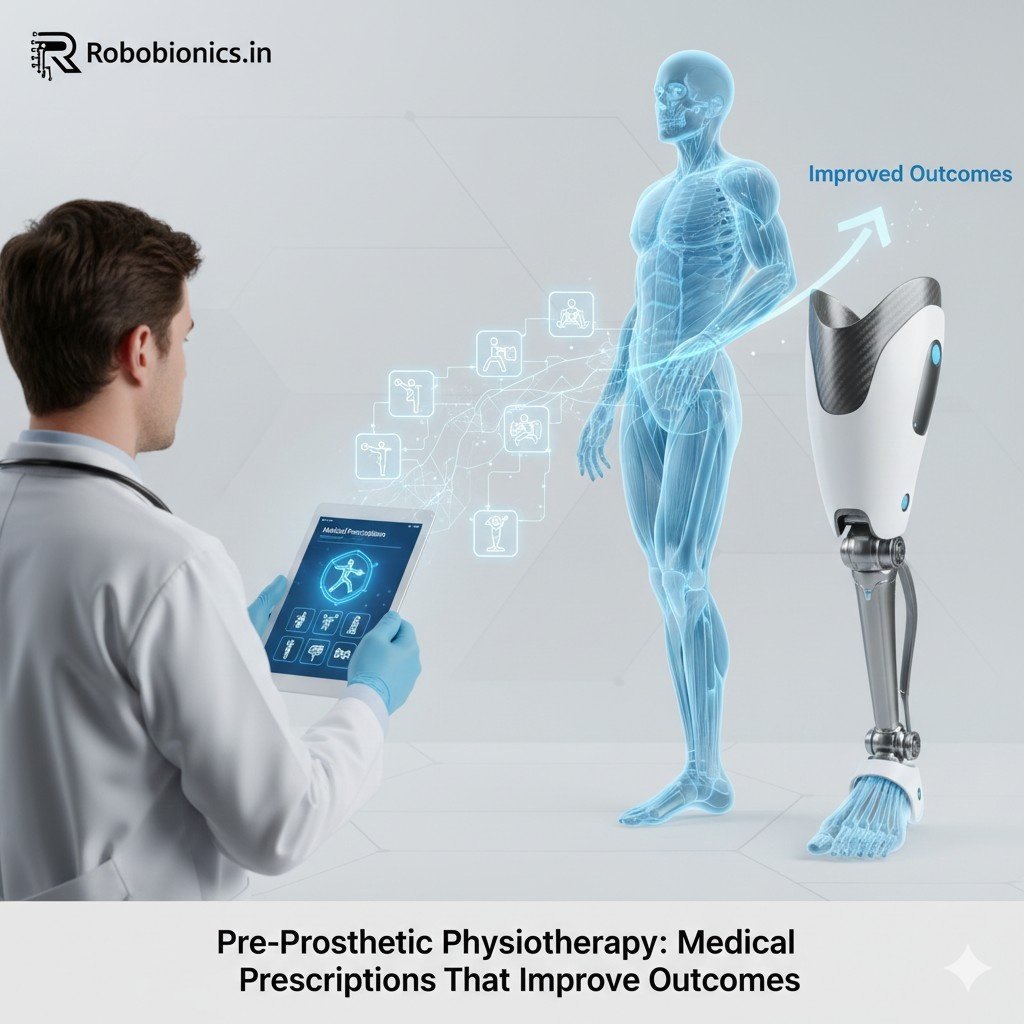
Physiotherapy before a prosthesis is fitted is one of the most powerful, yet most ignored, parts of recovery after limb loss. Many people believe therapy matters only after the prosthetic limb is given. In reality, what happens before fitting often decides how well the prosthesis will work later.
Pre-prosthetic physiotherapy prepares the body and the mind. It reduces pain, builds strength, improves balance, and shapes the limb for better prosthetic comfort. When done correctly, it shortens recovery time and helps people return to daily life with more confidence.
In this article, we will explain pre-prosthetic physiotherapy in a clear and practical way. We will focus on medical prescriptions, daily exercises, and therapist-led strategies that truly improve outcomes. Everything is explained in simple words, based on real clinical practice and real patient needs.
Pre-prosthetic physiotherapy is the phase of therapy that begins after surgery and continues until a prosthetic limb is fitted. Its main purpose is to prepare the body to accept a prosthesis comfortably and safely.
This stage focuses on healing, movement, strength, and control. It builds the physical base needed for future prosthetic use rather than rushing toward early fitting.
Doctors prescribe physiotherapy early because the body adapts quickly in the first weeks after amputation. Muscles either strengthen or weaken based on how they are used.
Early therapy guides this adaptation in the right direction. It prevents stiffness, reduces pain, and improves long-term mobility.
Pre-prosthetic therapy prepares the body. Post-prosthetic therapy teaches how to use the prosthesis.
Skipping the preparation phase often leads to pain, poor balance, and slow learning once the prosthesis is fitted.
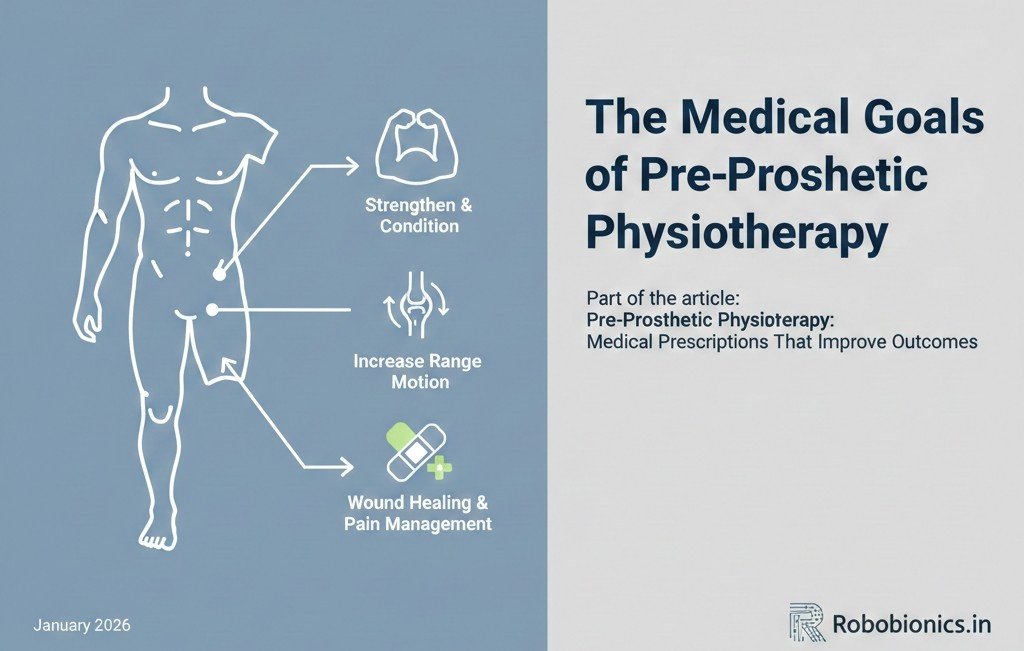
Pain after amputation limits movement and confidence. Physiotherapy helps reduce pain through gentle movement and guided activity.
Lower pain levels allow better participation in daily exercises and faster progress.
Joints near the amputation site are at risk of stiffness. Without movement, they may lose their full range.
Therapy keeps these joints flexible, which is essential for walking or hand use with a prosthesis.
Muscles that are not used become weak quickly. Physiotherapy keeps important muscles active and strong.
Strong muscles support balance, posture, and prosthetic control later.
Physiotherapy supports proper limb shape through movement, positioning, and guidance.
A well-shaped limb fits better into a prosthetic socket and reduces discomfort.
Skin and deeper tissues need time to adapt to pressure. Therapy prepares the limb by gradual exposure to controlled movement.
This reduces pain and skin problems during early prosthetic use.
Movement helps fluid flow out of the limb. Physiotherapy supports natural swelling reduction.
Lower swelling improves healing and speeds up prosthetic readiness.
Poor positioning can cause joint tightness and long-term posture problems. Physiotherapists teach safe resting positions early.
Correct positioning protects movement and comfort.
Body alignment affects balance and movement. Therapy helps patients sit, stand, and move correctly.
Good alignment supports better prosthetic use later.
Many patients feel unsure about their bodies after amputation. Physiotherapy helps rebuild body awareness.
This awareness improves confidence and safety.
Balance is affected after limb loss. Pre-prosthetic therapy begins balance training before prosthetic fitting.
Early balance work reduces fall risk and improves confidence.
Core muscles support posture and movement. Weak core muscles lead to fatigue and poor control.
Therapy strengthens these muscles to support future prosthetic use.
For lower limb amputees, balance and strength training prepares the body for standing and walking again.
This preparation shortens the learning time after prosthetic fitting.
Before a prosthesis is fitted, patients rely on their upper body for movement and transfers.
Physiotherapy strengthens arms and shoulders to prevent strain and injury.
Crutches, walkers, or wheelchairs are often used temporarily. Therapy ensures safe and efficient use.
Good upper body strength reduces fatigue and improves independence.
Without guidance, patients may overload certain muscles. Physiotherapy helps distribute effort evenly.
This prevents long-term shoulder and back pain.
Many patients fear movement after surgery. This fear slows recovery.
Physiotherapists provide safe guidance to rebuild trust in movement.
Small achievements during therapy build confidence. Each success encourages further effort.
Confidence improves overall outcomes.
Physiotherapy sessions also provide emotional support. Patients feel guided and understood.
This human connection supports healing.
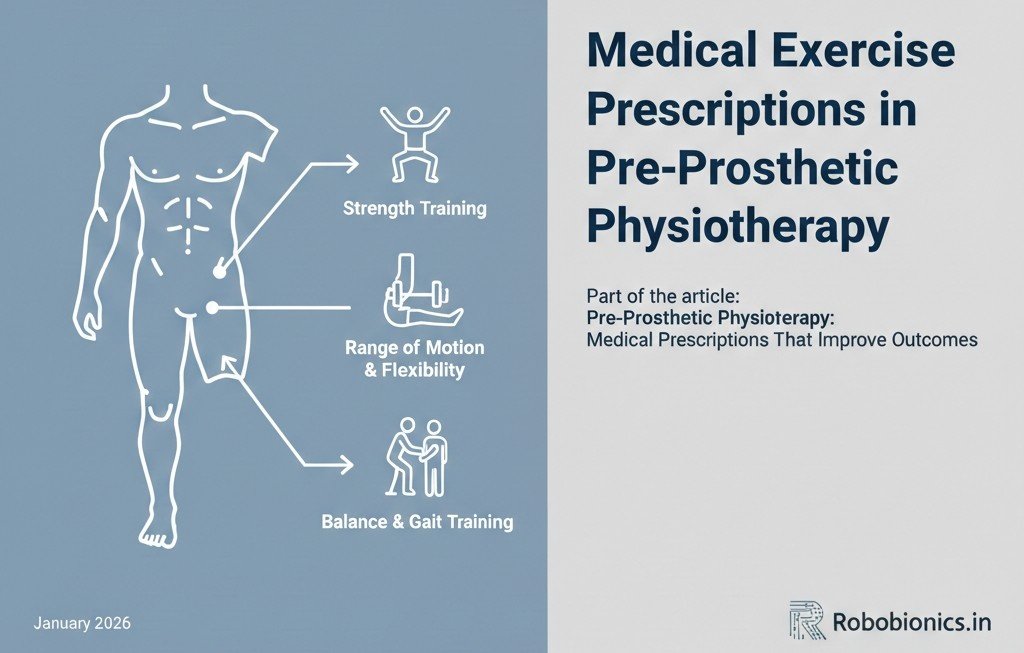
Pre-prosthetic exercises are not general fitness routines. They are prescribed carefully by doctors and physiotherapists based on the type of amputation, healing stage, and overall health. Each movement has a clear purpose linked to future prosthetic use.
When exercises are done without guidance, patients may unknowingly stress the wrong muscles or avoid important ones. Medically guided exercise ensures that every effort supports recovery and does not slow healing.
In the early stage, exercises focus on safe and gentle movement. These movements prevent stiffness and keep muscles active without stressing the surgical site. Physiotherapists guide patients to move within safe limits while still encouraging regular activity.
This early movement sends a strong message to the body that healing and motion can happen together. It builds a foundation for more advanced therapy later.
As healing improves, exercises become more challenging. Resistance, balance work, and controlled weight-bearing are added gradually. Physiotherapists monitor how the body responds and adjust exercises as needed.
This gradual increase builds strength and confidence without causing pain or fear.
Pre-prosthetic physiotherapy targets muscles that will control and support the prosthesis. These muscles often work harder after amputation and need early strengthening.
Strong muscles improve posture, balance, and endurance. They also reduce the effort needed to use a prosthetic limb later.
After limb loss, some muscles work more while others weaken. This imbalance can cause pain and poor movement patterns.
Physiotherapy corrects these imbalances by strengthening weak areas and relaxing overused muscles. Balanced strength leads to smoother movement.
Using a prosthesis requires energy. Pre-prosthetic therapy builds endurance so daily tasks feel less tiring.
Better endurance allows longer prosthetic wear time and improves quality of life.
Joints near the amputation site must move freely for prosthetic use. Physiotherapy keeps these joints flexible through guided stretching and movement.
Without this care, stiffness can limit prosthetic function even if the device is well designed.
Muscle and joint tightness often develops slowly. Early therapy prevents this problem before it becomes permanent.
This prevention saves time and avoids complex treatment later.
Flexibility allows the body to move naturally. Physiotherapy encourages smooth and controlled movement patterns.
Natural movement improves comfort and reduces strain.
Good blood flow supports healing and reduces swelling. Simple breathing and circulation exercises improve oxygen delivery to tissues.
These exercises may seem small, but they support faster recovery and better limb health.
Breathing exercises also reduce stress and muscle tension. Calm breathing helps patients relax during movement.
Reduced stress improves pain control and participation in therapy.
Better breathing supports heart and lung health. This is especially important for older patients or those with other medical conditions.
Good overall health supports better prosthetic outcomes.
Pre-prosthetic therapy includes practice of daily activities such as sitting, standing, and transferring. These activities are trained safely and efficiently.
Practicing these movements builds independence even before prosthetic fitting.
Therapists introduce tasks that reflect real life, such as turning, reaching, or carrying objects. These tasks prepare the body for daily demands.
This preparation reduces fear and improves readiness for prosthetic use.
Patients learn how to adapt movements safely. This builds problem-solving skills that are useful throughout prosthetic life.
Confidence grows as patients learn to manage their bodies effectively.
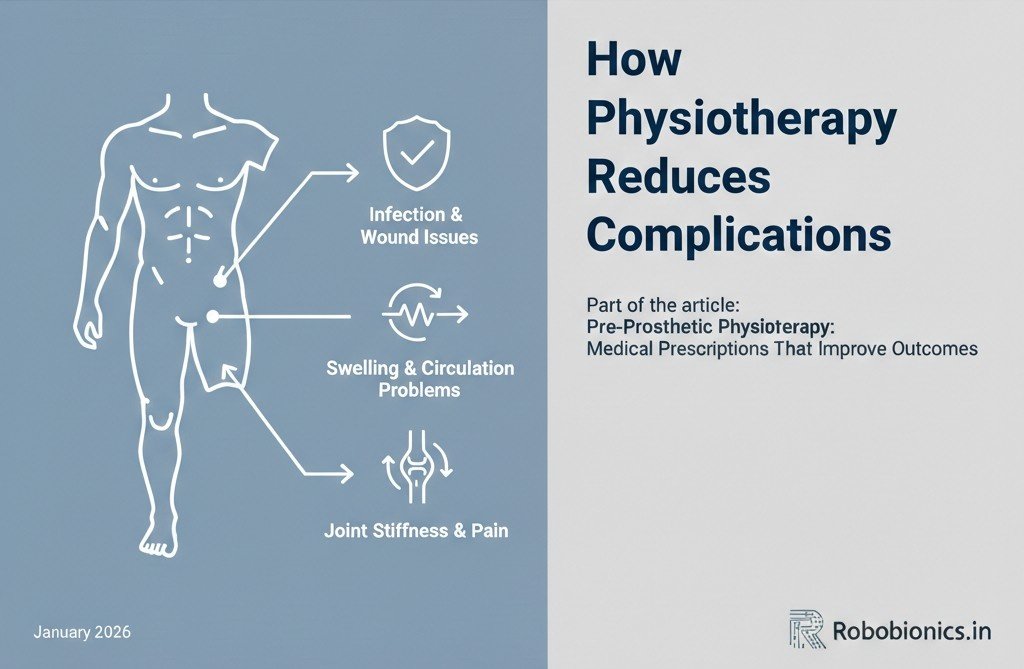
Without therapy, joints may stiffen into harmful positions. Physiotherapy prevents these deformities through movement and positioning.
Preventing deformity protects long-term mobility.
Pain that lasts too long can become chronic. Early movement and guided exercise reduce this risk.
Physiotherapy helps the nervous system adapt safely.
Active bodies heal better. Physiotherapy supports circulation, muscle health, and tissue recovery.
Faster healing supports earlier prosthetic readiness.
Physiotherapy does not rely on intense sessions alone. Daily small efforts create the biggest changes.
Consistency builds strength and confidence over time.
Skipping sessions or exercises slows progress. Physicians and therapists design plans for safety and effectiveness.
Following the plan closely leads to better outcomes.
Visible progress motivates patients to continue. Therapists highlight improvements to encourage effort.
Motivation supports long-term success.
Physiotherapy sessions in a clinic are important, but they are only part of the recovery process. Real progress happens when therapy continues at home. Physicians and physiotherapists design home exercise programs so patients can keep improving every day.
These programs are simple, safe, and focused. They support healing between sessions and prevent the body from slipping back into stiffness or weakness.
A daily routine helps physiotherapy become a habit instead of a task. Therapists guide patients to choose a fixed time each day for exercises. This structure improves consistency and reduces missed sessions.
Daily routines also help patients track progress and feel more in control of their recovery.
Home therapy should challenge the body without causing pain. Physicians guide patients on when to rest and when to push gently.
This balance protects healing while still building strength and movement.
Recovery does not move in a straight line. Some days feel easier than others. Regular physician and therapist follow-ups help track real progress.
These visits allow professionals to adjust therapy plans based on healing, strength, and comfort levels.
Small problems such as joint tightness or pain can grow if ignored. Follow-up visits catch these issues early.
Early correction prevents long delays in prosthetic readiness.
As patients improve, therapy needs change. Exercises that were once difficult become easy. Physicians update prescriptions to keep progress moving.
This flexibility keeps therapy effective and engaging.
A limb that is strong, flexible, and well-shaped fits better into a prosthetic socket. Physiotherapy supports this readiness.
When the limb is prepared, prosthetic fitting can begin sooner and with fewer problems.
Patients who complete pre-prosthetic therapy often report less pain during early prosthetic use. Their bodies are already used to movement and pressure.
Reduced pain improves confidence and learning speed.
Using a prosthesis requires coordination and strength. Pre-prosthetic therapy builds these skills early.
This preparation shortens the time needed to learn prosthetic control.
After amputation, many patients feel disconnected from their bodies. Physiotherapy helps rebuild this trust through guided movement.
Trust encourages effort and reduces fear.
The early recovery phase can feel uncertain and overwhelming. Regular therapy sessions provide structure and direction.
This structure supports emotional stability.
Seeing physical improvement builds hope. Each gain in strength or balance reinforces belief in recovery.
Confidence supports better long-term outcomes.
Many patients fear that movement will cause pain or harm. This fear can limit effort.
Physiotherapists guide safe movement to overcome this fear gradually.
Some patients do not understand why therapy matters before prosthetic fitting. Education improves motivation.
Clear explanation leads to better participation.
Missed sessions slow progress. Physicians stress the importance of regular therapy.
Consistency is key to success.
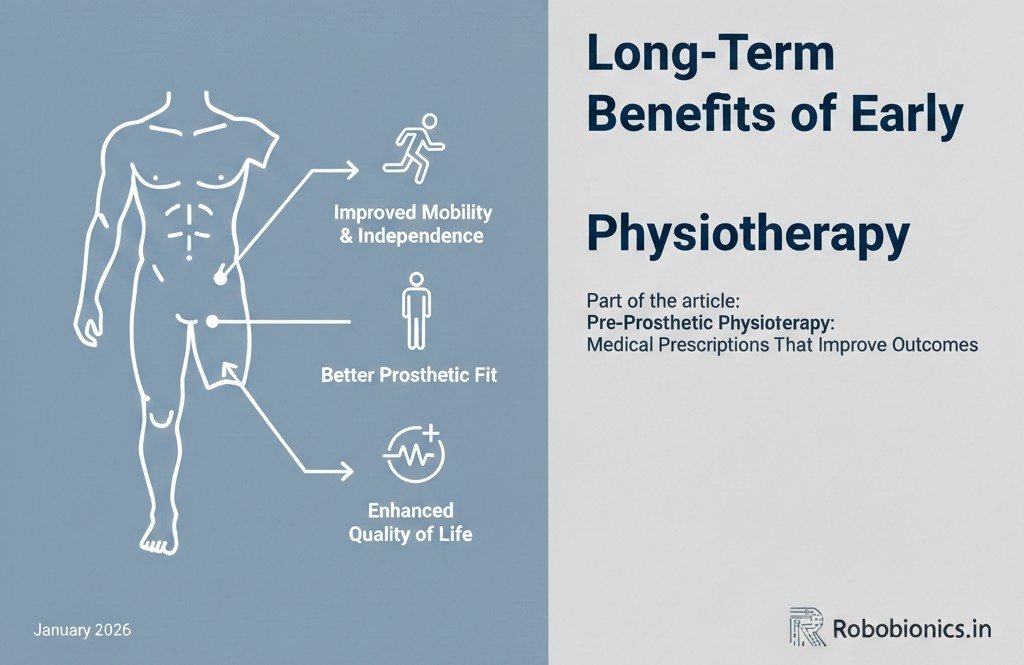
Strong muscles and good balance improve prosthetic control. This leads to smoother and safer movement.
Better control reduces fatigue and injury risk.
Early physiotherapy reduces the risk of back pain, joint strain, and poor posture.
Preventing these problems supports long-term health.
Physiotherapy supports independence and confidence. Daily tasks become easier and less tiring.
This improves overall quality of life.
Some people view pre-prosthetic therapy as a delay to prosthetic fitting. In reality, it speeds up success.
Preparation prevents problems that cause long delays later.
Prosthetic success depends on the foundation built before fitting. Physiotherapy creates this foundation.
Strong foundations lead to long-term comfort and use.
The effort invested in early therapy pays off for years. Better movement, comfort, and confidence last long after fitting.
Pre-prosthetic physiotherapy is not optional. It is essential.
As recovery progresses, physiotherapy becomes more focused and goal-driven. At this stage, therapists begin training the body for the exact demands a prosthesis will place on it. This is not general exercise. It is targeted preparation.
Movements are chosen based on how the prosthesis will work later. Muscles that will guide, balance, and control the prosthesis are trained with care. This helps the body feel familiar with future movement patterns even before the device is fitted.
Using a prosthesis means the body must accept load in new ways. Pre-prosthetic physiotherapy slowly introduces controlled loading to prepare joints and muscles.
This gradual exposure reduces fear and shock when prosthetic weight-bearing begins. It also protects joints from sudden stress.
Strength alone is not enough. The way a movement is done matters just as much. Physiotherapists focus on smooth, controlled motion rather than force.
Better movement quality improves balance, reduces strain, and leads to more natural prosthetic use later.
The best outcomes happen when doctors and physiotherapists work closely together. Both share the same goal of preparing the body for prosthetic success.
Doctors provide medical direction, while physiotherapists apply it through daily movement and exercise. This teamwork creates clear and safe progress.
Healing does not follow a fixed schedule. Doctors monitor wounds, scars, pain, and swelling, then guide therapists on how to adjust therapy.
This coordination prevents overwork and ensures therapy remains safe and effective.
When doctors and therapists deliver the same message, patients feel confident and supported. Mixed messages often cause confusion and fear.
Clear communication builds trust and improves effort.
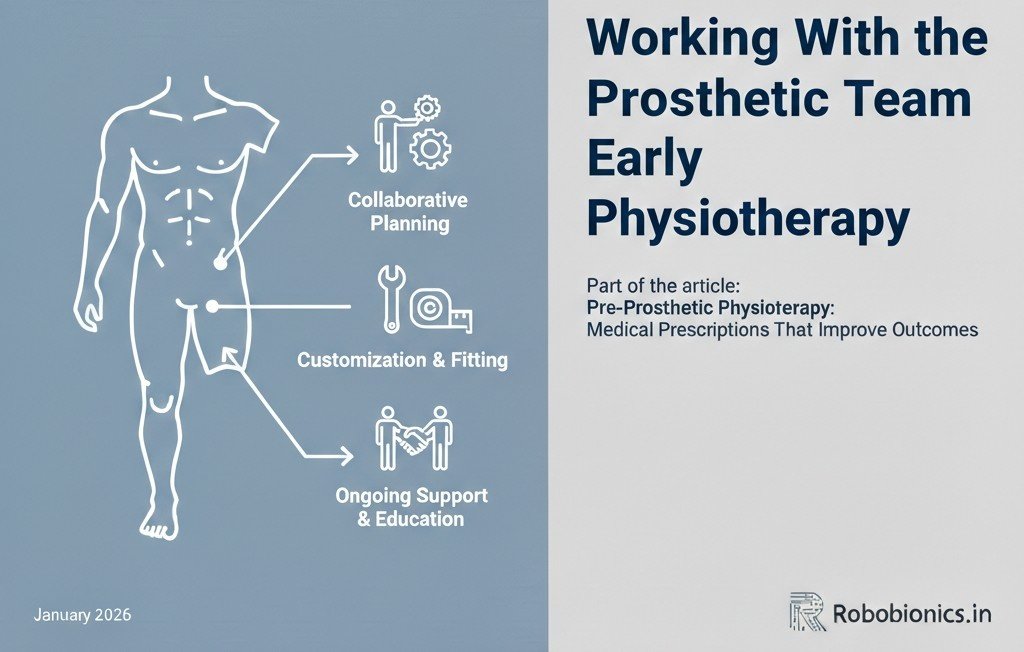
Prosthetists often join the care team even before fitting begins. Their early input helps guide physiotherapy goals.
Knowing what type of prosthesis is planned allows therapists to tailor exercises more accurately.
Physiotherapy helps shape and condition the limb so socket design becomes easier and more comfortable.
A prepared limb allows better socket fit and fewer adjustments later.
When therapy and prosthetic planning move together, the transition to prosthetic fitting feels natural rather than sudden.
This reduces stress and improves acceptance.
After limb loss, the body often moves differently. This can strain the back, hips, shoulders, and knees.
Pre-prosthetic physiotherapy teaches safe movement patterns that protect these areas.
Poor movement habits can lead to long-term pain. Early correction through therapy prevents this.
Pain-free movement supports longer prosthetic use.
Physiotherapy improves circulation, breathing, and general fitness. This supports healing and long-term health.
A healthier body adapts better to prosthetic use.
Progress does not come from one strong session. It comes from repeated effort over time.
Physiotherapy rewards patience and consistency more than intensity.
Some days feel slow. This is normal. Physiotherapists help patients focus on steady improvement rather than speed.
This mindset prevents frustration and burnout.
When patients take ownership of therapy, outcomes improve. Physiotherapy becomes something done with the patient, not to the patient.
Ownership builds confidence and independence.
Patients who complete proper pre-prosthetic therapy learn prosthetic use faster. Their bodies are already strong, balanced, and coordinated.
This shortens training time and reduces frustration.
Prepared muscles and joints handle prosthetic pressure better. Pain and fatigue are reduced.
Comfort encourages longer and more regular use.
Early preparation improves long-term prosthetic success. Devices are used more consistently and with better control.
This leads to greater independence.
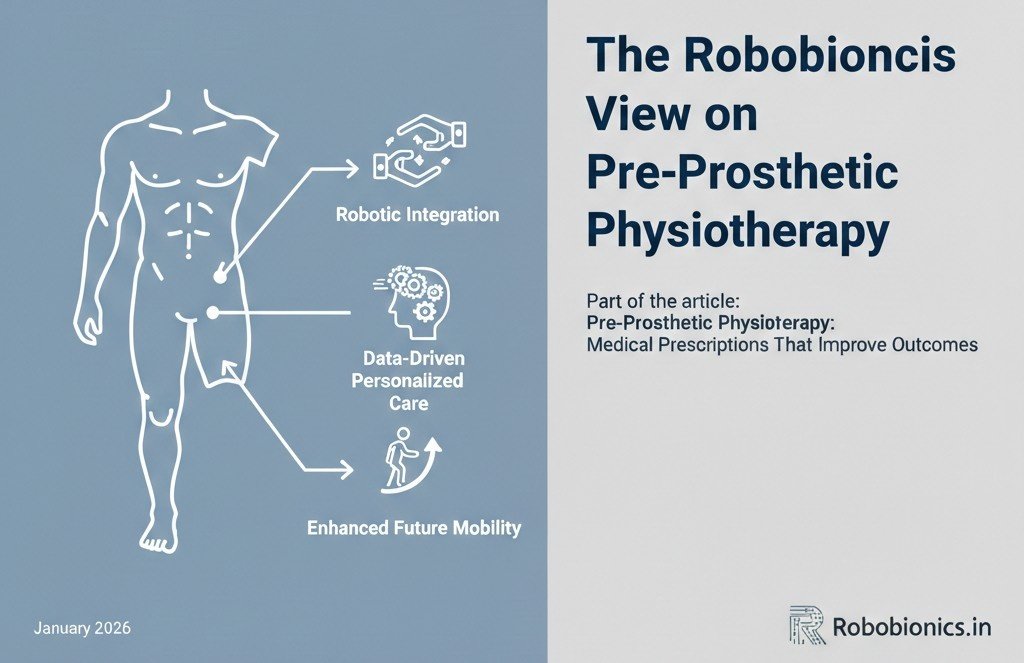
At Robobionics, we see clear differences between users who complete pre-prosthetic physiotherapy and those who do not. Prepared users adapt faster and report better comfort.
Their prosthetic journey feels smoother and more positive.
Modern prosthetics are designed to respond to small movements and muscle signals. A prepared body makes full use of this technology.
Physiotherapy helps users unlock the true potential of their prosthetic devices.
We believe prosthetics are not just products. They are part of a larger recovery journey.
Pre-prosthetic physiotherapy strengthens this journey from the start.
Time spent in physiotherapy before fitting is not lost time. It is an investment in comfort, confidence, and success.
This investment pays back for years.
Strong preparation leads to smoother prosthetic use, fewer problems, and greater independence.
Pre-prosthetic physiotherapy creates better beginnings.
Recovery after amputation is challenging, but the right start makes it manageable. Physiotherapy provides that start.
It prepares the body, strengthens the mind, and opens the path to a fuller life with a prosthesis.
For many clinicians, the surgery is only the first step. What happens after the operation
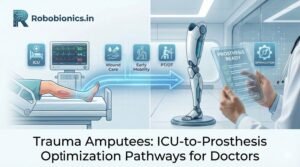
For trauma amputees, the journey does not begin at the prosthetic clinic. It begins much
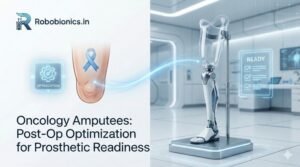
Amputation after cancer is not just a surgical event. It is the end of one

When a child loses a limb, the challenge is never only physical. A child’s body