
Post-Op Follow-Up Schedule That Prevents Prosthetic Delays (For Clinicians)
For many clinicians, the surgery is only the first step. What happens after the operation



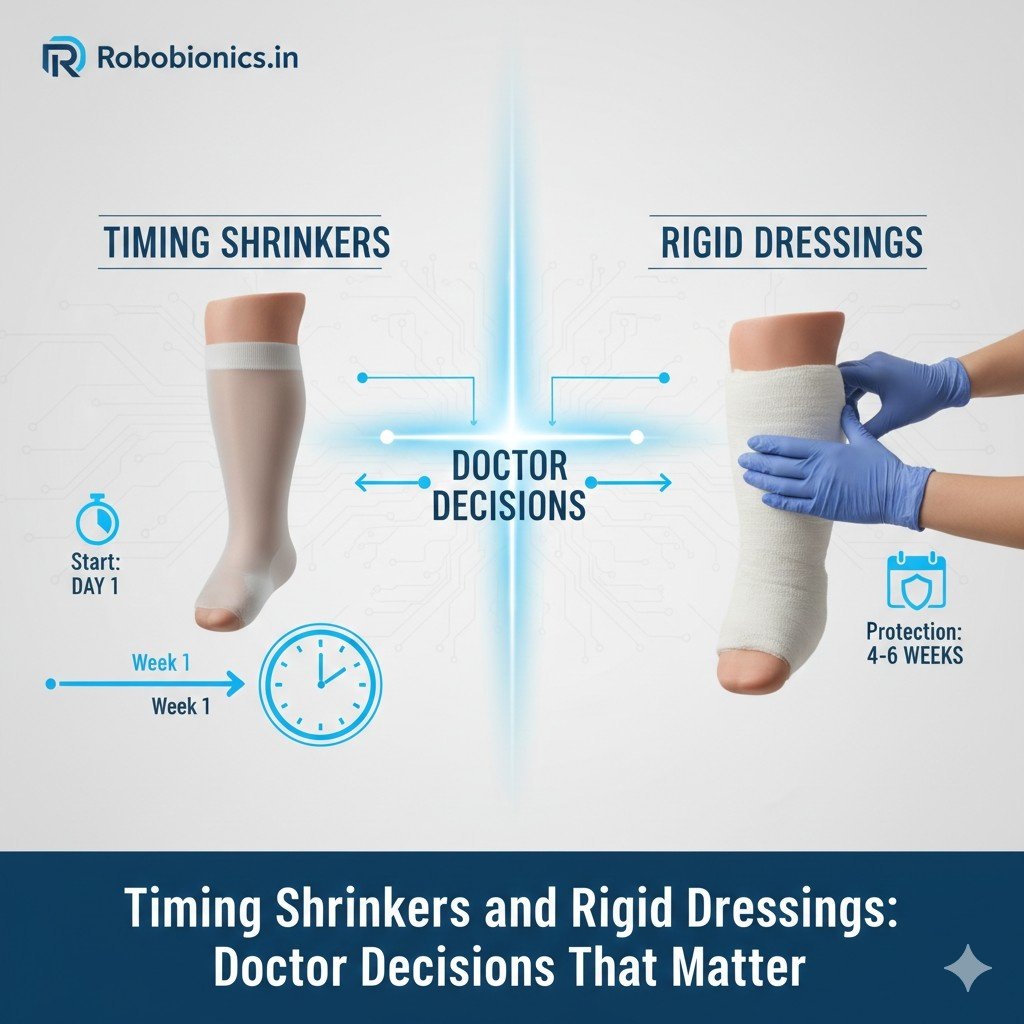
One of the most underestimated decisions after amputation is not about surgery or prosthetics. It is about timing. When to start shrinkers. When to introduce rigid dressings. When to wait, and when waiting causes more harm than good. These choices quietly shape limb healing, comfort, confidence, and how smoothly a patient moves toward prosthetic use.
At Robobionics, through close work with doctors, prosthetists, and patients across India, we have seen how early decisions around shrinkers and rigid dressings can either simplify recovery or create avoidable delays. Too early, and patients face pain, skin problems, or fear. Too late, and swelling, poor limb shape, and sensitivity slow everything that follows.
This article is written for medical doctors who guide post-amputation care. It focuses on practical, experience-backed insights into timing shrinkers and rigid dressings correctly. These are not rigid rules, but decision frameworks that help doctors act with clarity and confidence in real clinical settings.
After amputation, swelling is natural, but how it is managed decides the final limb shape. Uncontrolled swelling leads to uneven contours that complicate prosthetic fitting later.
Early, guided control supports a smoother and more comfortable socket interface.
A well-shaped limb distributes pressure evenly. A poorly shaped limb creates pressure points and fear during early prosthetic trials.
Patients often associate early discomfort with prosthetics rather than dressing choices.
Edema is not just a rehabilitation issue. It directly affects tissue health, wound healing, and readiness for prosthetic load.
Doctor decisions influence how seriously edema is managed.
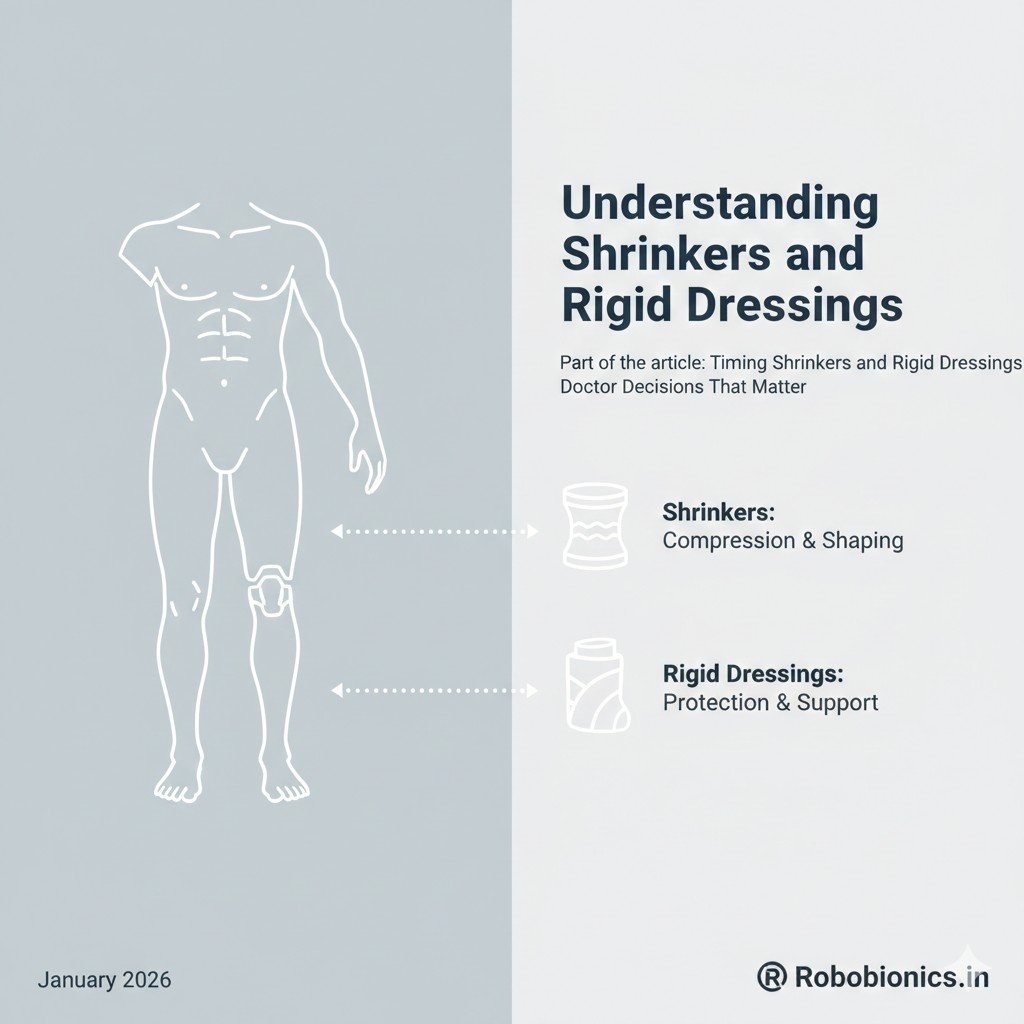
Shrinkers apply consistent, gentle compression to reduce swelling and help shape the limb over time.
Their effect depends heavily on timing and correct use.
Rigid dressings provide stronger shape control and protection. They limit movement of soft tissue and reduce trauma.
They are powerful tools when used at the right time.
Shrinkers and rigid dressings are not alternatives. They serve different purposes at different stages.
Doctor guidance determines the sequence.
During the first days, swelling, warmth, and sensitivity dominate. Aggressive compression is often poorly tolerated.
Gentle protection is the priority here.
As wounds stabilize, tissues begin to tolerate compression better. This is when timing decisions become critical.
Early action here prevents long delays later.
In later stages, consistent shaping supports readiness for prosthetic fitting.
Missed opportunities earlier are harder to correct now.
Shrinkers should not be introduced over open or fragile wounds. Surface closure alone is not enough.
Doctors must assess skin tolerance carefully.
Hypersensitive limbs react poorly to shrinkers. Early desensitization improves tolerance.
Doctors should guide this progression.
Starting with limited hours reduces fear and skin reaction.
Gradual increase improves compliance.
Early compression on fragile tissue increases pain and leads to movement avoidance.
This sets back recovery.
Early skin injury creates lasting fear of compression and prosthetic use.
Trust is hard to rebuild once lost.
Negative early experiences reduce compliance later.
Timing protects acceptance.
Delayed compression allows edema to become chronic and harder to reverse.
This delays prosthetic readiness.
Without early shaping, limbs often develop uneven contours.
Socket fitting becomes more complex.
Swelling and lack of pressure increase sensitivity.
This makes later compression harder to tolerate.
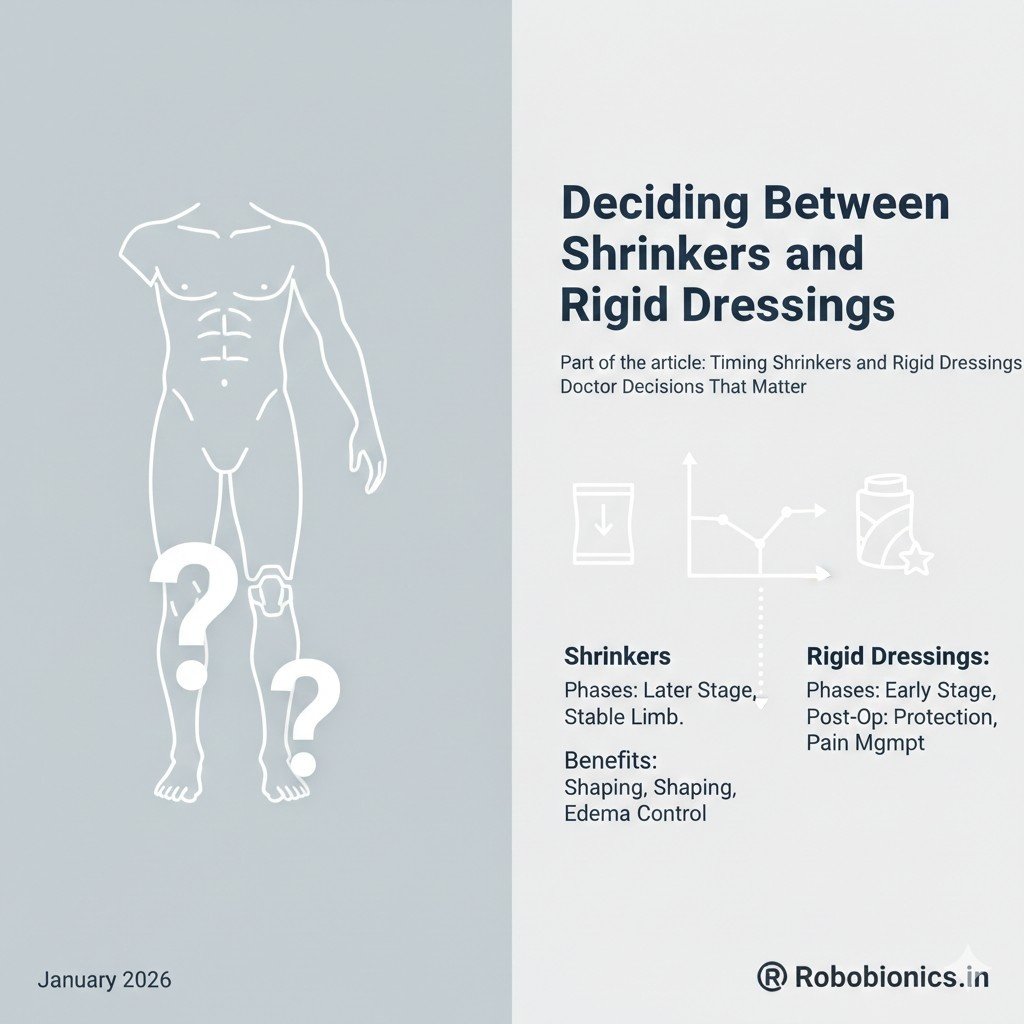
Rigid dressings require higher wound stability.
Doctors must assess risk carefully.
Rigid dressings need monitoring. Home environment matters.
Doctor decisions should consider setting.
Shrinkers rely on patient use. Rigid dressings rely on team application.
Understanding guides choice.
Vague orders create confusion. Specific start points improve adherence.
Patients need clarity.
Stating how long to wear prevents underuse or overuse.
Balance is key.
Proper donning and skin checks prevent complications.
Doctor guidance matters.
Skin response in the first days predicts long-term tolerance.
Doctors should review early.
Consistent reduction signals success. Fluctuation signals issues.
Trend tracking improves decisions.
Discomfort patterns guide adjustments.
Listening prevents setbacks.
Severe edema benefits from stronger control.
Rigid dressings provide stability.
Irregular tissue benefits from protection.
Rigid dressings reduce secondary injury.
Rigid dressings limit harmful movement.
They protect limb shape.
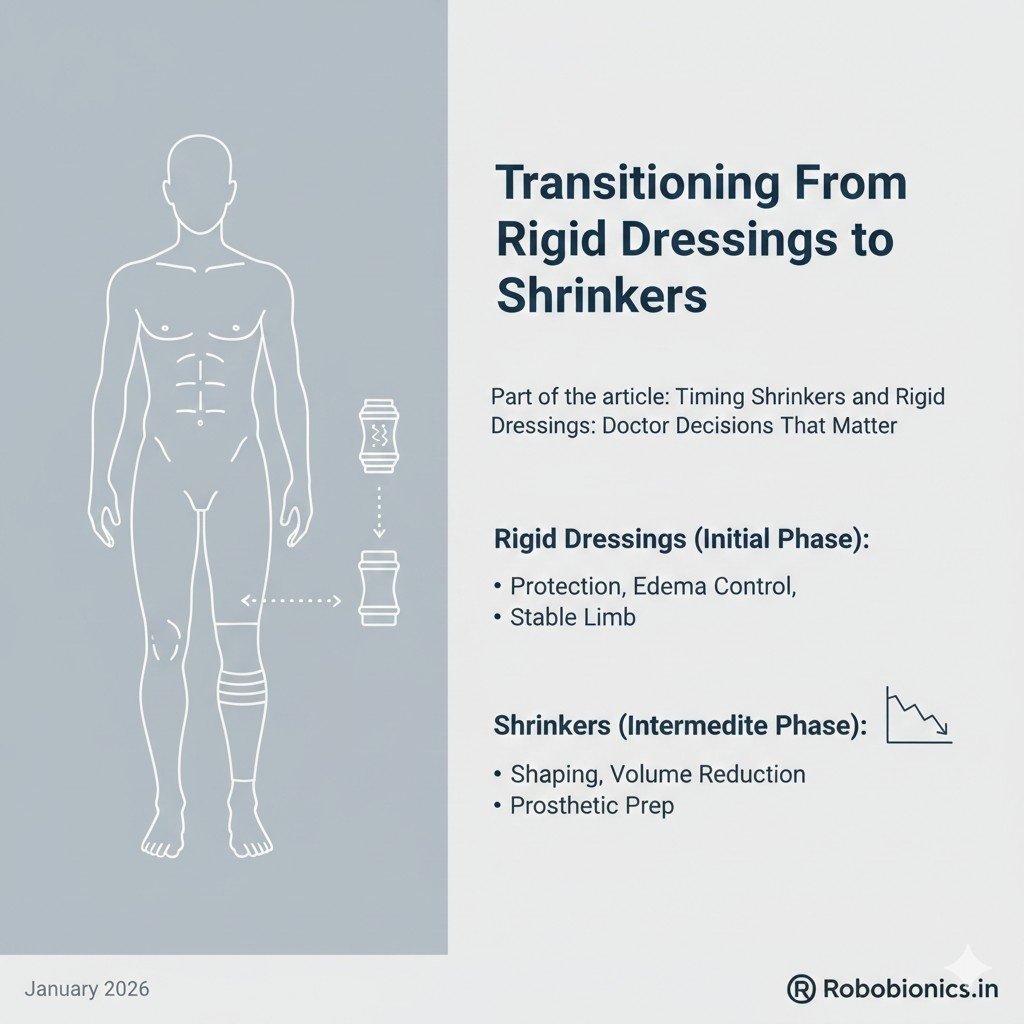
The shift from rigid dressings to shrinkers is often where progress is either protected or lost. A poorly timed transition can undo weeks of good limb shaping.
Doctors should treat transitions as clinical decisions, not routine handovers.
Stable wound closure, reduced warmth, and predictable swelling patterns suggest readiness. The limb should tolerate brief pressure without pain escalation.
Rushing this step increases risk of skin issues.
Short overlap periods, where rigid dressings are reduced while shrinkers are introduced gradually, help the limb adapt.
This overlap improves tolerance and confidence.
Waiting for ideal skin appearance delays compression unnecessarily. Functional tolerance matters more than visual perfection.
Missed timing windows are hard to recover.
Healing speed and tolerance vary widely. Fixed timelines often fail patients at both extremes.
Clinical judgment must override routine.
When timing decisions are left unclear, teams delay action out of caution.
Doctor clarity prevents paralysis.
Orders should state when to start and when to reassess. This keeps care moving forward.
Defined review points improve accountability.
Instead of saying start shrinker, doctors should outline progression in wear time.
Structure improves adherence.
Patients and teams should know when to pause and report issues.
Clear stop signals prevent harm.
Patients accept compression better when they understand its purpose. Explaining limb shaping and future comfort builds cooperation.
Purpose reduces resistance.
Patients should expect pressure, not pain. Clear distinction reduces fear.
This clarity improves early tolerance.
Simple skin inspection routines prevent small issues from growing.
Education empowers patients.
Families may remove dressings due to fear or discomfort complaints.
Doctor guidance helps families support, not interfere.
Families should observe skin and comfort, not force wear.
Balanced involvement improves outcomes.
Home routines matter more than clinic visits.
Clear family education improves consistency.
Reducing hours is safer than stopping completely when discomfort appears.
Doctors should guide these adjustments.
Touch and graded pressure improve tolerance.
Combined strategies work best.
Pain control should support compression use, not replace it.
Integrated care prevents delays.
Expecting rapid visible change creates frustration.
Doctors should explain realistic timelines.
Uneven shaping signals poor compression or positioning.
Early correction improves results.
Simple documentation helps guide next steps.
Records improve continuity.
Skin tolerance is reduced and unpredictable. Slower progression is safer.
Doctors should monitor closely.
Fragile skin needs gentle, gradual compression.
Lower starting durations reduce injury risk.
Irregular tissue benefits from longer rigid dressing phases.
Patience protects outcomes.
Well-shaped limbs allow simpler, more comfortable sockets.
This shortens fitting time.
Early compression reduces hypersensitivity.
Training becomes smoother.
Patients who tolerate compression trust prosthetic processes more.
Confidence accelerates progress.
When patients leave the hospital, supervision drops suddenly while responsibility increases. This shift often leads to inconsistent compression use or complete stoppage.
Doctor-led discharge planning protects the gains made during inpatient care.
Discharge instructions should clearly state what dressing to use, when to use it, and how long each day.
Simple, written guidance prevents confusion once the patient is home.
Early follow-up allows doctors to catch problems before they become delays.
Compression plans should always include a review date.
Even when swelling looks controlled, volume changes continue for weeks or months.
Ongoing compression stabilizes the limb for prosthetic fitting.
Inconsistent compression leads to daily size changes, which frustrate early prosthetic trials.
Doctors should emphasize regular use.
Consistent compression improves skin tolerance and reduces pressure sensitivity.
This makes the first socket experience smoother.
Patients often panic when limb size changes again.
Doctors should normalize this process.
Small changes in wear time or garment size often solve problems.
Stopping compression entirely usually worsens outcomes.
Sharing volume trends helps prosthetists plan better sockets.
Team coordination reduces refits.
Over time, patients may stop wearing shrinkers due to fatigue or inconvenience.
Doctors should reinforce importance during visits.
Linking compression to faster fitting and comfort renews motivation.
Purpose drives consistency.
Switching to easier compression options when appropriate improves adherence.
Flexibility matters.
Minor redness or irritation does not always require stopping compression.
Doctors should guide temporary adjustments.
Pain often reflects poor fit or excessive duration.
Reducing intensity preserves momentum.
True skin breakdown or infection requires pause and reassessment.
Clear criteria prevent harm.
Excessive compression causes pain and tissue damage.
Balance is key.
Waiting delays readiness and increases sensitivity.
Early shaping matters.
Compression plans should evolve with healing.
Adaptability improves outcomes.
Patients should inspect skin daily and understand warning signs.
Self-monitoring builds confidence.
Too loose or too tight reduces effectiveness.
Doctors should teach basic fit awareness.
Patients should feel safe asking about discomfort.
Open communication prevents silent non-compliance.
At Robobionics, we see how poor early compression complicates fitting and training.
These insights shape our collaboration with doctors.
Consistent shaping leads to simpler, more comfortable prosthetic designs.
Good timing improves design outcomes.
We value medical judgment in timing compression.
Aligned decisions benefit patients most.
Shrinkers and rigid dressings may look like simple tools, but the decisions around when and how to use them carry long-term consequences. These decisions quietly shape limb healing, comfort, confidence, and readiness for prosthetic use. When timed well, compression supports healing and simplifies everything that follows. When timed poorly, it creates avoidable delays that frustrate patients and care teams alike.
After amputation, swelling is not just a temporary inconvenience. It influences limb shape, tissue sensitivity, and how pressure is tolerated later. Early, thoughtful edema control helps create a limb that is easier to fit, more comfortable to load, and less fearful to use. This is why compression timing should be seen as a medical decision, not a routine task.
Starting shrinkers or rigid dressings too early often leads to pain, skin injury, and emotional resistance. Patients who experience early discomfort may associate compression, and later prosthetics, with harm. This fear is difficult to reverse. On the other hand, delaying compression for too long allows swelling to become chronic and limb shape to deteriorate. Once these patterns set in, correction takes time and energy.
The challenge for doctors is not choosing between shrinkers and rigid dressings, but choosing the right tool at the right moment. Rigid dressings offer protection and strong shape control in select cases, especially when swelling is severe or tissue is vulnerable. Shrinkers offer flexibility and patient-led management once wounds are stable. Used together in a planned sequence, they complement each other rather than compete.
Clear physician orders are central to success. When doctors specify timing, progression, and review points, care teams move forward with confidence. Patients understand what is expected and why. Families learn how to support without interfering. Vague or delayed instructions often lead to hesitation, overprotection, or inconsistent use.
Transitions matter as much as starting points. Moving from rigid dressings to shrinkers should be gradual and monitored. Overlapping use allows tissues to adapt and reduces risk of setbacks. Doctors who oversee these transitions actively prevent the loss of hard-earned progress.
Discharge planning is another critical moment. Once patients leave structured care environments, compression use depends heavily on understanding and routine. Clear, simple discharge instructions protect limb shaping during this vulnerable phase. Early follow-up allows adjustments before problems grow.
Long-term compression before prosthetic fitting stabilizes limb volume and improves skin tolerance. Patients who maintain consistent compression arrive at prosthetic fitting with fewer surprises and greater confidence. Socket design becomes simpler. Training progresses faster. Comfort improves.
Special populations require special attention. Patients with diabetes, elderly patients, and those with complex wounds tolerate compression differently. Adjusting timing and progression for these groups is not being overly cautious. It is being precise and respectful of biological reality.
At Robobionics, we see the downstream impact of early compression decisions every day. We see how good timing simplifies prosthetic design and training. We also see how poor timing creates obstacles that technology alone cannot solve. These experiences reinforce one truth: prosthetic success begins long before the prosthetic is made.
Shrinkers and rigid dressings are not just clinical supplies. They are tools that shape the recovery journey. When doctors use them thoughtfully, with clear timing and communication, they prevent delays, reduce complications, and protect patient confidence. These quiet decisions matter more than they appear, because they set the stage for everything that follows.
For many clinicians, the surgery is only the first step. What happens after the operation

For trauma amputees, the journey does not begin at the prosthetic clinic. It begins much

Amputation after cancer is not just a surgical event. It is the end of one

When a child loses a limb, the challenge is never only physical. A child’s body