
Post-Op Follow-Up Schedule That Prevents Prosthetic Delays (For Clinicians)
For many clinicians, the surgery is only the first step. What happens after the operation




When a child loses a limb, the challenge is never only physical. A child’s body is still growing, learning, and changing every day. Decisions made early do not just affect healing. They shape movement, confidence, and development for years to come. This makes pediatric amputation care very different from adult care, even when the surgery looks similar.
At Robobionics, working with children, parents, and doctors across India, we have learned that early prosthetic planning must respect growth above all else. A child is not a smaller adult. Bones grow, muscles adapt, and the brain rewires itself continuously. Pre-fit planning that ignores growth often leads to repeated discomfort, delayed learning, and emotional stress.
This article is written for medical doctors who guide children through amputation recovery and prosthetic preparation. It focuses on growth-sensitive pre-fit planning that supports healthy development, safe prosthetic use, and long-term success. These insights come from real pediatric journeys, not ideal timelines.
In children, bone growth, muscle development, and nervous system learning continue even during recovery. Healing and growth happen together, not one after the other.
Medical planning must support both at the same time.
Minor alignment issues or delayed movement in a child can influence posture and gait for years.
Early planning protects future development.
Children learn movement quickly, but they also remember fear and discomfort strongly.
Early experiences shape long-term acceptance of prosthetics.
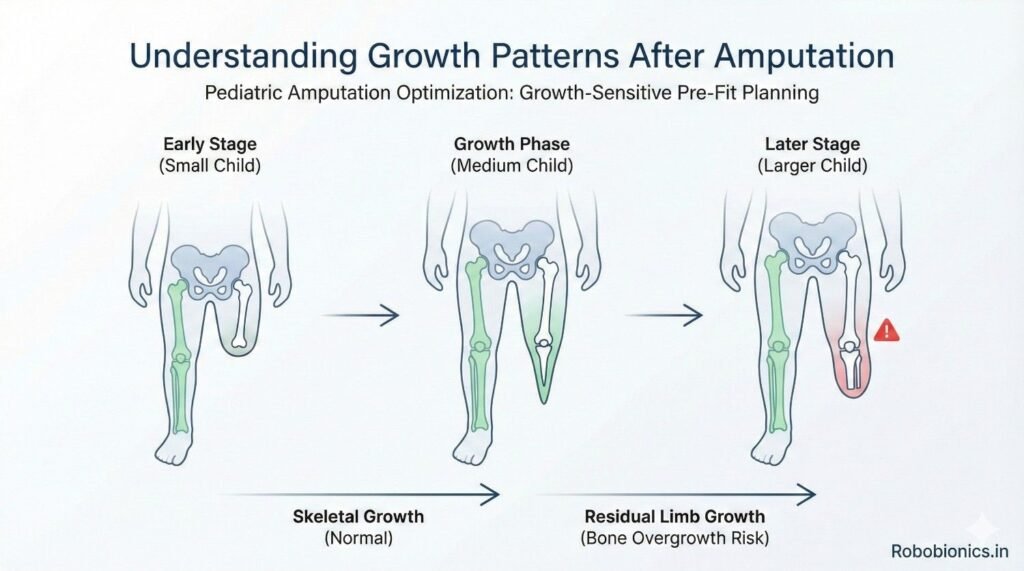
Bones grow from specific growth plates. Amputation changes load patterns and growth direction.
Doctors must anticipate how remaining bones will grow over time.
Muscles strengthen where they are used and weaken where they are avoided.
Poor early movement guidance creates imbalance quickly.
Children’s skin adapts fast but is sensitive to pressure.
Early protection prevents long-term sensitivity.
Early prosthetic exposure supports learning, but excessive demand harms growing tissue.
Doctors must balance opportunity with protection.
Readiness depends on developmental stage, not just wound healing.
Cognitive and motor readiness matter equally.
Interim devices allow exposure without long-term commitment.
They support learning while growth continues.
Assessment must include posture, spine alignment, and limb symmetry.
Growth compensation happens quickly in children.
Knowing how a child moves before fitting helps detect problems early.
Baseline observation is essential.
Pediatric care benefits from shared planning between surgeons, pediatricians, therapists, and prosthetists.
Early collaboration prevents fragmented care.
Children often avoid movement quietly rather than complain.
Stiffness can develop without visible distress.
Structured exercises feel restrictive to children.
Play-based movement preserves motion naturally.
As bones grow, tight muscles create contractures faster.
Early motion guidance protects joint alignment.
Behavioral changes often signal discomfort before words do.
Doctors should watch behavior closely.
Pain experiences early on shape long-term movement habits.
Gentle progression builds trust.
Teaching children to tolerate sensation works better than numbing it.
This supports long-term prosthetic comfort.
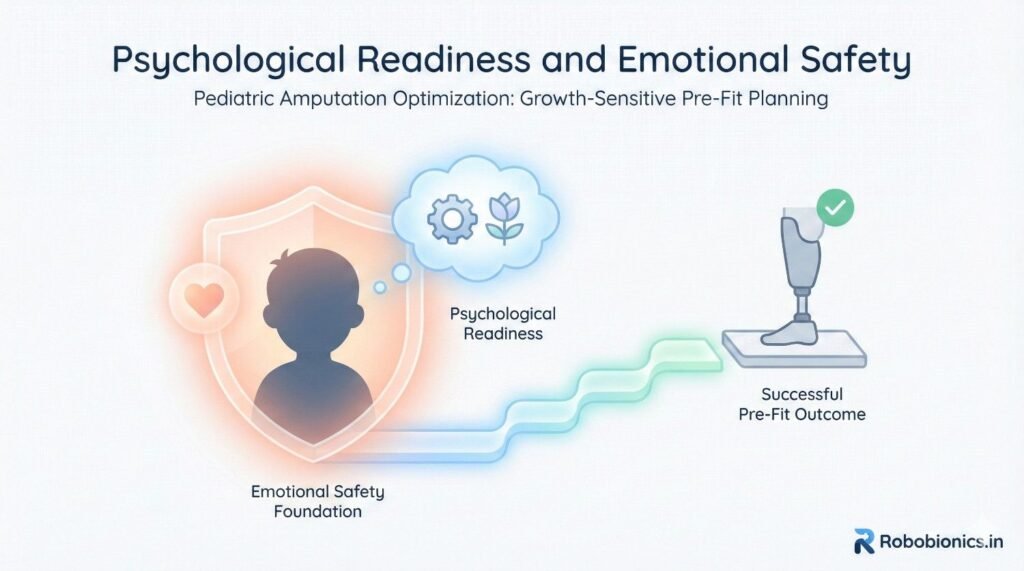
Children may show fear through withdrawal or refusal, not words.
Understanding this prevents mislabeling behavior.
Clear routines and familiar faces reduce anxiety.
Predictability improves cooperation.
How children see themselves develops early.
Positive framing prevents stigma and shame.
Parental fear often transfers to the child.
Doctors should address parents directly.
Overprotection limits learning.
Guided independence supports growth.
Grandparents, teachers, and caregivers influence daily habits.
Consistent guidance prevents confusion.
Children outgrow devices faster than adults.
Regular reviews prevent discomfort and frustration.
Asymmetry often appears before pain.
Early detection allows correction.
Setting expectations about frequent changes reduces stress.
Preparation builds resilience.
Pediatric prosthetics must allow adjustments.
Rigid designs fail children.
Heavy devices fatigue children quickly.
Lightweight designs support play and learning.
Play is therapy for children.
Designs must support safe exploration.
For a child, school is not just a place to study. It is where movement, play, social learning, and self-image develop every day.
Prosthetic planning that ignores school life creates gaps in adaptation.
Sitting, standing, writing, and carrying school bags place repeated demands on a growing body.
Doctors should consider these daily movements when advising pre-fit planning.
Teachers often feel unsure how to support a child with limb loss.
Simple guidance from doctors helps schools respond with confidence rather than fear.
Children’s brains are highly adaptable, especially in early years. They learn movement patterns quickly through repetition and play.
Early prosthetic exposure supports healthy brain mapping.
Without guidance, children create shortcuts that strain joints and posture.
Early correction protects long-term alignment.
Children need repetition, but not force.
Doctors should encourage frequent, gentle practice rather than intense sessions.
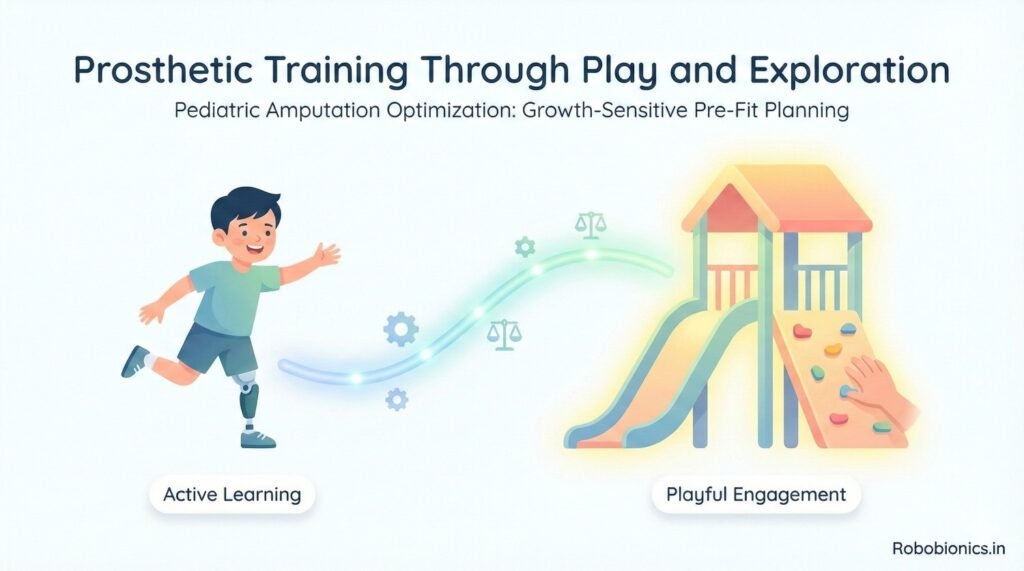
Children learn best when they are engaged and curious.
Play-based training builds skills without fear.
Falling, dropping objects, and trying again are part of learning.
Over-restricting movement slows confidence.
When children explore freely, prosthetics become tools rather than burdens.
This mindset supports long-term use.
Children do not grow evenly. Sudden growth spurts change limb length, alignment, and balance.
Doctors should anticipate these changes.
Waiting for pain means waiting too long.
Proactive adjustment prevents setbacks.
Puberty brings rapid physical and emotional change.
Closer follow-up during this phase protects continuity.
Remaining growth plates may grow faster or slower due to altered load.
Doctors should track this carefully.
Small differences increase over time if ignored.
Regular measurement prevents major correction later.
Some cases need orthopedic input.
Early coordination avoids crisis-driven decisions.
A young child may accept a prosthetic easily, while an adolescent may struggle more.
Doctors should expect these shifts.
Teenagers become more aware of differences.
Support during this phase is critical.
Emotional fluctuation is part of growth.
Doctors should reassure families that this is normal.
Many children stop using prosthetics during teenage years.
This often reflects emotional strain, not device failure.
Adolescents need choice and voice.
Forcing use often backfires.
Sports, hobbies, or independence can renew motivation.
Doctors should help reframe purpose.
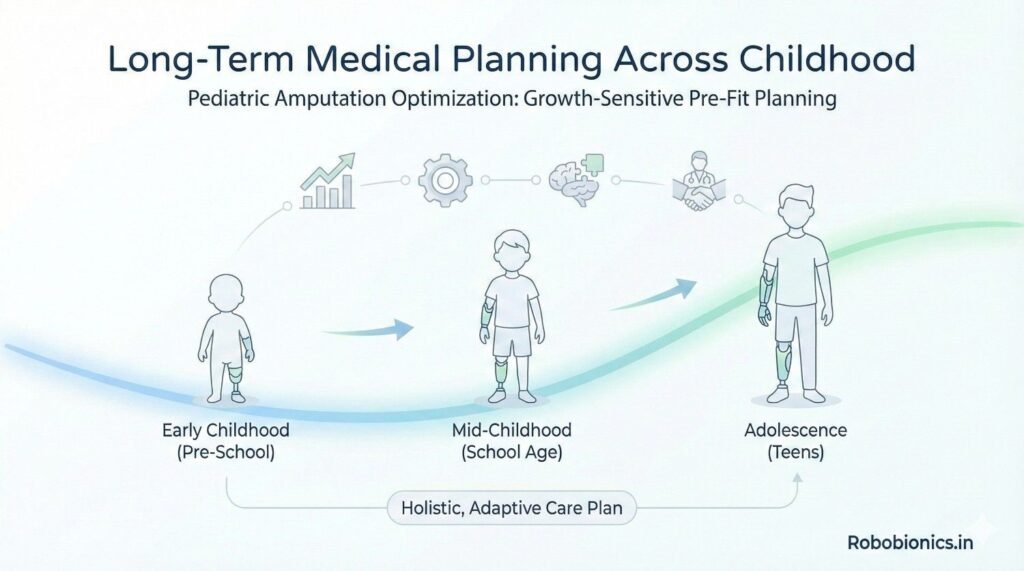
Pediatric prosthetic care spans many years.
Early decisions echo into adulthood.
Transitions between care teams and life stages need preparation.
Continuity matters.
Clear records help future teams understand past choices.
This protects long-term outcomes.
Children and families meet many professionals over time.
Doctors provide continuity and reassurance.
Advice that works at age five may not work at fifteen.
Doctors must adapt communication.
Knowing support exists reduces anxiety.
Availability builds confidence.
Children need more nutrients than adults because they are growing every day. After amputation, this demand rises further due to healing and adaptation.
Poor nutrition quietly slows growth and learning.
Protein supports muscle and tissue growth, while calcium and vitamin D support bone strength.
Doctors should ensure nutrition supports both healing and growth.
Sudden weight loss or stalled height gain signals concern.
Regular tracking helps detect problems early.
Children often compensate for limb loss by overusing other joints.
Over time, this stresses hips, knees, shoulders, and the spine.
Posture habits form early and persist.
Simple guidance protects long-term alignment.
Joint and back pain can appear years later if early protection is missed.
Prevention is far easier than correction.
Children may become irritable, withdrawn, or inattentive when tired.
Doctors should look beyond verbal reports.
Children need activity for learning, but also rest for recovery.
Guidance should support balance, not extremes.
Over-scheduling therapy can reduce joy and motivation.
Preserving play protects engagement.
Caring for a child with limb loss is emotionally demanding.
Burnout affects decision-making and patience.
Parents often feel guilt or fear.
Acknowledging this reduces isolation.
Involving schools and extended family reduces pressure.
Support networks improve sustainability.
Children sense difference quickly.
Early positive framing prevents stigma.
Families often worry about how others will react.
Doctor reassurance helps families respond confidently.
Participation builds resilience.
Doctors should encourage inclusion, not avoidance.
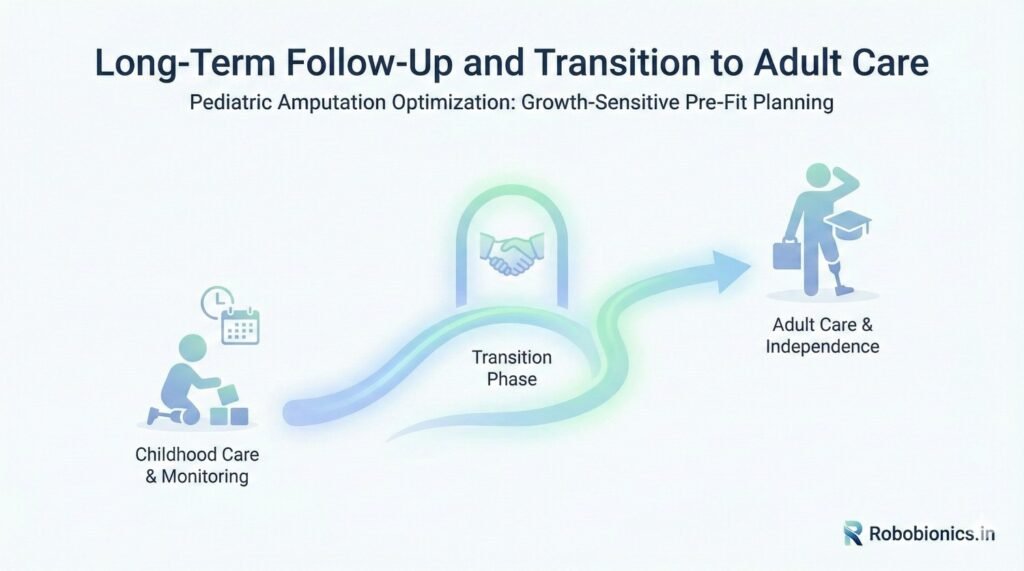
Children eventually move into adult care.
Preparation should begin early.
As children mature, they should learn to express needs.
Self-advocacy supports independence.
Smooth transitions prevent gaps.
Documentation and communication matter.
Pediatric amputation care is never just about replacing a limb. It is about supporting a growing human being whose body, mind, and identity are still forming. Every medical decision made early has long-term consequences, not because it is dramatic, but because growth amplifies its effects over time.
Children grow in ways adults do not. Bones lengthen, muscles strengthen, coordination improves, and the brain rewires itself continuously. When amputation occurs during these years, the body adapts quickly, but it also compensates easily in ways that can become problematic later. Growth-sensitive planning exists to guide this adaptation safely.
Pre-fit planning in pediatric care must always look ahead. A well-healed limb today may not tolerate the same prosthetic design next year. A movement pattern that seems harmless at age six may strain the spine at sixteen. Doctors who think in years rather than weeks protect future mobility.
Early prosthetic exposure plays a powerful role in motor learning. When introduced thoughtfully, it helps the developing brain map new movement patterns naturally. When introduced too aggressively or without emotional safety, it creates fear that lingers. The goal is not early performance, but early familiarity and trust.
Family dynamics are central to pediatric outcomes. Parents want to protect their children, but overprotection limits exploration and confidence. Doctors who guide families gently toward balanced independence help children grow stronger both physically and emotionally. Addressing parental anxiety openly prevents it from shaping the child’s experience.
School and social environments shape self-image. Children who feel included and supported adapt better than those who feel singled out or restricted. Medical guidance that considers school life, play, and peer interaction supports whole-child development, not just limb function.
Adolescence is a turning point. Growth accelerates, emotions intensify, and identity becomes more important. Prosthetic abandonment during this phase is common, not because devices fail, but because emotional needs change. Doctors who respect autonomy and reconnect prosthetics to personal goals help adolescents stay engaged.
Nutrition, sleep, fatigue management, and joint protection often receive less attention, yet they quietly shape outcomes. A growing body under stress needs support. When these needs are met, children have the energy and resilience to adapt.
At Robobionics, our experience with pediatric patients across India has taught us that the best prosthetic outcomes come from early, growth-sensitive planning. Devices matter, but preparation matters more. When doctors, families, and prosthetic teams align around growth, children gain more than mobility. They gain confidence, independence, and the freedom to explore their world.
Pediatric amputation optimization is not about predicting every future challenge. It is about creating flexible, supportive pathways that evolve with the child. When planning respects growth, prosthetics become tools that grow alongside the child, supporting a life that continues to unfold with possibility and strength.
For many clinicians, the surgery is only the first step. What happens after the operation
For trauma amputees, the journey does not begin at the prosthetic clinic. It begins much

Amputation after cancer is not just a surgical event. It is the end of one

Age changes the body, but it does not take away the need for independence, dignity,