Post-Op Follow-Up Schedule That Prevents Prosthetic Delays (For Clinicians)
For many clinicians, the surgery is only the first step. What happens after the operation



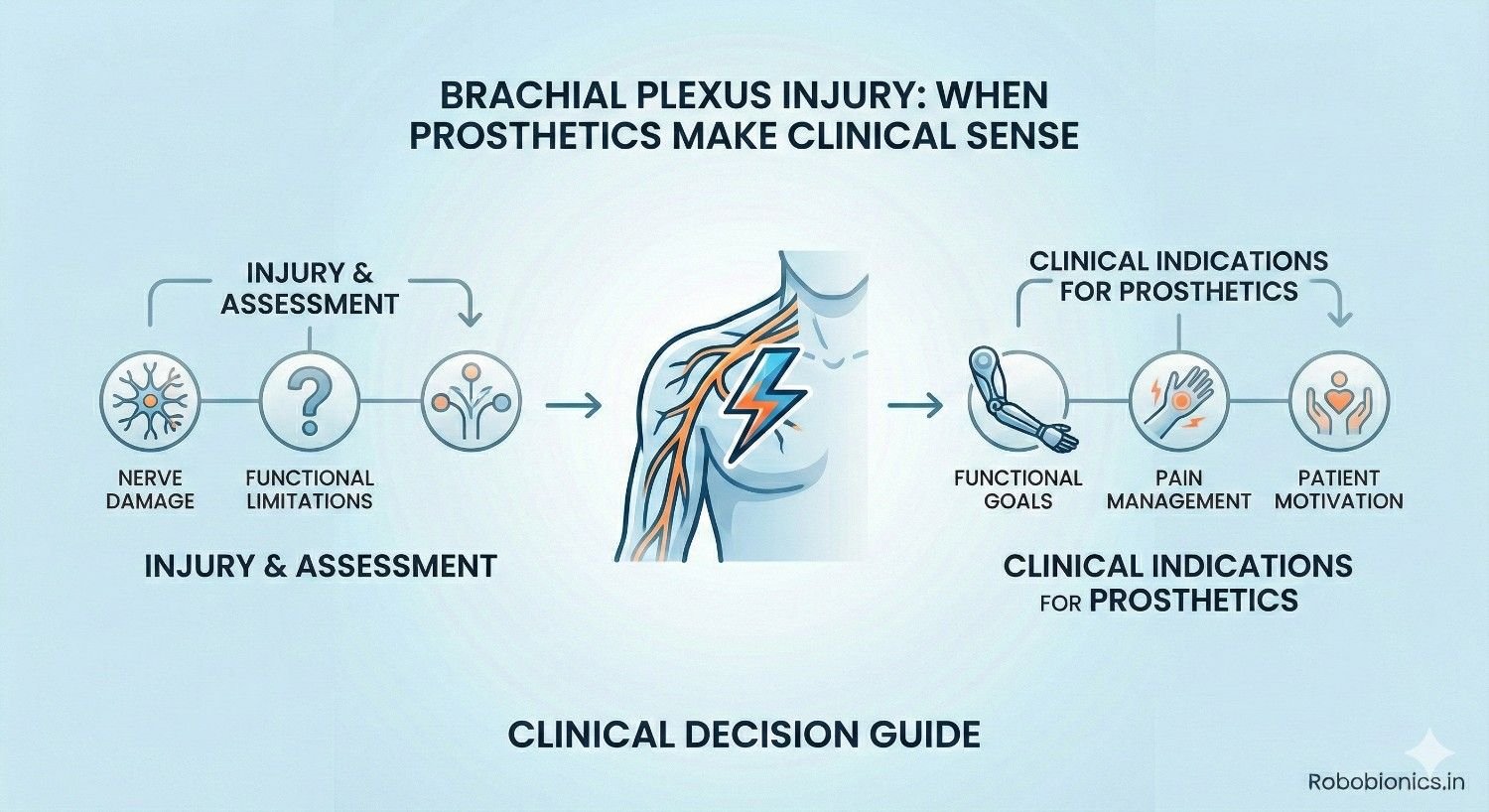
Brachial plexus injury is a condition that quietly changes lives. It affects how the arm moves, feels, and functions, often without warning. For many people, the journey includes pain, long treatments, slow recovery, and difficult choices. One of those choices is whether a prosthetic limb makes sense at all. This article is written to answer that exact question with honesty, clarity, and care. We will explore when prosthetics truly help, when they do not, and how to make the right clinical decision without confusion or false hope.
The brachial plexus is a network of nerves that starts near the neck and travels down into the shoulder, arm, and hand. These nerves act like electrical wires that carry signals from the brain to the arm muscles and back again.
Every simple action, such as lifting a cup, buttoning a shirt, or feeling warmth, depends on this nerve network working well. When these nerves are damaged, the arm may stop responding the way it should.
This damage can be partial or complete, temporary or permanent. The outcome depends on how severe the injury is and which nerves are affected.
Most brachial plexus injuries happen due to sudden force. Road accidents, especially bike crashes, are a very common cause in India. A strong pull between the head and shoulder can stretch or tear the nerves.
Other causes include falls from height, sports injuries, and heavy objects pulling the arm suddenly. In newborns, this injury can happen during difficult deliveries, but the focus here is on adult injuries.
In many cases, the injury is not visible from the outside. The arm may look normal, but its function is deeply affected.
The first signs are often weakness or loss of movement in the shoulder, elbow, or hand. Some people feel burning pain that does not go away easily.
Others notice numbness or a dead feeling in parts of the arm. Over time, the muscles may shrink because they are no longer getting nerve signals.
These changes can be frightening, especially when they do not improve after weeks or months.
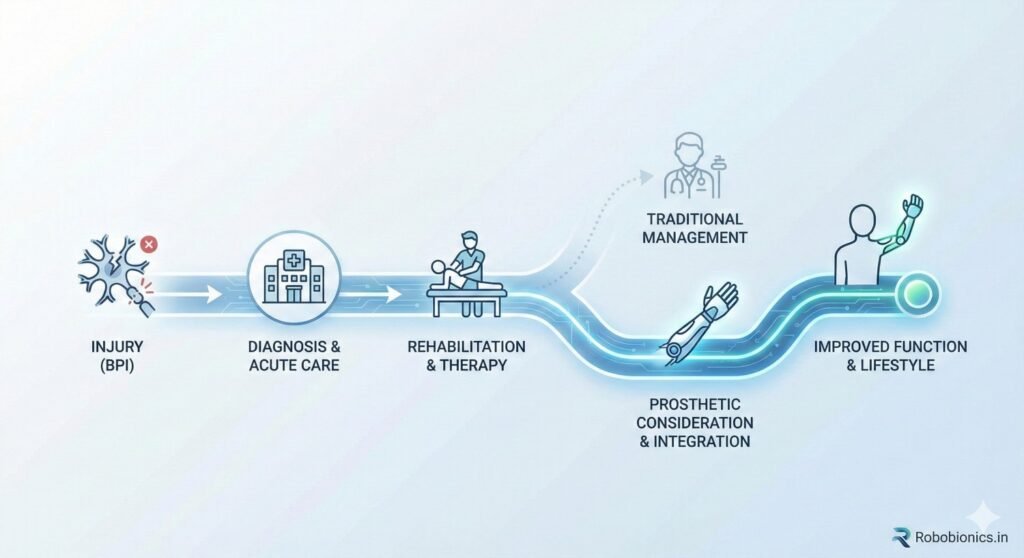
Doctors usually start with physical exams to check which muscles are working and which are not. They test movement, strength, and feeling across the arm.
Scans such as MRI or nerve tests like EMG are often done. These tests help show whether nerves are stretched, torn, or completely avulsed from the spine.
This stage can feel overwhelming because the reports are complex and recovery timelines are unclear.
In the early months, doctors often recommend waiting and watching. Some nerve injuries recover on their own with time and therapy.
Physiotherapy plays a big role during this phase. The goal is to keep joints flexible and muscles healthy while waiting for nerve recovery.
If there is no improvement, surgery may be suggested. This could include nerve grafts or nerve transfers, depending on the case.
Not every surgery leads to meaningful function. Even after multiple procedures, some people regain only limited movement.
In many cases, shoulder movement may return, but hand function remains weak or absent. This is especially true in severe injuries.
This is often the point where patients and families start asking difficult questions about long-term function and quality of life.
An arm that does not work affects almost every daily task. Dressing, eating, writing, and personal care become slow and tiring.
Many people depend heavily on their unaffected arm. Over time, this can cause pain and strain on the other side of the body.
The emotional weight is just as heavy. Losing independence can quietly reduce confidence and social participation.
For people who work with their hands, brachial plexus injury can change their career completely. Some are forced to stop working or shift to lower-paying roles.
Simple activities like shaking hands or carrying objects in public can feel uncomfortable or embarrassing.
Over time, many people withdraw socially, not because they want to, but because everyday interactions feel harder.
After months or years of limited recovery, many patients ask one important question. Is there any way to regain useful function in daily life?
This is where the idea of prosthetics enters the conversation. Not as a replacement for medical care, but as a functional support.
Understanding when prosthetics make sense is critical, especially in brachial plexus injuries.
In most hospitals, prosthetics are discussed mainly for amputations. Since the arm is still present in brachial plexus injury, this option is often overlooked.
Many doctors focus on nerve recovery for as long as possible. While this approach is medically valid, it can delay functional solutions.
Patients are rarely told that prosthetics can sometimes help even when the limb is still intact but not functional.
In amputation, the limb is missing, so prosthetics replace structure and function. In brachial plexus injury, the limb is present but may not move.
This creates a unique challenge. The prosthetic must work with or around the existing arm.
Clinical sense comes from understanding whether the current limb helps or limits function.
In severe cases, the arm may hang without control, causing balance issues and shoulder pain. It may get in the way during walking or daily tasks.
Some patients choose surgical procedures to stabilize or even remove parts of the limb to allow better prosthetic use.
These are serious decisions that require deep clinical reasoning and patient consent.
High-level injuries that affect shoulder, elbow, and hand together often have poor functional outcomes.
If after two to three years there is no useful hand function, the chances of further improvement are very low.
This is one of the strongest indicators for considering prosthetic intervention.
Modern bionic prosthetics rely on muscle signals to function. In some brachial plexus injuries, usable signals may still be present.
If muscles in the forearm or upper arm can generate signals, myoelectric prosthetics may be possible.
If signals are absent, mechanical or body-powered options may be considered instead.
Chronic pain, shoulder subluxation, and stiff joints can limit prosthetic fitting.
Sometimes, surgeries are done not to restore movement, but to improve posture and reduce pain so a prosthetic can be used comfortably.
Clinical sense means looking at the whole body, not just the arm.
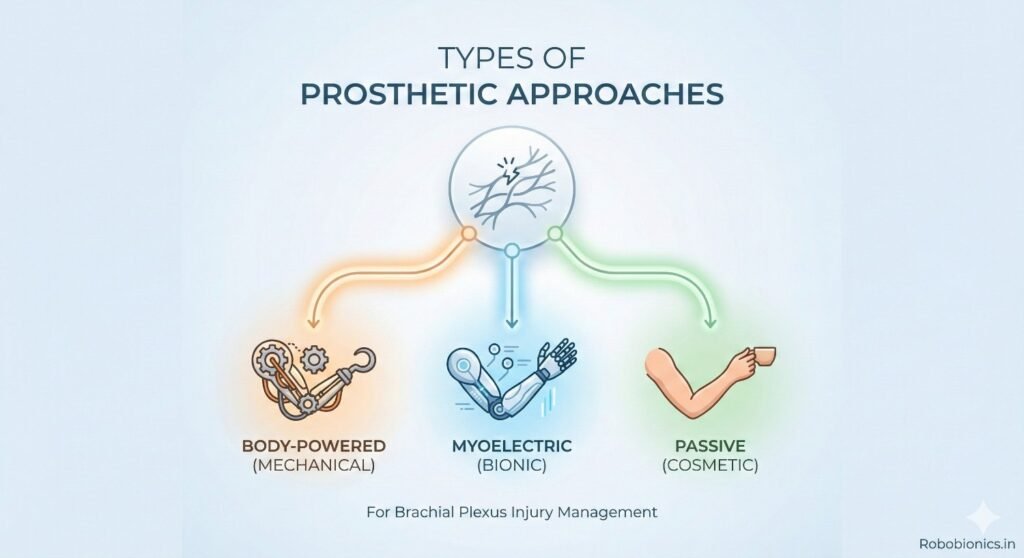
In some cases, the goal is not movement but balance and appearance. A supportive prosthesis can reduce shoulder strain and improve posture.
Cosmetic prosthetics also help restore confidence in social settings, even if function is limited.
These options are often overlooked but can greatly improve quality of life.
Body-powered prosthetics use shoulder or body movements to control the device. They are durable and do not need batteries.
For some brachial plexus patients, these offer predictable and reliable function, especially for holding or stabilizing objects.
They require training but can be very effective in the right cases.
Bionic hands use muscle signals to open and close fingers. When signals are available, these devices offer more natural control.
They allow tasks like holding a bottle, carrying a bag, or using tools with better precision.
Clinical sense is critical here, as not every patient with brachial plexus injury is a good candidate.
A prosthetic is only a tool. Learning to use it takes time, patience, and guided training.
Rehabilitation helps the brain adapt to the device and use it smoothly in daily life.
Without this phase, even the best prosthetic may end up unused.
Patients must understand what the prosthetic can and cannot do. Unrealistic expectations often lead to disappointment.
Clear counselling before fitting improves long-term acceptance and satisfaction.
This is as important as the technology itself.
Support from family makes a huge difference. Daily encouragement and help during training builds confidence.
When families understand the purpose of the prosthetic, outcomes are much better.
Prosthetics should fit into life, not feel like an added burden.
One of the clearest moments to consider a prosthetic is when recovery has stopped improving. This usually happens after two to three years from the injury.
By this time, nerve healing has reached its limit. Muscles that did not regain function are unlikely to recover further.
Continuing to wait beyond this point often delays meaningful functional improvement in daily life.
The hand plays the biggest role in independence. If the hand cannot open, close, or hold objects in a controlled way, daily life becomes very difficult.
Even if shoulder or elbow movement exists, lack of hand function limits usefulness of the limb.
In such cases, a prosthetic hand may offer more practical function than the biological hand.
Some brachial plexus injuries cause severe shoulder pain due to joint instability. The arm may pull down due to its weight.
A well-designed prosthetic or orthotic solution can reduce this strain and improve comfort.
Clinical sense means choosing the option that reduces pain while improving daily function.
In the first year after injury, the body is still healing. Nerve recovery may still occur.
Introducing prosthetics too early can interfere with therapy and recovery goals.
At this stage, focus is usually on physiotherapy and surgical planning.
Prosthetic use requires effort and training. If a patient is not mentally ready, outcomes may be poor.
This does not mean prosthetics are not useful, but timing matters.
Good counselling helps identify the right moment to introduce this option.
If pain is not managed, prosthetic use becomes uncomfortable.
Pain management should come first before fitting any device.
Comfort is a foundation for success.
In some cases, surgeries are done to stabilize the shoulder or elbow rather than restore movement.
This creates a better base for prosthetic fitting.
These procedures aim to reduce pain and improve posture.
In very severe cases, parts of the limb may be surgically removed to allow better prosthetic control.
This is never a quick decision and involves deep discussion between patient and doctors.
The goal is function, not removal for its own sake.
Decisions should involve surgeons, prosthetists, therapists, and the patient.
Each brings a different perspective that improves outcomes.
Good teamwork leads to better clinical sense.
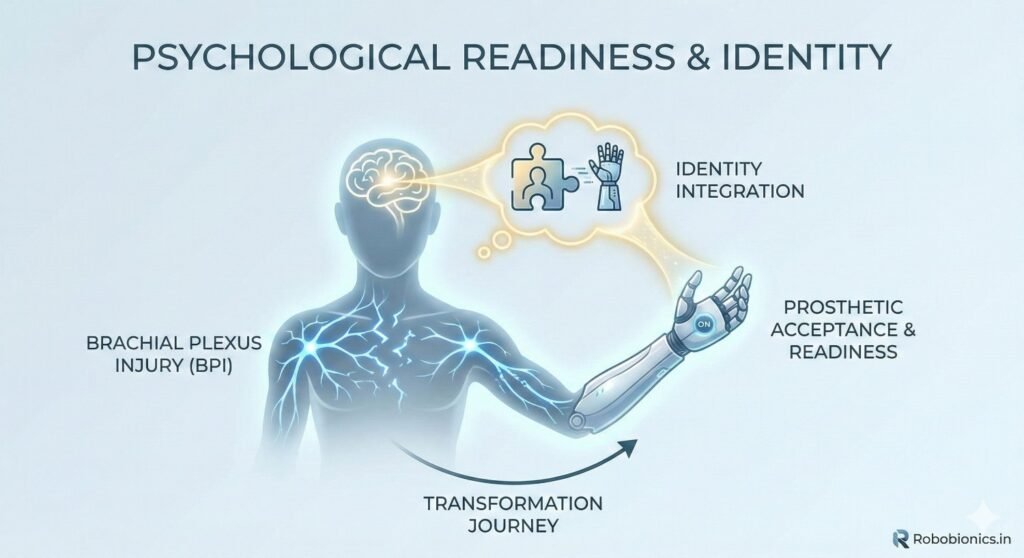
Many people struggle with the idea of using a prosthetic when their arm is still present.
This is a natural emotional response and should be respected.
Acceptance often comes when function improves and daily tasks become easier.
Independence does not always mean using the natural limb.
It means being able to live, work, and care for oneself with confidence.
Prosthetics are tools that support this goal.
Small wins matter. Holding a cup, opening a door, or carrying a bag builds trust in the device.
Over time, confidence grows naturally.
This journey is personal and should not be rushed.
India sees a large number of brachial plexus injuries due to road accidents.
Many patients reach specialized care late due to lack of awareness.
This delay often affects recovery outcomes.
Imported prosthetics are expensive and out of reach for many families.
Indian-made solutions have changed this landscape.
Affordable options make long-term functional care possible.
Prosthetic success depends on nearby therapy and service support.
Local centers improve follow-up and long-term use.
This is critical in a country as large as India.
When muscle signals are present, bionic hands offer controlled grip and release.
They help with daily tasks like holding objects and carrying items.
This restores practical independence in many cases.
Bionic hands are not replacements for natural hands.
They require charging, care, and training.
Clear understanding prevents disappointment.
Not every patient needs advanced technology.
Clinical sense lies in choosing what fits the person’s life and needs.
Sometimes simpler solutions work better.
Success is not just about motion. It includes comfort, confidence, and participation in life.
Being able to return to work or social roles matters deeply.
Prosthetics often support these goals.
Users often improve with practice. Tasks that seem hard at first become routine.
The brain adapts slowly but effectively.
Consistency is more important than speed.
With the right guidance, many people build full and active lives.
Prosthetics are one part of this journey.
Support systems complete the picture.
Waiting for recovery is important, but waiting without direction can quietly reduce future options. Muscles that stay unused for years become stiff and weak.
Joints may lose their natural range of motion. Pain patterns can become chronic and harder to treat.
At a certain point, the body needs a new plan focused on function, not just healing.
Hope plays a big role in recovery, but it must be guided by medical facts. Doctors often see patients who keep hoping for movement that is unlikely to return.
Clinical sense means respecting hope while preparing for practical outcomes.
Prosthetics should not be seen as giving up, but as choosing progress.
When there is no improvement in hand movement after long periods, this is a clear sign.
Repeated surgeries without functional gain are another signal.
Difficulty managing daily tasks independently often pushes the decision forward.
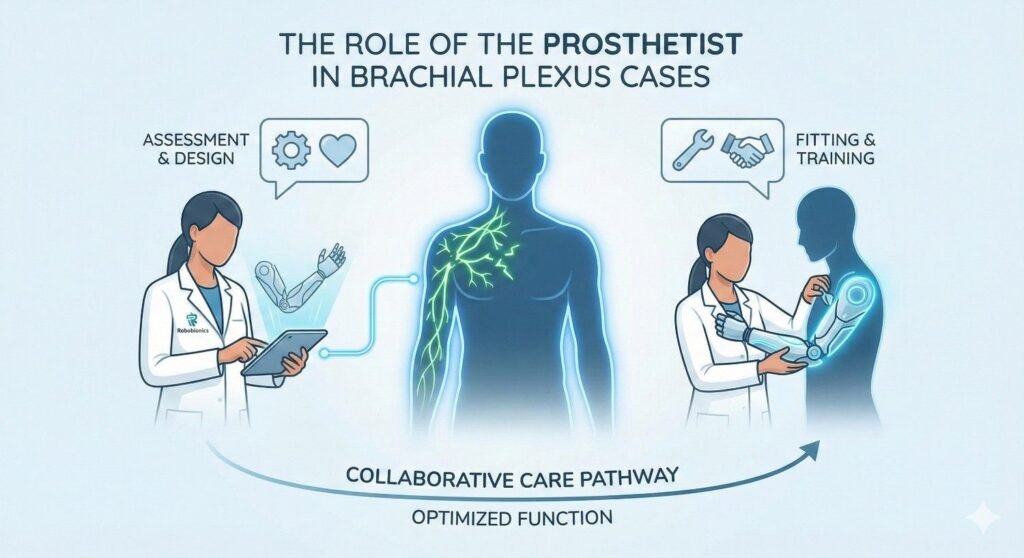
A skilled prosthetist looks beyond measurements and materials. They study posture, movement patterns, and daily habits.
In brachial plexus cases, this understanding is especially important.
Each design decision affects comfort and long-term use.
No two brachial plexus injuries are the same. A device must match the user’s lifestyle, work demands, and strength.
A farmer, an office worker, and a student all need different solutions.
Clinical sense lies in personalisation, not standard models.
Often, prosthetic fitting is done in stages. Initial trials help understand comfort and control.
Feedback from the user shapes the final design.
This process improves acceptance and long-term success.
Using a prosthetic feels strange at first. The brain needs time to connect intention with movement.
This phase can feel tiring and frustrating.
Proper training makes this process smoother and more rewarding.
Rehabilitation is not just exercise. It includes learning how to use the device in daily tasks.
Therapists guide users through simple actions that slowly build skill.
This structured approach builds confidence safely.
Many prosthetics are abandoned due to poor training or unrealistic expectations.
Regular follow-ups and encouragement prevent this outcome.
Support is as important as technology.
Brachial plexus injury pain can be nerve-related, muscular, or joint-based.
Each type requires a different approach.
Ignoring pain reduces prosthetic tolerance.
By supporting the arm and improving posture, prosthetics can reduce shoulder strain.
Better balance reduces overuse pain in the other arm.
This indirect benefit is often underestimated.
Some pain requires medication, therapy, or interventions.
Prosthetics should be introduced when pain is reasonably controlled.
Comfort improves learning and use.
The final decision must always belong to the patient.
Clinicians provide information, not pressure.
Informed choice leads to better satisfaction.
Just because a device exists does not mean it is right for everyone.
Clinical sense means choosing what helps, not what looks advanced.
Simplicity often wins.
Prosthetic decisions affect years of life.
Ongoing support is part of ethical care.
Follow-up matters as much as fitting.
Young patients may adapt faster to prosthetics.
However, growth and changing needs must be planned for.
Devices may need frequent adjustments.
School, play, and social life are important.
Prosthetic use should support these areas, not limit them.
Integration into daily life is key.
Young users may feel different from peers.
Positive reinforcement and peer support help greatly.
Prosthetics should empower, not label.
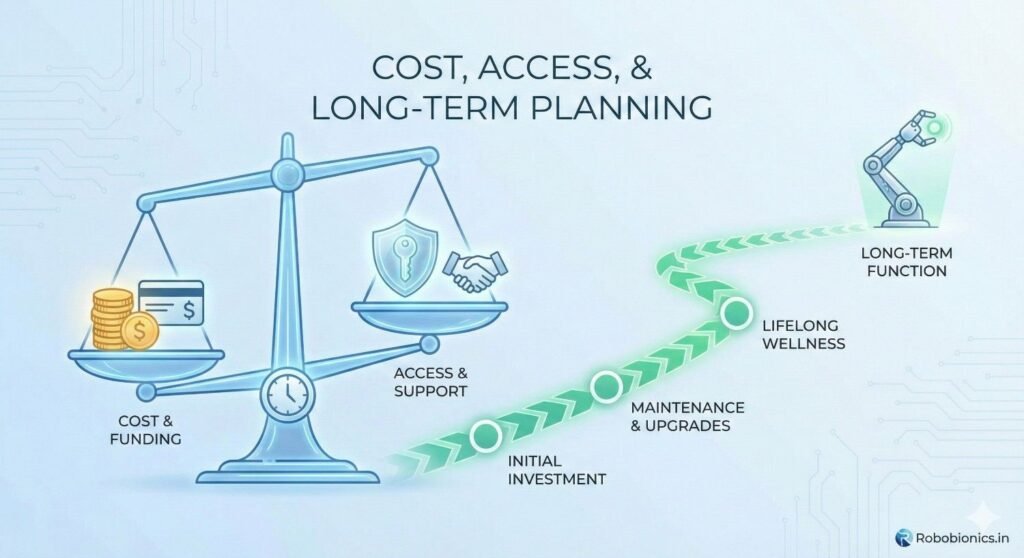
Prosthetics involve not just initial cost but maintenance and upgrades.
Clear cost discussions prevent future stress.
Affordable local solutions improve sustainability.
Regular servicing keeps devices usable.
Local service centers reduce downtime.
This is critical for daily users.
Needs may change with age and work.
Flexible solutions adapt better over time.
Planning ahead improves long-term outcomes.
Being able to manage personal tasks matters more than technical specs.
Success looks different for each person.
User-defined goals should guide decisions.
Confidence, participation, and dignity are key outcomes.
Prosthetics often support social re-engagement.
This impact is deeply meaningful.
Real-life experiences teach clinicians what works.
Listening to users improves future care.
Clinical sense grows through empathy.
For many people with brachial plexus injury, the loss goes beyond physical ability. It affects how they see themselves and how they feel in public spaces.
A prosthetic can restore balance to the body, but it also restores balance to self-image.
Standing straight, feeling supported, and appearing whole again has a deep emotional impact.
Simple social acts like meeting people, attending events, or traveling become easier when a person feels supported.
A prosthetic reduces unwanted attention caused by a hanging or non-functional arm.
This quiet confidence often leads to better social participation.
Being able to manage personal care, work tasks, or household chores brings back a sense of control.
This dignity cannot be measured in clinical charts but is deeply felt by users.
Prosthetics often play a silent but powerful role here.
Many still believe prosthetics are only useful when a limb is missing.
In reality, functional prosthetics can support or replace lost function even when the limb is present.
Education is key to changing this belief.
Some worry that using a prosthetic means becoming dependent.
In truth, prosthetics increase independence rather than reduce it.
They are tools, not crutches.
Technology helps, but human factors matter more.
Training, motivation, and support shape outcomes.
Clinical sense means blending both.
Prosthetic counselling should begin early, even if fitting happens later.
This gives patients time to understand options and prepare mentally.
Early awareness prevents shock and resistance later.
Patients need clear timelines for recovery, surgery, and alternative options.
Knowing when to reassess goals reduces frustration.
Transparency builds trust.
Informed patients make better decisions.
Counselling should focus on options, not directions.
Choice improves long-term satisfaction.
Many patients start with injury, followed by therapy and surgery.
After limited recovery, functional gaps become clear.
This is where prosthetics shift from idea to solution.
Even partial function can change daily life.
Being able to stabilize objects or assist the other hand is valuable.
Prosthetics often provide this support.
What works today may change tomorrow.
Prosthetic plans should evolve with the person.
Flexibility is key.
Prosthetics should match real Indian lifestyles.
Durability, ease of use, and comfort matter more than appearance alone.
Local context shapes good design.
Users need guidance beyond fitting day.
Workshops, follow-ups, and check-ins improve outcomes.
Support builds trust.
Affordability is not optional in a country like India.
Responsible pricing expands access.
This is part of clinical sense.
The future lies in closer collaboration between surgeons and prosthetists.
Joint planning improves outcomes.
Silos reduce effectiveness.
Digital tools and gamified therapy are improving engagement.
These tools help users practice regularly.
Consistency drives progress.
Listening to patients will shape better solutions.
Care should adapt to life, not the other way around.
This shift is already happening.
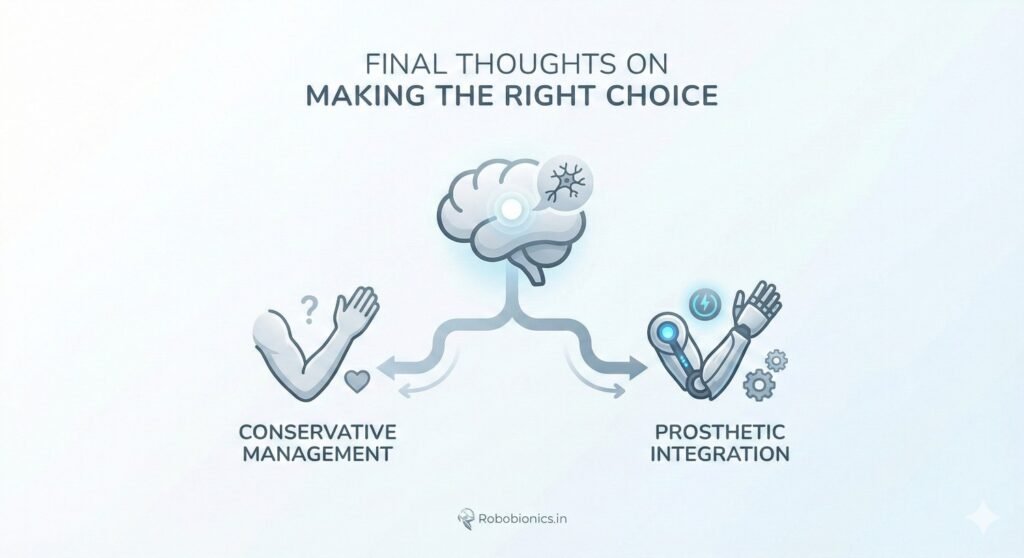
Prosthetics should not be seen as failure of medicine.
They are a valid clinical option when used wisely.
Timing and selection matter.
Clear discussions prevent regret.
Patients deserve honesty and empathy.
This builds lasting trust.
At the heart of every decision is the person living with the injury.
Prosthetics make clinical sense when they improve life in meaningful ways.
That is the measure that truly matters.
For many clinicians, the surgery is only the first step. What happens after the operation
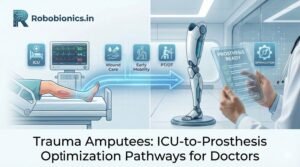
For trauma amputees, the journey does not begin at the prosthetic clinic. It begins much
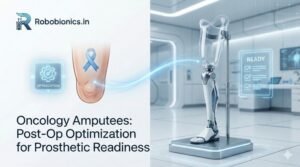
Amputation after cancer is not just a surgical event. It is the end of one
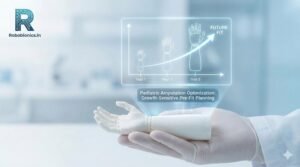
When a child loses a limb, the challenge is never only physical. A child’s body