
Post-Op Follow-Up Schedule That Prevents Prosthetic Delays (For Clinicians)
For many clinicians, the surgery is only the first step. What happens after the operation



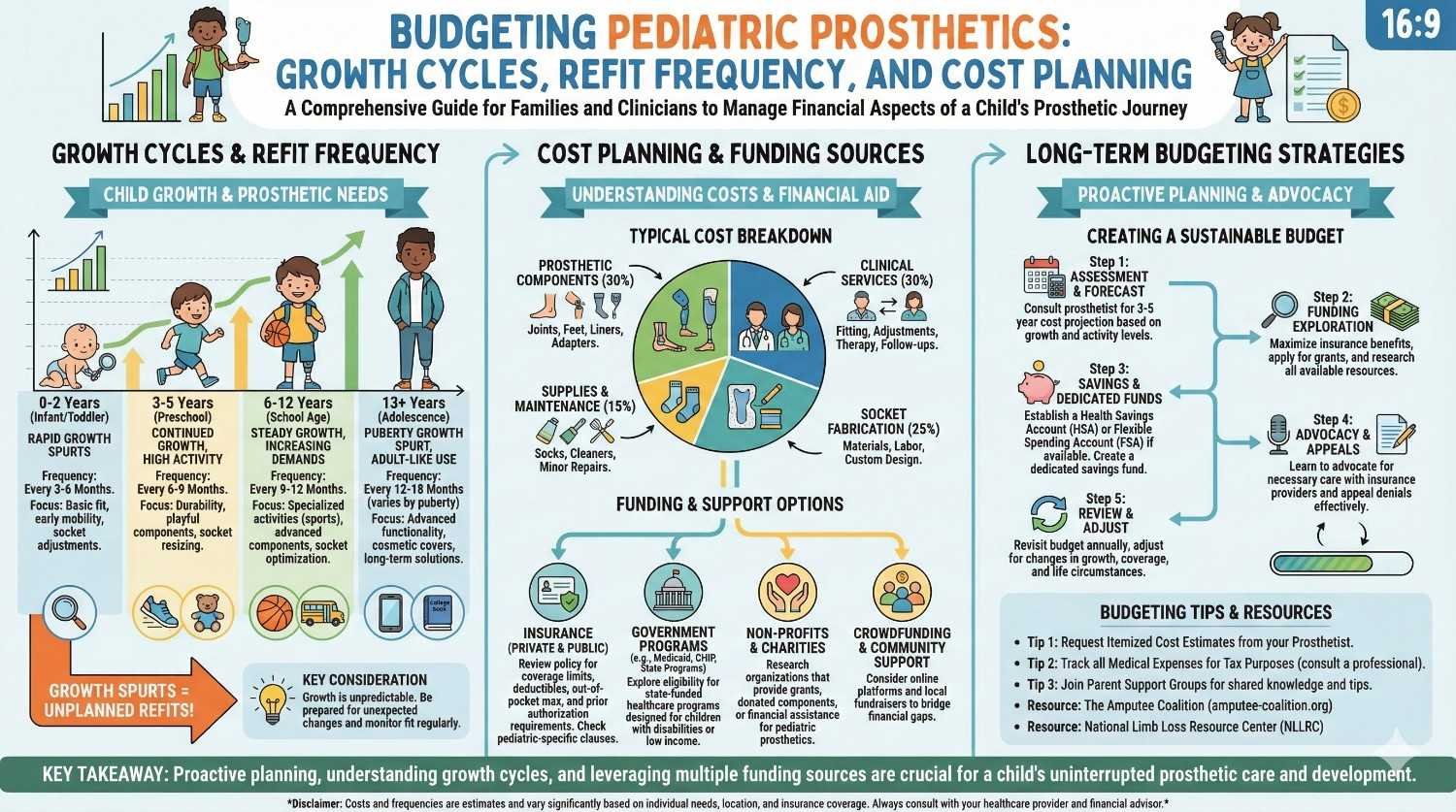
Raising a child with limb difference comes with many questions, but one concern rises again and again. How do we plan for the future when a child’s body keeps changing? Pediatric prosthetics are not a one-time decision. They are a long journey shaped by growth, school life, play, and confidence.
This article looks closely at how hospitals, clinicians, and families can budget pediatric prosthetic care in a realistic and caring way. We will talk about growth cycles, how often refits are truly needed, and how to plan costs without fear or surprise. The goal is simple. Clear thinking, honest planning, and better outcomes for children.
In adult prosthetic care, the body is stable. Size, weight, and bone structure do not change much after fitting. Pediatric care is the opposite. A child’s body is always changing, sometimes slowly and sometimes very fast.
Bones grow in length. Muscles get stronger. Body weight shifts. Even posture changes as children learn new movements. A prosthetic that fits well today may become uncomfortable or unsafe within months. This constant change makes long-term cost planning more complex.
Children are active in ways adults are not. They run, jump, climb, and fall. School playgrounds, sports, and daily play put extra stress on prosthetic devices.
This means pediatric prosthetics face more wear and tear. Parts may need repair more often. Liners may need replacement sooner. Ignoring this reality leads to unexpected expenses and frustration for families and care teams.
For children, a prosthetic is not just a mobility tool. It is part of identity. How it looks, feels, and performs affects confidence, school life, and social interaction.
Budgeting must account for adjustments that support emotional comfort, not just physical fit. A child who rejects a prosthetic due to discomfort or embarrassment loses both function and value from the investment.

One of the biggest mistakes in pediatric planning is assuming growth happens at a steady pace. In reality, children grow in spurts.
There may be months with little change, followed by rapid growth in a short time. Prosthetic fit can change suddenly during these periods, even if everything seemed stable before.
Recognizing this pattern helps families and hospitals plan refits more wisely.
Different age groups show different growth behavior. Early childhood often brings rapid size changes. School-age children grow more steadily but still unpredictably. Adolescence introduces another major growth phase.
Each phase demands a different prosthetic strategy. Budgeting must reflect where the child is in this cycle, not just their current age.
Growth is not only about length. Limb volume changes too. Muscle development, fat distribution, and activity levels all affect socket fit.
Even if limb length stays similar, volume changes can cause discomfort, skin issues, and poor control. These changes often trigger refits even without visible height growth.
Many families are told to plan for one prosthetic change per year. This rule sounds simple, but it is rarely accurate.
Some children may need two or three adjustments in a year. Others may go longer with minor modifications. A fixed yearly assumption often leads to under-budgeting or over-spending.
Not every change requires a full prosthetic replacement. Many issues can be solved with socket modifications, liner changes, or component adjustments.
Understanding the difference between a refit and a full rebuild helps control cost without sacrificing safety or comfort.
Hospitals that educate families on this distinction reduce anxiety and improve trust.
Children do not always express discomfort clearly. Parents and clinicians must watch for signs like redness, reluctance to wear the prosthetic, changes in walking pattern, or increased falls.
Catching these signs early often allows for smaller, less expensive interventions.
The prosthetic itself is only part of the cost. Clinical visits, therapy sessions, follow-ups, and repairs add up over time.
Families who budget only for the device often feel blindsided by these additional needs. Clear cost planning must include the full care journey.
Children break things. This is normal and healthy. Prosthetic parts are no exception.
Foot shells, straps, and cosmetic covers wear out faster in pediatric use. Planning for regular maintenance prevents emergency spending and care disruption.
As children grow, they must relearn balance and movement. Therapy is not a one-time expense.
Each growth phase may require new training to adapt to size and strength changes. Budgeting without therapy is incomplete.
Hospitals often use adult-based cost models for pediatric care. This leads to mismatch between projected and actual spend.
Unplanned refits strain budgets and disrupt scheduling. Over time, this creates reluctance to invest in pediatric prosthetic programs.
Short-term budgeting fails in pediatric care. Hospitals need multi-year planning that accounts for growth cycles and average refit frequency.
This approach improves financial predictability and supports better clinical decisions.
Clinical teams understand growth. Finance teams understand numbers. Pediatric prosthetic budgeting succeeds only when both work together.
Shared planning reduces conflict and improves outcomes.

Chronological age does not tell the full story. Growth stage, activity level, and health status matter more.
Budgets should be tailored to the child’s expected growth pattern over the next one to two years.
Including a set number of adjustments in the budget reduces surprise costs. Minor fixes are cheaper and often enough.
This approach encourages early care instead of delayed intervention.
Unexpected growth spurts and accidents happen. A small contingency buffer protects families and hospitals from stress.
This buffer is not waste. It is preparedness.
Modular prosthetics allow parts to be changed without replacing the whole device. This is especially valuable in growing children.
Length adjustments, socket changes, and component swaps reduce cost over time.
When modular systems are used, growth-related changes can often be handled as upgrades rather than full rebuilds.
This lowers long-term cost and reduces disruption for the child.
Not all prosthetics are designed with growth in mind. Selecting pediatric-focused systems improves both fit and budget control.
This decision at the start has long-term impact.
Families often fear pediatric prosthetic costs because they feel unpredictable. Clear communication reduces this fear.
Explaining what is likely to happen over time helps families plan emotionally and financially.
When families know that refits are normal and expected, they react calmly when changes are needed.
Surprises create stress. Preparation creates confidence.
Hospitals that offer clear pediatric prosthetic care plans stand out. These plans guide families through growth stages and expected costs.
Structure brings peace of mind.
We are approaching the next major section, where we will focus on long-term cost planning strategies, insurance and funding considerations, and how hospitals can design pediatric prosthetic packages that support growth without financial shock.

One of the most helpful mindset shifts in pediatric prosthetics is moving away from visit-based thinking. Each clinic visit feels small, but together they form a long journey that spans many years.
Hospitals and families benefit when costs are mapped across two to five years instead of month to month. This longer view makes growth-related changes feel expected rather than disruptive. It also allows better financial preparation for periods when refits are more likely.
Long-term planning does not remove uncertainty, but it replaces fear with structure.
Not all years cost the same. Certain phases demand more resources. Early walking years often require frequent socket changes. School entry brings higher activity and wear. Adolescence introduces rapid growth and strength changes that affect alignment and safety.
By identifying these phases early, hospitals can smooth spending over time. Families also feel more secure when they know which years may need more attention and budget.
Some costs are almost guaranteed, such as routine follow-ups and basic maintenance. Others are harder to predict, like sudden growth spurts or device damage from heavy play.
Good planning separates these two categories. Predictable costs form the base budget. Variable costs are covered through buffers, insurance, or support programs. This separation improves clarity and reduces emotional stress.
Insurance systems are usually designed around adult care. Pediatric prosthetics do not fit neatly into these structures. Growth-related refits are sometimes seen as replacements rather than medical needs.
This creates delays, denials, and confusion. Families often feel they must fight for coverage, which adds emotional strain to an already sensitive situation.
Hospitals that understand these gaps can guide families more effectively.
One of the strongest tools in pediatric prosthetic reimbursement is documentation. Clear clinical notes that link growth changes to safety, skin health, and mobility make approvals more likely.
Growth is not cosmetic. It affects function directly. When this connection is documented consistently, payers are more willing to support refits and adjustments.
In many cases, insurance alone does not cover everything. Hospitals may need to blend insurance billing with internal support programs, payment plans, or partnerships.
This blended approach keeps care continuous even when reimbursement is delayed or partial. For families, continuity matters more than perfect coverage.
Itemized billing turns every adjustment into a separate cost event. This creates anxiety for families and administrative burden for hospitals.
Package-based pediatric prosthetic care groups services into a clear structure. Families know what support they will receive over a defined period. Hospitals gain predictability.
Packages shift the conversation from cost per visit to quality of care over time.
Effective pediatric packages are often time-bound rather than device-bound. For example, a twelve-month care package that includes fittings, adjustments, therapy check-ins, and maintenance.
This structure matches how children grow. It also allows flexibility within the package without renegotiating cost at every step.
A toddler learning to walk has different needs from a teenager entering a growth spurt. Tiered packages reflect this reality.
Lower tiers may focus on frequent adjustments and basic components. Higher tiers may include advanced components, sports support, or extended therapy.
Clear tiers help families choose based on current needs while planning for future transitions.
Many refits happen only after a problem becomes serious. Skin breakdown, pain, or refusal to wear the prosthetic often signal delayed intervention.
Scheduled check-ins catch issues earlier. Early changes are usually simpler and less expensive. Over time, this approach lowers total cost and improves comfort.
Proactive care is almost always cheaper than reactive care.
Parents are the first line of observation. Teaching them what to look for reduces emergency visits and sudden refits.
Simple guidance on redness, gait changes, or behavior shifts empowers families. This shared responsibility protects both the child and the budget.
Measuring limb length, volume, and activity changes at each visit builds a growth trend over time. Trends are more useful than isolated complaints.
When clinicians see a pattern forming, they can plan adjustments ahead of time instead of reacting late.

Low-cost devices may seem attractive for growing children. The logic is simple. Why invest when the child will outgrow it soon?
In practice, poorly fitting or fragile devices lead to higher repair costs, lower usage, and more frequent replacements. Over time, this often costs more.
Quality devices that allow adjustment usually offer better long-term value.
During rapid growth, balance and coordination can temporarily decline. Prosthetic stability becomes even more important.
Investing in safer components during these phases reduces fall risk and injury. Avoiding one hospital visit can offset a large part of the device cost.
A child’s daily life matters as much as physical growth. School demands, sports interests, and social activities all affect prosthetic needs.
When technology matches lifestyle, usage improves. Better usage means better value from the investment.
Children are sensitive to stress around them. Financial anxiety in parents often transfers to the child, even if unspoken.
When prosthetic care feels like a burden, children may feel guilty or hesitant to ask for help. This can lead to delayed care and worse outcomes.
Good budgeting protects emotional health, not just finances.
Children thrive on routine and predictability. When prosthetic care follows a clear plan, children feel safer and more confident.
This confidence shows in school, play, and social interaction. These benefits are hard to measure but deeply valuable.
Transparent planning builds trust. Families who trust their care team communicate more openly.
Open communication leads to better care decisions and fewer crises.
Pediatric prosthetics should not be treated as a smaller version of adult care. Dedicated pathways reflect the unique needs of growing children.
These pathways improve efficiency, outcomes, and cost control.
Not all clinicians are trained to think in growth cycles. Ongoing education helps teams anticipate change instead of reacting to it.
This proactive mindset improves both care quality and budgeting accuracy.
Success in pediatric prosthetics is not a fitted limb. It is a child who moves confidently and keeps moving as they grow.
Hospitals that measure long-term function and participation make better decisions over time.
Pediatric care does not last forever. At some point, children transition to adult prosthetic systems.
Planning this transition early avoids sudden cost spikes and care disruption. It also prepares families emotionally.
As children grow, their prosthetic technology can gradually evolve. Sudden jumps are often expensive and overwhelming.
A planned progression smooths both learning and cost.
Maintaining continuity in care philosophy, even as systems change, protects long-term outcomes.
Children who transition smoothly stay active and engaged.
We are now nearing the final major section, where we will bring everything together with practical budgeting frameworks, hospital-level action steps, and a strong closing focused on dignity, planning, and long-term impact.

The most effective pediatric prosthetic budgets are visual and simple. Instead of a single large number, hospitals and families benefit from a year-by-year cost map.
Each year includes expected fittings, adjustments, therapy needs, and maintenance. High-growth years are marked clearly. Lower-intensity years are planned with lighter spend.
This map turns uncertainty into something visible and manageable. When families can see the path ahead, decisions feel less overwhelming.
Exact prediction is impossible in pediatric care. Growth is too personal and too dynamic. Instead of chasing precision, good planning relies on averages.
Hospitals can use historical data to estimate average refit frequency and maintenance needs for each age group. These averages create realistic budgets without false promises.
Families often prefer honest ranges over exact numbers that later prove wrong.
Budgets should not be locked and forgotten. Scheduled review points every six or twelve months allow adjustment without crisis.
These reviews align care, growth, and finances in one conversation. Small changes made early prevent large shocks later.
Many hospitals struggle because pediatric prosthetic data is scattered across departments. Surgery records sit in one system. Rehab notes in another. Prosthetic details somewhere else.
Centralizing this information creates a complete picture of cost and outcomes. This visibility is essential for accurate budgeting and improvement.
When growth is measured differently by different clinicians, planning becomes inconsistent. Standard protocols for measuring limb length, volume, and functional change improve reliability.
Standardization does not limit care. It supports smarter decisions.
Finance teams often see numbers without understanding why they change. Regular joint reviews between clinical and finance teams close this gap.
When costs are discussed alongside growth patterns and clinical needs, trust improves and conflict reduces.
Families manage daily prosthetic use. They notice early signs of fit issues. They carry emotional and financial responsibility.
Including families in budgeting conversations respects their role. It also improves adherence to care plans.
Partnership reduces surprises on both sides.
Large, unexpected bills create distress. Predictable payment options, such as monthly plans tied to care packages, reduce this burden.
These options help families focus on the child, not the bill.
Verbal explanations are often forgotten under stress. Written care plans give families something to refer back to.
These plans outline expected growth changes, care milestones, and cost ranges. Clarity builds confidence.
One of the quiet risks in pediatric care is device abandonment. When care feels too complex or expensive, families may stop follow-up.
This leads to poorer mobility and higher long-term cost. Good budgeting keeps families engaged and children active.
Mobility affects school attendance, play, and independence. When prosthetic care is stable, children participate more fully in daily life.
These benefits extend far beyond healthcare. They shape future opportunity.
Children who stay active and confident place less strain on healthcare systems as adults. Early investment pays off over decades.
Budgeting is not just about saving money now. It is about reducing future cost through better outcomes.
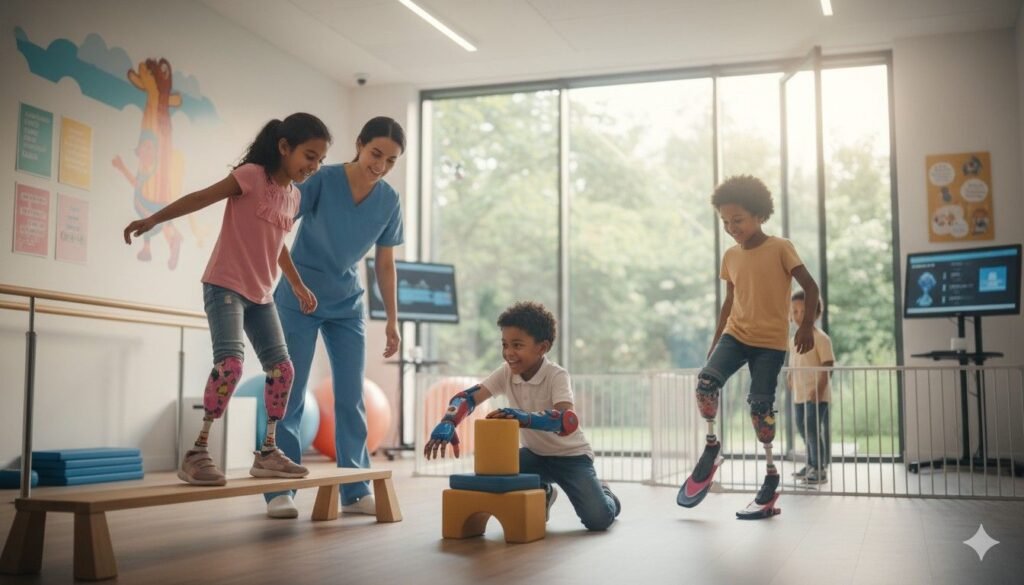
Manufacturers play a critical role in pediatric budgeting. Devices designed to grow, adjust, and withstand play reduce long-term cost.
Growth-friendly design is not a luxury. It is a necessity in pediatric care.
Manufacturers can support hospitals by sharing data, growth planning tools, and service support models.
This partnership improves care quality and financial predictability.
Fast local service reduces downtime, travel expense, and missed school or work days.
These hidden costs matter to families and hospitals alike.
Thoughtful budgeting shows respect for the child and family. It acknowledges that growth is natural and care must adapt.
When systems plan well, children feel supported, not burdensome.
Children who trust their prosthetic and care team explore more, try more, and believe in themselves more.
Stability in care creates space for confidence to grow.
Pediatric prosthetic care is a shared responsibility between hospitals, families, and manufacturers.
When budgeting reflects this shared role, outcomes improve for everyone.
Budgeting pediatric prosthetics is not about predicting every change. It is about preparing for change with honesty and care.
Growth cycles, refit frequency, and cost planning are not problems to solve once. They are realities to manage thoughtfully over time.
Hospitals that plan with clarity, families that are informed and supported, and systems designed for growth create something powerful. Children who move forward without fear.
That is the true return on thoughtful pediatric prosthetic budgeting.
For many clinicians, the surgery is only the first step. What happens after the operation

For trauma amputees, the journey does not begin at the prosthetic clinic. It begins much

Amputation after cancer is not just a surgical event. It is the end of one

When a child loses a limb, the challenge is never only physical. A child’s body