
For many clinicians, the surgery is only the first step. What happens after the operation often decides how soon a person can return to daily life with a prosthesis—or how long they remain stuck in delays, doubt, and discomfort. Post-op follow-up is not just a routine task. It is the bridge between healing and function. […]
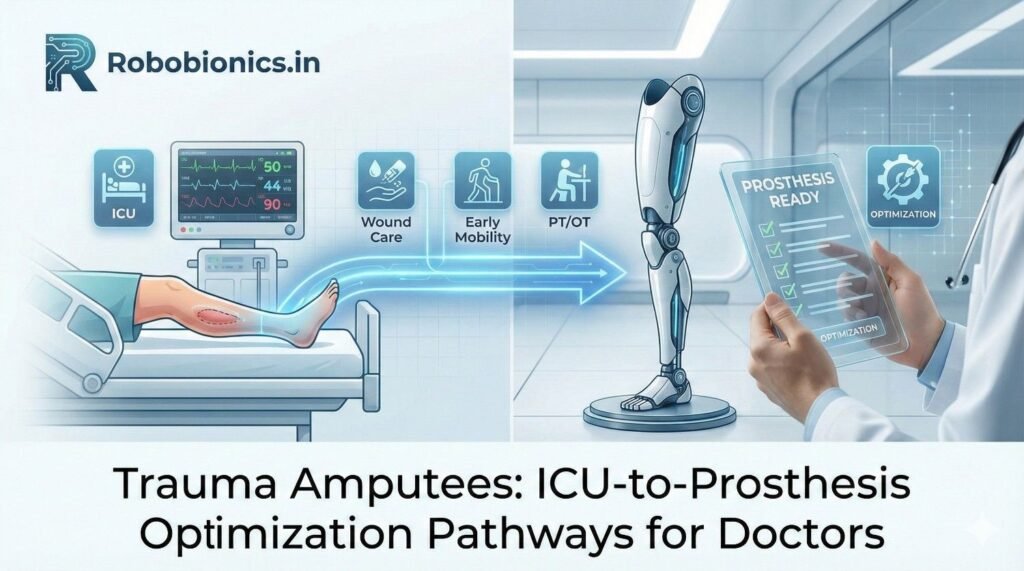
For trauma amputees, the journey does not begin at the prosthetic clinic. It begins much earlier, inside the ICU. Decisions made in the first few hours and days after injury often decide whether a patient reaches a prosthesis smoothly or faces months of delay. Doctors working in trauma care carry a quiet but powerful influence […]
Amputation after cancer is not just a surgical event. It is the end of one long medical journey and the beginning of another that asks much more from the body and the mind. Oncology amputees face unique challenges after surgery, including delayed healing, fatigue, pain, emotional stress, and the effects of chemotherapy or radiation. These […]

When a child loses a limb, the challenge is never only physical. A child’s body is still growing, learning, and changing every day. Decisions made early do not just affect healing. They shape movement, confidence, and development for years to come. This makes pediatric amputation care very different from adult care, even when the surgery […]
Age changes the body, but it does not take away the need for independence, dignity, or movement.For older adults who need a prosthesis, success depends on more than just fit and technology. It depends on strength, balance, skin health, confidence, and daily habits that are very different from those of younger users. In geriatric care, […]