
Post-Op Follow-Up Schedule That Prevents Prosthetic Delays (For Clinicians)
For many clinicians, the surgery is only the first step. What happens after the operation



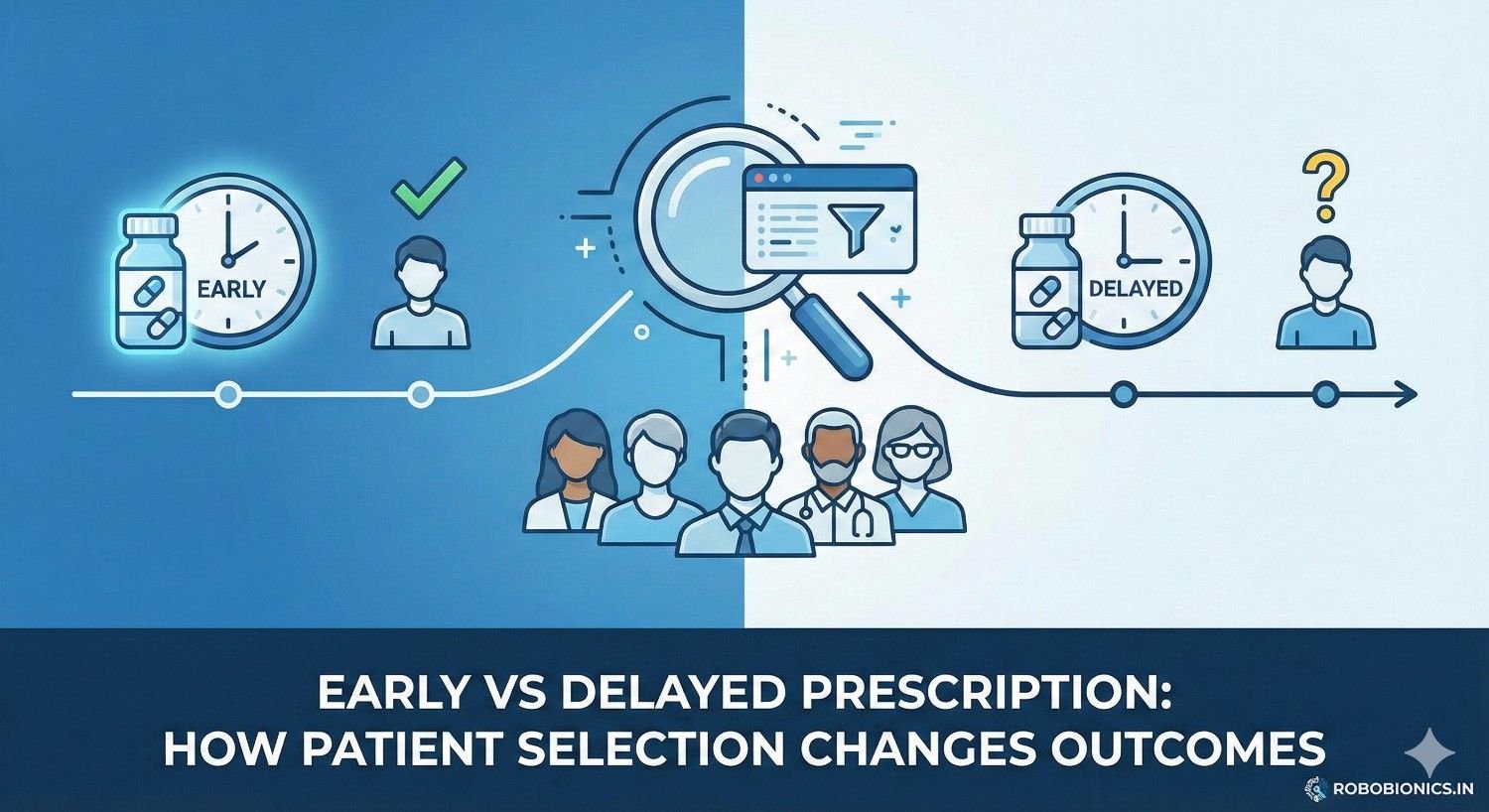
The moment a doctor considers prescribing a prosthetic or assistive device, timing quietly becomes the most powerful factor. Prescribe too early and the body may not be ready. Prescribe too late and the patient may lose valuable function, confidence, and trust. This article explores how early versus delayed prescription changes outcomes, why patient selection matters more than speed, and how thoughtful timing can shape recovery, independence, and long-term success.
Prescribing a prosthetic or assistive device is not the same as writing a medicine slip. It is a decision that affects movement, learning, and long-term habits.
Once a device is introduced, the body and brain begin to adapt around it. This makes timing very important.
Doctors must think beyond the present moment and consider how this choice shapes future recovery.
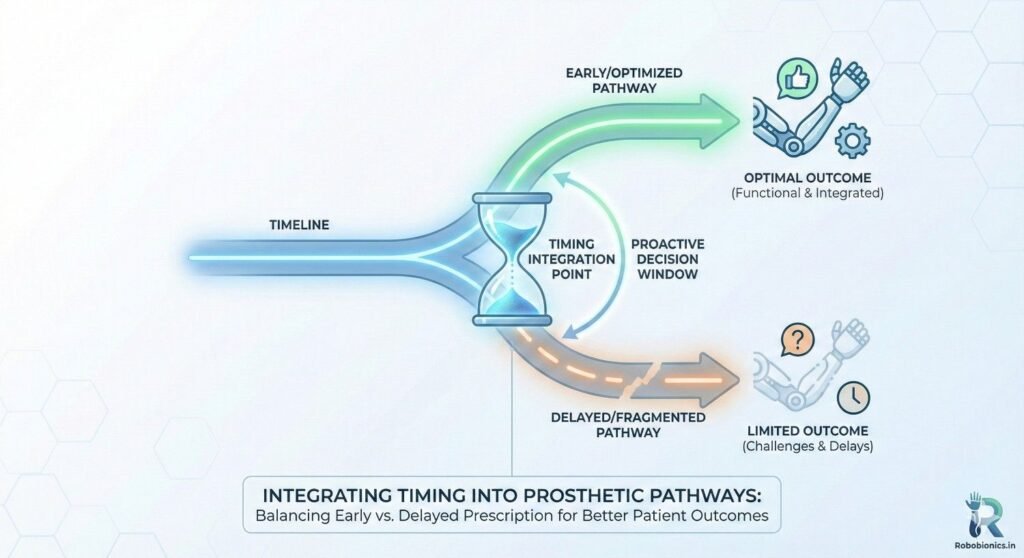
Early prescription is not always good, and delayed prescription is not always bad. Each has benefits and risks.
The key factor is not time since injury alone, but patient readiness.
Understanding this difference helps avoid rigid timelines.
The body heals in phases, and the brain learns in stages. A device introduced at the wrong stage may not be used well.
This can lead to frustration, poor habits, or even rejection of the device.
Correct timing supports smooth learning and acceptance.
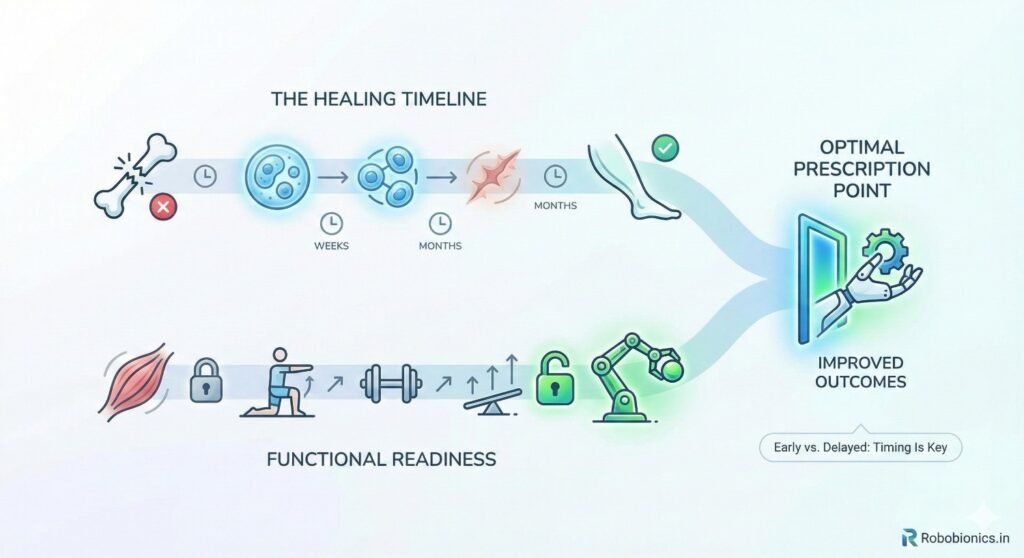
Wounds may heal, but swelling, pain, and weakness may remain.
Functional stability means the body can tolerate regular use without flare-ups.
Doctors should wait for this stability before prescribing certain devices.
Early after injury, joints may be unstable or poorly aligned.
Introducing a device too soon may reinforce poor posture.
Delayed prescription after basic alignment improves long-term outcomes.
Some muscle activity must be present before advanced devices are prescribed.
Without control, the device may feel heavy or hard to manage.
Assessing basic control helps guide timing.
The brain builds new connections when learning to use a prosthetic.
This learning is easier when pain and swelling are controlled.
Early learning under stress often leads to poor patterns.
If a device is used before proper movement is possible, the brain may learn unsafe patterns.
These patterns are hard to correct later.
Delayed prescription can sometimes protect learning quality.
Learning requires focus and patience.
Pain, fear, or confusion reduce learning capacity.
Doctors should assess mental readiness along with physical healing.
Some patients avoid using the injured limb entirely.
Early device use can encourage engagement and prevent neglect.
This is especially helpful in motivated patients.
Light support devices prescribed early can protect joints.
They help maintain movement without strain.
This supports later functional recovery.
Early prescription can signal hope and direction.
Patients feel supported and guided.
This emotional benefit can be powerful.
Early devices may place stress on healing tissues.
This can increase pain or delay recovery.
Doctors must avoid adding load too soon.
Some patients may rely on the device instead of natural recovery.
This can slow muscle return.
Clear goals help avoid this risk.
Early discomfort can lead to long-term dislike.
Once rejected, patients may resist future use.
Timing affects acceptance deeply.
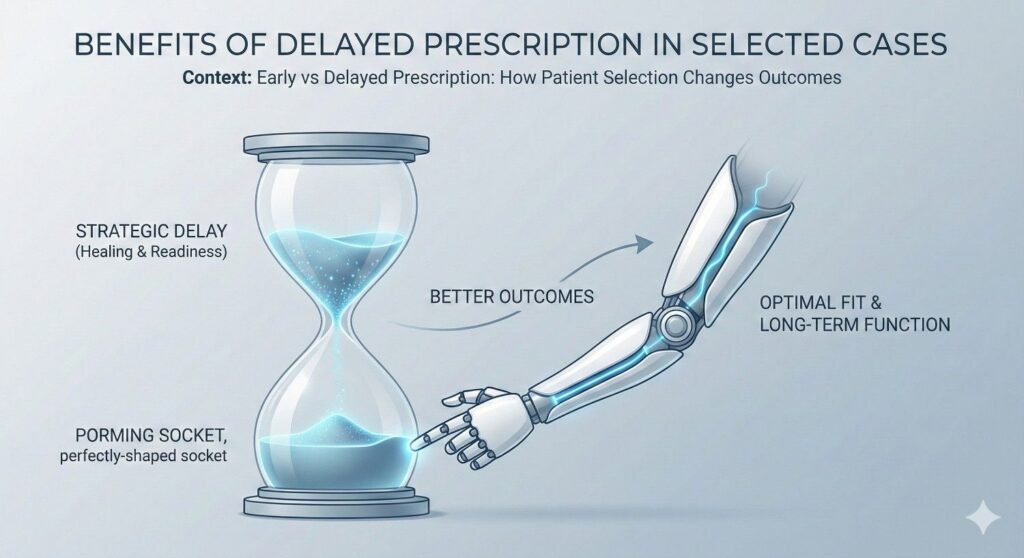
Some conditions improve significantly with time and therapy.
Delayed prescription avoids unnecessary devices.
This respects the body’s healing ability.
Body shape and movement change during recovery.
Delaying allows for more accurate fitting.
This improves comfort and function.
After initial recovery, deficits are clearer.
Devices can be chosen to match real needs.
This improves relevance and use.
There is a learning window for device use.
Delay beyond this window can make adaptation harder.
Especially in children and older adults.
Long waits without solutions can reduce hope.
Patients may disengage from rehabilitation.
Delayed support can affect morale.
Poor posture or overuse of other limbs may develop.
Early support could have prevented this.
Delayed prescription can allow bad habits to form.
Motivated patients benefit more from early prescription.
They practice and adapt actively.
Low engagement may need delayed introduction.
Using devices requires learning and judgement.
Patients must understand purpose and limits.
Selection ensures safety.
Family support improves early success.
Without support, early prescription may fail.
Social context matters.
Children adapt quickly but grow rapidly.
Timing must consider growth and development.
Regular review is essential.
Early return to function may support employment.
Delayed prescription may risk income loss.
Decisions must balance healing and livelihood.
Older patients may need more recovery time.
Early prescription may cause fatigue.
Gentle timing improves outcomes.
Temporary supports suit early phases.
Permanent devices suit stable stages.
Mixing these can confuse learning.
Simple devices tolerate early use better.
Advanced devices need control and focus.
Timing should match complexity.
Prosthetics often need more training.
Orthotics may be used earlier.
Understanding this difference guides prescription.
Progress in therapy shows readiness.
Plateaus may signal need for device support.
Doctors should align timing with therapy outcomes.
Therapists observe daily function closely.
Their input improves timing decisions.
Team decisions reduce error.
Response to therapy may change plans.
Timing should remain flexible.
Rigid plans reduce success.
Early or delayed success should be measured by independence.
Not by speed alone.
Function is the true outcome.
Consistent use shows correct timing.
Abandonment signals mismatch.
Feedback matters.
Correct timing protects joints and muscles.
Poor timing increases complications.
Outcomes must be viewed long-term.
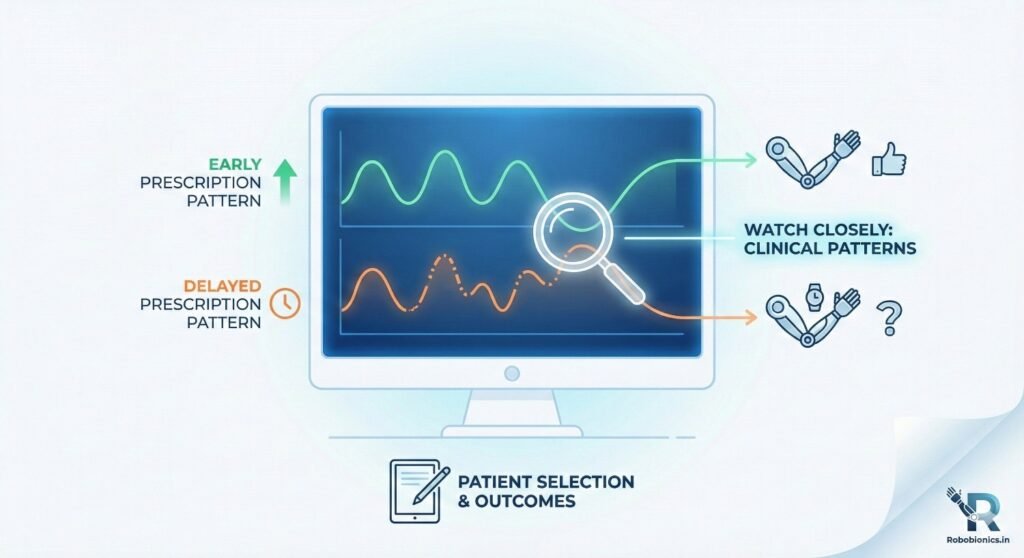
Some patients show clear intent to use the affected limb despite weakness or loss. They try to engage, ask questions, and actively participate in therapy sessions.
When swelling is controlled, pain is manageable, and joints remain aligned during movement, early prescription can guide recovery in a positive direction.
In these cases, the device acts as a structured support rather than a replacement for healing.
If pain levels fluctuate widely, or if the limb position collapses during simple movements, early prescription can cause harm.
Patients who struggle to understand instructions or show fear during movement may not be ready to learn device use.
In such cases, waiting allows the body and mind to reach a safer baseline.
One good day should never drive a prescription decision. Doctors must look for consistent function across sessions.
Consistency shows readiness, while variability suggests instability.
This observation often matters more than time since injury.
The body learns quickly, especially when adapting to new tools or supports. Early exposure shapes how muscles fire and how posture is maintained.
If a device is introduced before proper alignment is achieved, poor habits may become automatic.
These habits can remain even after strength improves.
Early prescription can either reduce or increase compensatory movements.
When guided well, it protects other joints from overuse.
When poorly timed, it encourages awkward movement patterns that strain the body.
Correcting habits takes more effort than building them correctly the first time.
Delayed correction often leads to frustration.
This is why early decisions carry long-term weight.
When patients wait without understanding why, they may feel ignored or uncertain.
This can reduce trust in care and lower engagement.
Clear explanation during delay preserves confidence.
Delayed prescription must still include active therapy and review.
Silence or lack of guidance feels like neglect to patients.
Doctors should communicate timelines clearly.
Hope is maintained through milestones, not devices alone.
Tracking small functional gains keeps motivation alive.
This makes delayed prescription safer emotionally.
Sudden injuries often involve swelling and instability early on.
Gradual conditions may allow earlier device use.
Diagnosis shapes safe timing windows.
In conditions that worsen over time, early prescription may preserve function longer.
Waiting too long may result in missed functional windows.
Here, early does not mean rushed, but proactive.
When recovery follows a known path, timing can be planned more confidently.
Delayed prescription may allow better customization.
Predictability reduces risk.
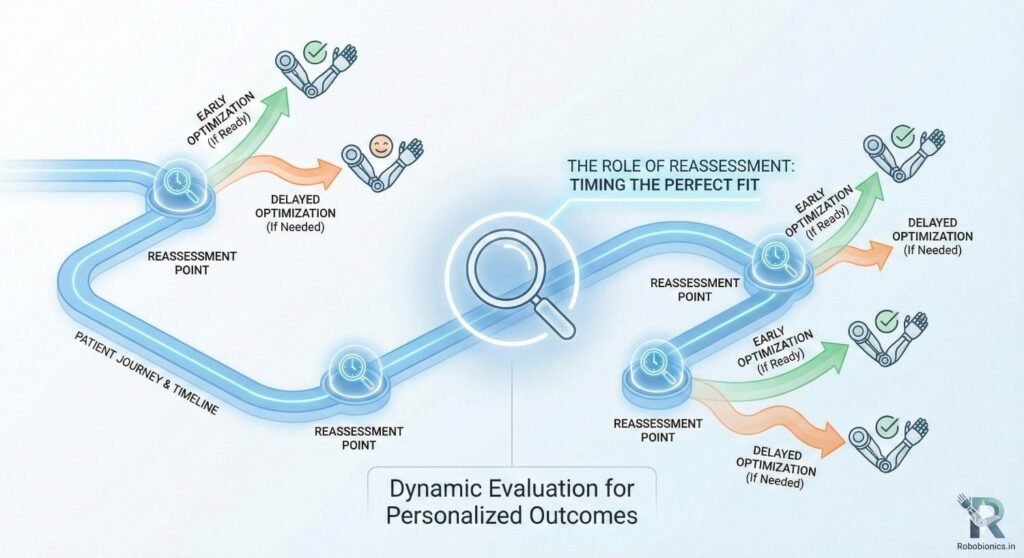
A prescription decision is not permanent.
Patients change, and so should plans.
Reassessment protects against poor outcomes.
Pain levels, joint stability, muscle control, and emotional readiness should be reviewed often.
Small changes may shift the balance between early and delayed prescription.
Regular review keeps care responsive.
When patients see that decisions adapt to their progress, trust increases.
They feel seen rather than judged.
This improves cooperation and results.
Early prosthetic exposure does not always mean full-time use.
Sometimes, it is about familiarization and mental adjustment.
This prepares patients for later stages.
Using a prosthetic extensively before physical readiness can overload tissues.
This may cause pain and rejection.
Gradual exposure protects acceptance.
Early prosthetic discussion can inspire hope.
Doctors must balance this with realistic guidance.
Clarity prevents disappointment.
After surgery, the body needs time to adapt.
Delayed prosthetic fitting avoids repeated adjustments.
This improves comfort and cost-effectiveness.
For myoelectric devices, stable muscle signals are essential.
Delayed prescription often results in better control.
This improves user satisfaction.
Patients who receive prosthetics when ready tend to use them longer.
Delayed but well-timed prescription reduces rejection.
This is a key outcome measure.
Urgency should not drive prescription.
Readiness should.
Doctors must separate emotional pressure from clinical indicators.
Patients who clearly express functional goals adapt better.
Unclear goals often lead to misuse.
Selection should include goal clarity.
In India, family expectations and financial stress affect readiness.
Doctors must factor these realities.
Context-aware selection improves success.
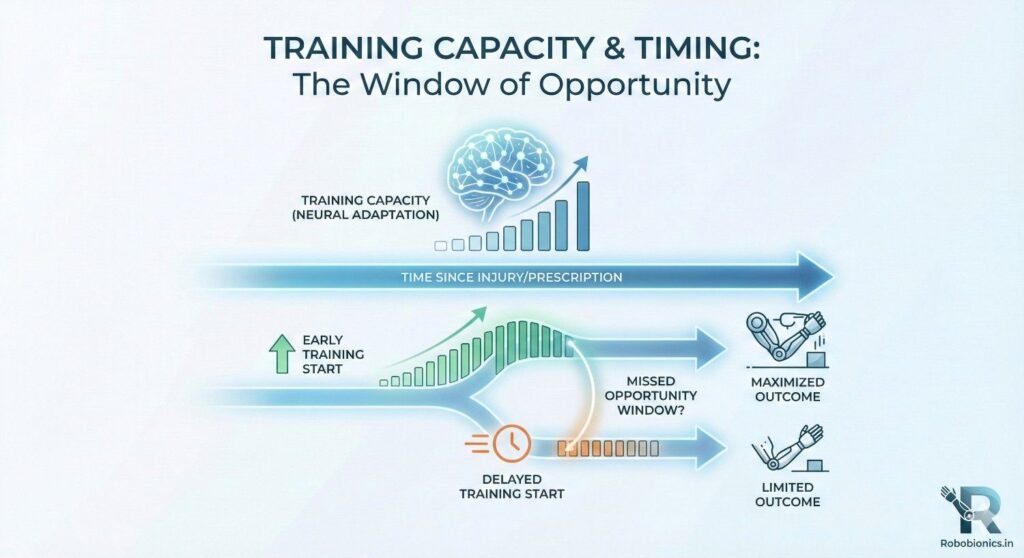
Learning to use a device is mentally demanding.
Early after injury, cognitive fatigue is common.
Delayed training may improve retention.
High-intensity training too early overwhelms patients.
Gradual learning improves confidence.
Timing affects training success.
Early prescription without training support fails.
Timing must align with available rehabilitation.
Systems matter as much as patients.
Fast adoption does not always mean good outcomes.
Sustained use over years matters more.
Timing influences longevity.
Discomfort often signals poor timing.
Confidence signals readiness.
Doctors should track both.
True success is independent, safe function.
Timing should serve this goal.
Not timelines or pressure.
Doctors improve timing decisions through experience.
Patterns emerge over time.
Reflection sharpens judgement.
Every patient is different.
Rigid timing rules fail often.
Flexibility improves outcomes.
Healthcare systems should allow flexible timing.
Funding and access should adapt.
This supports better care.
When a device is prescribed at the right stage, the body adapts smoothly without strain. Joints stay aligned, muscles work within safe limits, and compensatory movements are kept in check.
Over years, this reduces secondary problems such as back pain, shoulder overload, and joint wear, which are common when timing is poor.
Good timing quietly protects long-term physical health.
Patients who receive devices when they are ready tend to trust their bodies again. They feel in control rather than dependent.
This confidence encourages regular use and skill building.
Poor timing, in contrast, often creates doubt that lasts long after physical recovery.
Devices introduced at the right moment become part of daily life.
Those introduced too early or too late are often used only occasionally.
Consistency is one of the strongest markers of success.
In cases where function is lost but body structures remain stable, early prescription can prevent functional decline.
Examples include certain nerve injuries or partial limb loss.
Early support maintains engagement and prevents neglect.
Some conditions rapidly lead to stiffness or joint collapse if unsupported.
Early devices can protect alignment and preserve movement.
Here, waiting can cause irreversible loss.
Highly motivated patients who engage fully in therapy often benefit from early prescription.
They practice correctly and ask for guidance.
Patient selection makes early timing powerful.
In complex injuries, early function is often unstable.
Delayed prescription avoids repeated changes and confusion.
Stability improves device acceptance.
When pain is the main issue, learning suffers.
Delayed prescription allows pain control first.
This improves learning quality later.
Some patients need time to accept change.
Delayed prescription respects this process.
Acceptance improves long-term outcomes.
Using devices only to reduce discomfort can mask problems.
Without assessment, this may worsen alignment.
Comfort should not replace function checks.
Delay without explanation creates frustration.
Patients need clarity even when waiting.
A plan makes delay safe.
Pressure from family, work, or systems can influence decisions.
Doctors must anchor timing in clinical readiness.
This protects patients.
Early review allows correction of fit and use.
Small adjustments early prevent bigger problems.
Follow-up strengthens success.
Using a device does not mean using it well.
Doctors should watch how movement evolves.
Adaptation quality matters.
Some patients benefit from phased introduction.
Partial use first, then full integration.
This refines timing within recovery.
When patients understand timing, they cooperate better.
They stop comparing themselves to others.
Education builds patience.
Clear expectations reduce disappointment.
Patients know what to expect next.
This improves trust.
Patients can help monitor readiness.
This shared responsibility improves outcomes.
Allowing patients to see and touch devices early reduces fear.
This does not mean early use.
Exposure prepares the mind.
Milestones guide both doctors and patients.
They replace vague timelines.
Clarity improves planning.
Surgeons, therapists, and prosthetists must align timing.
Misalignment causes failure.
Team planning improves results.
Delays due to access issues are common.
These delays are not always clinically planned.
Doctors must manage their impact carefully.
Cost concerns can push early prescription.
Doctors should guide families gently.
Clinical readiness must remain central.
Early prescription without nearby support fails often.
Timing must match service availability.
Local context matters.
Success should be measured after months, not days.
Independence is the true goal.
Timing shapes this outcome.
Satisfied users trust their devices.
Trust reflects correct timing.
This predicts long-term use.
Correct timing reduces later injuries.
This is often overlooked.
Long-term data matters.
There is no fixed timeline that fits all patients.
Timing improves with observation and listening.
It is a clinical skill.
Early or delayed only matters when matched to the right patient.
Selection shapes success.
This is where expertise shows.
Speed feels productive but can be harmful.
Outcomes define good care.
Timing should always serve long-term function, comfort, and dignity.
For many clinicians, the surgery is only the first step. What happens after the operation

For trauma amputees, the journey does not begin at the prosthetic clinic. It begins much

Amputation after cancer is not just a surgical event. It is the end of one

When a child loses a limb, the challenge is never only physical. A child’s body