
Post-Op Follow-Up Schedule That Prevents Prosthetic Delays (For Clinicians)
For many clinicians, the surgery is only the first step. What happens after the operation



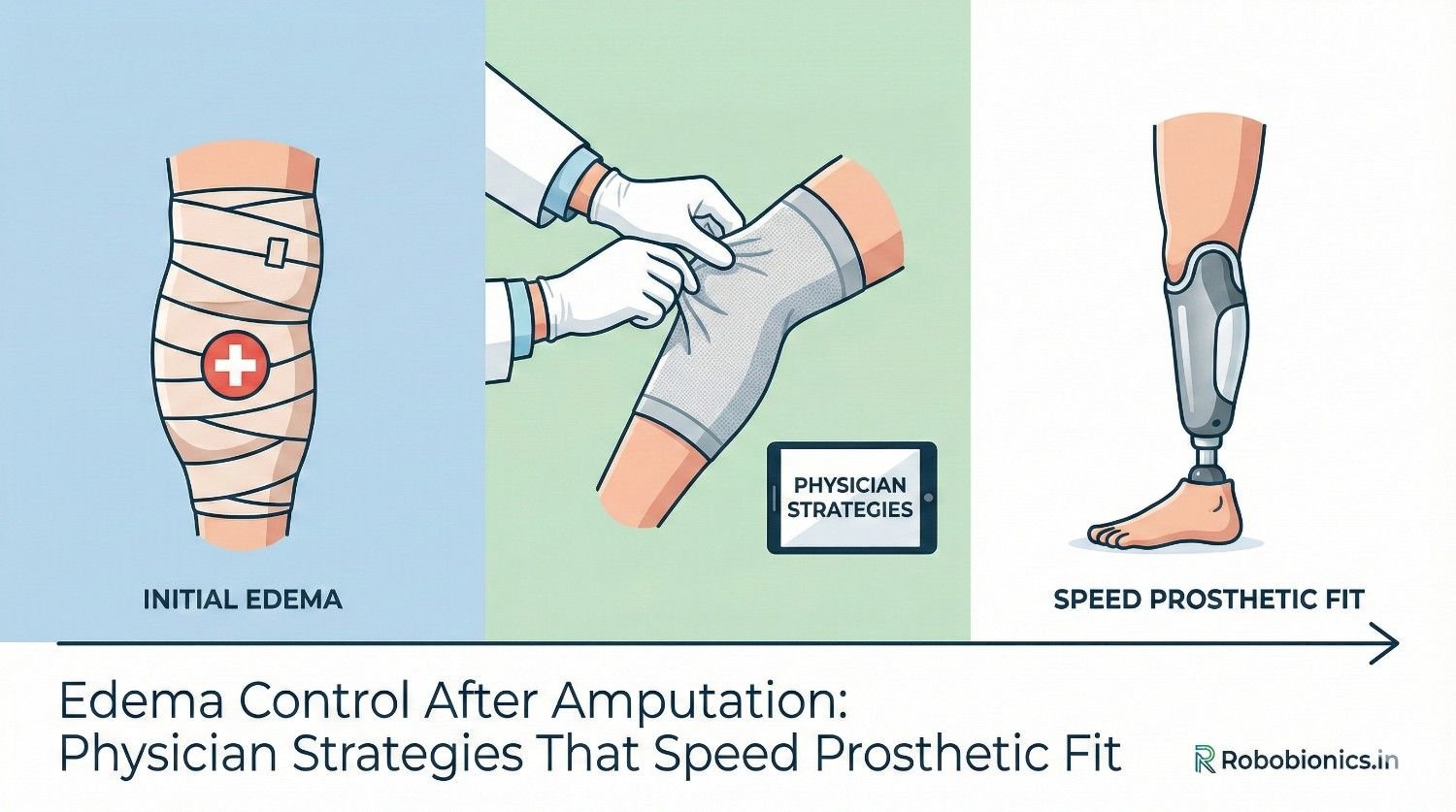
Swelling after amputation is normal. Almost every person who goes through limb loss faces it. But what many people do not know is this: how swelling is handled in the first few weeks can decide how fast, how comfortable, and how successful a prosthetic fitting will be.
Edema, or swelling, is not just a medical issue. It affects daily comfort, wound healing, emotional health, and long-term prosthetic use. If swelling stays uncontrolled, it can delay prosthetic fitting by months. If managed well, it can speed up recovery and help the body accept a prosthesis sooner and better.
Physicians play a key role here. Their early decisions, simple techniques, and daily guidance can shape the entire recovery journey. From the way a limb is wrapped to how movement is encouraged, small actions make a big difference.
In this article, we will break down edema control after amputation in a clear and practical way. We will focus on real physician strategies that actually work. No heavy medical language. No theory without action. Just clear steps, real-world insights, and proven methods that help reduce swelling and speed up prosthetic readiness.
When edema is controlled early, everything else becomes easier. Healing improves. Pain reduces. Confidence grows. And most importantly, the path to a well-fitting prosthetic becomes smoother and faster.
Edema is the swelling that happens when fluid builds up in the body’s tissues. After an amputation, the body sends extra blood and fluid to the surgical area to help it heal. This is a normal response, but when too much fluid stays trapped, swelling becomes a problem.
This swelling can make the residual limb feel tight, heavy, and painful. It can also stretch the skin and slow down wound healing. If not handled early, edema can become firm and long-lasting, making future prosthetic fitting more difficult.
Amputation changes how blood and fluid move in the body. Muscles that once helped pump blood back to the heart are suddenly missing or weaker. At the same time, lymph channels may be damaged during surgery, slowing fluid drainage.
Gravity also plays a role. When the residual limb hangs down for long periods, fluid naturally collects there. This is why swelling is often worse at the end of the day and less in the morning.
Early edema happens right after surgery and is usually soft and pitting. When pressed, it leaves a small dent. This type of swelling responds well to simple steps like wrapping and positioning.
Late edema develops when swelling is not managed well. It becomes firm and hard, and the skin may lose flexibility. At this stage, reducing swelling takes more time and effort and can delay prosthetic use.
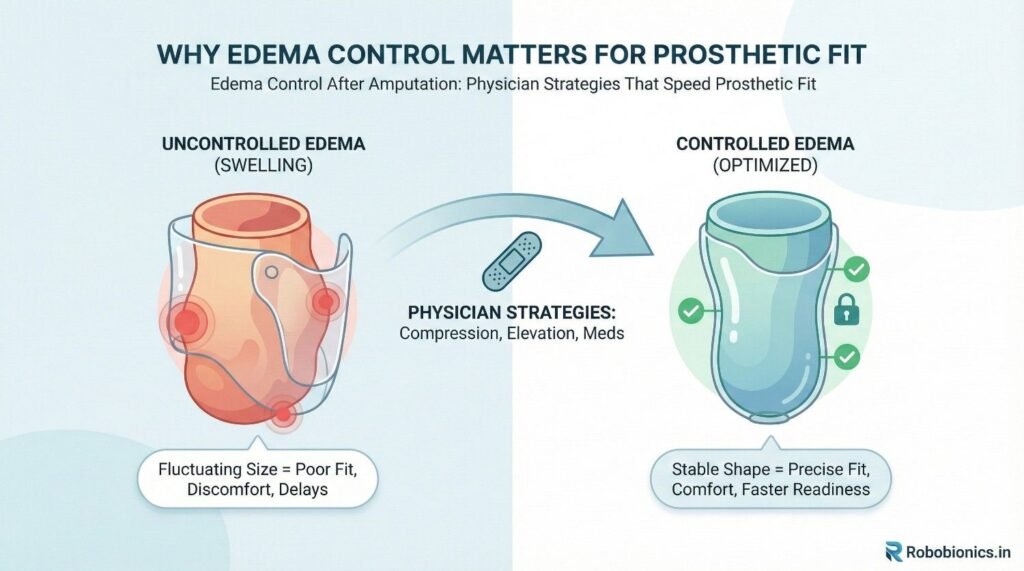
A prosthesis fits best when the residual limb has a stable shape. Swelling changes the size and shape of the limb daily. If a prosthesis is made while swelling is high, it will feel loose later. If made too early, it may become tight and painful.
Physicians aim to help the limb reach a steady size as soon as possible. This allows prosthetists to design a socket that fits well and stays comfortable over time.
Swelling increases pressure inside the socket once a prosthesis is worn. This can cause redness, skin breakdown, and even wounds. Pain from pressure points often comes from poor edema control rather than prosthetic design alone.
When swelling is controlled, pressure spreads evenly. The skin stays healthier, and the person can wear the prosthesis for longer hours without discomfort.
When edema is under control, movement becomes easier. Physical therapy exercises feel less painful, and muscle control improves faster. This speeds up balance training, walking practice, and daily activity use.
Good edema control often means fewer delays, fewer socket changes, and a smoother rehab journey overall.
The first few days after surgery are critical. Physicians decide how the limb is positioned, wrapped, and monitored. Clear instructions during this phase can prevent weeks of swelling problems later.
Patients often feel unsure and scared after surgery. When doctors explain why swelling control matters and what to expect, patients are more likely to follow guidance closely.
Edema control is not handled by one person alone. Physicians work closely with nurses, physiotherapists, and prosthetists. Everyone needs to follow the same plan to avoid mixed messages.
Simple coordination, like consistent wrapping techniques and shared goals, can greatly improve outcomes. When the care team works as one unit, swelling reduces faster and stays under control.
Not all swelling is normal. Physicians must watch for signs of infection, blood clots, or poor circulation. Redness, warmth, sudden pain, or uneven swelling need quick attention.
Early detection prevents serious problems and keeps the recovery on track toward prosthetic fitting.
Right after surgery, soft dressings and elastic bandages are often used. These provide gentle pressure that pushes fluid out of the limb and back into circulation.
The key is proper technique. Wrapping should be snug but not tight, with more pressure at the end of the limb and less as it moves upward. Poor wrapping can increase swelling instead of reducing it.
Compression works only when used regularly. Removing bandages for long periods allows fluid to collect again. Physicians often stress the need for continuous compression except during skin checks and hygiene.
Consistency helps the limb slowly learn its new shape. Over time, swelling reduces and becomes easier to manage.
Many patients go home before swelling is fully controlled. Physicians must ensure that patients or caregivers know how to reapply bandages correctly. Simple demonstrations and written instructions make a big difference.
Confidence in self-care reduces anxiety and improves long-term results.
Rigid and semi-rigid dressings provide stronger and more even compression. They also protect the limb from bumps and accidental injury. These dressings often reduce swelling faster than soft wraps.
They help keep the limb in a proper shape, which is helpful for early prosthetic planning.
Not every patient is suited for rigid dressings. Physicians consider wound condition, skin health, and patient comfort. When used correctly, they can shorten the time needed before prosthetic casting.
Close monitoring is important to avoid pressure sores or circulation problems.
Some patients feel nervous about rigid dressings. Clear explanation helps build trust. When patients understand that discomfort is temporary and benefits are long-term, acceptance improves.
Comfort checks and reassurance go a long way in keeping patients engaged in their care.
Elevation helps fluid flow back toward the heart. However, elevation must be done carefully. Placing pillows under the knee or keeping the limb bent for long periods can cause joint stiffness.
Physicians guide patients to elevate the limb while keeping joints straight. This reduces swelling without harming mobility.
Letting the limb hang down for long periods increases swelling. Sitting for hours without support or standing still can worsen edema.
Simple reminders, like changing position often and using support surfaces, can reduce daily swelling build-up.
Small habits matter. Encouraging patients to rest with proper support, avoid long sitting times, and move gently throughout the day helps control swelling naturally.
These habits are easy to follow and require no special equipment.
Muscle movement helps pump fluid out of tissues. Even small movements improve blood flow and reduce swelling. Complete rest often makes edema worse.
Physicians encourage gentle exercises as soon as it is safe. These movements support healing while preventing fluid buildup.
Exercises focus on keeping nearby joints flexible and muscles active. This prevents stiffness and prepares the limb for prosthetic use.
Clear guidance ensures exercises are done safely and without strain on the surgical site.
Movement also helps mentally. Patients feel more in control of their bodies. This emotional boost supports better participation in therapy and self-care.
Confidence often grows as swelling reduces and movement improves.

Dry, damaged, or infected skin does not manage fluid well. Good skin care supports natural drainage and reduces swelling risk.
Physicians stress gentle cleaning, proper drying, and regular inspection of the residual limb.
Swelling can increase skin sensitivity. Gentle massage techniques, when approved, help improve circulation and comfort.
Reduced pain often leads to better movement, which further supports edema control.
Early skin care prevents issues that can delay prosthetic fitting later. Healthy skin adapts better to socket pressure and daily use.
This creates a strong foundation for long-term prosthetic success.
Stress can affect circulation and healing. Anxiety after amputation is common and can worsen swelling indirectly by reducing activity and sleep quality.
Physicians who acknowledge emotional health often see better physical outcomes.
When patients understand why swelling happens and how to control it, fear reduces. Clear explanations help patients feel involved rather than passive.
Trust leads to better follow-through with daily edema control steps.
Hope and motivation improve engagement. Patients who believe they are moving toward prosthetic independence are more likely to follow edema control plans closely.
This mindset can shorten recovery time significantly.
Once early swelling starts to settle, physicians often adjust their approach. Basic bandaging alone may not be enough for all patients. At this stage, doctors look at how the limb responds day by day and fine-tune the plan.
This may include changing the type of compression, increasing wear time, or combining methods. The goal is steady reduction, not quick fixes that cause pain or skin trouble.
No two residual limbs behave the same way. Age, health history, type of surgery, and activity level all affect swelling. Physicians study these factors closely.
By adjusting care to the person, not just the condition, swelling reduces more smoothly. This personal approach often saves weeks in the recovery timeline.
Edema control is a balance. Too much pressure can harm the skin. Too little allows fluid to collect. Skilled physicians know when to increase effort and when to step back.
This careful judgment protects healing while still moving recovery forward.
Shrinker socks are elastic garments designed to apply even pressure on the residual limb. They are often used once the wound is healed and stitches are removed.
They help maintain limb shape throughout the day and are easier to use than bandages for many patients.
Shrinkers work best when worn correctly and for the right number of hours. Physicians guide patients on sizing, wear time, and skin checks.
Wearing a poorly fitted shrinker can increase swelling or cause pain. Proper guidance prevents these issues.
Shrinkers allow patients to move freely, dress easily, and manage swelling without constant rewrapping. This convenience improves daily comfort and follow-through.
Better use leads to faster limb size stability, which helps prosthetic planning.
Some patients heal slower due to blood flow problems or diabetes. Their swelling may last longer and needs closer watch.
Physicians use gentle methods and slower progress plans for these patients. Safety always comes first, even if progress feels slower.
Infection can increase swelling quickly. Physicians watch for signs like redness, heat, and discharge. Treating infection early prevents long delays.
Once infection is controlled, edema management becomes much easier.
Some medicines affect fluid levels in the body. Physicians review all medications to avoid drugs that worsen swelling when possible.
This step is often overlooked but can make a real difference.
Physicians often measure limb size regularly. This shows whether swelling is truly reducing or just shifting.
Clear numbers help guide decisions and avoid early prosthetic fitting mistakes.
Pain, tightness, and skin feel provide valuable clues. Physicians encourage patients to speak openly about discomfort.
Patient feedback helps fine-tune care and prevent setbacks.
Sometimes swelling stops improving. When this happens, physicians adjust methods instead of waiting. Early action prevents long delays.
This proactive approach keeps recovery moving forward.
Prosthetic fitting begins when limb size is stable. Good edema control helps reach this stage sooner.
Physicians who focus on early swelling control often reduce waiting time by weeks.
Uncontrolled swelling leads to repeated socket changes. Each change costs time, money, and emotional energy.
Stable limbs mean better first-time fit and fewer adjustments later.
A comfortable first prosthesis builds confidence. Patients walk more, use the limb longer, and stay motivated.
This positive start often shapes long-term prosthetic success.
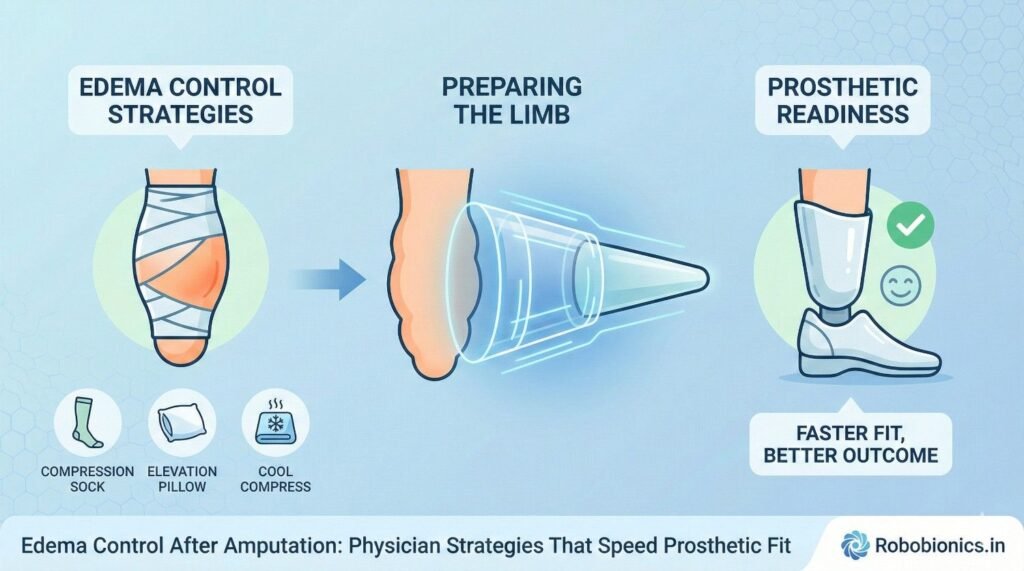
As swelling reduces, physicians focus on skin strength. Gentle pressure prepares the limb for socket contact.
Healthy skin adapts faster and reduces early prosthetic pain.
Even before prosthetic fitting, controlled pressure helps the limb adjust. This makes the first fitting less shocking to the body.
Gradual preparation leads to smoother transitions.
Physicians share progress with prosthetists. This teamwork ensures fitting starts at the right time, not too early or too late.
Good alignment between teams saves time and improves outcomes.
Waiting for swelling to “go away on its own” often causes delays. Early action is always better.
Physicians who address edema from day one see faster recovery.
Removing compression too often allows fluid to return. Consistency is key.
Clear rules help patients stay on track.
When patients do not understand why steps matter, they skip them. Education improves results.
Simple explanations create better habits.
Limbs with good early edema control adapt better over time. Daily prosthetic wear becomes easier.
Comfort improves, and confidence grows.
Proper early care trains the body to manage fluid better. Long-term swelling issues reduce.
This leads to fewer clinic visits later.
Less pain, better movement, and faster independence all start with swelling control.
This foundation supports a fuller, more active life.
Edema control does not succeed with medical tools alone. It depends heavily on what the patient understands and does each day. When patients know the reason behind every step, they follow care plans more carefully.
Physicians who spend time explaining swelling often see faster results. Education removes fear and confusion, which are common after amputation.
Patients do not need medical terms to understand edema. Clear and simple words work best. Explaining swelling as “extra fluid that needs help moving out” makes the concept easy to grasp.
When patients understand that their actions directly affect swelling, they feel more responsible and involved in recovery.
Physicians guide patients on what a normal day should look like. This includes when to wear compression, how long to rest, and when to move.
Clear routines reduce mistakes and build healthy habits that support long-term limb health.
At home, simple routines make a big difference. Wearing compression at the same time each day, checking the skin, and doing gentle movements all support fluid control.
Physicians often suggest linking these steps to daily habits, like after bathing or before sleep. This makes routines easier to follow.
Many patients rely on family support during recovery. Physicians who include caregivers in education improve results.
When caregivers know how to help with wrapping, positioning, and reminders, swelling control becomes more consistent.
Patients must know warning signs that need medical attention. Sudden swelling, skin color change, or sharp pain should never be ignored.
Clear instructions on when to seek help prevent serious problems and delays.
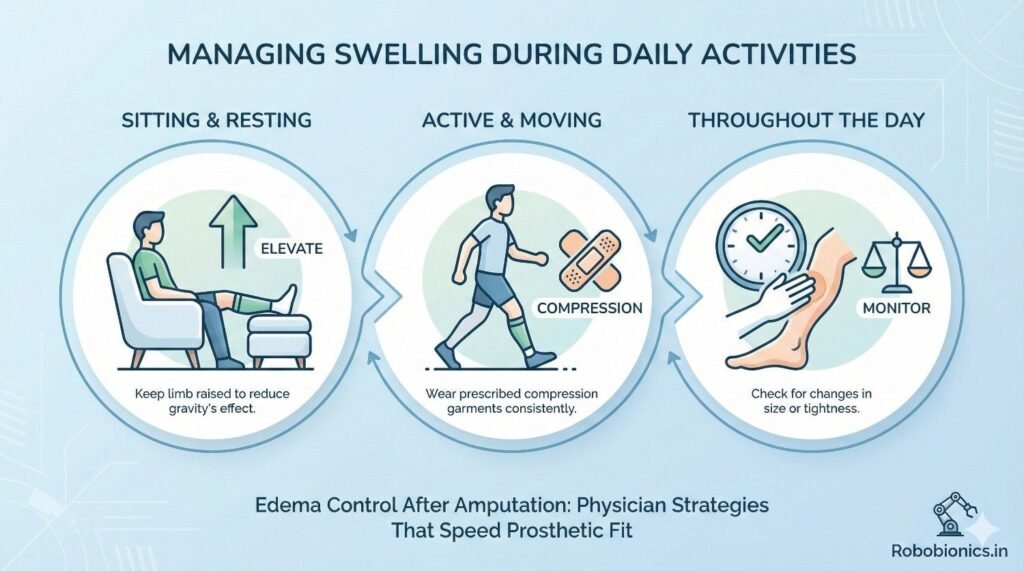
Daily positions affect swelling more than people realize. Sitting for long hours without support allows fluid to collect. Standing still for too long can do the same.
Physicians guide patients to change positions often and support the limb when resting. These small changes reduce daily swelling buildup.
Tight clothing near the residual limb can block fluid flow. Loose, comfortable clothing supports better circulation.
Physicians also guide patients to keep the limb clean and dry, as skin health affects swelling control.
Travel can increase swelling due to long sitting times. Physicians advise extra compression and movement breaks during travel.
Simple planning helps patients stay active without setbacks.
Healing is not only physical. Stress and worry can slow recovery. Patients who feel hopeless often move less and skip care steps.
Physicians who acknowledge emotional struggles help patients stay engaged and motivated.
Celebrating small progress builds confidence. Even slight swelling reduction is a success.
Physicians who point out these improvements help patients stay positive and committed.
Edema control requires daily effort. Motivation may fade over time. Clear goals and regular follow-ups help maintain discipline.
This steady approach leads to lasting results.
Modern prosthetic limbs, especially bionic hands, need accurate fitting. Even small swelling changes can affect comfort and control.
Good edema control allows these advanced devices to perform as designed.
Stable limb shape improves socket grip and signal control. This is especially important for myoelectric prosthetics.
Patients feel more natural movement and less fatigue when swelling is well managed.
Prosthetics are long-term tools. Early swelling control protects the limb and the device over time.
This reduces repair needs and improves user satisfaction.
Swelling patterns change over time. Regular follow-ups help physicians adjust care plans as needed.
These visits prevent small issues from becoming major delays.
As patients return to work and daily life, swelling patterns may shift. Physicians adjust strategies to match new routines.
Flexible care keeps swelling under control in real life situations.
Edema control is not a short-term task. Physicians who build long-term relationships with patients improve outcomes.
Trust and open communication support lifelong limb health.
Edema control is made up of simple actions done every day. Wrapping, movement, and care habits work together.
Physicians who focus on these basics help patients recover faster and better.
What happens in the first weeks after amputation affects years of prosthetic use. Early swelling control saves time, effort, and pain later.
This early focus sets the stage for success.
When swelling is managed well, prosthetic fitting becomes smoother. Confidence grows, and independence comes sooner.
This is the true goal of good edema control.
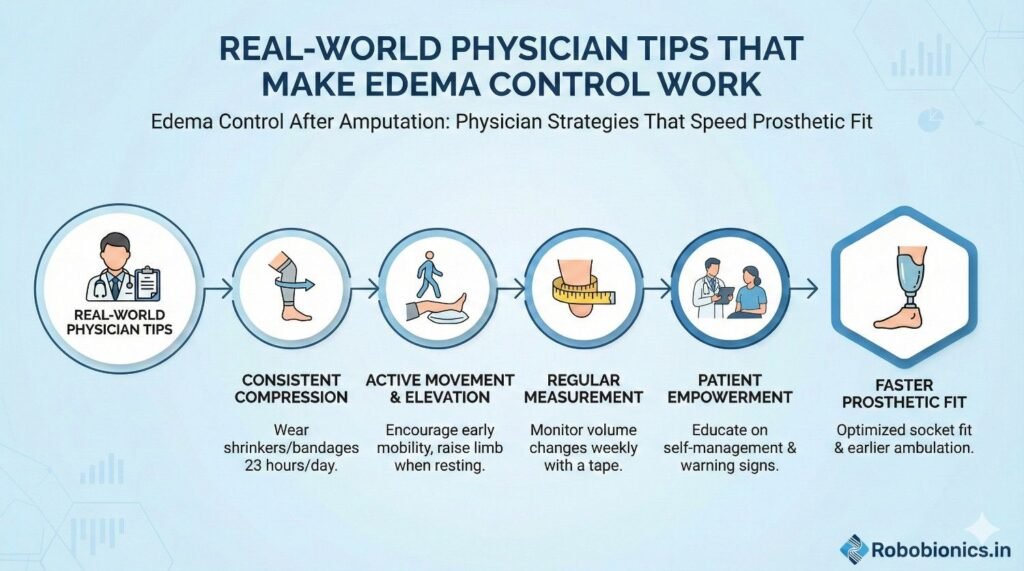
One of the most effective habits experienced physicians follow is starting edema control before the patient even understands its importance. Right after surgery, patients are often focused on pain and fear. Swelling feels like a side issue to them. Physicians who act early prevent problems before they begin.
Clear instructions given early create structure during a confusing time. When patients are guided step by step from the start, edema control becomes part of daily life instead of a burden added later.
Most patients do not fully absorb information the first time. Stress, pain, and medicines affect memory and focus. Skilled physicians repeat key instructions calmly and clearly during every visit.
Repeating guidance is not a weakness. It strengthens habits. Each reminder reinforces why compression, movement, and positioning matter, leading to better long-term results.
Complex plans often fail. Physicians who design simple, easy-to-follow routines see better compliance. Asking a patient to follow too many steps increases confusion and drop-off.
A small number of clear actions done well every day beats a long list that feels overwhelming. Simplicity builds confidence and consistency.
This is one of the most common questions. Physicians explain that swelling reduces in stages. The first few weeks show the biggest change, but full stability may take several months.
Honest timelines help patients stay patient and committed. False promises lead to frustration and loss of trust.
Yes, mild swelling can happen even after healing. Activity level, weather, and daily routine can all affect limb size.
Physicians teach patients to notice patterns rather than panic. Understanding normal changes prevents unnecessary worry.
Patients often want faster results. Physicians explain that steady progress is safer than rushing. Too much pressure or activity can cause setbacks.
This guidance protects the limb while still moving recovery forward.
One of the most important decisions is knowing when the limb is ready for prosthetic casting. Referring too early leads to repeated changes. Waiting too long delays mobility.
Experienced physicians look for stable size, healthy skin, and good tolerance to pressure before moving forward.
Physicians prepare patients mentally and physically for prosthetic fitting. They explain that the first socket may feel strange but should not be painful.
This preparation reduces fear and improves first-time acceptance of the prosthesis.
Edema control does not stop after prosthetic delivery. Physicians continue monitoring swelling during early prosthetic use.
Ongoing support ensures comfort and prevents new swelling issues from developing.
Modern prosthetics, especially myoelectric and bionic hands, rely on muscle signals. Swelling can weaken or block these signals.
When edema is controlled well, signal quality improves. This leads to smoother movement and better control of the device.
Advanced prosthetics are meant to be worn for long hours. Swelling reduces comfort and shortens wear time.
Physicians who focus on edema control help patients get full value from their prosthetic technology.
A prosthetic device can only perform as well as the limb allows. Early edema control protects both the body and the device.
This creates better outcomes for years, not just months.
Edema affects how patients feel about their bodies. Persistent swelling can be a daily reminder of loss and delay.
Physicians who address swelling also help restore confidence and dignity.
When patients see visible reduction in swelling, hope grows. They feel progress is real and within reach.
Physicians who highlight progress help patients stay emotionally strong.
Comfort leads to movement. Movement leads to independence. Edema control is the first step in this chain.
Physicians guide patients toward independence by focusing on comfort from the beginning.
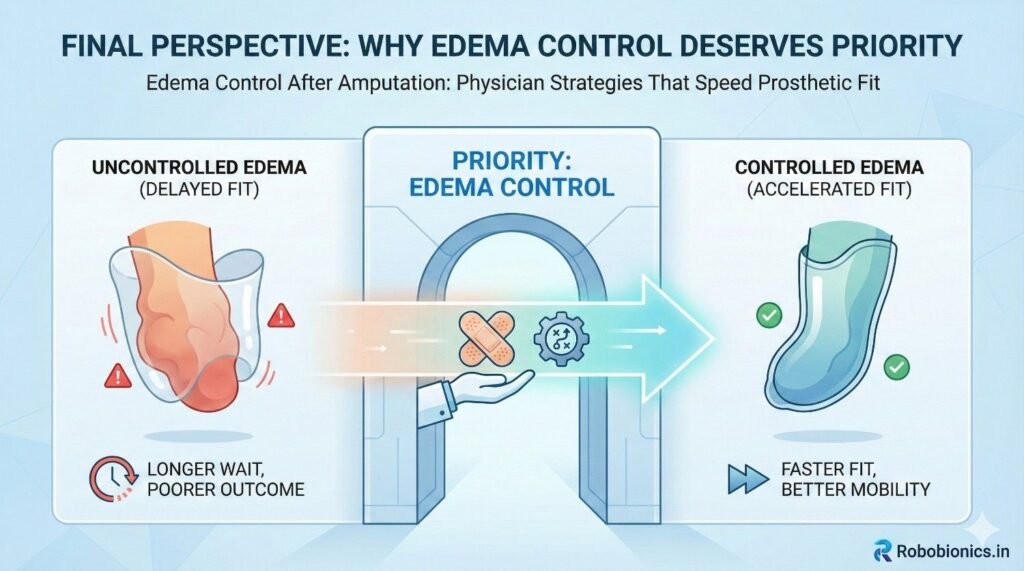
Edema may seem minor compared to surgery itself, but its impact is large. It affects healing, prosthetic fit, comfort, and confidence.
Physicians who treat swelling as a priority change the entire recovery path.
Weeks saved early prevent months of struggle later. Edema control reduces clinic visits, socket changes, and emotional stress.
This efficiency benefits both patients and care teams.
When swelling is managed well, prosthetic life begins on strong footing. Patients adapt faster, move better, and live fuller lives.
Edema control is not just about reducing fluid. It is about opening the door to mobility, dignity, and independence.
For many clinicians, the surgery is only the first step. What happens after the operation

For trauma amputees, the journey does not begin at the prosthetic clinic. It begins much

Amputation after cancer is not just a surgical event. It is the end of one

When a child loses a limb, the challenge is never only physical. A child’s body