
Post-Op Follow-Up Schedule That Prevents Prosthetic Delays (For Clinicians)
For many clinicians, the surgery is only the first step. What happens after the operation




Infection is one of the biggest threats to a successful amputation outcome. It does not only delay healing. It can decide whether a person ever becomes ready for a prosthetic limb. Many patients lose valuable time, confidence, and function because infection control was not handled with enough care at the right stage.
This article explains how infection prevention during amputation surgery directly affects prosthetic eligibility. It is written for doctors, surgeons, care teams, and decision-makers who want better long-term results for their patients. The focus is simple and practical: how clean healing leads to faster prosthetic fitting, better comfort, and stronger daily use.
Infection after amputation is often seen as a short-term medical issue. In reality, it has long-term effects on mobility, confidence, and prosthetic use. When infection enters the picture, the entire recovery path shifts.
Even a small infection can delay healing for weeks or months. During this time, muscles weaken, motivation drops, and prosthetic planning is pushed aside.
A prosthetic limb can only be fitted on a healed and stable residual limb. Infection keeps wounds open, causes swelling, and damages skin and tissue. This makes prosthetic fitting unsafe or impossible.
Many patients who are medically fit for a prosthesis become ineligible simply because infection was not controlled early.
Every delay caused by infection has a cost. Physical strength reduces, joints stiffen, and the patient’s mental state suffers. The longer the wait, the harder it becomes to restart rehab.
Preventing infection protects not just the wound, but the patient’s future function.
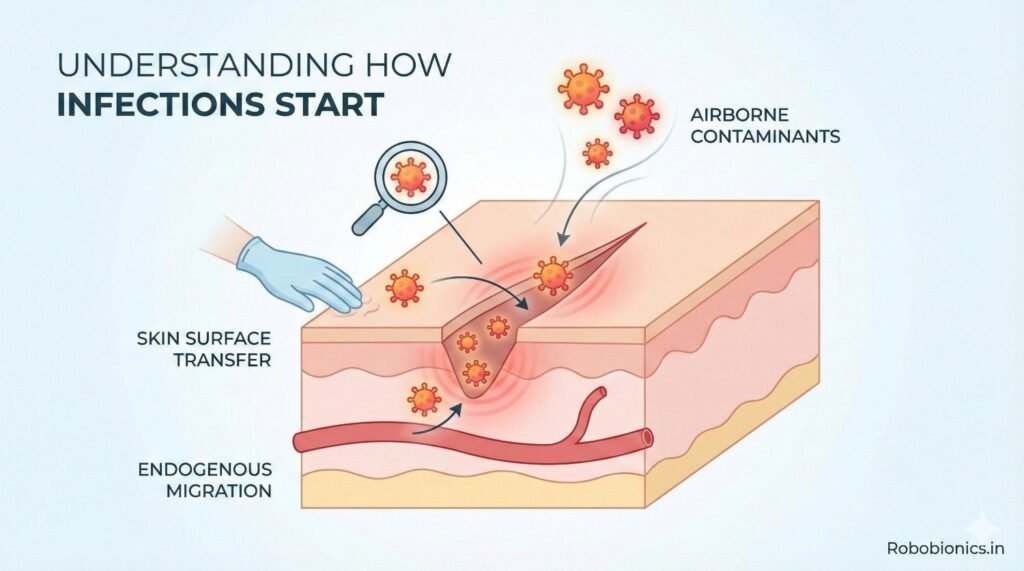
Many infections begin before surgery even takes place. Poor skin condition, existing wounds, or untreated infections elsewhere in the body can spread during surgery. These risks must be identified early.
Ignoring small issues before surgery often leads to bigger problems after.
Amputation surgery creates a large open area that must heal under stress. Blood supply may already be weak, especially in patients with diabetes or vascular disease. This makes the site more open to infection.
Careful handling of tissue is critical at this stage.
After surgery, the wound is exposed to the hospital environment and daily handling. Poor dressing care or delayed cleaning increases infection risk. Every interaction with the wound matters.
Simple steps, done correctly, reduce major risks.
High blood sugar weakens the immune response. It slows healing and allows bacteria to grow faster. Patients with uncontrolled diabetes face a much higher infection risk.
Tight blood sugar control before and after surgery is essential for clean healing.
Good blood flow brings oxygen and healing cells to the wound. Poor circulation slows repair and allows infection to settle. Many amputation patients already have circulation issues.
Improving blood flow where possible reduces complications.
A weak body heals slowly. Low protein, dehydration, and weight loss reduce the ability to fight infection. Many patients enter surgery already undernourished.
Nutrition support is a simple but powerful tool.
The level of amputation affects blood flow and healing ability. Cutting too low may leave weak tissue that struggles to heal. Cutting too high may remove healthy tissue unnecessarily.
The right level balances healing safety and future prosthetic use.
Gentle handling of muscle, skin, and bone reduces tissue damage. Less damage means better blood supply and lower infection risk. Rough handling creates dead space where bacteria can grow.
Skill and patience matter greatly here.
Spaces left under the skin can fill with fluid and become infected. Proper closure and drainage prevent this. Surgeons must plan closures carefully.
Good closure supports faster and cleaner healing.
Strict cleanliness in the operating room reduces bacterial exposure. This includes air control, instrument handling, and staff hygiene. These steps may seem routine, but they save limbs.
Consistency is more important than speed.
Antibiotics work best when given at the right time. Too early or too late reduces their effect. Proper timing protects the surgical site during its most vulnerable moment.
This is a small step with a large impact.
Longer surgeries increase infection risk. Good planning and coordination reduce unnecessary delays. Efficiency supports safety when done without rushing.
Prepared teams work cleaner.
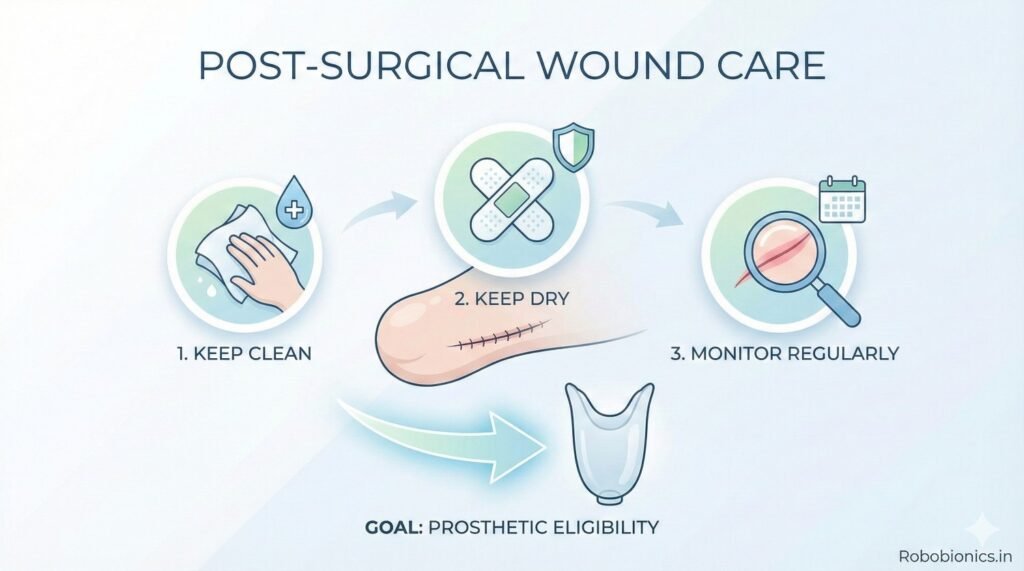
Infection rarely appears suddenly. It starts with small signs like redness, warmth, or unusual pain. Early detection allows early action.
Teaching teams to watch closely prevents escalation.
Dressings should be changed using clean methods every time. Poor technique introduces bacteria directly into the wound. Even small lapses matter.
Clean habits protect healing.
Too much moisture weakens skin. Too much pressure reduces blood flow. Both increase infection risk. Balance is key during early healing.
Careful positioning and dressing choice make a difference.
Infection causes swelling and fluid build-up. This changes limb shape and delays prosthetic planning. A changing limb cannot be fitted safely.
Stable shape is required for prosthetic success.
Infected wounds often heal with weak or uneven scars. These scars break down under prosthetic pressure. This leads to repeated wounds and pain.
Good healing builds strong skin.
Infection can damage nerves and increase sensitivity. This makes prosthetic wear uncomfortable. Pain reduces daily use and confidence.
Preventing infection protects comfort.
The early weeks after surgery are ideal for rehab. Infection often steals this time. Muscles weaken and joints stiffen during long bed rest.
Lost time is hard to recover.
Waiting for healing creates frustration and fear. Patients may lose hope of walking or using a prosthesis. Mental withdrawal often follows.
Clean healing keeps motivation alive.
Patients who wait too long may never fully adapt to a prosthesis. Fear, pain, and weakness increase the chance of abandonment.
Early fitting supports acceptance.
Some infections do not respond to treatment. In these cases, further surgery is needed. This may mean reopening the wound or re-amputation.
Each surgery increases physical and emotional cost.
Severe infection may force a higher-level amputation. This reduces strength and prosthetic options. Functional ability often drops sharply.
Early prevention protects limb length.
Higher amputations limit prosthetic control and comfort. Some advanced devices may no longer be suitable. Choices become fewer.
Infection narrows futures.
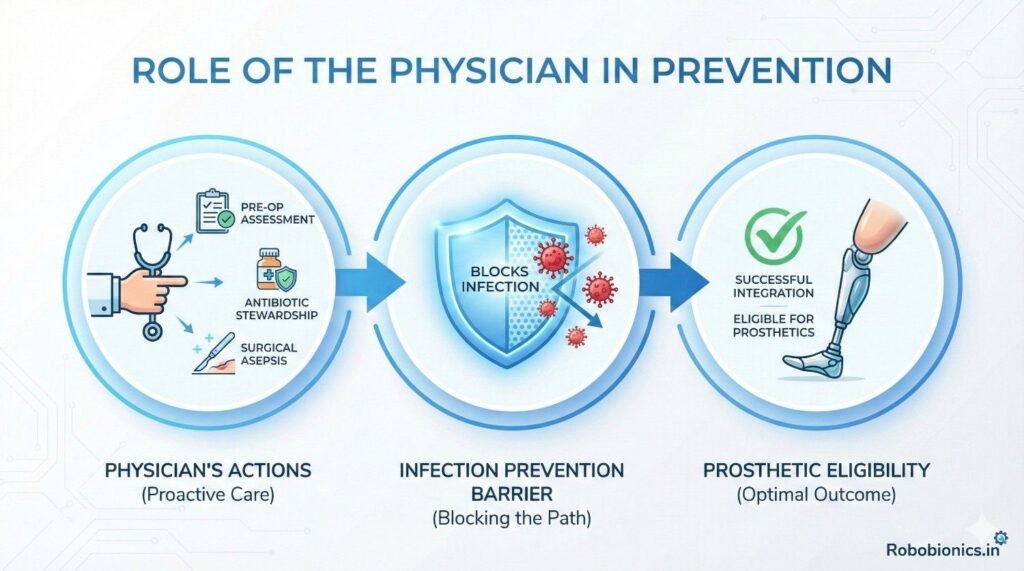
Physicians must identify infection risks before surgery. This includes medical conditions, skin issues, and social factors. Early action reduces danger.
Preparation saves outcomes.
Surgeons, nurses, and therapists must share infection concerns openly. Silence allows small issues to grow. Communication builds safety.
Team awareness matters.
Patients should understand infection risks and their role in prevention. Simple education improves hygiene and compliance.
Informed patients protect themselves.
Patients must learn how to keep the wound clean. This includes hand washing, dressing care, and avoiding contamination. These habits are simple but vital.
Consistency prevents infection.
Patients should know when something feels wrong. Redness, fever, or foul smell should be reported early. Delay increases damage.
Early reporting saves limbs.
Education should empower, not scare. Patients should feel confident, not anxious. Calm guidance builds trust.
Confidence improves cooperation.
Hospitals with clear infection protocols see better outcomes. These include checklists, audits, and training. Systems protect patients.
Good systems support good care.
Overworked staff make more mistakes. Adequate staffing reduces lapses in hygiene. This is a system responsibility.
Care quality reflects work conditions.
Regular review of infection rates improves practice. Feedback helps teams learn and adjust. Improvement requires awareness.
Measurement drives change.
Prosthetists cannot work on infected or unstable limbs. They must wait for full healing. This delay affects planning and patient morale.
Clean healing enables early collaboration.
Infection-related scars and swelling complicate socket design. Comfort becomes harder to achieve. Adjustments increase.
Good healing simplifies fitting.
Patients with infection history often need more follow-up. Skin issues recur more often. This increases care burden.
Prevention reduces lifetime care needs.
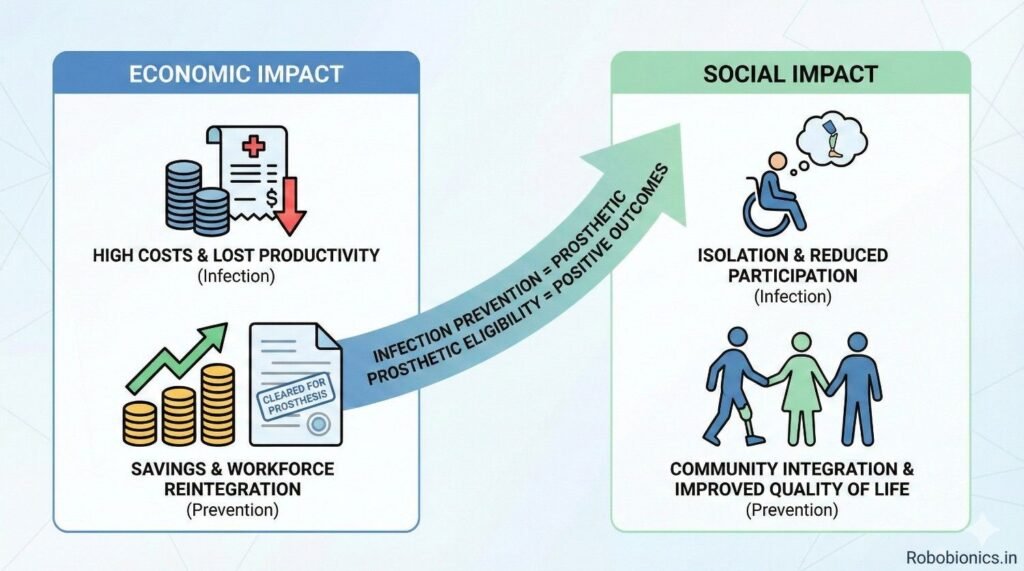
Infections increase hospital stays, medicines, and surgeries. These costs strain families and systems. Prevention is far cheaper.
Cost control begins with care quality.
Delayed recovery delays return to work. Financial stress affects mental health. Infection multiplies losses.
Healing supports independence.
Long recovery increases caregiver strain. Families face emotional and physical stress. Clean healing reduces this burden.
Health affects the whole family.
Treating infection is harder than preventing it. Teams must focus on prevention at every step. This mindset changes outcomes.
Prevention protects futures.
Infection control is not one person’s task. Every team member plays a role. Shared responsibility improves results.
Ownership builds safety.
When teams see infection control as key to prosthetic success, care improves. Function becomes the shared goal.
Purpose drives action.
When an amputation wound heals without infection, the body follows a smoother path. Swelling reduces in a predictable way, skin strength improves steadily, and limb shape becomes stable sooner. This allows prosthetic planning to begin earlier, often weeks ahead of infected cases.
Early readiness is not just about time. It protects muscle strength, joint movement, and patient motivation, all of which directly affect how well a prosthesis is used later.
Clean healing leads to stronger skin and healthier tissue. This skin tolerates pressure and friction better inside a prosthetic socket. Patients experience less pain, fewer wounds, and fewer breaks from prosthetic use.
Comfort is the strongest reason patients continue using a prosthesis. Infection prevention supports comfort more than any later adjustment.
Patients who heal well feel encouraged. They trust their body and the care process. This confidence helps them accept the prosthesis as part of daily life rather than seeing it as a burden.
Confidence built early often lasts for years.
Even after an infection clears, the skin may remain weak. Scars may break down easily under pressure. This leads to repeated wounds that interrupt prosthetic use.
Patients may begin to fear wearing the prosthesis, even when the infection is gone.
Infection causes uneven healing. Pockets of swelling or hard scar tissue change limb shape over time. Prosthetic sockets need repeated changes, which frustrates both patient and care team.
Stable healing supports stable fitting.
Repeated delays and setbacks drain emotional energy. Patients may lose trust in treatment or doubt their ability to adapt. This mental fatigue often reduces rehab effort.
Clean healing protects emotional strength.
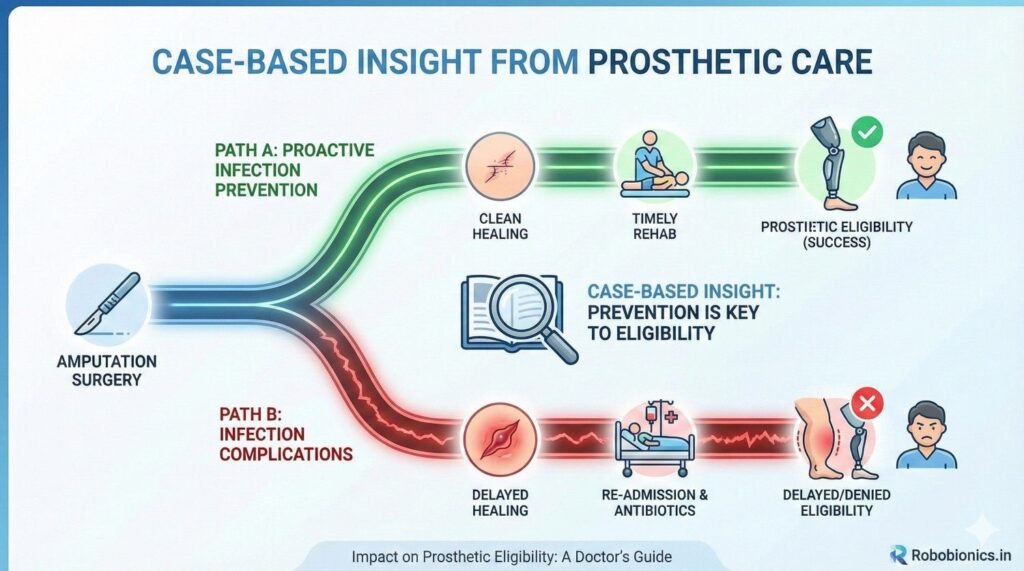
Patients whose infection risks were managed well before and after surgery often begin prosthetic training sooner. They show better balance, better control, and fewer skin complaints in the first year.
These patients usually attend rehab regularly and progress steadily.
Patients who faced infection often enter rehab late and weak. Fear of pain and wound breakdown limits effort. Even with good devices, their usage time is lower.
The difference is rarely the prosthesis. It is the healing path.
Years later, infection-free patients show better independence and lower care needs. Those with infection history often require frequent clinic visits and repeated socket changes.
Prevention reduces long-term burden.
Early safe movement improves circulation around the wound. Better blood flow supports immune response and tissue repair. This lowers infection risk.
Complete rest often delays healing.
Too much movement can stress the wound, while too little causes stiffness and poor circulation. Physicians must guide balanced activity.
Clear guidance prevents harm.
Early movement keeps joints flexible and muscles active. This prepares the body for prosthetic training once healing allows.
Readiness begins before fitting.
Antibiotics should support healing, not replace hygiene and care. Overuse leads to resistance and weak results. Correct choice and duration matter.
Smart use protects future care.
Patients should be monitored closely while on antibiotics. Poor response may signal deeper issues. Early change prevents spread.
Close follow-up improves safety.
Antibiotics do not cancel poor wound care. Patients and teams must stay alert even when medicines are given.
Clean habits still matter most.
Many infections start after discharge. Patients may lack guidance or support at home. Clear instructions and follow-up reduce this risk.
Home care is part of surgical care.
Delayed follow-ups allow small problems to grow. Early review catches issues before they worsen. This supports clean healing.
Access protects outcomes.
Local nurses and clinics can help monitor wounds. Connecting patients to these resources improves safety, especially in remote areas.
Care should not stop at the hospital door.
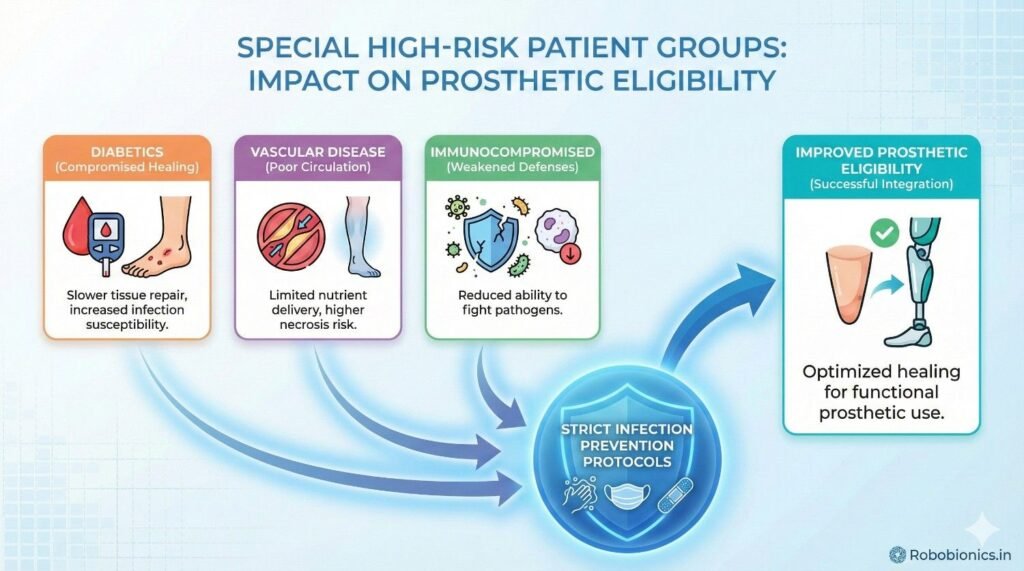
These patients need strict blood sugar control and close wound monitoring. Even small lapses increase infection risk. Education and follow-up are critical.
Control supports healing.
Emergency cases often skip pre-op preparation. These patients need extra care post-op to control infection risk. Planning must catch up quickly.
Extra vigilance saves outcomes.
Older patients heal slower and may miss early signs of infection. Family involvement and simple instructions improve safety.
Support compensates for vulnerability.
Prosthetic eligibility can change over time. Infection may delay or even remove eligibility. Clean healing keeps options open.
Prevention protects choice.
Some patients regain eligibility after infection clears, but the process is longer and harder. Tissue damage may limit options.
Early prevention avoids recovery battles.
Patients delayed by infection need encouragement, not pressure. Support helps them stay engaged.
Care must match reality.
Simple, clear instructions prevent confusion. Medical language should be avoided with patients. Understanding improves action.
Clarity saves limbs.
Patients forget details during stress. Repeating infection prevention steps helps retention. Repetition builds habits.
Habits protect healing.
Patients should feel safe asking questions. This reduces hidden errors. Open dialogue improves care quality.
Trust improves outcomes.
Many infections are preventable. Allowing them due to poor systems or communication is not acceptable. Prevention is an ethical duty.
Quality is a responsibility.
All patients deserve the same infection prevention care, regardless of background. Gaps increase complications.
Fair care improves population outcomes.
The impact of infection lasts years. Physicians must think beyond discharge. Responsibility extends into prosthetic life.
Care must be complete.
Infection prevention is not just medical safety. It enables walking, working, and living independently. This link should guide care priorities.
Function should drive decisions.
When teams focus on prosthetic readiness, infection control gains urgency. Shared goals improve effort.
Purpose improves performance.
Checklists, training, and follow-up systems reduce human error. Strong systems protect patients.
Structure supports care.
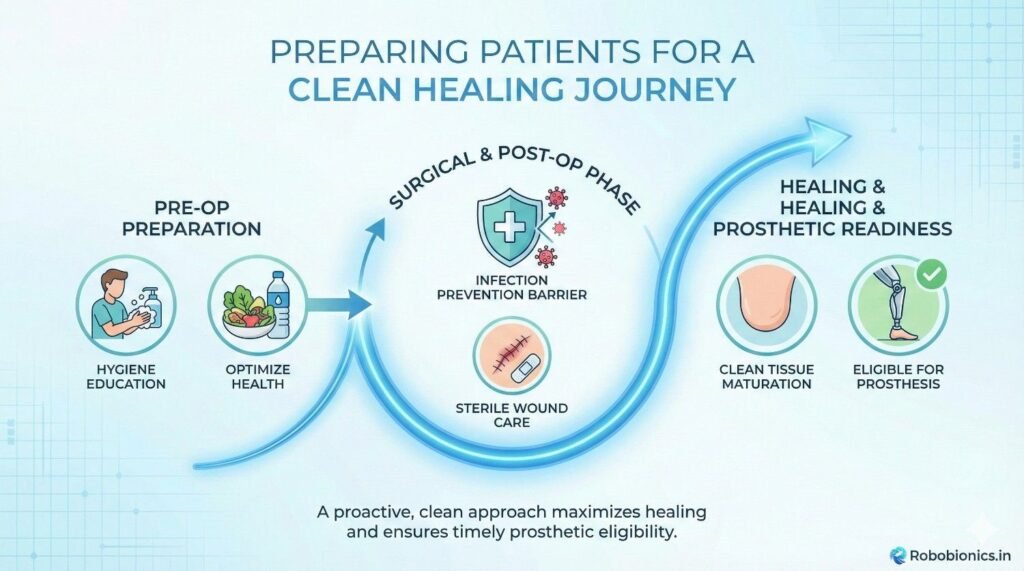
Patients should know that healing quality affects prosthetic success. This understanding increases cooperation.
Knowledge motivates care.
Patients must take part in prevention. Simple daily actions matter. Empowerment improves outcomes.
Participation builds success.
When problems arise, support should replace blame. Fear blocks reporting. Calm response encourages honesty.
Safety grows with trust.
Early success builds momentum. Patients who heal well stay active and hopeful. This energy fuels rehab.
Momentum matters.
Time, money, and effort go into prosthetic care. Infection can undo all three. Prevention protects this investment.
Protection saves resources.
Success is not just survival of surgery. It is a stable limb ready for function. Infection prevention makes this possible.
Healing defines futures.
Infection control should never be seen as only a safety task. Every action taken to prevent infection directly affects whether the patient will ever be ready for a prosthesis. Clean healing protects limb shape, skin strength, and patient morale, all of which decide prosthetic eligibility.
When infection prevention is treated as part of prosthetic planning, care becomes more focused and outcomes improve. The goal shifts from closing a wound to creating a limb that can carry load, tolerate pressure, and support daily life.
Decisions made before and during surgery carry effects for years. Poor tissue handling, delayed antibiotics, or weak follow-up can remove prosthetic options permanently. These outcomes are often not reversible.
Physicians must understand that infection prevention is one of the few factors fully under human control in amputation care. This makes it one of the most powerful tools available.
Treating infection costs time, money, and patient trust. Preventing infection saves all three. Clean healing reduces repeat surgeries, long hospital stays, and emotional fatigue.
From a system view and a patient view, prevention always wins.
From a prosthetic point of view, a residual limb is a weight-bearing structure. Infection weakens this structure. Skin becomes fragile, scars become painful, and bone tolerance reduces.
Surgical care must always ask one question: will this limb be able to carry load safely and daily. Infection prevention is the first step toward a yes.
No prosthetic socket, no matter how advanced, can overcome infected or weak skin. Pain and wounds lead to rejection. Comfort depends on tissue quality created during healing.
When surgeons and physicians think like prosthetists, infection control becomes non-negotiable.
Every week lost to infection delays training and reduces strength. Muscles shrink, joints stiffen, and confidence drops. These losses are hard to reverse.
Clean healing protects the narrow window when recovery is fastest and learning is easiest.
Written infection control rules mean nothing if they are not followed daily. Teams should review protocols regularly and correct gaps quickly.
Good outcomes come from habits, not intentions.
Regular training keeps standards high. New staff must learn why each step matters. Understanding builds ownership.
Consistency across teams reduces error.
When senior doctors prioritize infection prevention, the entire team follows. When leaders rush or ignore basics, standards fall.
Culture flows from the top.
Patients spend more time with their wound than any doctor. Their actions matter. Teaching them simple, clear steps makes them active partners.
Partnership improves safety.
Hand washing, clean dressings, and early reporting of changes prevent most infections. These actions do not require skill, only discipline.
Simple rules protect complex outcomes.
Patients must feel safe reporting pain, smell, or discharge. Fear of blame causes delay. Supportive response saves limbs.
Trust saves time.
Every infection should be reviewed calmly. The goal is improvement, not blame. Understanding where systems failed prevents repeat errors.
Learning protects future patients.
Patients with infection often feel guilty or hopeless. Emotional support is as important as medical treatment. Shame delays healing.
Kindness improves cooperation.
Not all infection outcomes are positive, but many patients can still reach function with time and care. Honest encouragement keeps them engaged.
Hope must be realistic but present.
Preventable infection is avoidable harm. Allowing it through poor practice is unethical. Physicians must treat prevention as a core duty.
Quality care is a moral responsibility.
All patients deserve the same infection prevention standards. Differences in income, education, or location should not change care quality.
Fair care improves trust.
The effects of infection last long after discharge. Professional duty continues into rehab and prosthetic life.
Care must be continuous.
Patients who heal well return to work, family roles, and social life sooner. Independence reduces long-term care needs.
Healing supports dignity.
Infection leads to disability, job loss, and long-term dependence. These effects spread beyond the patient to families and systems.
Prevention protects communities.
Every patient who uses a prosthesis successfully reduces long-term health costs and improves social participation.
Success benefits everyone.
Infection prevention and prosthetic success are not separate goals. They are the same goal viewed from different angles. Clean healing is the shared path.
Alignment improves outcomes.
The end goal is not surgery. It is walking, working, and living with confidence. Every step should serve this end.
Purpose guides care.
A limb free from infection is a limb ready for function. This readiness opens doors to better devices and better life quality.
Preparation builds opportunity.
Infection prevention in amputation surgery is one of the most powerful tools in prosthetic care. It decides who heals well, who fits early, and who regains independence. It shapes comfort, confidence, and long-term use more than many advanced technologies.
When care teams protect healing with discipline and respect, they protect the patient’s future. Clean healing is not just good surgery. It is the foundation of prosthetic life.
For many clinicians, the surgery is only the first step. What happens after the operation

For trauma amputees, the journey does not begin at the prosthetic clinic. It begins much

Amputation after cancer is not just a surgical event. It is the end of one

When a child loses a limb, the challenge is never only physical. A child’s body