Post-Op Follow-Up Schedule That Prevents Prosthetic Delays (For Clinicians)
Many prosthetic delays do not happen because of surgical problems or device limitations. They happen



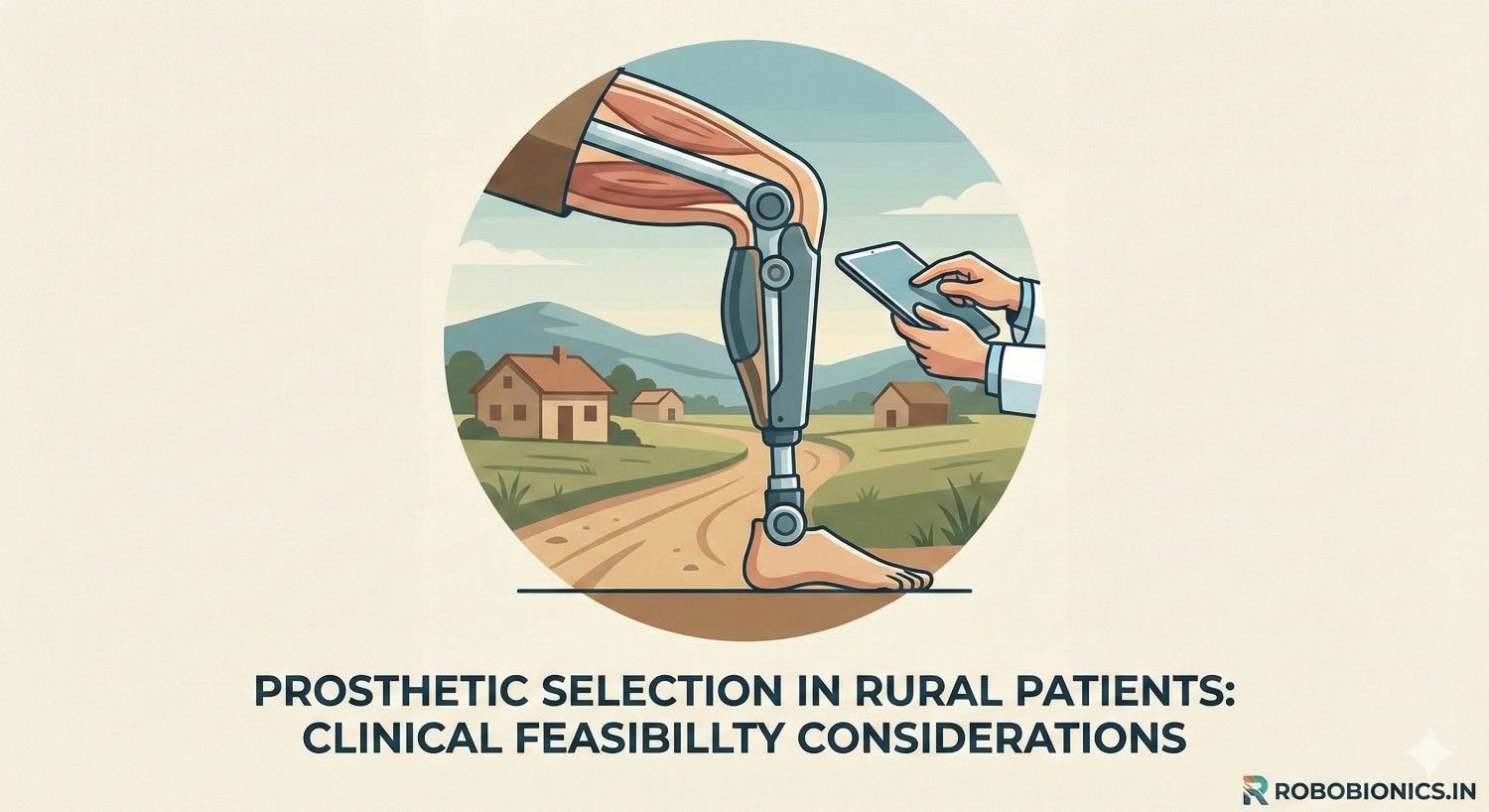
Prosthetic selection is never only a medical decision. It is a practical one that must fit the patient’s daily life, environment, and access to care. For rural patients, these factors become even more important. Distance from clinics, limited transport, uneven terrain, and demanding physical work all influence whether a prosthesis will actually be used or slowly abandoned.
At Robobionics, we work with many patients from rural regions across India. We have seen cases where advanced prostheses performed well in the clinic but failed in real life because they could not withstand rough use or because follow-up care was difficult to access. We have also seen simple, well-matched devices restore mobility and independence when chosen with the patient’s context in mind.
This article focuses on prosthetic selection for rural patients, with emphasis on clinical feasibility rather than ideal technology. It explores how environment, occupation, access to repairs, and patient education affect outcomes. The aim is not to lower standards, but to choose devices that work reliably in real conditions.
If you are a clinician, prosthetist, or healthcare worker supporting rural amputees, this guide will help you make decisions that balance function, safety, and sustainability. When prosthetic care respects the realities of rural life, outcomes improve and confidence returns.
Rural patients often live in environments that place constant physical demand on the body.
Daily movement may involve walking long distances, climbing uneven paths, or standing for extended hours during work.
These conditions place stress on any prosthetic device far beyond controlled indoor use.
Homes in rural areas may lack smooth flooring or controlled hygiene spaces.
Dust, mud, water, and heat are common exposures.
Prosthetic selection must account for this continuous environmental load.
Many rural patients depend on manual labor for income.
Farming, construction, animal care, and daily wage work require strength, stability, and endurance.
A prosthesis must support these demands without frequent breakdown.
Advanced features may be less useful than durability and comfort.
A device that limits squatting, lifting, or prolonged standing quickly becomes impractical.
Work requirements must guide selection decisions.
Doctors should understand the patient’s work routine in detail.
Assumptions lead to mismatch.
Function must reflect livelihood needs.
Cultural practices influence how prostheses are used and perceived.
Patients may need to sit on the floor, walk barefoot indoors, or remove footwear frequently.
These habits affect device design and suspension choices.
Social stigma may also influence acceptance.
Bulky or unfamiliar devices may attract unwanted attention.
Discretion and comfort matter for consistent use.
Clinicians should discuss these factors openly.
Respect builds trust.
Trust improves outcomes.
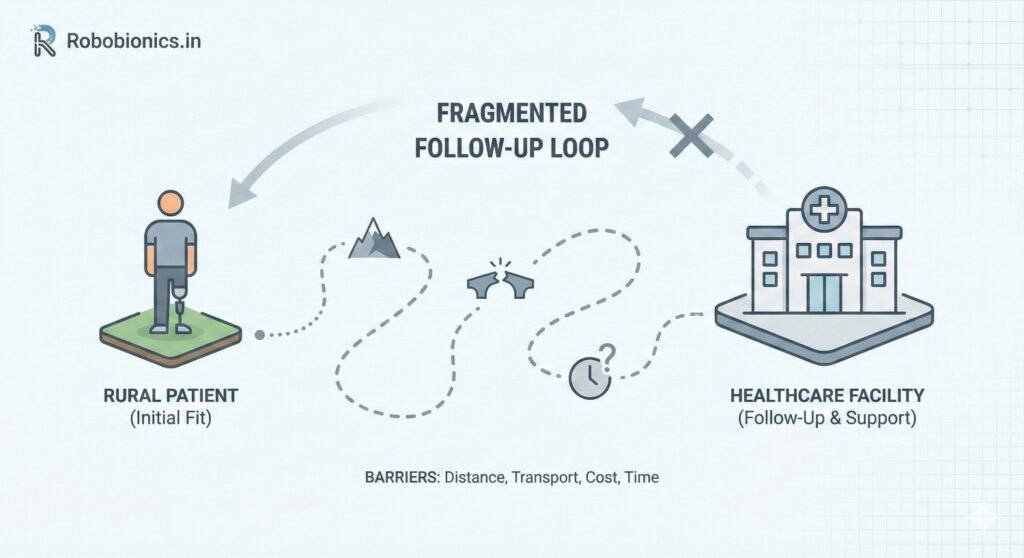
Rural patients often travel long distances to reach prosthetic centers.
Transport may be unreliable or expensive.
Frequent follow-up becomes difficult.
Devices that require repeated fine adjustments may not be practical.
Each visit carries cost and time burden.
Selection must minimize dependency on frequent clinic access.
Doctors should consider follow-up feasibility early.
Planning reduces future frustration.
Accessibility shapes success.
Skin breakdown, pain, or mechanical failure require timely attention.
In rural settings, immediate help may not be available.
Delays increase severity.
Prosthetic systems should be forgiving and safe under minor misuse.
Complex systems may fail catastrophically without prompt repair.
Robust design protects patients.
Education becomes critical when access is limited.
Patients must manage minor issues independently.
Confidence reduces risk.
Regular monitoring improves prosthetic outcomes.
In rural contexts, continuity is often fragmented.
Different providers may be involved over time.
Clear documentation and simple care plans help bridge gaps.
Patients benefit from straightforward instructions.
Consistency supports safety.
Doctors should plan for long-term care beyond initial fitting.
Prosthetic journeys are ongoing.
Preparation improves durability.
Rural landscapes rarely offer flat, predictable walking surfaces.
Mud, gravel, slopes, and water crossings are common.
Balance demands are high.
Lower limb prostheses must provide stability over flexibility.
Overly dynamic feet may be difficult to control.
Predictable response improves confidence.
Doctors should ask about typical walking environments.
Terrain shapes requirements.
Testing should simulate real conditions.
Heat, rain, and humidity affect prosthetic materials.
Sweating increases skin risk.
Moisture accelerates wear and corrosion.
Devices must tolerate harsh conditions without frequent maintenance.
Sealed components and simple designs perform better.
Durability outweighs aesthetics.
Doctors should consider seasonal variations.
Monsoon conditions create unique challenges.
Year-round use must be safe.
Access to clean water and controlled hygiene spaces may be limited.
Daily cleaning routines may be difficult to maintain.
Skin infection risk rises.
Prosthetic interfaces should be easy to clean and dry.
Complex liners may not be practical.
Simplicity supports hygiene.
Education should focus on realistic routines.
Ideal instructions must adapt to real life.
Practical advice protects skin.
Durability is often the most important feature for rural patients.
A prosthesis must withstand rough use and environmental stress.
Frequent repairs are not feasible.
Advanced electronics may fail in harsh conditions.
Mechanical reliability becomes critical.
Simple designs often last longer.
Doctors should resist over-prescribing technology.
More features do not always mean better outcomes.
Matching matters.
Rural patients may need to remove and reapply their prosthesis multiple times daily.
Ease of use affects compliance.
Complicated systems discourage consistent wear.
Simple suspension systems are often preferable.
They reduce dependency on tools or assistance.
Independence improves confidence.
Doctors should observe patients managing the device themselves.
Hands-on assessment reveals challenges.
Ease of use predicts long-term success.
Heavy prostheses increase fatigue during long workdays.
Energy efficiency matters greatly for active rural patients.
Lighter designs reduce strain.
However, weight reduction should not compromise strength.
Balance between lightness and robustness is needed.
Overly delicate devices fail quickly.
Doctors should consider daily activity duration.
Endurance needs guide selection.
Comfort supports productivity.
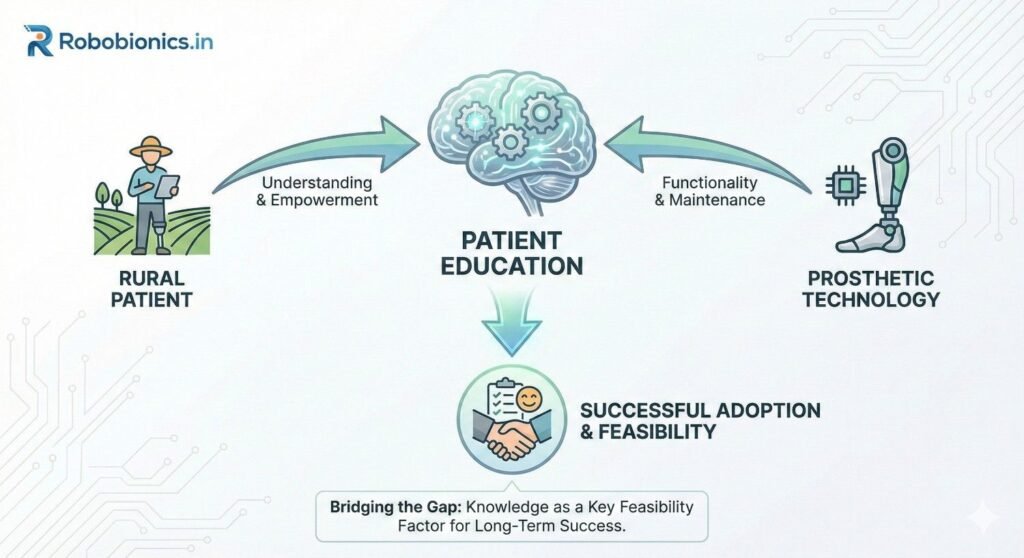
Rural patients must often detect and respond to issues independently.
Education should focus on recognizing early warning signs.
This includes skin changes, loosening, or unusual sounds.
Patients should know when to stop use and seek help.
Clear thresholds prevent serious injury.
Education replaces proximity to care.
Doctors should use simple language and demonstrations.
Understanding must be confirmed.
Assumptions are risky.
Basic cleaning and inspection routines extend device life.
Patients should learn how to care for liners, sockets, and straps.
Simple habits prevent complications.
Maintenance instructions must match available resources.
Ideal methods may not be practical.
Adaptation improves adherence.
Doctors should encourage questions.
Clarifying doubts builds confidence.
Confidence improves outcomes.
Family members often assist with care and monitoring.
Involving them improves safety.
Shared knowledge reduces burden on the patient.
Community health workers can also play a role.
They may provide local support.
Integration improves continuity.
Doctors should identify support networks early.
Planning improves sustainability.
Care is rarely solitary.
Upper limb prostheses in rural contexts often support basic tasks.
Gripping tools, carrying loads, and stabilizing objects are common needs.
Fine motor precision may be less critical.
Devices should be robust and intuitive.
Complex control systems may not be necessary.
Function should match daily tasks.
Doctors should assess task-specific needs.
One size does not fit all.
Context guides choice.
Upper limb devices with electronics require regular charging and care.
Power access may be limited.
Downtime affects livelihood.
Body-powered or hybrid systems may be more reliable.
They tolerate rough use better.
Control is predictable.
Doctors should discuss power and maintenance realities.
Honest conversation prevents regret.
Feasibility matters.
Upper limb prostheses are often abandoned when they do not meet real needs.
Comfort and utility drive acceptance.
Appearance is secondary.
Rural patients value reliability over novelty.
A device that works every day is preferred.
Consistency builds trust.
Doctors should prioritize daily usefulness.
Success is measured by use, not features.
Practicality wins.
Lower limb prostheses must provide stable support across varied terrain.
Falls in rural areas can be dangerous due to delayed medical access.
Safety must guide decisions.
Simple, stable foot designs often perform better.
Predictable behavior improves confidence.
Control reduces risk.
Doctors should test balance in realistic conditions.
Clinic floors are misleading.
Simulation improves accuracy.
Rural patients often work long hours on their feet.
Prosthetic comfort must be sustained throughout the day.
Pressure tolerance matters.
Short clinic trials do not reveal endurance issues.
Extended wear testing is helpful.
Fatigue patterns guide adjustment.
Doctors should ask about daily schedules.
Understanding workload shapes selection.
Comfort supports livelihood.
Footwear options may be limited or inconsistent.
Prostheses must work with locally available shoes.
Special footwear may not be feasible.
Cultural practices like barefoot walking indoors matter.
Design must adapt.
Rigid assumptions fail.
Doctors should discuss footwear honestly.
Compatibility affects compliance.
Adaptation improves success.
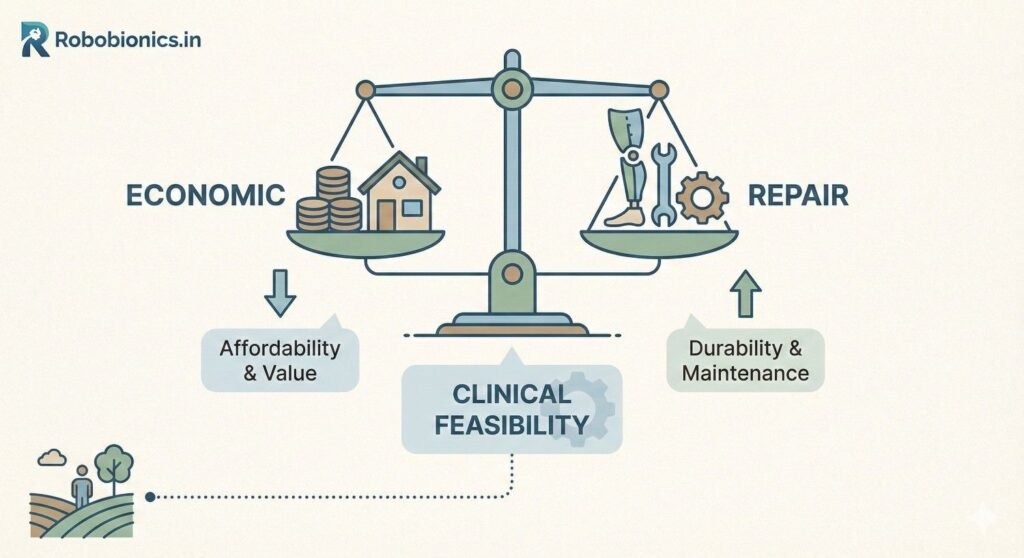
Upfront cost is a major concern for rural patients.
However, long-term maintenance costs matter equally.
Affordable repairability improves sustainability.
Devices that require expensive parts or specialized service may be impractical.
Breakdown leads to prolonged disability.
Selection must consider total cost of ownership.
Doctors should discuss long-term costs openly.
Transparency builds trust.
Surprises harm outcomes.
Access to local repair services improves prosthetic longevity.
Devices compatible with regional service networks perform better.
Centralized-only systems pose challenges.
Doctors should consider service pathways during selection.
Repair feasibility matters as much as initial fit.
Local solutions support continuity.
Training local technicians can improve outcomes.
Decentralization reduces downtime.
Infrastructure matters.
When devices are difficult to repair or maintain, abandonment risk increases.
Patients may return to crutches or wheelchairs.
This affects independence.
Simple, durable devices reduce abandonment.
Reliability builds trust.
Trust sustains use.
Doctors should monitor early signs of disengagement.
Intervention prevents loss.
Support preserves mobility.
Clinical assessment for rural patients must go beyond standard medical evaluation and focus deeply on how the patient actually lives and works each day.
Doctors should ask detailed questions about daily walking distance, type of work performed, time spent standing, and common movements such as squatting, lifting, or climbing.
Many rural patients underreport physical demands because they see them as normal life rather than work stress.
Clinicians must probe gently but thoroughly.
Accurate understanding prevents underestimating prosthetic load.
Assessment should include discussion of seasonal changes in work.
Farming tasks vary across the year.
A prosthesis must perform reliably in peak demand periods, not just during clinic visits.
Rural prosthetic eligibility depends heavily on how well the body tolerates sustained use under harsh conditions.
Skin integrity, muscle strength, and endurance must be assessed together rather than in isolation.
A patient with good strength but fragile skin may still fail with prolonged use.
Likewise, good skin without endurance leads to fatigue and unsafe gait.
Balance between these factors determines feasibility.
Doctors should simulate extended standing or walking when possible.
Short assessments hide fatigue-related problems.
Realistic testing improves decision accuracy.
Rural patients often need to manage minor issues independently due to limited access to care.
Doctors must assess whether the patient can inspect their limb, clean the prosthesis, and recognize early problems.
This is not a test of intelligence but of practical readiness.
Visual ability, hand function, and understanding matter.
Support systems can compensate where individual ability is limited.
If self-care capacity is low, family or community support must be identified.
Without this, prosthetic use becomes risky.
Eligibility must reflect real-world safety.
In many rural cases, simpler prosthetic designs produce better long-term outcomes than advanced systems.
Mechanical reliability, ease of repair, and predictable behavior often outweigh added features.
Patients who rely on their prosthesis for daily income cannot afford downtime.
A device that works consistently every day builds trust and confidence.
This trust directly affects usage.
Doctors should not equate technological advancement with superiority.
Appropriateness defines success.
Simple solutions often restore function more effectively.
Some rural patients may still benefit from advanced prosthetic components, especially younger or highly motivated individuals with stable access to follow-up care.
These cases require careful selection and strong education.
Advanced devices must offer clear functional benefit that justifies added complexity.
For example, improved stability or reduced energy cost may be valuable.
Novelty alone is not a valid reason.
Doctors should ensure that repair pathways and maintenance plans are realistic.
Without this, even good candidates may struggle.
Advanced care must be sustainable.
Prosthetic selection for rural patients should not be treated as a permanent, one-time decision.
Needs change as the patient adapts, ages, or shifts occupation.
Starting with a simple, durable solution allows early mobility.
Upgrades can be considered later if conditions allow.
This staged approach reduces risk.
Doctors should communicate this flexibility clearly.
Patients feel less pressure to choose “perfectly” the first time.
Adaptation becomes part of the journey.
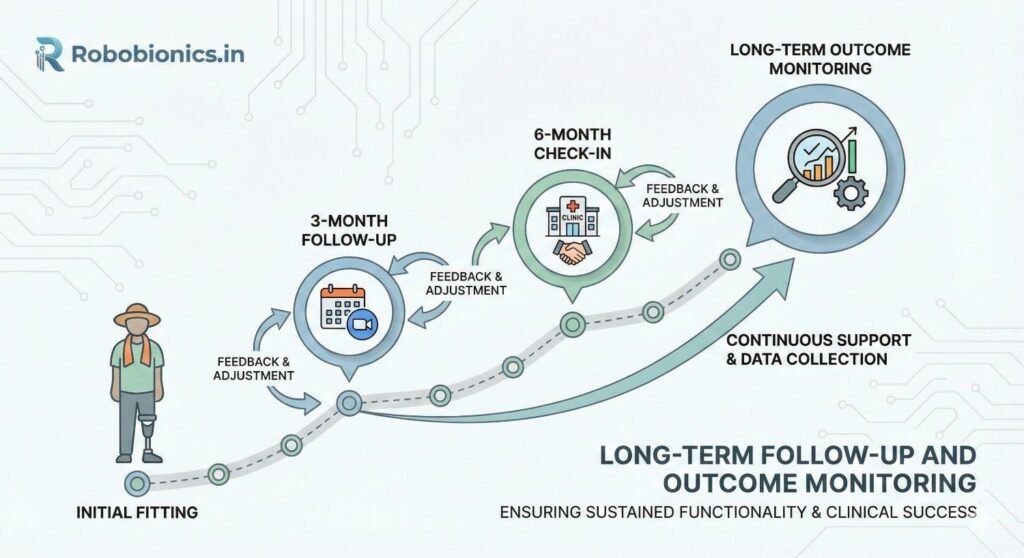
Even when follow-up visits are infrequent, periodic review is essential for rural prosthetic users.
Small issues left unchecked often become major problems over time.
Doctors should schedule realistic follow-up intervals rather than ideal ones.
Annual or biannual reviews may be more achievable.
Consistency matters more than frequency.
Remote follow-up through phone calls or local health workers can supplement visits.
Early feedback prevents escalation.
Creative solutions improve continuity.
Rural patients may slowly reduce prosthetic use without explicitly reporting problems.
Pain, fatigue, or minor discomfort often lead to quiet avoidance.
Doctors should ask specific questions about daily wear time and activity.
General questions often miss important clues.
Patterns matter more than statements.
Early detection allows timely intervention.
Adjustments or repairs can restore function.
Preventing abandonment protects independence.
Over time, a rural patient’s work or environment may change.
New farming methods, relocation, or health changes alter prosthetic demands.
Doctors should reassess prosthetic suitability during follow-up.
What worked before may no longer be ideal.
Flexibility supports longevity.
Encouraging patients to report changes proactively improves outcomes.
Open communication builds trust.
Trust sustains care.
Community health workers often have close contact with rural patients.
They can support basic monitoring, education, and early problem identification.
Training these workers to recognize prosthetic red flags improves safety.
They act as a bridge between patients and distant clinics.
This model increases reach.
Doctors should collaborate with local systems when possible.
Shared responsibility improves outcomes.
Decentralized support is powerful.
Clear referral pathways reduce delays when problems arise.
Patients should know where to go and whom to contact.
Uncertainty leads to postponement and worsening issues.
Simple instructions reduce confusion.
Preparedness improves safety.
Doctors should provide written guidance where possible.
Visual aids help overcome literacy barriers.
Clarity supports action.
Seeing other prosthetic users in the community encourages acceptance.
Shared experience reduces stigma and fear.
Peer support can motivate continued use and care.
Practical tips are often shared informally.
Community builds resilience.
Doctors should encourage connection where appropriate.
Isolation undermines confidence.
Belonging strengthens outcomes.
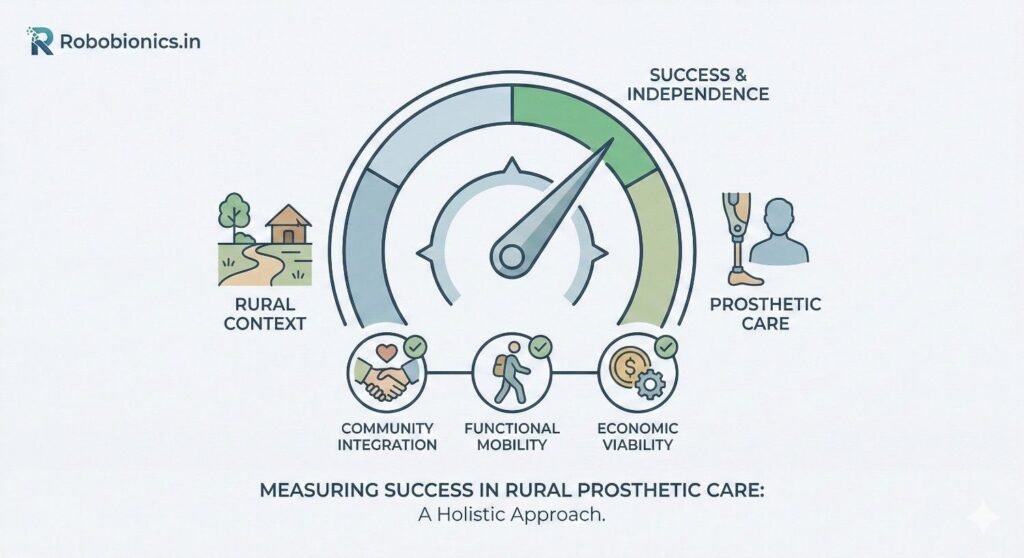
Success in rural prosthetic care is not defined by advanced features or appearance.
It is defined by consistent use, safety, and improved quality of life.
A device that allows a patient to work, travel, and participate socially is successful.
Perfection is not the goal.
Function is.
Doctors should align expectations accordingly.
Clear definitions prevent disappointment.
Satisfaction improves adherence.
Rural patients best judge whether a prosthesis fits their life.
Their feedback on comfort, fatigue, and reliability is critical.
Doctors should value patient experience as much as clinical metrics.
Lived reality matters.
Listening improves care.
Encouraging honest feedback builds partnership.
Patients feel respected.
Respect improves outcomes.
The ultimate goal of rural prosthetic care is sustained independence.
This includes physical mobility, economic participation, and social inclusion.
Prosthetic selection should support these goals over years, not weeks.
Durability, comfort, and feasibility matter most.
Short-term gains are not enough.
Doctors should keep this long view in mind.
Decisions today shape futures.
Responsibility is shared.
Prosthetic selection for rural patients requires a shift from idealized clinical thinking to practical, context-aware decision-making.
Environment, occupation, access to care, and support systems are not secondary factors but central determinants of success.
At Robobionics, our experience across rural India shows that prostheses chosen with feasibility in mind are used longer, maintained better, and trusted more deeply by patients.
When devices match real life rather than theoretical capability, independence becomes sustainable.
Rural prosthetic care is not about offering less, but about offering what truly works.
When clinicians respect the realities of rural living and plan accordingly, prosthetic technology becomes a reliable partner rather than a fragile promise.