
Post-Op Follow-Up Schedule That Prevents Prosthetic Delays (For Clinicians)
For many clinicians, the surgery is only the first step. What happens after the operation




Trauma-related amputation changes a life in a moment, but prosthetic care is a long clinical journey that must be planned with care, timing, and clear judgment. For doctors, the question is not only whether a limb can be fitted, but when it should be fitted and how to decide if the patient can truly benefit from it in the long term. Trauma patients often look strong on the outside, yet carry hidden physical and emotional risks that can affect outcomes.
This article explains the clinical criteria for prosthetic candidacy after trauma amputation, using a clear and practical approach suited to real hospitals and rehabilitation settings in India. It focuses on medical safety, functional readiness, emotional recovery, and real-life demands, so that prosthetic decisions support healing rather than rush it.
The aim is to help clinicians make confident, ethical, and patient-centered decisions that lead to safe use, consistent wear, and meaningful recovery.
Trauma amputations are different from planned or disease-related amputations because they happen suddenly and often involve multiple injuries at the same time.
The patient may be young, physically fit, and motivated, yet their body and mind may still be in shock.
This mix of strength and vulnerability is why trauma cases need a careful and structured approach.
A trauma patient may appear stable once wounds close and fractures heal, but deeper issues like nerve injury, muscle loss, or emotional distress can remain.
These factors may not show up in early exams but can strongly affect prosthetic success later.
Good candidacy decisions look beyond what is visible on the surface.
The first few clinical choices after trauma often set the direction for years.
Rushing into prosthetic fitting too early can cause setbacks, while waiting too long can reduce confidence and muscle strength.
Balanced timing is the core challenge in trauma-related prosthetic care.
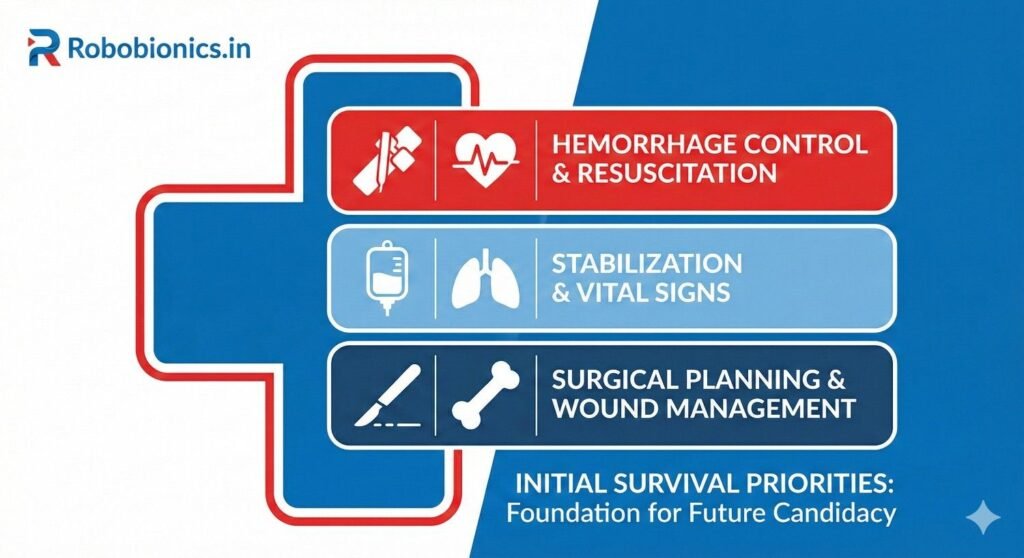
In trauma care, saving life always comes before saving limb or planning mobility.
Until bleeding, infection risk, and organ injury are controlled, prosthetic planning must wait.
A stable patient is the foundation of safe prosthetic candidacy.
Many trauma amputees also have head injuries, chest trauma, or fractures in other limbs.
Each of these injuries affects when and how rehabilitation can begin.
Prosthetic planning must account for the slowest healing system in the body.
Long ICU stays often lead to muscle loss, joint stiffness, and fatigue.
These issues reduce early prosthetic tolerance even if the amputation site heals well.
Recognizing ICU-related weakness helps set realistic early goals.
Clean bone cuts, well-shaped muscle coverage, and good skin closure improve future prosthetic fit.
Emergency trauma surgeries may not always achieve ideal shapes due to time pressure.
Later revision surgery may be needed before prosthetic fitting is considered.
Higher levels of amputation demand more energy and balance during prosthetic use.
Severe trauma often causes loss of muscle and soft tissue beyond the bone level.
These losses directly affect control, comfort, and long-term wear.
Plates, rods, or fragments may cause pain under load.
If these issues are not addressed early, prosthetic use can become painful or unsafe.
Imaging and surgical review are essential before final candidacy decisions.
Trauma wounds are often contaminated and crushed, not cleanly cut.
This increases the risk of delayed healing and deep infection.
Prosthetic candidacy should only be considered once infection risk is clearly controlled.
Closed skin alone is not enough to confirm readiness.
The limb should tolerate gentle pressure, movement, and daily handling without pain or redness.
Stable healing over time matters more than quick closure.
Skin grafts and large scars behave differently under pressure.
They may need special socket design and slower load increase.
These factors should shape the candidacy timeline, not exclude the patient.
Early pain is expected after trauma and surgery.
Persistent or worsening pain needs investigation before prosthetic planning.
Uncontrolled pain blocks learning and reduces trust in the device.
Trauma often damages nerves in irregular ways.
Burning, shooting, or electric pain suggests nerve involvement.
These patterns require targeted treatment before prosthetic training.
Phantom pain is common after trauma and does not exclude prosthetic use.
However, severe phantom pain can reduce tolerance and focus.
Early education and pain management improve later candidacy.
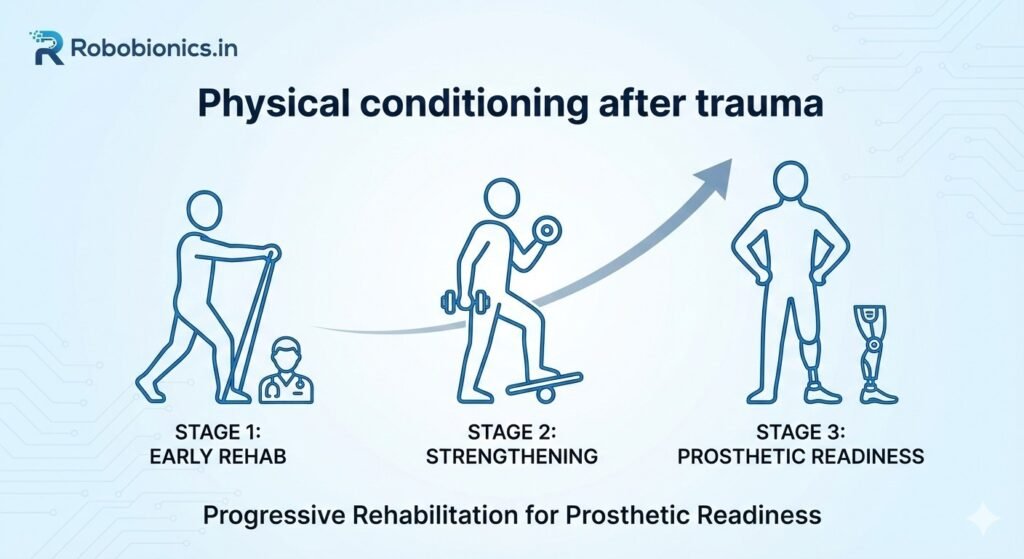
Even young trauma patients lose strength quickly during bed rest.
Weakness in the core and hips affects balance and control.
Pre-prosthetic strengthening is often needed before fitting.
Immobilization after trauma increases the risk of stiff joints.
Hip and knee stiffness can severely limit prosthetic walking.
Early movement and positioning reduce this risk.
Reduced activity lowers stamina and exercise tolerance.
Prosthetic walking increases energy demand, especially above the knee.
Fitness level should be considered when judging readiness.
Even mild head injury can affect focus and reaction time.
These changes increase fall risk during prosthetic training.
Candidacy decisions must include cognitive screening.
Learning to walk with a prosthesis requires repeated practice and recall.
Memory problems can slow progress and frustrate patients.
Training plans should adjust pace rather than deny care.
Some trauma patients underestimate risk due to emotional or brain-related changes.
This can lead to unsafe behavior during early walking.
Clear boundaries and supervision are essential.
Trauma amputation happens without warning and often causes deep emotional distress.
Patients may appear calm while still processing loss internally.
Emotional readiness is as important as physical healing.
Flashbacks, anxiety, and fear of re-injury are common after severe trauma.
These symptoms can interfere with training and confidence.
Early recognition allows timely mental health support.
Some patients push themselves to walk too fast to prove recovery.
Others feel pressure from family or society to return to normal quickly.
Balanced motivation leads to safer and more sustainable outcomes.
Families also experience trauma and may struggle to adapt.
Their fear can either protect or limit the patient.
Including them in discussions improves cooperation.
Trauma often interrupts income suddenly.
Financial stress can push patients to rush prosthetic use.
Clear planning helps align recovery with long-term stability.
Patients with strong social support recover better.
Isolation increases dropout and depression.
Support systems should be considered part of candidacy.
We have now covered the early and mid-stage clinical criteria that shape prosthetic candidacy after trauma amputation, focusing on surgery, healing, pain, physical conditioning, cognition, and emotional readiness.
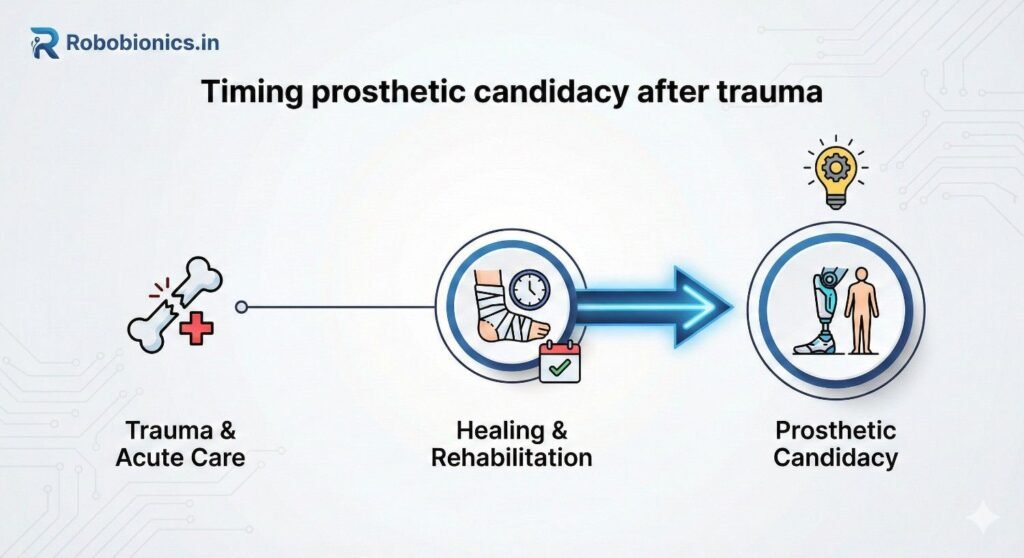
In trauma amputation, the body may heal faster than the mind, or the mind may be ready before the body can safely respond.
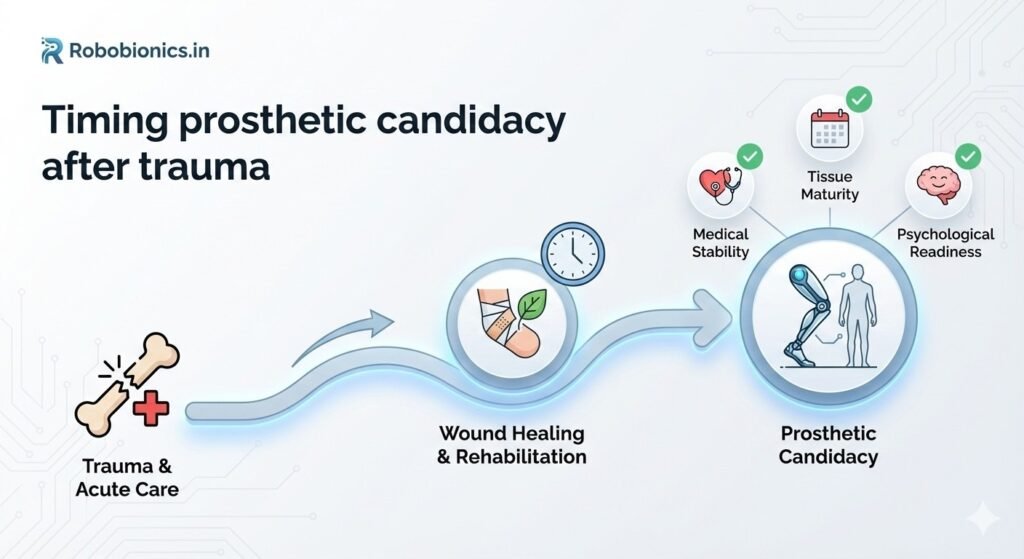
Choosing the right time for prosthetic progression is not about dates on a calendar but about observing stable patterns in healing, strength, and behavior.
Poor timing is one of the most common reasons for early prosthetic failure in trauma patients.
The residual limb should show stable volume, healthy skin response, and tolerance to gentle pressure over repeated days.
Pain should be controlled enough that the patient can focus on learning rather than coping.
Transfers, sitting balance, and supported standing should feel safe and repeatable.
Repeated skin irritation, increasing pain, or rapid fatigue suggest the body is not yet ready.
Emotional distress, confusion, or poor safety awareness are also valid reasons to delay.
Waiting in these cases protects trust and long-term success rather than slowing recovery.
After trauma, many patients lose confidence in their own body.
Pre-prosthetic rehab helps them relearn safe movement and control before adding a prosthesis.
This step reduces fear and improves cooperation during later training.
Lower-limb prosthetic use depends heavily on trunk and hip control.
Trauma patients often have weakness from bed rest or injury-related guarding.
Targeted strengthening prepares the body to accept new movement patterns.
The non-amputated leg carries extra load during early prosthetic use.
If it is weak or painful, progress slows and injury risk rises.
Strengthening and protecting the sound limb is a key candidacy factor.
The first trial is not about walking far or looking normal.
Its purpose is to test comfort, safety, and emotional response under controlled conditions.
Clear explanation before the trial prevents disappointment and fear.
Watch how the patient stands, shifts weight, and responds to pressure.
Guarding, grimacing, or rapid fatigue offer valuable information.
These signs guide immediate adjustment or delay.
Some trauma patients feel joy when standing again, while others feel panic or grief.
Both responses are normal and informative.
Emotional readiness should be respected as part of candidacy.
Some trauma patients learn quickly due to youth and fitness.
Others move slowly because of fear or pain memory.
Both patterns can succeed when training is matched to learning style.
Impatience is common in trauma survivors who want life to return to normal.
Clear milestones help channel this energy safely.
Unmanaged impatience increases injury risk.
Learning new walking patterns is mentally demanding.
Trauma patients may tire mentally before they tire physically.
Short, focused sessions often work better than long ones.
Lack of progress does not always mean poor candidacy.
It often reflects pain, fear, or unclear expectations.
Reassessment helps identify the true barrier.
Poor fit, alignment, or component choice can mimic patient failure.
Before judging candidacy, technical factors must be reviewed carefully.
This protects patients from unfair conclusions.
Sometimes the safest choice is to pause training briefly.
Explaining this clearly maintains trust and motivation.
Ethical care values long-term outcomes over speed.
Patients who integrate the prosthesis into daily life early tend to succeed long term.
Inconsistent use often signals unresolved comfort or emotional issues.
Monitoring wear patterns offers early insight.
Clinic walking does not guarantee outdoor success.
Trauma patients must adapt to uneven ground, crowds, and distractions.
Gradual exposure builds confidence and safety.
Emotional healing continues long after physical recovery.
Changes in mood or confidence may appear months later.
Regular check-ins help sustain long-term use.
Some patients need more time for healing, strength, or emotional processing.
Clear guidance on what must improve keeps hope realistic.
Temporary delay is part of good care.
Severe brain injury, uncontrolled pain, or repeated unsafe behavior may limit prosthetic use.
These cases require honest discussion and alternative mobility planning.
Protecting safety is always the priority.
Even without a prosthesis, patients can live full and independent lives.
Respectful communication preserves trust and self-worth.
Mobility options should match the person, not an ideal image.
Doctors are often seen as final decision-makers.
In trauma care, guiding patients through readiness is more effective than issuing approval.
This approach builds partnership and adherence.
Trauma patients and families value clarity during uncertainty.
Simple explanations reduce fear and unrealistic expectations.
Good communication is a clinical skill that shapes outcomes.
Surgeons, rehab doctors, therapists, and prosthetists must work as one unit.
Clear roles and shared goals prevent confusion.
Team alignment strengthens candidacy decisions.
Walking safely and independently matters more than how the limb looks.
Trauma patients often worry about public perception.
Redirecting focus to function improves satisfaction.
Using the prosthesis for real tasks defines success.
Transfers, self-care, and community mobility matter most.
These outcomes reflect proper selection and timing.
Good candidacy decisions reduce joint damage, falls, and chronic pain.
This long-term view protects both patient and healthcare system.
Trauma care does not end at discharge.
Trauma amputation demands patience, structure, and compassion.
Prosthetic candidacy is not a single moment but a process that evolves with healing and confidence.
When doctors respect timing, readiness, and the human experience of trauma, prosthetics become tools for recovery rather than reminders of loss.
Many trauma patients appear physically capable early, which can push teams to move faster than the body or mind can handle.
Strength alone does not equal readiness, and early pressure often leads to pain, fear, or dropout.
Slowing down at the right time protects long-term outcomes.
Emotional trauma is less visible than wounds but just as real.
When fear, anger, or grief are not addressed, prosthetic use often suffers.
Acknowledging emotions improves cooperation and trust.
Slow progress is often a signal, not a verdict.
Adjusting timing, training, or expectations usually restores momentum.
Labeling a patient too early causes unnecessary harm.
Doctors must protect patients from unsafe optimism while preserving hope.
Clear explanations help patients accept delays without losing motivation.
Ethical care chooses the right time, not the fastest path.
Patients should be involved in decisions even when they are not ready yet.
Understanding the reasons behind clinical choices builds respect.
Shared decisions reduce conflict and regret.
When prosthetic use is not possible or must be delayed, alternatives should be presented respectfully.
Wheelchairs, aids, and environmental changes can still support independence.
Dignity must never depend on a device.
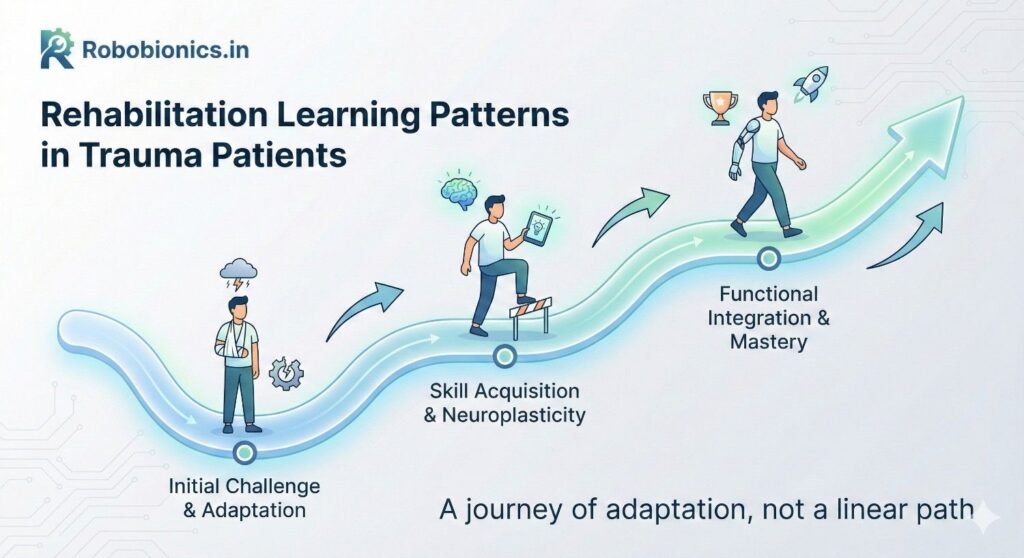
Younger trauma patients often aim to return to full activity quickly.
Guided pacing helps convert ambition into sustainable progress.
Clear milestones reduce frustration.
Long admissions often slow physical and emotional recovery.
These patients benefit from extended pre-prosthetic rehab.
Patience at this stage pays off later.
Distance, terrain, and limited follow-up affect outcomes.
Simpler, durable solutions often work best.
Context-aware decisions matter.
At Robobionics, we work closely with doctors who guide trauma amputees through some of the most difficult transitions of their lives.
We have seen that successful prosthetic use after trauma depends less on speed and more on timing, trust, and thoughtful selection.
By respecting clinical criteria and the human experience of injury, prosthetics can support recovery with safety, dignity, and lasting confidence.
For many clinicians, the surgery is only the first step. What happens after the operation

For trauma amputees, the journey does not begin at the prosthetic clinic. It begins much

Amputation after cancer is not just a surgical event. It is the end of one

When a child loses a limb, the challenge is never only physical. A child’s body