
Post-Op Follow-Up Schedule That Prevents Prosthetic Delays (For Clinicians)
For many clinicians, the surgery is only the first step. What happens after the operation




Prosthetic success often depends on one quiet decision made by a doctor. Is the wound truly ready, or does it only look healed on the surface. This moment of clearance shapes comfort, safety, and long-term use more than most people realize. When clearance is given too early, patients struggle with pain and skin breakdown. When it is delayed without reason, confidence and momentum are lost.
At Robobionics, after working with doctors and amputees across India, we have seen how wound healing benchmarks directly influence prosthetic outcomes. Many problems blamed on prosthetic design actually begin with premature or unclear wound clearance. Clear medical benchmarks reduce these risks and build trust between doctors, prosthetists, and patients.
This article is written as a practical guide for doctors. It focuses on how to assess wound healing beyond surface appearance, how to judge readiness safely, and how to communicate clearance decisions clearly. These insights come from real-world patient journeys, not ideal textbook timelines.
Wounds heal at different speeds based on age, health, blood flow, and care quality. Two patients operated on the same day may reach readiness weeks apart.
Relying only on time since surgery ignores these differences and increases risk.
A wound may appear closed while deeper tissues remain fragile. Prosthetic loading stresses more than the skin surface.
Doctors must assess strength, tolerance, and response, not just closure.
Early clearance often leads to skin breakdown, pain, and fear of prosthetic use.
These issues damage trust and delay long-term success more than waiting briefly would.
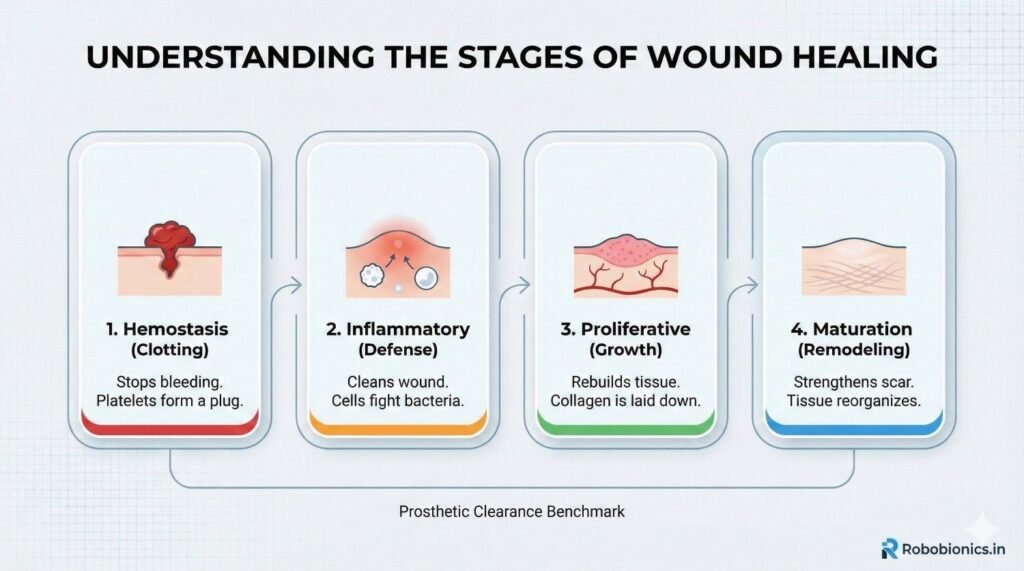
This phase involves swelling, warmth, and tenderness. It is a normal response, not a problem.
Prosthetic clearance is unsafe during this stage due to tissue vulnerability.
New tissue forms and strength improves. The wound looks better, but remains sensitive to stress.
Doctors should observe consistency and stability before progressing.
Tissue gains strength and flexibility. This phase supports gradual loading.
Clearance decisions should align with this stage, not earlier ones.
A closed wound is not automatically ready. Color, dryness, and edge quality matter.
Uneven healing often signals deeper weakness.
Any persistent moisture increases risk under prosthetic pressure.
Dry, stable tissue tolerates load better.
Strong edges resist separation. Fragile edges break under stress.
Doctors should gently test tolerance.
Healthy tissue feels supple, not stiff or boggy.
Pain on gentle pressure signals incomplete healing.
Thick, tight scars restrict movement and increase pressure points.
Early identification allows early intervention.
Warmth or altered sensation may indicate inflammation or nerve irritation.
These signs warrant caution.
Redness spreading beyond the wound, increasing pain, or fever are clear warning signs.
Ignoring these signs risks severe complications.
Persistent itching, mild swelling, or uneven coloration can signal delayed healing.
Doctors should treat these signs seriously.
Patients must understand why clearance is delayed.
Clear explanations reduce frustration.
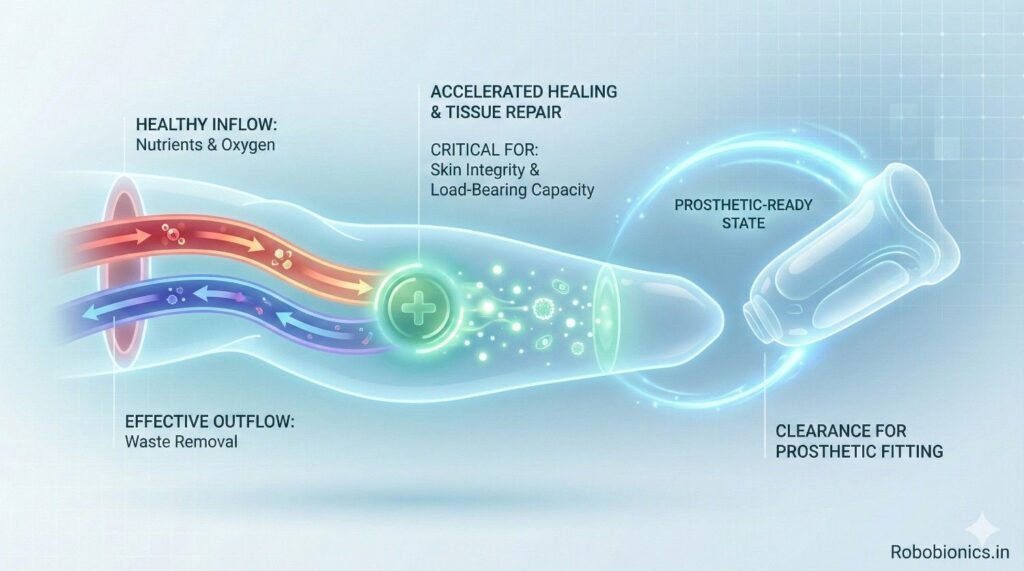
Good circulation supports strong healing. Poor circulation delays readiness even if the wound looks closed.
Doctors should assess vascular status carefully.
Diabetes, smoking, and vascular disease slow healing.
These factors require stricter benchmarks.
Clearance timelines must adjust to circulatory realities.
Safety should guide decisions.
Edema weakens tissue and changes limb shape. Prosthetic pressure worsens swelling.
Stable volume is a key readiness sign.
Consistent reduction over time is positive. Fluctuating swelling is not.
Doctors should track trends, not single visits.
Compression, elevation, and movement support readiness.
MD guidance ensures safe use.
Mild tenderness is expected. Sharp or increasing pain is not.
Doctors must help patients describe pain clearly.
Pain during gentle pressure suggests fragility.
Clearance should wait until tolerance improves.
Pain medication should not hide healing problems.
Balanced management preserves safety.
Thin or fragile skin breaks easily under load.
Doctors should assess resilience through touch and observation.
Overdry or overly moist skin both increase risk.
Balanced hydration supports strength.
Small irritations often predict larger breakdowns.
Addressing them early prevents delay.
Scars over weight-bearing areas increase risk.
Doctors should note scar position carefully.
Sensitive scars reduce tolerance and increase avoidance.
Desensitization should begin before clearance.
Scar realities should inform prosthetic planning.
Clear communication supports team alignment.
Gentle weight or pressure testing reveals readiness.
Doctors should observe tissue response after testing.
Healthy tissue recovers quickly. Delayed recovery signals risk.
This observation is crucial.
Function reveals readiness more accurately than looks.
Clearance should follow function.
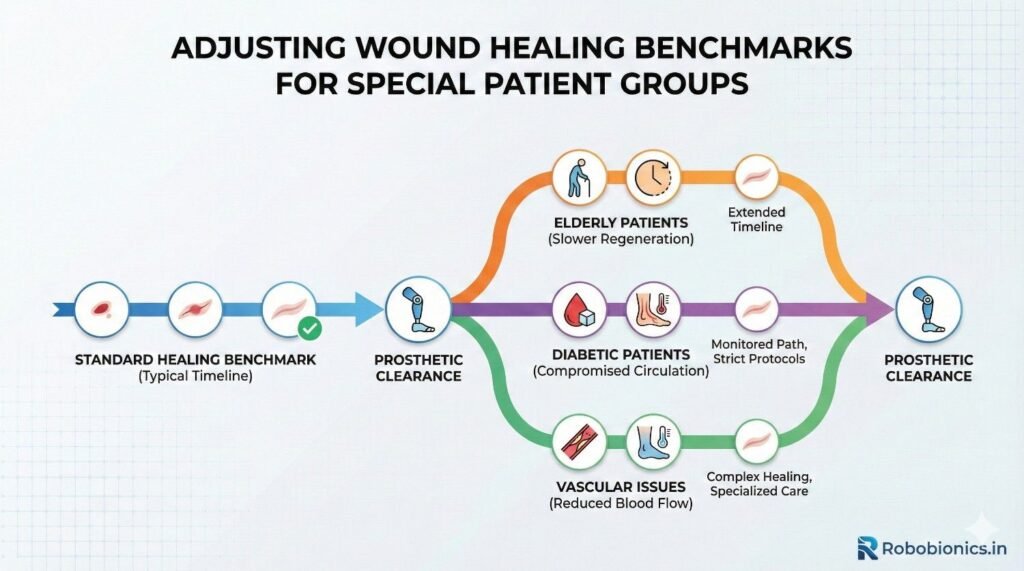
Standard healing timelines fail many patients because bodies heal under different conditions. Age, health history, and cause of amputation all affect tissue response.
Doctors must adjust benchmarks based on patient context, not averages.
Instead of asking if the wound looks healed, doctors should ask how much risk the tissue can handle.
This mindset improves safety and long-term prosthetic outcomes.
Patients often compare themselves to others. Doctors should explain why their benchmarks may differ.
Clear reasoning prevents discouragement.
Diabetes affects blood flow, sensation, and immune response. Wounds may look stable one week and deteriorate the next.
Doctors should observe consistency over time before clearance.
Neuropathy may reduce pain even when tissue is fragile.
Doctors must rely on objective signs, not patient comfort alone.
Diabetic tissue tolerates pressure poorly. Clearance should follow stronger load tolerance benchmarks.
Gradual exposure is safer than early full use.
Poor circulation reduces oxygen delivery to tissue. Healing may be slower and scars weaker.
Doctors should confirm vascular stability before clearance.
Cool skin, color changes, or delayed refill signal poor readiness.
These signs matter even if the wound is closed.
Early clearance often leads to breakdown and delays overall progress.
Conservative decisions often lead to faster long-term success.
Trauma causes uneven tissue injury. Surface healing may hide deeper damage.
Doctors must assess tissue depth and quality carefully.
Trauma scars often adhere to deeper layers. This limits movement and tolerance.
Early mobility assessment informs clearance decisions.
Trauma affects mental state as much as physical healing.
Doctors should consider emotional readiness alongside wound status.
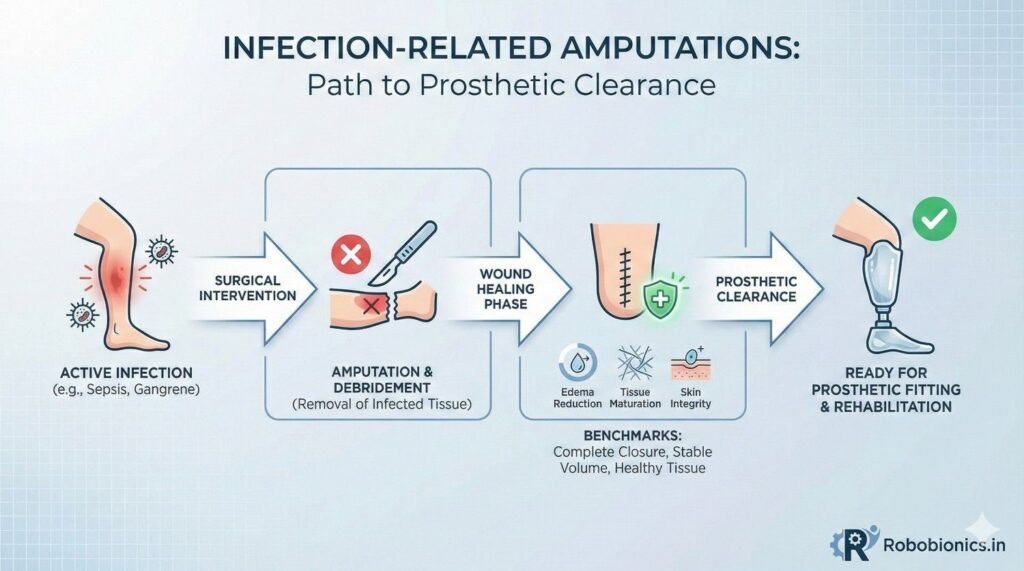
Tissues affected by infection heal differently. Strength and resilience take longer to return.
Doctors should require longer stability before clearance.
Low-grade infection may not cause obvious symptoms.
Persistent warmth or tenderness warrants caution.
Clearance decisions should align with infection management plans.
Team communication prevents relapse.
Revision sites often have scarred, stressed tissue. Healing may appear fast but tolerance is low.
Doctors should apply stricter benchmarks than first-time cases.
Patients fear repeat failure. Clear, cautious clearance builds trust.
Rushed decisions increase fear.
Understanding why the first site failed informs safer clearance.
History matters deeply here.
Children heal quickly but have sensitive skin and changing limb shapes.
Doctors should focus on tolerance, not speed.
Healing tissue must handle future growth and change.
Clearance should allow flexibility.
Parents often push for quick progress.
Doctors should guide pace firmly but kindly.
Aging skin tears easily and heals slowly.
Doctors should assess resilience carefully.
Early prosthetic use supports independence but increases risk.
Balanced benchmarks protect dignity and safety.
Elderly patients fatigue quickly.
Recovery after testing is as important as testing itself.
These treatments weaken tissue and delay healing.
Doctors must apply extended benchmarks.
Radiated skin reacts unpredictably to pressure.
Longer observation improves safety.
Clearance timing should align with cancer treatment plans.
Coordination prevents complications.
Skin grafts lack normal strength and sensation.
Clearance must be delayed until tolerance is proven.
Grafts should be tested gently and gradually.
Abrupt loading risks failure.
Grafted areas remain vulnerable long term.
Doctors should plan ongoing review.
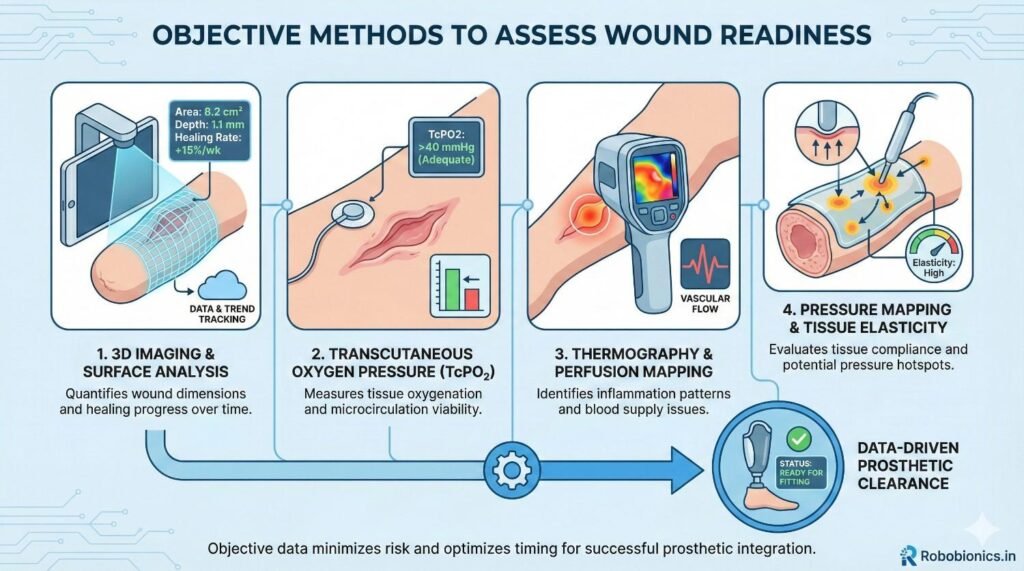
Subjective judgment varies between clinicians. Objective checks create consistency and reduce avoidable errors.
Using repeatable methods protects both patients and doctors.
No single test is enough. Readiness emerges from patterns across observation, touch, and response.
Doctors should look for agreement between signs.
All testing should be gentle and reversible.
If testing itself causes damage, readiness was not present.
Applying light, even pressure helps assess tissue response.
Doctors should watch for pain, blanching, and recovery speed.
Immediate tolerance is not enough. Tissue response after several minutes matters more.
Delayed redness or pain signals risk.
Healthy tissue responds evenly. Uneven reactions signal weak areas.
Comparison improves accuracy.
Soft pads or temporary supports simulate prosthetic pressure safely.
This allows early assessment without full risk.
Healthy tissue returns to baseline quickly.
Slow recovery indicates delayed readiness.
Consistency across visits matters more than single results.
Doctors should look for stable improvement.
Identifying areas of high sensitivity guides clearance decisions.
These zones often become pressure points later.
Reduced sensation increases risk of unnoticed injury.
Doctors must adjust benchmarks accordingly.
Patients should understand what they may not feel.
Education improves self-monitoring.
Movement reveals tension patterns that static checks miss.
Doctors should observe during bending or reaching.
Shear forces often cause breakdown before pressure does.
Early signs include skin shifting or wrinkling.
End-range positions stress scars most.
Tolerance here supports clearance.
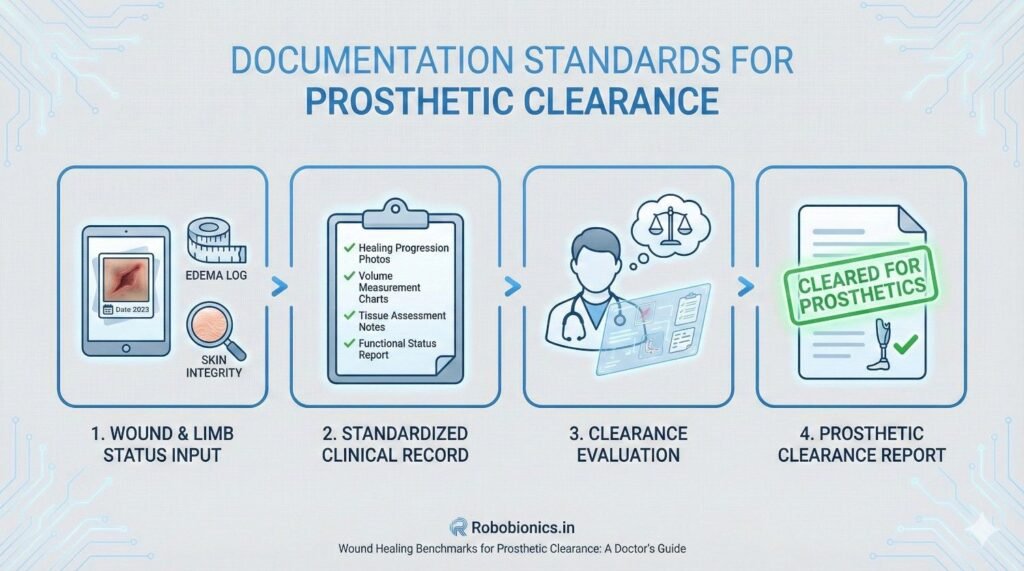
Clear notes prevent miscommunication and rushed fitting.
They protect patient safety and team alignment.
Healing stage, tolerance findings, pain response, and risks should be recorded.
Vague terms should be avoided.
Saying tolerates light pressure for five minutes is clearer than healed well.
Functional language guides prosthetists better.
Overly optimistic clearance causes pressure mismatches.
Honest limits support safer fitting.
Prosthetists need to know where caution is required.
Clear marking prevents injury.
Clearance should invite feedback, not end communication.
Ongoing dialogue improves outcomes.
Clearance does not mean full use immediately.
Doctors should explain gradual progression clearly.
Patients should expect mild discomfort but not pain.
Clear expectations reduce fear.
Patients should know when to stop and report.
This knowledge prevents harm.
Families, timelines, or financial stress often push for early clearance.
Doctors must prioritize safety.
Clear explanations protect trust even when delaying.
Confidence reassures patients.
Delays can be used for conditioning and education.
This reframes waiting positively.
Readiness can change due to illness, swelling, or skin issues.
Doctors should remain flexible.
If issues arise, pausing use is responsible care.
Early pauses prevent long-term setbacks.
Early prosthetic feedback refines future clearance decisions.
Doctors should value this input.
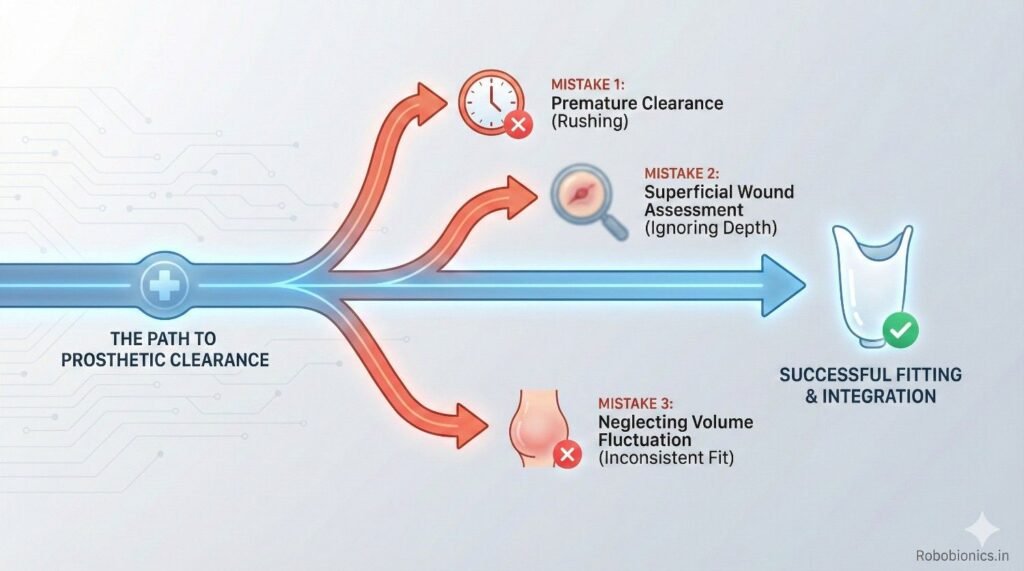
One of the most common mistakes is assuming that a closed wound can handle pressure. Visual healing is only the first step, not the final benchmark.
When load tolerance is not tested properly, early prosthetic use leads to breakdown and fear.
Doctors often feel pressure to keep the patient motivated by moving fast. While intention is good, early clearance often backfires.
Setbacks caused by early clearance reduce motivation more than a short, well-explained delay.
Phrases like looks good or healing well do not guide prosthetic teams. They leave room for misinterpretation.
Clear, functional descriptions prevent unsafe assumptions.
Some patients report discomfort but are reassured without investigation. This discourages honest reporting later.
Early listening prevents silent suffering.
Prosthetic clearance is a medical decision with long-term impact. It must be based on documented findings, not assumptions or pressure.
Clear benchmarks protect both patient and clinician.
When clearance is unclear, responsibility becomes blurred. This increases risk for everyone involved.
Clear documentation defines roles and improves accountability.
Patients must understand that clearance allows gradual loading, not immediate full use.
Clear explanations reduce legal and ethical risk.
When clearance is delayed for safety, proper documentation supports the decision.
Medical reasoning should always be recorded.
Clearance does not end wound care. It begins a new phase of monitored loading.
Doctors should plan follow-up at the time of clearance.
Therapists need to know wound limits and risk zones. This guides training intensity.
Clear communication prevents overloading.
If the wound reacts poorly, rehab pace must adjust.
Doctors should expect and guide these adjustments.
Patients who experience early skin breakdown often lose trust in prosthetics.
Better clearance prevents this cycle.
If early use is comfortable, habits form naturally.
Clearance timing directly affects comfort.
Confidence is fragile after amputation. Early wound issues damage it deeply.
Safe clearance protects confidence.
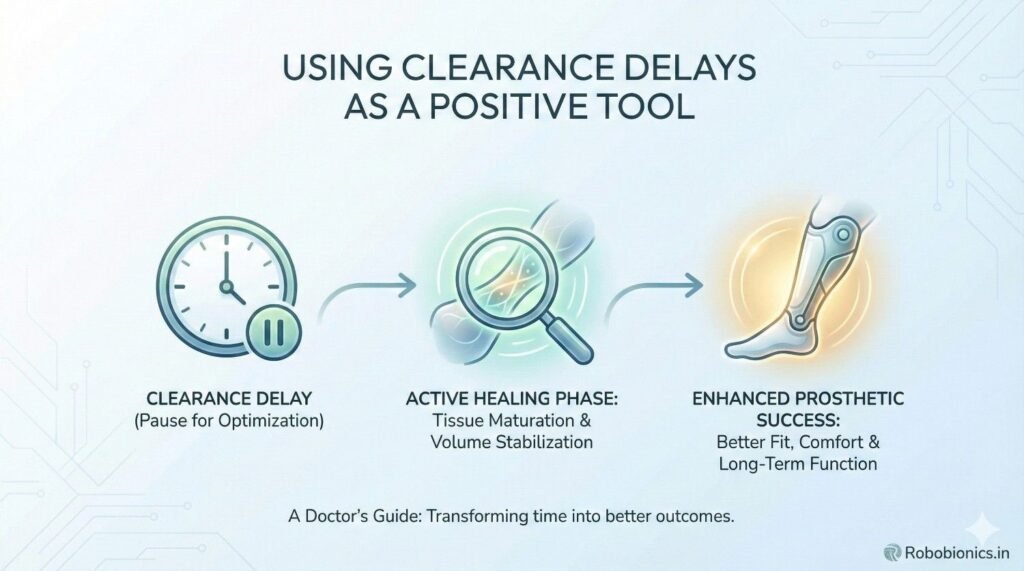
Delays should be framed as strengthening time, not setbacks.
Patients respond better when delays have purpose.
Even when clearance is delayed, conditioning and education can continue.
This maintains momentum.
Patients trust doctors who explain delays clearly.
Honesty builds long-term cooperation.
At Robobionics, we do not rush fitting against medical advice.
We value safe, well-timed clearance.
Clear medical notes help us design safer sockets and training plans.
This collaboration improves outcomes.
We share early feedback with doctors to refine clearance benchmarks.
This loop improves future care.
Prosthetic success does not begin with advanced technology or perfect alignment. It begins much earlier, at the moment a doctor decides that a wound is ready to take load. This decision, often made quietly and quickly, shapes the patient’s entire experience with a prosthetic. When made carefully, it builds comfort, confidence, and long-term use. When made too early or without clear benchmarks, it creates pain, fear, and eventual abandonment.
Wound healing is not a simple on or off state. It is a gradual process that moves through stages of inflammation, tissue formation, and maturation. Each stage has different risks and tolerances. Clearing a wound based only on appearance ignores what lies beneath the surface. Functional strength, tissue response, circulation, and recovery behavior all matter more than how neat a scar looks.
For doctors, this means shifting from time-based thinking to benchmark-based judgment. Calendar timelines are useful guides, but they cannot replace clinical assessment. Two patients may reach readiness weeks apart despite identical surgeries. Respecting this variability is not being cautious. It is being precise.
Clear benchmarks protect patients in ways they may not immediately understand. Early clearance often feels encouraging, but it exposes fragile tissue to stress it cannot handle. The resulting breakdowns damage trust and slow progress far more than a short, well-explained delay ever could. Patients remember early pain. They carry it into every future step.
Equally important is how clearance decisions are communicated. Prosthetic teams depend on clear, functional medical notes to plan safe fittings. Patients depend on clear explanations to understand what clearance really means. Saying ready without explaining limits creates false confidence. Saying not yet without explanation creates frustration. Good communication balances honesty with reassurance.
Special populations make this process even more important. Diabetes, vascular disease, trauma, infection, revision surgeries, cancer treatment, and skin grafts all change how tissue heals and tolerates load. Applying standard benchmarks to complex cases leads to predictable problems. Adjusting benchmarks based on risk protects outcomes and dignity.
Objective testing methods help remove guesswork. Gentle pressure testing, load simulation, movement observation, and recovery monitoring reveal readiness far better than visual inspection alone. These methods do not require advanced tools. They require time, attention, and consistency. When documented clearly, they support safe decisions and protect clinicians ethically and legally.
Perhaps most importantly, clearance should be seen as the beginning of a monitored phase, not the end of wound care. Early prosthetic use must be guided, paced, and reviewed. Wound response during the first weeks of loading often reveals whether clearance timing was correct. Doctors who remain involved during this phase prevent small issues from becoming major setbacks.
At Robobionics, our work with patients across India has shown us that many prosthetic problems begin before the prosthetic is even worn. They begin with unclear or rushed clearance decisions. When doctors, prosthetists, and rehabilitation teams align around clear wound healing benchmarks, outcomes improve naturally. Comfort increases. Confidence grows. Long-term use becomes more likely.
Wound healing benchmarks are not barriers to progress. They are the foundation of it. They protect patients from avoidable harm and protect the healthcare system from repeated failures. Most of all, they respect the patient’s journey by ensuring that when prosthetic use begins, it begins on solid ground.
For doctors, taking the time to assess readiness properly is not an extra step. It is one of the most important parts of prosthetic care. When clearance is given at the right moment, with clarity and care, prosthetics stop being a struggle and start becoming tools for living.
For many clinicians, the surgery is only the first step. What happens after the operation

For trauma amputees, the journey does not begin at the prosthetic clinic. It begins much

Amputation after cancer is not just a surgical event. It is the end of one

When a child loses a limb, the challenge is never only physical. A child’s body