For a person living with diabetes, a prosthetic limb is not just a device. It is a test of healing, skin strength, and daily stability. Blood sugar control sits at the center of this journey. When glucose levels are high or unstable, wounds heal slowly, skin breaks easily, infections rise, and prosthetic fitting becomes painful […]
Prosthetic success often depends on one quiet decision made by a doctor. Is the wound truly ready, or does it only look healed on the surface. This moment of clearance shapes comfort, safety, and long-term use more than most people realize. When clearance is given too early, patients struggle with pain and skin breakdown. When […]
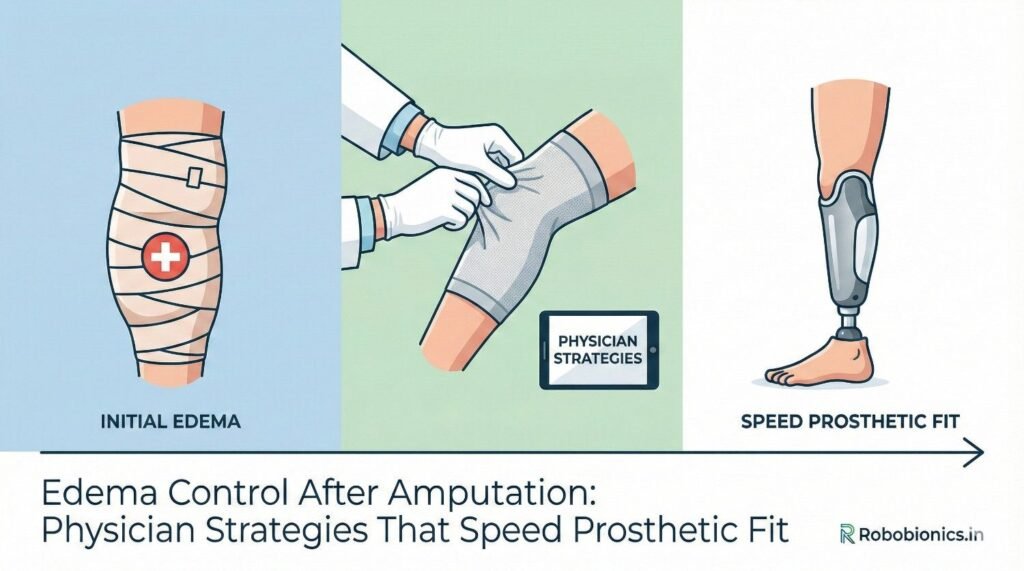
Swelling after amputation is normal. Almost every person who goes through limb loss faces it. But what many people do not know is this: how swelling is handled in the first few weeks can decide how fast, how comfortable, and how successful a prosthetic fitting will be. Edema, or swelling, is not just a medical […]
This guide is about one simple goal: help your patient heal into the best possible shape for a comfortable, stable, and safe prosthetic fit. Residual limb shaping is not a side task after surgery. It is the bridge between wound closure and real function. When done well, it speeds fitting, reduces pain, lowers skin risk, […]

The success of a prosthetic does not begin on the day it is fitted. It begins much earlier, often in the first few days after amputation. What happens during this early phase quietly shapes every future outcome. Comfort, function, long-term use, and even patient confidence are all influenced by post-amputation care decisions made by doctors. […]