
Post-Op Follow-Up Schedule That Prevents Prosthetic Delays (For Clinicians)
For many clinicians, the surgery is only the first step. What happens after the operation




For a person living with diabetes, a prosthetic limb is not just a device. It is a test of healing, skin strength, and daily stability. Blood sugar control sits at the center of this journey. When glucose levels are high or unstable, wounds heal slowly, skin breaks easily, infections rise, and prosthetic fitting becomes painful and uncertain. When glucose is well managed, the same limb heals faster, tolerates pressure better, and adapts smoothly to a socket.
This article is written for clinicians who guide patients from surgery to prosthetic fitting. It focuses on one clear idea: glycemic optimization is not a medical formality, it is a functional requirement. Every decision about timing, compression, and fitting is influenced by blood sugar control. This guide explains what targets matter, when they matter, and how clinicians can work within real-world Indian settings to improve outcomes without overloading patients.
Blood sugar levels directly affect how tissues repair after surgery. When glucose stays high, small blood vessels do not deliver enough oxygen to healing skin and muscle. This slows wound closure and weakens new tissue.
For a residual limb, this delay creates fragile skin that cannot handle pressure. Even mild socket contact can lead to cracks, redness, or open wounds. Clinicians often see this as a prosthetic issue, but the root cause is metabolic.
Stable glucose gives the limb a fair chance to heal into a strong, pressure-ready shape.
Skin in people with poor glycemic control tends to be dry, thin, and less elastic. It breaks down faster under friction and heat. Inside a prosthetic socket, this becomes a serious problem.
Good glycemic control improves skin hydration and resilience. Patients report less burning, itching, and pain when wearing compression or test sockets.
Clinicians should view skin tolerance as a sign of metabolic readiness, not just local care quality.
High blood sugar feeds infection. Even minor skin damage can turn into a serious problem when glucose remains uncontrolled.
Infections delay prosthetic fitting and often reverse progress made through shaping and rehab. Each delay affects patient morale and trust.
Optimizing glucose early reduces these risks and keeps the rehabilitation timeline predictable.
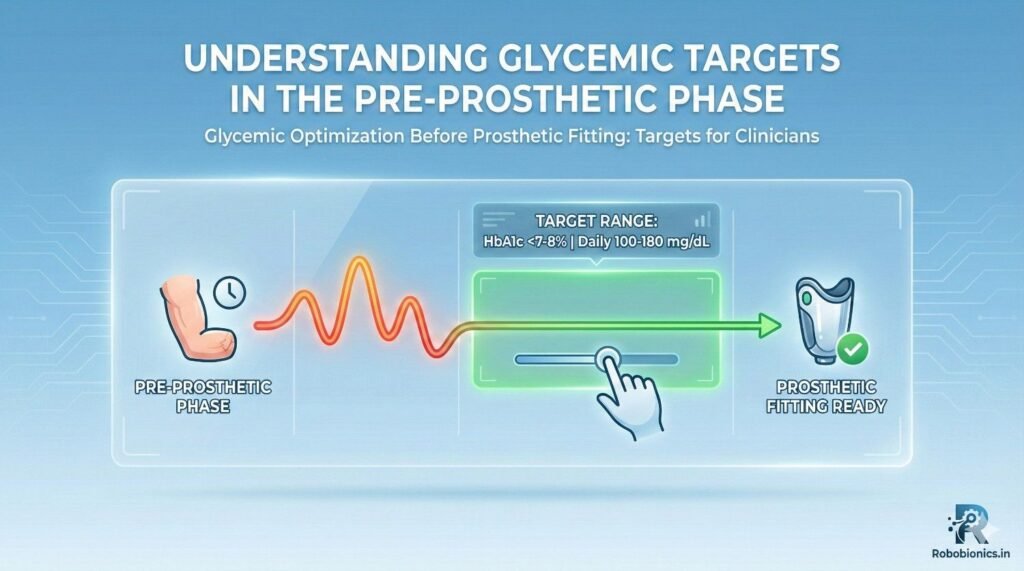
Standard diabetes targets are designed for long-term health, not surgical recovery or prosthetic readiness. A patient may appear “controlled” on paper but still struggle with healing and skin issues.
Clinicians need to think beyond lab numbers. Daily fluctuations, post-meal spikes, and hypoglycemic episodes all matter during this phase.
The goal is functional stability, not perfect readings.
Fasting glucose gives a baseline view, but post-meal spikes often cause the most damage to healing tissue. These spikes increase inflammation and fluid shifts in the limb.
Patients who look stable in the morning may still have poor tissue response due to large post-meal rises. Clinicians should ask about meal timing and symptoms, not just lab reports.
Simple adjustments can often reduce these spikes without major treatment changes.
HbA1c offers a broad picture of glucose control over time. It helps assess risk but should not be the only decision factor for prosthetic timing.
A patient with improving trends may be more suitable than one with a static but borderline value. Direction matters as much as the number.
Clinicians should use HbA1c as a guide, not a gatekeeper.
There is often pressure to fit a prosthesis quickly, especially when patients are eager to walk or work again. In poorly controlled diabetes, this rush often leads to failure.
Early fitting on fragile skin results in wounds, repeated breaks, and extended downtime. Each setback delays progress more than a short initial wait would have.
Clinicians should frame timing as protection, not delay.
A closed wound does not always mean a ready limb. Skin color, temperature, sensitivity, and response to compression give better clues.
If the limb tolerates shaping methods without redness or pain, it often tolerates early socket trials better. If not, metabolic factors should be reviewed.
This functional assessment is more useful than visual inspection alone.
Rather than waiting for a perfect value, clinicians should align fitting decisions with improving glucose trends. Stable readings over several weeks are a strong sign.
This approach keeps patients motivated while still protecting outcomes. It also allows rehab to progress without unnecessary pauses.
Clear communication helps patients understand this balance.
Glycemic optimization should start before amputation whenever possible. Early planning reduces complications and shortens recovery time.
When surgery is planned, clinicians have a valuable window to adjust medications, diet, and routines. This preparation often makes the biggest difference.
Waiting until after surgery limits options and increases risk.
Stress, pain, and infection risk all raise blood sugar after surgery. Even well-controlled patients may see sudden spikes.
Close monitoring and timely adjustments are essential during this phase. Ignoring short-term spikes can undo surgical success.
Clinicians should work closely with the care team to maintain stability during this vulnerable period.
Many patients lose glycemic control after discharge due to routine changes and reduced supervision. This period often coincides with early shaping.
Clear instructions, simplified regimens, and early follow-up reduce this drop-off. Family involvement is especially important.
Consistency during this phase protects both healing and shaping progress.
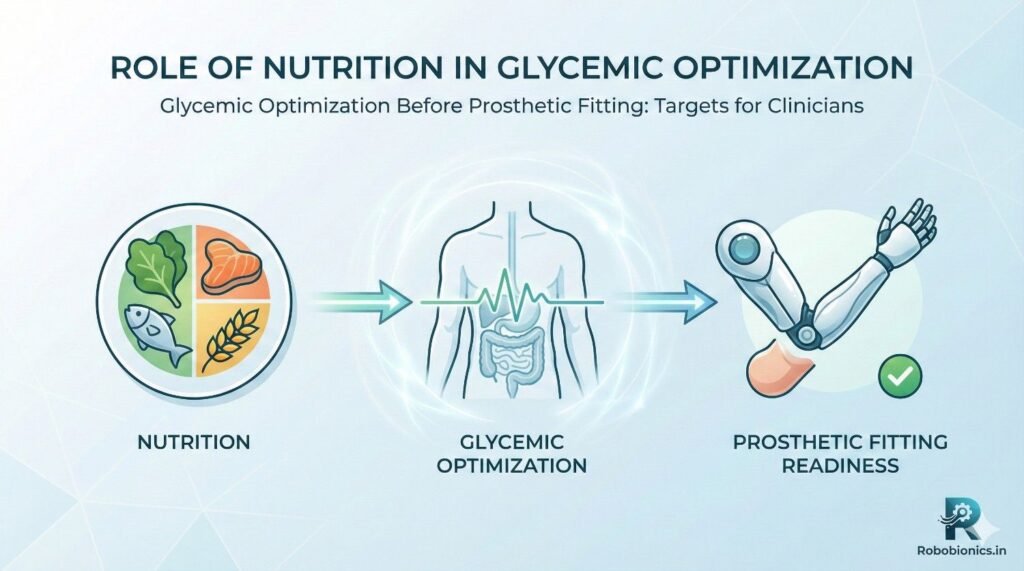
During healing, the body needs energy and protein. At the same time, excess carbohydrates can raise blood sugar and slow repair.
This balance is delicate and often misunderstood. Patients may eat less to “control sugar,” harming healing.
Clinicians should guide patients toward steady, nourishing meals rather than restriction.
Simple advice works best. Regular meals, controlled portions, and reduced refined sugars go a long way.
In the Indian context, small changes in staple foods and cooking methods can make a large impact. Advice should fit cultural habits.
Clinicians should avoid overwhelming patients with complex plans.
Many patients follow myths that limit fruit, protein, or calories unnecessarily. These beliefs weaken recovery.
Gentle correction and clear reasoning help patients feel safe eating well. Education should be repeated, not assumed.
Better nutrition supports both glycemic control and tissue strength.
Medication plans that worked before surgery may not work during recovery. Changes in activity, stress, appetite, and infection risk all affect glucose levels.
Many patients continue old prescriptions without review, leading to hidden highs or sudden lows. Both are harmful for healing and prosthetic readiness.
Clinicians should treat the pre-prosthetic phase as a new metabolic phase, not a continuation of routine diabetes care.
Oral drugs can be effective, but some have limits during wound healing. Missed meals, poor intake, or illness can increase side effects.
In some patients, oral agents fail to control post-meal spikes, even if fasting levels appear acceptable. This mismatch often shows up as skin problems.
Clinicians should watch patterns, not just average values, when deciding whether oral therapy is enough.
Insulin is often seen as a last step, but in the pre-prosthetic phase, it can be a helpful temporary support. Short-term insulin use can stabilize glucose during healing.
When explained well, patients accept insulin more easily than expected. Framing it as a healing aid rather than a lifelong change reduces fear.
Clinicians should not delay insulin when tissue health is at risk.
Large swings in blood sugar damage tissue more than mildly elevated but stable levels. These swings increase inflammation and fluid changes in the residual limb.
Patients may report “good readings” but still experience discomfort, sweating, or fatigue due to variability.
Clinicians should aim for smoother curves, not just lower peaks.
Frequent testing is helpful, but even simple logs can reveal patterns. Timing of meals, medications, and activity often explains fluctuations.
Clinicians should review logs with curiosity, not judgment. Patients are more honest when they feel supported.
Pattern-based changes are often more effective than dose increases.
Low blood sugar episodes reduce patient confidence and compliance. Fear of lows may cause patients to overeat or skip medications.
Hypoglycemia also slows healing by triggering stress responses. This effect is often overlooked.
Clinicians should actively ask about symptoms and adjust plans to reduce this risk.
Gentle physical activity improves insulin sensitivity and glucose uptake. Even limited movement during rehab can help stabilize levels.
Patients who remain inactive for long periods often see worsening control despite medication adherence.
Clinicians should encourage safe, stage-appropriate movement as part of glycemic care.
Activity must never compromise wound healing. Overexertion can increase swelling and stress the limb.
The key is consistency, not intensity. Short, regular sessions work better than occasional effort.
Clinicians should align rehab goals with metabolic needs.
Patients who move regularly tend to tolerate compression and socket trials better. Improved circulation supports skin health.
This creates a positive cycle where better control leads to faster progress.
Clinicians should highlight this connection to motivate patients.
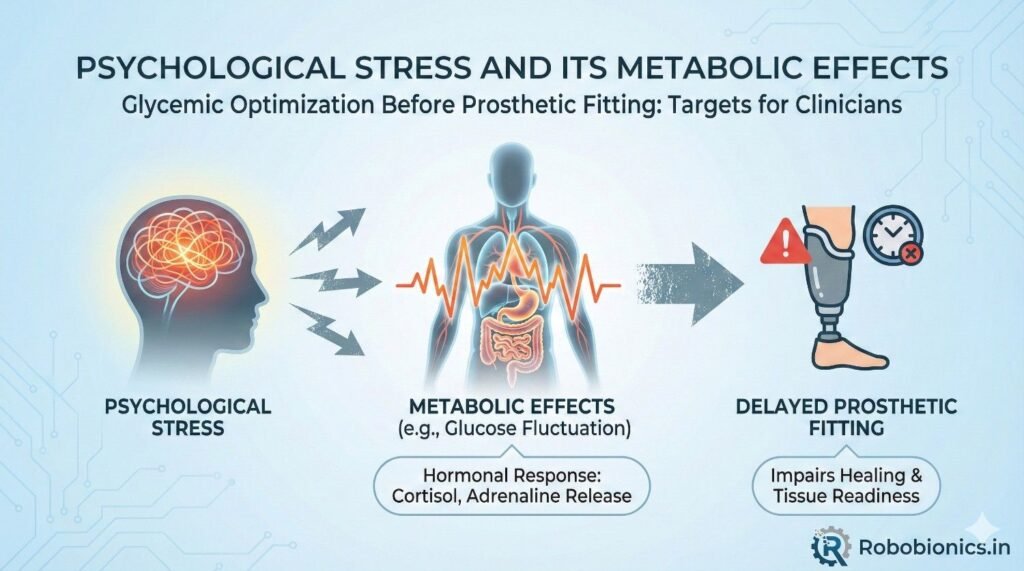
Stress hormones raise glucose levels, even when diet and medication are unchanged. Surgery, pain, and fear all contribute.
Many patients experience silent stress that clinicians may miss. This stress often shows up as unexplained glucose elevation.
Addressing stress is part of medical care, not an extra service.
Anxious or depressed patients often struggle with self-care. Missed doses and irregular meals become common.
Clinicians should watch for emotional cues during visits. Simple reassurance and clear plans reduce anxiety.
Mental stability supports metabolic stability.
Unrealistic timelines increase stress. When patients expect rapid fitting despite poor control, disappointment follows.
Clear explanations about why glucose matters help patients accept short delays.
Honest conversations build trust and cooperation.
Diabetes care, surgical recovery, and prosthetic fitting often run in parallel but not together. This disconnect harms outcomes.
Clinicians should align goals across teams. Everyone should understand that glycemic stability supports prosthetic success.
Shared language improves patient understanding.
Prosthetists need to know when skin issues may have metabolic causes. Therapists benefit from knowing glucose trends that affect tolerance.
Simple updates prevent misattribution of problems.
This teamwork reduces trial-and-error approaches.
Complex cases benefit from specialist input. Early referral prevents crisis-driven changes.
Clinicians should not hesitate to ask for support when targets are not met.
Team-based care shortens recovery time.
Indian diets vary widely but often include high carbohydrate staples. Asking patients to abandon these foods is unrealistic.
Small portion control and timing changes work better than restriction. Clinicians should respect cultural habits.
Practical advice leads to better adherence.
Frequent testing and advanced medications may not be feasible for all patients. Plans must match resources.
Simple regimens used consistently often outperform complex plans used inconsistently.
Clinicians should prioritize sustainability.
Heat and humidity increase sweat and skin breakdown. High glucose worsens this risk.
Clinicians should be proactive during warmer months, adjusting care plans as needed.
Seasonal awareness improves outcomes.
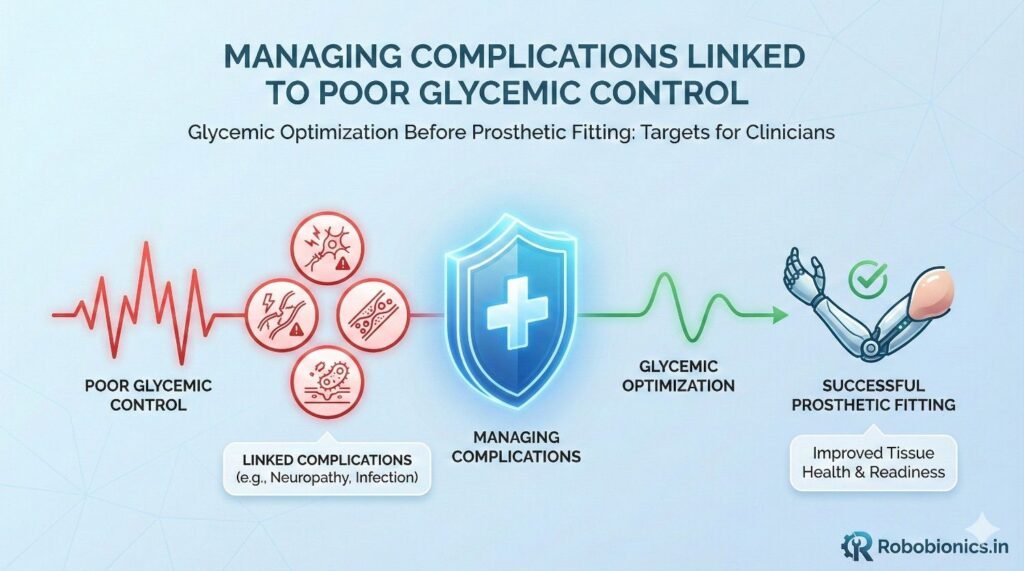
Delayed healing is often the first visible sign of poor glycemic control. Wounds may remain open, edges look pale, or mild discharge may persist longer than expected.
Clinicians should not treat these signs as local issues alone. Reviewing glucose trends at this stage often reveals the underlying cause.
Early correction prevents prolonged delays in shaping and fitting.
Some patients heal well initially but develop repeated skin issues once compression or socket trials begin. This pattern often points to unstable glucose rather than poor technique.
Clinicians should reassess recent sugar levels, meal patterns, and missed doses. Small corrections can restore skin tolerance quickly.
Ignoring this link leads to repeated failures and patient frustration.
Infections are costly in time and trust. Even minor infections may force stopping compression or prosthetic trials.
High glucose reduces immune response, making infections harder to control. Clinicians should treat infection risk as a metabolic issue as much as a local one.
Preventing infection is far easier than recovering lost progress.
No single number should decide prosthetic readiness. A patient with slightly elevated values but stable trends may do better than one with sharp swings.
Clinicians should review glucose logs, skin response, and healing history together. This combined view supports safer decisions.
Rigid cut-offs often harm more than help.
Functional signs include good tolerance to compression, absence of unexplained redness, and stable limb volume. These signs reflect internal stability.
When these markers are present, prosthetic trials are usually smoother.
Clinicians should trust these practical indicators alongside lab data.
If repeated skin issues or pain occur despite good prosthetic technique, it is wise to pause. Pushing ahead rarely succeeds.
Short periods of focused glycemic optimization often save months later.
Clear explanation helps patients accept these pauses without losing motivation.
Prosthetic fitting is not the end of risk. Ongoing glucose instability can still cause skin problems and volume changes.
Patients who relax control after fitting often return with socket issues and discomfort.
Clinicians should reinforce that fitting is a milestone, not a finish line.
As patients become more active, glucose needs may change. Increased movement can improve control but also increase hypoglycemia risk.
Medication and meal plans may need adjustment. Regular review prevents surprises.
Clinicians should anticipate these changes rather than react to problems.
Simple habits like daily skin checks and regular glucose monitoring protect long-term prosthetic use.
Patients who understand the connection stay more engaged in their care.
Education should continue well beyond discharge.
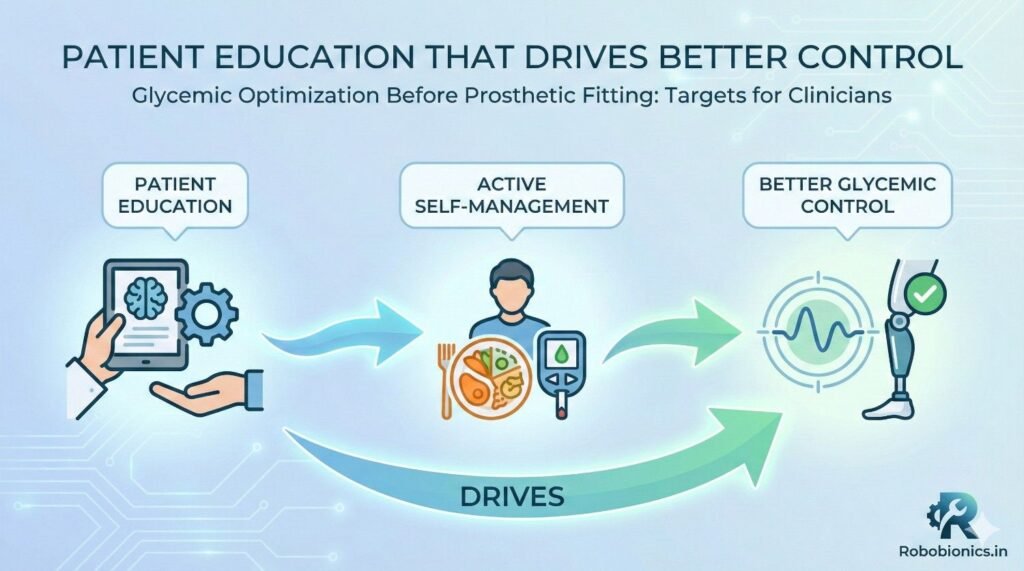
Patients are more motivated when they see direct benefits. Explaining that good control reduces pain and improves walking often resonates.
Abstract health risks feel distant, but daily comfort feels immediate.
Clinicians should use this connection often.
Perfection is not required. Consistency matters more than ideal numbers.
Patients who feel judged often hide problems. A supportive tone encourages honesty.
Trust improves outcomes.
Family support helps with meals, reminders, and emotional balance. In many Indian homes, this support is central.
Clinicians should include family members in key discussions.
Shared responsibility reduces patient burden.
For patients needing prosthetics, glycemic optimization is not optional. It is part of functional care.
Clinicians who treat it this way see fewer complications and better long-term use.
This shift in mindset changes outcomes.
Delays, wounds, and repeated failures affect confidence. Good preparation protects dignity as much as health.
Clinicians hold the power to reduce this suffering through early action.
Thoughtful care leaves a lasting impact.
When clinicians, patients, and prosthetic teams work toward shared metabolic goals, results improve.
Stable glucose supports strong skin, safe fitting, and confident movement.
This is how mobility is restored with care and respect.
A middle-aged patient with long-standing diabetes was referred for prosthetic fitting soon after wound closure. Initial glucose reports appeared acceptable, but daily readings showed wide swings.
During early socket trials, the patient developed redness and burning pain within minutes. Multiple socket adjustments did not help. Once glucose variability was addressed with meal timing and short-term insulin support, skin tolerance improved.
This case shows how mechanical solutions fail when metabolic instability is ignored.
Another patient had moderately high average glucose levels but showed steady improvement over six weeks. Skin healed well and tolerated compression without issues.
Based on functional signs and stable trends, prosthetic trials were started with close monitoring. The fitting progressed smoothly.
This example highlights the value of trend-based decisions rather than rigid thresholds.
A patient from a rural area had limited access to frequent testing. Clinicians focused on symptom review, meal consistency, and simple fasting checks.
With clear education and realistic goals, glucose stability improved enough to support safe fitting. The outcome was successful despite limited resources.
This reinforces that good outcomes are possible with practical planning.
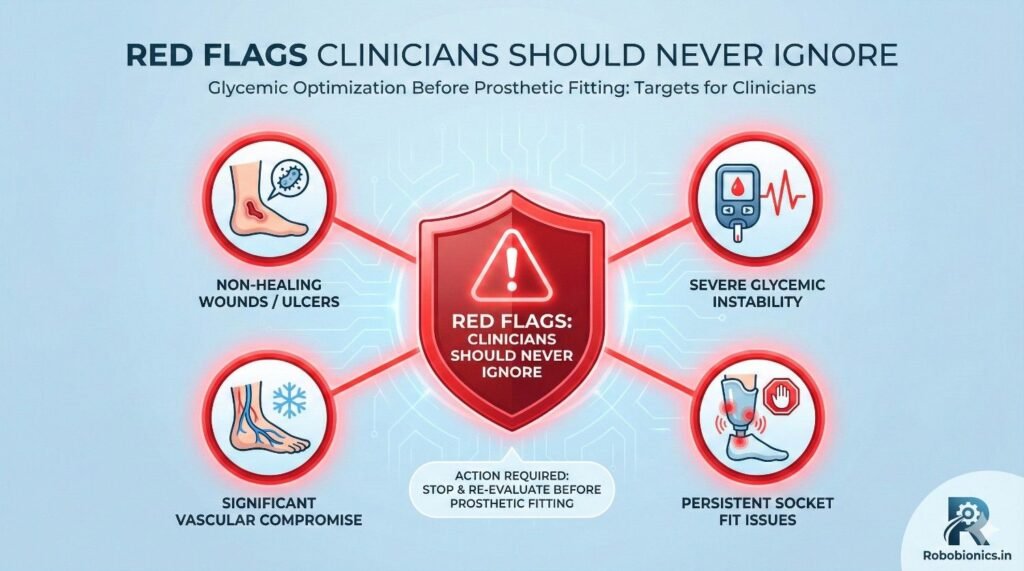
When redness appears repeatedly without clear pressure points, glucose instability should be suspected. Treating it as friction alone often fails.
Clinicians should pause and review metabolic factors before continuing fitting.
Early recognition saves time and skin.
Rapid swelling or excess sweating inside the socket often reflects poor glucose control. These changes increase friction and skin breakdown risk.
Adjusting only the socket without addressing sugar levels leads to repeated issues.
Metabolic review should be part of the response.
Patients with unstable glucose often feel tired, irritable, or discouraged. This affects rehab participation.
Clinicians should see behavioral changes as possible metabolic signals, not lack of motivation.
Supportive inquiry often reveals hidden issues.
Advanced prosthetics demand stable skin and volume. When glucose control is poor, simpler systems may be safer initially.
Clinicians should match technology level to metabolic readiness, not aspiration alone.
This staged approach protects outcomes.
Upper-limb myoelectric users need consistent skin-electrode contact. Fluctuating glucose affects signal quality and comfort.
Early glycemic optimization improves device performance and user satisfaction.
Technology works best when the body is prepared.
Patients can transition to advanced systems once control improves. This phased plan maintains motivation.
Clinicians should present upgrades as goals, not promises.
Realistic planning builds trust.
Clinical notes should link glucose patterns with skin and limb observations. This creates clarity over time.
Patterns become easier to spot when data is reviewed together.
Good documentation supports better decisions.
Early shaping and initial fitting are high-risk periods. More frequent follow-ups during these times prevent setbacks.
As stability improves, visit frequency can reduce.
Flexible scheduling improves safety.
When problems occur, clinicians should review what changed rather than assign blame. Illness, diet shifts, or stress often explain setbacks.
This approach keeps patients engaged rather than discouraged.
Learning-focused care improves long-term adherence.
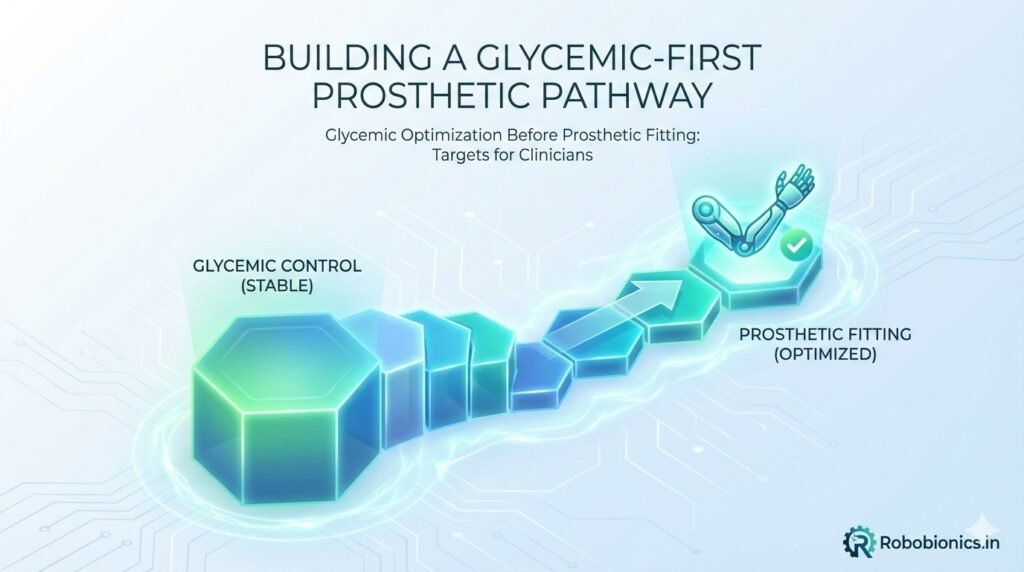
Clinics benefit from clear, simple protocols that link glycemic stability with prosthetic milestones. This reduces variation in care.
Even basic checklists improve consistency.
Standardization does not remove clinical judgment; it supports it.
When all team members explain glucose importance in the same way, patients listen. Mixed messages create confusion.
Short team briefings can align communication.
Unified messaging improves compliance.
Success should include skin health, comfort, and sustained use, not just speed of fitting.
Clinics that track these outcomes see better long-term results.
Quality matters more than timelines.
Even modest improvements in glucose stability can dramatically improve prosthetic tolerance.
Clinicians should celebrate these wins with patients.
Positive reinforcement drives consistency.
Technology and surgery matter, but daily clinical decisions shape real outcomes. Glycemic optimization is one of the most powerful tools available.
Used well, it prevents suffering and restores confidence.
This is meaningful medicine.
When glycemic control is treated as a foundation, prosthetic fitting becomes smoother and safer.
Patients walk, work, and live with fewer setbacks.
That is the true goal of prosthetic care.
For many clinicians, the surgery is only the first step. What happens after the operation

For trauma amputees, the journey does not begin at the prosthetic clinic. It begins much

Amputation after cancer is not just a surgical event. It is the end of one

When a child loses a limb, the challenge is never only physical. A child’s body