
Post-Op Follow-Up Schedule That Prevents Prosthetic Delays (For Clinicians)
For many clinicians, the surgery is only the first step. What happens after the operation



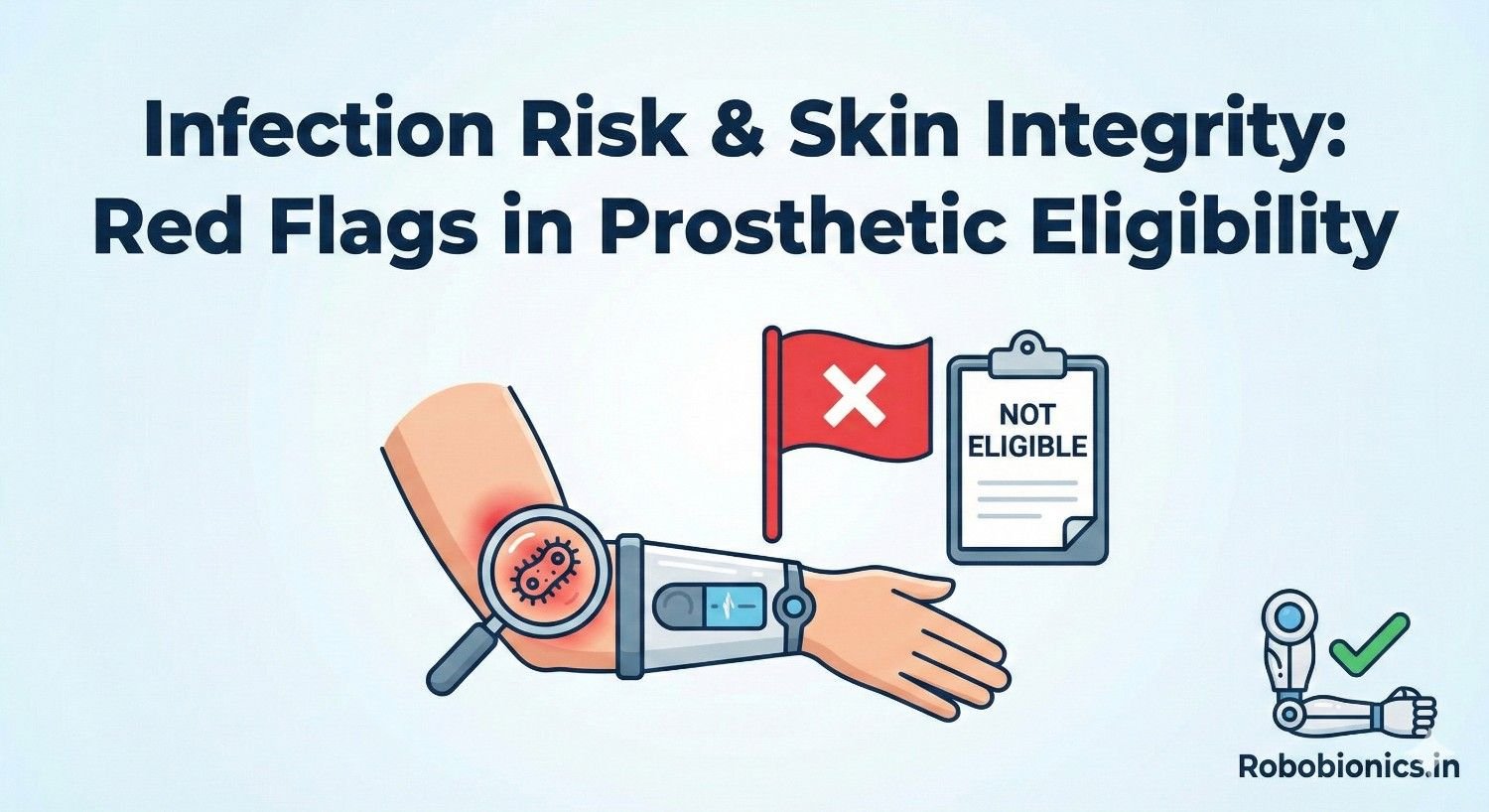
A prosthetic device can only work well when the skin beneath it is healthy and protected. No matter how advanced the technology is, it will fail if the skin cannot tolerate pressure, friction, and daily wear. Infection risk and poor skin integrity are among the most common and most overlooked reasons why prosthetic use becomes painful, unsafe, or impossible.
At Robobionics, we often see patients who are physically strong and highly motivated, yet struggle because their skin breaks down repeatedly or infections keep returning. In many of these cases, the problem was not the prosthetic itself, but the timing and readiness of the limb. Small skin issues that seem harmless can quickly turn into serious complications once a prosthesis is introduced.
This article focuses on infection risk and skin integrity as critical factors in prosthetic eligibility. It explains how skin behaves under prosthetic load, which warning signs doctors and patients should never ignore, and how early decisions can prevent long-term damage. The goal is not to delay care unnecessarily, but to ensure that prosthetic fitting happens when the body is truly ready.
If you are a clinician, therapist, or amputee preparing for prosthetic use, this guide will help you identify red flags early and act on them wisely. When skin health is respected from the start, prosthetic outcomes become safer, more comfortable, and far more sustainable.
When a prosthesis is worn, the skin becomes the main surface that carries weight, pressure, and movement forces.
Unlike shoes or clothing, a prosthetic socket applies sustained contact for many hours each day.
If the skin is weak, fragile, or inflamed, even normal forces can cause damage.
Healthy skin adapts to pressure gradually and recovers between uses.
Compromised skin breaks down quickly and heals slowly.
This difference often decides whether prosthetic use succeeds or fails.
Prosthetic use introduces compression, shear, heat, and moisture all at once.
Each of these stresses challenges skin health in a different way.
When combined, they can overwhelm already vulnerable tissue.
Repeated motion creates friction at the socket interface.
Pressure concentrates around bony areas.
Warmth and sweat soften the skin and reduce its resistance.
Understanding these forces helps explain why small skin issues escalate rapidly.
Prevention begins with respect for these stresses.
Ignoring them invites complications.
Many patients have skin that looks healed at rest but fails under load.
Standing and walking expose weaknesses that are not visible during examination.
This delayed response is common and misleading.
Early prosthetic use may feel comfortable at first.
Skin breakdown may appear days or weeks later.
This timing confuses patients and clinicians alike.
Recognizing this pattern helps with monitoring and education.
Early signs must be taken seriously.
Waiting too long worsens outcomes.
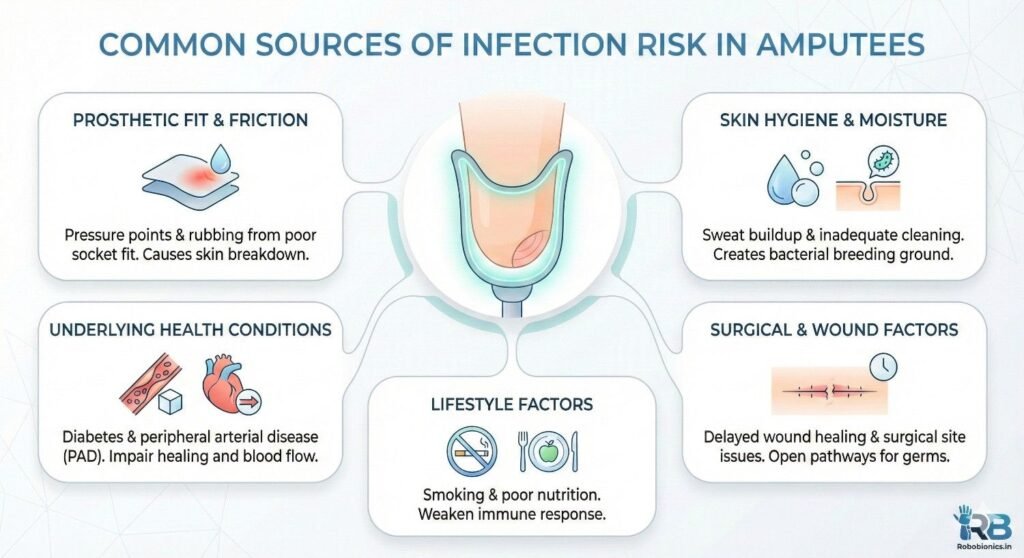
Recent surgery increases infection risk significantly.
Even closed wounds may still be fragile beneath the surface.
Deep tissues take longer to heal than skin alone.
Small areas of delayed healing are red flags.
Drainage, scabbing, or tenderness indicate incomplete recovery.
Prosthetic fitting should wait until stability is clear.
Scar tissue from surgery is also less resilient.
It tolerates pressure poorly.
This must be considered during eligibility assessment.
Diabetes is one of the strongest risk factors for infection.
Poor blood sugar control weakens immune response and skin repair.
Minor irritation can become serious quickly.
Vascular disease reduces blood flow to the skin.
This limits oxygen and nutrient delivery.
Healing becomes slow and unpredictable.
Other conditions such as kidney disease or immune suppression also matter.
Doctors must review medical history carefully.
Risk assessment must be holistic.
Patients with repeated skin infections are at higher risk during prosthetic use.
Past problems often predict future ones.
Ignoring this history leads to recurrence.
Fungal infections, cellulitis, and abscesses weaken skin defenses.
Even after treatment, skin may remain sensitive.
Extra caution is required.
Doctors should ask detailed questions about prior infections.
Patterns matter more than isolated events.
History guides prevention strategies.
Redness after prosthetic use is expected briefly.
However, redness that lasts longer than thirty minutes is concerning.
It signals excessive pressure or poor circulation.
Persistent redness often precedes skin breakdown.
Pain may or may not be present.
This makes it easy to overlook.
Doctors should educate patients to monitor color changes.
Early reporting prevents escalation.
Ignoring redness is a common mistake.
Small blisters or abrasions are warning signs, not minor issues.
They indicate friction or pressure concentration.
Under prosthetic load, they worsen rapidly.
Open skin provides an entry point for bacteria.
Infection risk rises sharply.
Continuing prosthetic use in this state is unsafe.
These issues require immediate rest and evaluation.
Adjustments must be made before resuming use.
Early action protects long-term eligibility.
Increased warmth around the residual limb can indicate inflammation or infection.
Swelling may signal tissue stress or fluid buildup.
Tenderness often appears before visible damage.
These signs are especially concerning in patients with reduced sensation.
Pain may be muted or absent.
Visual and tactile checks become essential.
Doctors should treat these signs seriously.
Delaying evaluation increases risk.
Caution is justified.
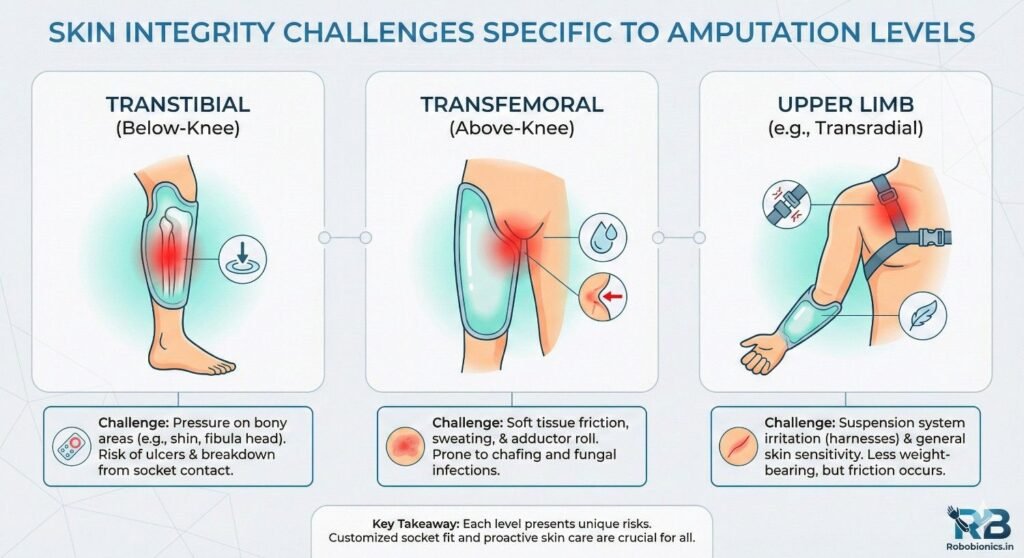
Lower limb amputees place significant load through the socket.
This amplifies pressure-related skin issues.
Walking multiplies stress compared to standing.
Areas around bony prominences are particularly vulnerable.
Repeated stress leads to callus formation or breakdown.
Design and fit must account for this.
Eligibility decisions must consider load tolerance.
Skin must withstand daily demands.
Testing under controlled conditions helps.
Upper limb prostheses create different skin challenges.
Suspension systems often rely on suction or straps.
These create localized pressure and movement.
Friction during arm motion can irritate skin folds.
Sweating increases moisture-related breakdown.
These issues often appear during prolonged use.
Doctors should assess skin response during simulated activity.
Static checks are insufficient.
Movement reveals risk.
Partial limb amputations often involve complex scar patterns.
Scars vary in elasticity and sensitivity.
Some areas tolerate pressure poorly.
Scar tissue may appear strong but fail under repeated load.
Sensitivity can trigger avoidance behavior.
This affects prosthetic use.
Eligibility must account for scar quality.
Desensitization may be needed first.
Rushing fitting is risky.
The initial weeks of prosthetic use are the highest risk period.
Skin is adapting to new forces and moisture levels.
Small errors have large effects.
Patients may overuse the prosthesis due to excitement.
This overloads unconditioned skin.
Breakdown often follows.
Strict wear schedules protect adaptation.
Doctors must emphasize gradual progression.
Education is essential.
Prosthetic sockets trap heat and sweat.
Moist environments promote bacterial and fungal growth.
This increases infection risk.
Poor hygiene worsens the problem.
Even clean skin becomes vulnerable when damp.
Moisture management is critical.
Doctors should discuss cleaning routines clearly.
Patients need practical guidance.
Consistency reduces risk.
Many patients delay reporting skin problems.
They fear being told to stop using the prosthesis.
This delay worsens outcomes.
Minor issues become major infections when ignored.
Early intervention often requires only small adjustments.
Late intervention may require complete rest.
Doctors should create a non-punitive reporting culture.
Patients must feel safe to speak up.
Trust improves safety.
Skin assessment begins with careful visual inspection.
Color, texture, and integrity must be evaluated.
Subtle changes matter.
Palpation reveals warmth, swelling, or tenderness.
These signs may precede visible damage.
Hands-on assessment adds depth.
Doctors should inspect both at rest and after activity.
Dynamic assessment is more informative.
Timing matters.
Healthy skin recovers quickly after stress.
Redness fades and tissue feels normal again.
Slow recovery signals poor tolerance.
Doctors should observe recovery patterns.
Delayed normalization suggests risk.
This helps guide readiness decisions.
Recovery capacity often predicts long-term success.
It reflects circulation and tissue health.
Assessment should not be rushed.
Reduced sensation hides early skin damage.
Patients may not feel pain or discomfort.
Visual checks become critical.
Doctors must account for this risk explicitly.
Education should emphasize daily inspection.
Tools such as mirrors may help.
Eligibility decisions should be stricter in these cases.
Protection outweighs speed.
Safety must guide care.
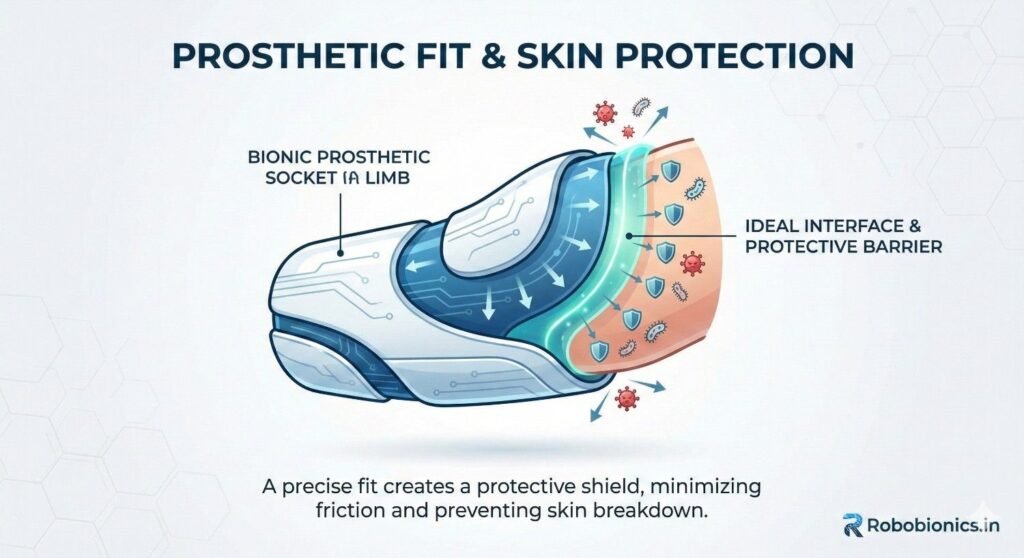
Uneven pressure is a major cause of skin breakdown.
High-pressure points damage tissue quickly.
Even distribution protects integrity.
Socket design must match limb shape accurately.
Small mismatches cause large problems.
Precision matters greatly.
Doctors should expect multiple adjustments early.
This is normal and protective.
Comfort evolves with use.
Shear forces occur when skin moves against the socket.
These forces are more damaging than pressure alone.
They tear tissue layers.
Good suspension reduces movement within the socket.
Proper fit minimizes sliding.
Shear reduction is a design priority.
Assessment should include movement tasks.
Static fit checks are insufficient.
Real-world motion reveals risk.
Managing heat and sweat protects skin health.
Ventilation, liners, and hygiene routines help.
No single solution fits all.
Doctors should discuss moisture management openly.
Ignoring it leads to infection.
Practical advice matters.
Individual responses vary.
Adjustment is often needed.
Flexibility improves outcomes.
Active infection is a clear contraindication to prosthetic fitting.
Using a prosthesis in this state worsens infection.
Healing must come first.
Open wounds require full closure and stability.
Partial healing is not enough.
Patience prevents serious harm.
Doctors must communicate this clearly.
Delay is protective, not punitive.
Understanding reduces frustration.
Repeated skin breakdown signals poor tolerance.
This may reflect medical issues or design mismatch.
Continuing use without resolution is unsafe.
Doctors should pause and reassess.
Alternative strategies may be needed.
Escalation prevents further damage.
Ignoring repetition leads to chronic problems.
Early action preserves eligibility.
Protection is priority.
Some patients cannot reliably inspect or care for their skin.
Cognitive, visual, or mobility issues may limit ability.
Support systems matter.
Without proper care, infection risk rises sharply.
Doctors must consider this factor.
Eligibility depends on safe management.
Involving caregivers may help.
Education is essential.
Support improves safety.
The rehabilitation phase introduces repeated stress to skin that is still adapting to load, moisture, and friction, which makes this period especially vulnerable to infection even when the limb initially appears healed.
As activity increases, micro-damage can occur beneath the surface, creating an entry point for bacteria long before obvious signs appear.
Patients often feel encouraged by early progress and may increase wear time faster than advised, which overloads skin defenses that have not yet strengthened.
This mismatch between enthusiasm and biological readiness is one of the most common triggers for infection during early prosthetic use.
Doctors must treat rehabilitation as a conditioning phase for the skin, not just for muscles and balance.
Clear limits and repeated reinforcement are essential to prevent setbacks.
Skin adapts slowly to sustained pressure and movement, and it requires time to thicken, toughen, and improve blood flow under stress.
Gradual load progression allows tissue to strengthen without breaking down, which directly lowers infection risk.
Short wear periods followed by full skin recovery are far safer than long, continuous use early on.
Recovery patterns tell clinicians whether the skin is coping or struggling.
Doctors should emphasize that rest days are part of rehabilitation, not a sign of failure.
This mindset protects long-term eligibility and outcomes.
Frequent skin reviews during rehabilitation catch problems before they escalate into infections.
Small changes in color, texture, or temperature often appear days before pain or open wounds.
These reviews should be scheduled, not left to chance or patient reporting alone.
Structured follow-up reduces reliance on subjective judgment.
When clinicians take early skin concerns seriously, patients learn to do the same.
This shared vigilance reduces complications significantly.
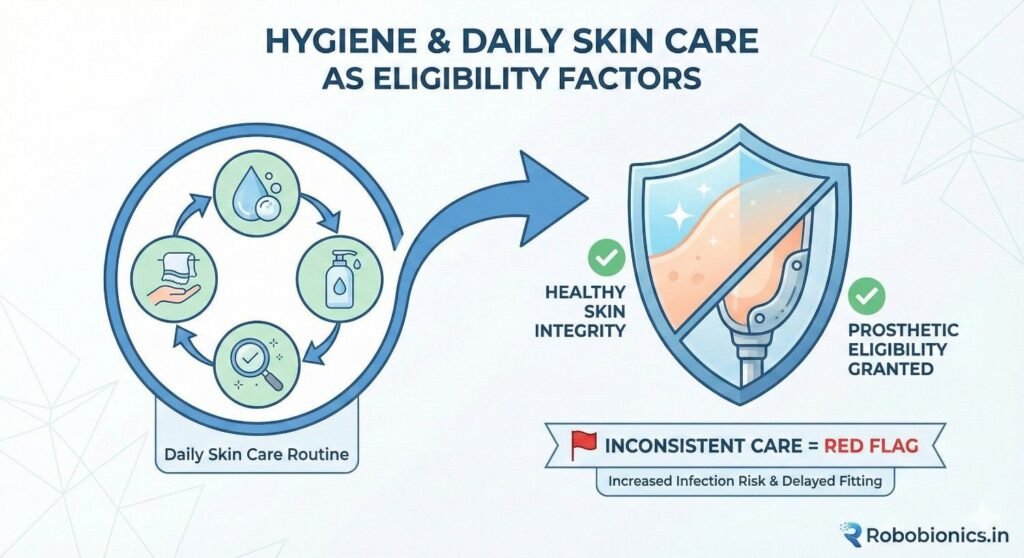
Daily hygiene is not optional for prosthetic users, especially those at higher infection risk.
Sweat, dead skin cells, and bacteria accumulate quickly inside a socket, creating an ideal environment for infection.
The limb must be cleaned gently but thoroughly, then dried completely before prosthetic use.
Moisture left on the skin softens tissue and weakens its protective barrier.
Doctors should give clear, practical instructions rather than general advice.
Specific routines improve adherence and safety.
Prosthetic liners and socks are in constant contact with the skin and must be kept clean and dry.
Dirty or damp liners transfer bacteria directly to vulnerable tissue.
Regular washing and proper drying are essential, and patients must understand how often this is required.
Neglect in this area often explains recurrent infections.
Socket interiors also need attention, as residue and sweat build up over time.
Cleaning protocols should be discussed openly and reviewed periodically.
Patients who cannot maintain basic hygiene routines face higher infection risk during prosthetic use.
This is not a judgment, but a safety concern that must be addressed honestly.
Doctors should assess hygiene capacity as part of eligibility, especially in patients with limited mobility or cognitive challenges.
Support systems may be required to ensure safety.
When hygiene barriers cannot be resolved, delaying prosthetic use may be necessary to prevent serious harm.
Protection must always come first.
Diabetic patients often have thinner, more fragile skin with reduced healing capacity, which makes them especially vulnerable to breakdown and infection under prosthetic load.
Reduced sensation further increases risk because early warning signs may go unnoticed.
Even mild friction can progress to ulcers quickly in this population.
Strict monitoring and conservative progression are essential.
Eligibility decisions must be more cautious, and follow-up must be more frequent.
Skin protection outweighs speed in these cases.
Aging skin loses elasticity, moisture, and resilience, which reduces its ability to tolerate sustained pressure and shear.
Healing also slows with age, increasing the consequences of minor injuries.
Elderly patients may also have difficulty performing daily skin checks or hygiene tasks.
This increases dependence on caregivers.
Doctors must factor age-related skin changes into eligibility decisions.
Support and education become critical components of safe prosthetic use.
Poor circulation limits oxygen delivery and slows repair, making skin more vulnerable to breakdown and infection.
Immune suppression further reduces the body’s ability to fight bacteria.
In these patients, even small skin injuries can become serious quickly.
Prosthetic use must be approached with caution.
Eligibility should be reassessed frequently, and any sign of delayed healing should prompt immediate review.
Safety margins must be higher.
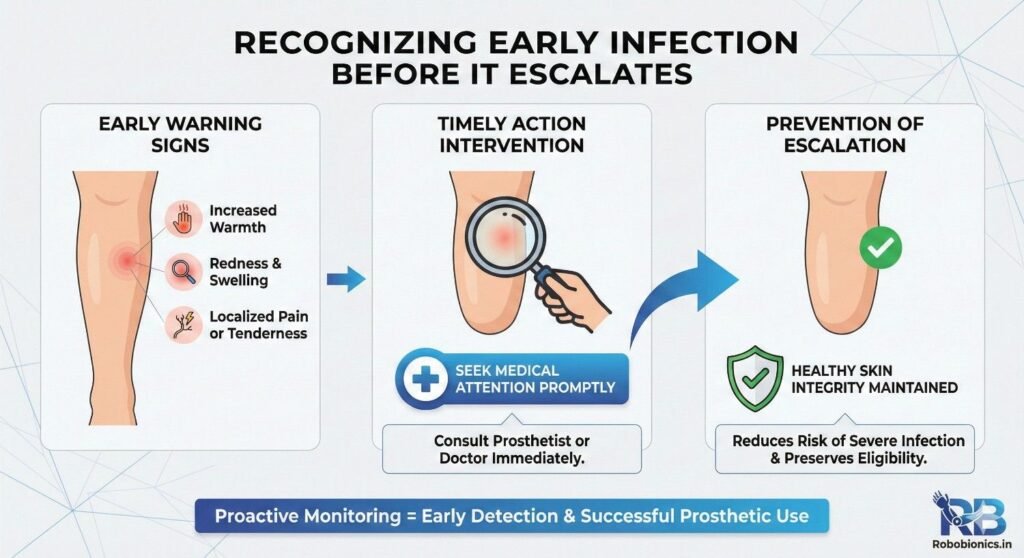
Early infection does not always present with obvious redness or pain.
Slight warmth, increased moisture, or mild swelling may be the first indicators.
In patients with reduced sensation, pain may be absent altogether.
Visual and tactile checks become essential.
Doctors should educate patients to look for patterns, not just single signs.
Changes over time matter more than isolated findings.
Not all skin irritation is infection, but irritation that does not improve with rest is concerning.
Infection tends to worsen or spread, while simple irritation stabilizes or resolves.
Persistent tenderness, expanding redness, or discharge should raise immediate concern.
Waiting for severe symptoms delays treatment.
Clinicians should err on the side of caution.
Early intervention is simpler and safer.
Any open wound, spreading redness, or signs of systemic illness require immediate cessation of prosthetic use.
Continuing wear in these situations greatly increases risk.
Doctors must communicate clear stop rules to patients.
Uncertainty leads to dangerous delays.
Stopping early protects long-term eligibility.
Short pauses prevent long setbacks.
Patients who understand their skin are safer prosthetic users.
Education should focus on recognizing normal versus abnormal responses to prosthetic wear.
Visual aids and demonstrations help reinforce learning.
Simple language improves retention.
Doctors should repeat education across visits.
Repetition builds habit and confidence.
Many patients hide skin problems because they fear being told to stop using their prosthesis.
This fear leads to delayed reporting and worse outcomes.
Clinicians must clearly state that early reporting protects progress rather than threatens it.
Trust changes behavior.
Creating a supportive environment improves communication.
Honesty reduces complications.
Some patients require assistance with skin care and monitoring.
Caregivers should be educated alongside the patient.
Clear roles and routines improve consistency.
Shared responsibility reduces risk.
Doctors should assess caregiver involvement as part of eligibility.
Support systems matter as much as medical factors.
Infection risk and skin integrity are not secondary concerns in prosthetic eligibility; they are foundational requirements that determine whether prosthetic use is safe, sustainable, and successful over time.
Ignoring early skin warning signs often leads to repeated breakdown, chronic infection, and eventual loss of prosthetic opportunity.
At Robobionics, our experience shows that patients who respect skin health from the beginning adapt better and maintain prosthetic use longer.
Careful timing, structured education, and early intervention protect both the limb and the individual’s confidence.
Prosthetic eligibility is not about rushing to fit a device, but about ensuring the skin can support the journey ahead. When infection risk is managed proactively and skin integrity is treated as a priority, prosthetic care becomes safer, more comfortable, and far more effective in the long term.
For many clinicians, the surgery is only the first step. What happens after the operation

For trauma amputees, the journey does not begin at the prosthetic clinic. It begins much

Amputation after cancer is not just a surgical event. It is the end of one

When a child loses a limb, the challenge is never only physical. A child’s body