
Post-Op Follow-Up Schedule That Prevents Prosthetic Delays (For Clinicians)
For many clinicians, the surgery is only the first step. What happens after the operation



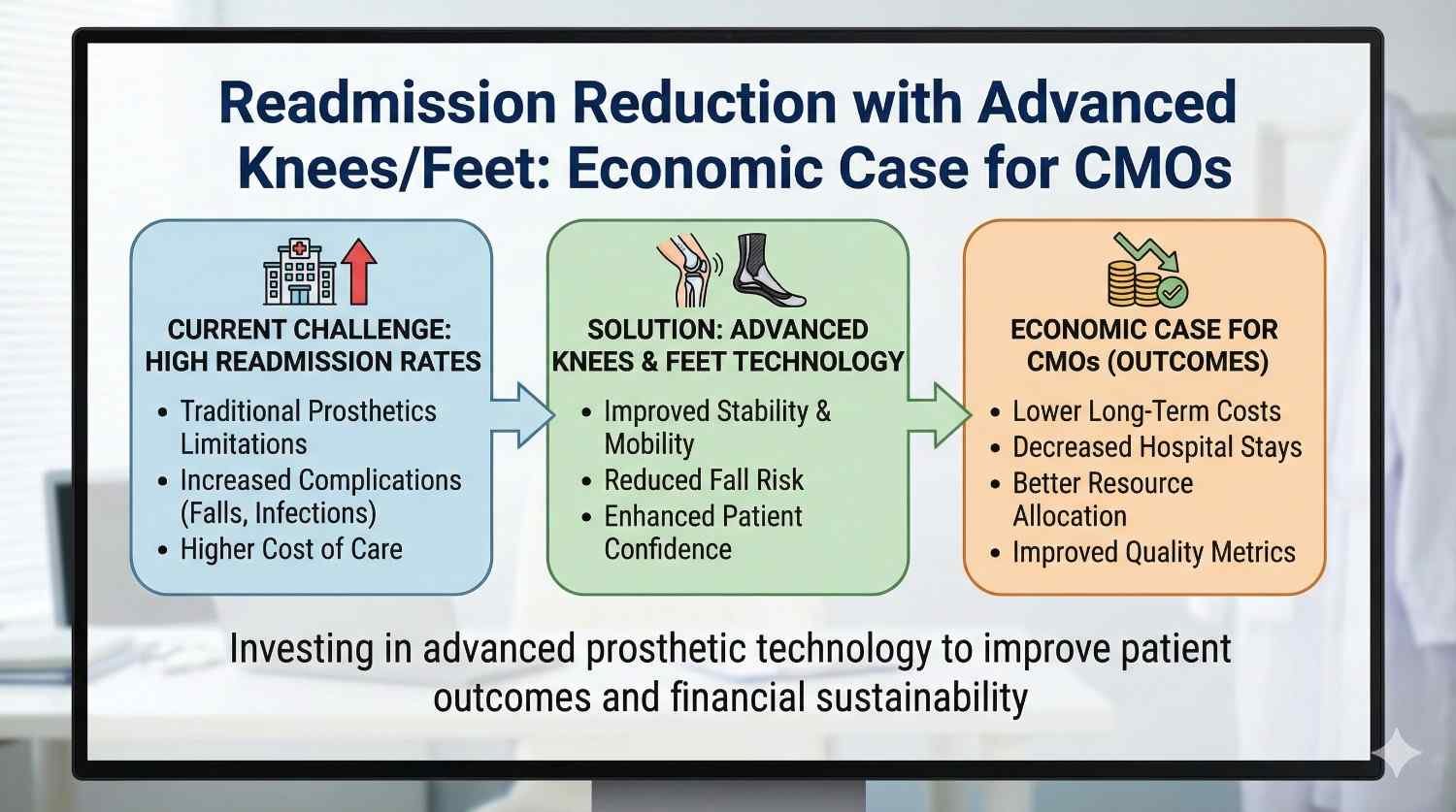
Hospital leaders today are under pressure from all sides. Readmissions hurt patient trust, strain care teams, and quietly drain hospital revenue. For Chief Medical Officers, the challenge is not only to improve outcomes, but to do it in a way that makes financial sense. One area that often gets overlooked is prosthetic care, especially the role of advanced knees and feet in reducing avoidable readmissions.
This article looks at a simple but powerful idea. When patients with limb loss receive better mobility support, they fall less, heal faster, and return to the hospital less often. Advanced prosthetic knees and feet are not just clinical upgrades. They are economic tools that can protect margins while improving lives.
In the sections ahead, we will break down how readmissions happen, why basic prosthetics increase risk, and how modern knees and feet change the story. The goal is to give CMOs a clear, practical case for investing in better prosthetic technology, with real-world insight, not theory.
For hospitals, readmissions are often discussed as numbers on a dashboard. A percentage here. A penalty there. But behind every readmission is a patient whose recovery did not go as planned.
In limb loss care, readmissions usually signal something very specific. A fall. A wound that did not heal. A device that failed the patient in daily life. These events are not random. They follow patterns.
When mobility is unsafe or tiring, patients limit movement. When they limit movement, their health declines. That decline often brings them back to the hospital.
Chief Medical Officers sit at the center of this problem. They are accountable for outcomes, safety, and quality, while also protecting the hospital from financial loss.
Readmission penalties reduce reimbursement. Longer stays increase cost. Staff burnout rises when the same patients return again and again.
For CMOs, the question becomes simple. Where can we reduce risk without adding complexity to care delivery?
Patients with amputations are more likely to be readmitted than many other groups. The reasons are not hard to see.
They are adjusting to a new body. They are learning to walk again. They often have diabetes or vascular disease. A small setback can quickly turn into a major event.
When prosthetic support is weak, the risk multiplies.
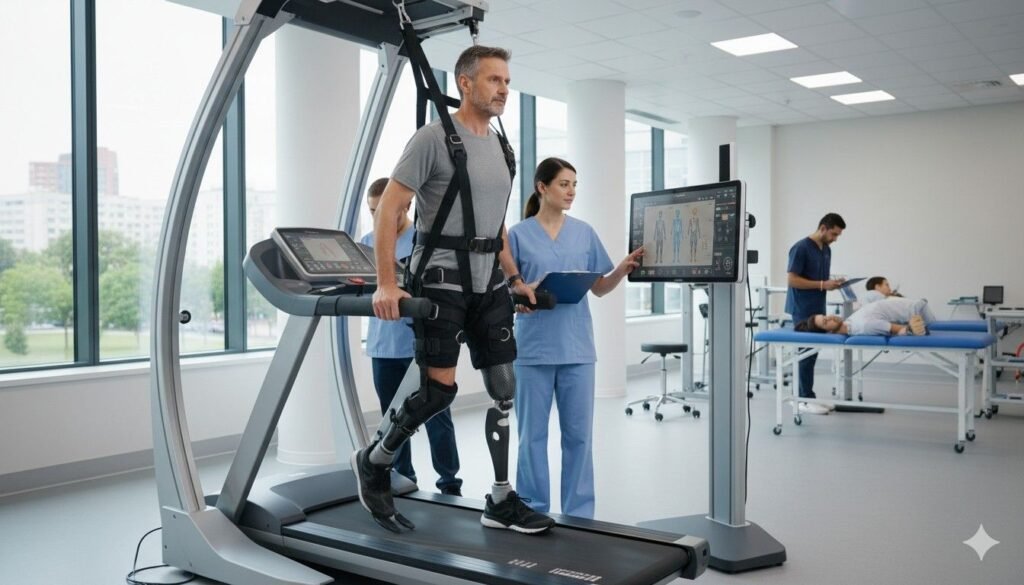
Basic prosthetic knees and feet are often chosen because they are cheaper upfront. But these devices usually lack adaptive control.
They do not adjust to walking speed. They do not respond well to slopes or uneven ground. They offer little protection when a patient stumbles.
Falls are one of the top causes of readmission in amputee patients. A single fall can mean fractures, head injury, or surgical revision.
Simple prosthetic systems require more effort to use. Patients must compensate with their hips, back, and sound limb.
This higher energy use causes fatigue. Fatigue reduces activity. Reduced activity slows healing and increases the risk of infection.
When recovery stalls, patients often return with complications that could have been avoided.
Mobility is not only physical. It is also mental.
When patients do not trust their prosthetic leg, they move less. They avoid stairs. They avoid longer walks. Some stop using the device altogether.
This loss of confidence leads to isolation, weight gain, and decline in overall health. These factors quietly increase the chance of readmission.
Advanced knees and feet are designed to respond to the user, not fight them.
They use sensors to detect movement. They adjust resistance in real time. They provide smoother walking and safer stance control.
Instead of forcing the patient to adapt to the device, the device adapts to the patient.
One major advantage is stability in daily life.
Advanced knees can sense when a patient is standing, walking, or changing speed. They lock when needed and release smoothly when safe.
Advanced feet provide better ground contact. They adjust to slopes, uneven surfaces, and changes in direction.
This stability directly reduces fall risk.
Because these devices move more naturally, patients use less energy to walk.
Reduced strain means less stress on joints and the lower back. It also means patients can walk longer without pain.
More movement supports better circulation, faster healing, and stronger overall health.
The most immediate impact of advanced knees and feet is fall prevention.
When patients feel stable, they recover faster and move with confidence. Emergency visits drop. Trauma-related readmissions fall.
For hospitals, this alone can justify the investment.
Movement plays a key role in recovery. It supports wound healing, muscle strength, and mental health.
Advanced prosthetics encourage regular use. Patients walk more. They stay active.
This consistency reduces post-surgical complications and lowers the chance of infection-related readmissions.
When prosthetic walking feels smoother, patients engage more in rehab.
They attend therapy sessions. They practice at home. They progress faster.
Stronger rehab outcomes reduce long-term dependency on hospital services.
Advanced prosthetic knees and feet cost more at the start. This is often where the conversation stops.
But readmissions are expensive. Falls are expensive. Long stays are expensive.
When one avoids even a single readmission, the cost difference begins to narrow. Over time, it often disappears.
Patients who mobilize early and safely are discharged sooner.
Advanced prosthetics support early ambulation. This shortens hospital stays and frees up beds.
For CMOs managing capacity, this benefit is significant.
Fewer complications mean fewer emergency calls, fewer revisions, and less stress on staff.
Care teams can focus on new patients instead of managing preventable setbacks.
This improves morale and care quality at the same time.
Value-based care rewards results, not tools.
Advanced knees and feet are not about technology for its own sake. They are about reducing harm and improving function.
Better mobility outcomes align directly with quality metrics hospitals are measured on.
Patients who walk safely and independently report higher satisfaction.
They feel supported. They feel respected. They feel confident leaving the hospital.
These experiences reflect in feedback scores and public ratings.
When amputee patients stay active, their overall health improves.
They manage chronic disease better. They rely less on acute care. They stay out of the hospital.
This supports long-term population health goals.
Any change in clinical practice brings hesitation. Prosthetic upgrades are often seen as non-essential, especially when budgets are tight.
Many teams worry about cost approvals, training needs, and pushback from finance departments. There is also fear of disrupting existing vendor relationships.
For CMOs, the risk feels personal. If outcomes do not improve quickly, the decision may be questioned.
The first shift is mental. Advanced knees and feet should not be viewed as equipment upgrades.
They are preventive tools. Just like infection control or fall prevention programs.
When framed this way, the conversation changes from expense to risk reduction.
Most hospitals already track readmissions by diagnosis and cause.
Falls, wound issues, and mobility-related complications often appear again and again in amputee cases.
By linking these events to prosthetic limitations, CMOs can present a data-backed story, not an opinion.

Surgeons and therapists see the daily struggles of amputee patients.
They witness unsafe gait, fear of walking, and slow rehab progress.
Including them early builds clinical support. Their voices carry weight in decision-making rooms.
Finance teams focus on numbers, not narratives.
Presenting a simple comparison helps. One advanced prosthetic versus one avoided readmission.
When numbers are clear and conservative, resistance often softens.
Procurement teams worry about contracts, vendors, and compliance.
Early engagement helps avoid last-minute delays.
Clear criteria for patient selection and device use also reduce fear of uncontrolled spending.
Advanced knees and feet are powerful, but they are not needed for everyone.
CMOs can guide teams to focus on patients with the highest readmission risk.
This targeted approach improves outcomes while controlling cost.
Patients with diabetes, vascular disease, or previous falls benefit the most.
So do patients living alone or returning to uneven environments.
These individuals are more likely to return if mobility fails.
Early fitting with advanced prosthetics leads to better results.
Waiting until problems appear often means readmission has already happened.
Proactive decisions create stronger long-term outcomes.
Advanced prosthetics do not require a new care model.
They fit into existing post-surgical and rehab workflows.
The key is coordination, not reinvention.
Modern prosthetic systems are designed for ease of use.
Most rehab teams adapt quickly with minimal training.
Vendors often support onboarding, reducing the burden on hospital staff.
Tracking simple metrics builds confidence.
Falls, length of stay, rehab progress, and readmission rates tell the story clearly.
Early wins help sustain internal support.
This concern is common and understandable.
But when costs are compared to penalties, extended stays, and repeat admissions, the picture changes.
Advanced prosthetics shift spending from reactive to preventive.
Evidence shows the opposite.
Patients adapt faster to devices that feel natural and stable.
Confidence grows when the device supports, not challenges, movement.
Vendor loyalty is important, but outcomes matter more.
Many advanced solutions can integrate into existing partnerships.
The goal is better care, not disruption.
Once advanced prosthetics become part of care strategy, results compound.
Fewer falls lead to fewer emergencies.
Fewer emergencies lead to lower readmission rates year after year.
Hospitals known for better amputee outcomes attract referrals.
Physicians trust systems that invest in patient safety.
Patients talk about experiences that restore dignity and independence.
This approach aligns clinical quality with financial responsibility.
It shows leadership that values prevention, not just treatment.
For CMOs, it strengthens both outcomes and credibility.
At the heart of this discussion are people learning to walk again.
Every avoided fall protects more than a budget line.
It protects confidence, independence, and hope.
Providing better mobility tools sends a message.
It says the hospital believes the patient deserves safety and dignity.
That message stays long after discharge.
Few decisions offer both financial and moral clarity.
Advanced knees and feet do exactly that.
They reduce cost while improving lives.
When hospitals move from basic to advanced knees and feet, the change is often quiet at first.
There is no big announcement. No sudden spike in numbers.
Instead, teams notice fewer emergency calls. Fewer reports of falls. Fewer unplanned returns.
Over months, patterns become clear. The same patients who once came back now stay home and recover.
Rehabilitation teams are often the first to notice change.
Patients stand sooner. Walking sessions last longer. Fear reduces.
Therapists spend less time correcting unsafe gait and more time building strength and confidence.
This shift improves both efficiency and morale inside rehab departments.
Family members often see the impact before metrics do.
They report fewer stumbles at home. Less anxiety about daily tasks.
When families feel safer, they are less likely to bring patients back for minor concerns that escalate into admissions.
In acute settings, early mobility is critical.
Advanced knees support safer transfers, bathroom use, and corridor walking.
This reduces in-hospital falls, which are a major driver of extended stays and legal risk.
Early success sets the tone for the entire recovery journey.
Rehab centers often deal with setbacks caused by unstable prosthetics.
Advanced systems reduce interruptions in therapy.
Fewer pauses mean faster functional gains and earlier discharge to home.
This improves throughput and resource use.
The real test of any prosthetic is life outside the hospital.
Uneven roads, stairs, wet floors, and crowds are daily challenges.
Advanced knees and feet handle these conditions better, reducing community-based readmissions.
Health systems are steadily moving away from volume-based models.
Readmission rates, functional outcomes, and patient experience are gaining weight.
Advanced prosthetics directly influence these measures.
Early adoption prepares hospitals for future payment structures.
Falls are now a major quality indicator.
Regulators and payers track fall-related harm closely.
Investing in mobility technology is a proactive fall prevention strategy.
Policy discussions increasingly include prosthetics as part of long-term care planning.
CMOs who integrate prosthetic strategy early align with this broader view.
This reduces fragmentation and improves continuity.
Measurement does not need to be complex.
Track falls, length of stay, readmissions, and rehab milestones.
These indicators already exist in most systems.
The difference lies in connecting them to prosthetic choice.
To show impact clearly, compare similar cases.
Patients with similar diagnoses, age, and risk profiles.
One group with basic devices. One with advanced.
Even small sample sizes often show meaningful trends.
Data convinces finance teams. Stories convince leadership.
Sharing patient journeys helps humanize the metrics.
Together, they create a complete picture.
Advanced prosthetics should not be a one-off experiment.
They work best as part of a defined care pathway.
Clear guidelines help teams make consistent choices.
Develop simple criteria for device selection.
Risk of falls. Living environment. Medical history.
This removes guesswork and ensures fair access.
Reliability matters.
Devices must be durable, serviceable, and supported locally.
Strong partnerships reduce downtime and patient frustration.
One fear is that advanced devices create inequality.
This happens only when selection lacks structure.
Clear criteria ensure those who benefit most receive priority.
Many amputee patients come from working-class environments.
They face uneven roads, public transport, and physical jobs.
Advanced knees and feet offer protection in these real conditions.
When patients remain mobile, they stay employed longer.
They rely less on caregivers and social services.
This reduces burden beyond the hospital walls.
CMOs shape how quality is defined.
By linking mobility to safety and outcomes, they elevate prosthetic care.
This sets expectations across departments.
Prosthetic decisions touch surgery, rehab, nursing, and finance.
CMOs can bring these voices together.
Shared ownership leads to smoother implementation.
Not all benefits appear in one quarter.
Leadership commitment allows programs time to mature.
The long-term gains often outweigh early hesitation.
Few interventions improve outcomes, reduce cost, and raise satisfaction at once.
Advanced knees and feet do exactly that.
They address a root cause, not a symptom.
As care models evolve, hospitals that prevent harm will lead.
Reducing avoidable readmissions strengthens resilience.
It prepares systems for tighter margins ahead.
For CMOs, impact is measured in systems built, not meetings attended.
Embedding better mobility support changes countless lives.
That legacy lasts far beyond annual reports.
At the executive level, decisions often stall because the wrong question is asked. Advanced knees and feet are usually evaluated as line-item costs instead of risk-control tools. This framing limits the discussion before it begins.
A better question is whether the hospital can afford repeated readmissions, longer stays, fall-related injuries, and avoidable complications in amputee care. When mobility-related readmissions are mapped across a year, the hidden cost becomes visible.
Once leaders see prosthetics as part of patient safety strategy, not equipment spend, approval becomes easier and more rational.
CMOs often sit between two strong forces. Clinical teams push for better tools, while finance teams push for tighter controls. The role of the CMO is not to choose one side, but to translate between them.
Advanced prosthetics offer a rare bridge. Clinically, they improve safety, confidence, and rehab outcomes. Financially, they reduce downstream events that cost far more than the device itself.
This balance strengthens the CMO’s position as both a care leader and a responsible steward.
One of the most effective ways to move forward is through small, controlled pilots. Instead of a full rollout, hospitals can start with a defined group of high-risk amputee patients.
Tracking outcomes over six to nine months often provides enough internal evidence to justify expansion. Pilots lower fear, create internal champions, and replace assumptions with real data from the hospital’s own patients.
Without structure, prosthetic selection becomes subjective. This leads to confusion, delays, and uneven patient outcomes.
CMOs can support the creation of simple clinical guidelines that define when advanced knees or feet are recommended. These guidelines should be based on fall risk, environment, medical history, and rehab potential.
When teams know the criteria, decisions become faster and fairer.
Advanced prosthetic outcomes depend on timing and coordination. Surgeons, rehab teams, and discharge planners must work from the same playbook.
When prosthetic planning starts early, patients mobilize sooner and discharge planning becomes smoother. Late decisions often lead to rushed fittings and poor adaptation, which increase readmission risk.
Strong alignment reduces friction and improves continuity of care.
Each advanced prosthetic case is an opportunity to learn. Simple documentation of why a device was chosen and how the patient progressed builds institutional knowledge.
Over time, this record helps refine criteria, justify budgets, and train new staff. It turns individual decisions into system-wide improvement.
The financial benefit of advanced knees and feet rarely appears as a single large number. Instead, it shows up as absence. Fewer emergency visits. Fewer revision surgeries. Fewer extended stays.
These avoided costs accumulate month by month. By the end of a year, the difference is often significant, even if it was not dramatic in any single report.
CMOs who look beyond quarterly snapshots see the real value.
Unplanned care is the most expensive kind of care. It disrupts schedules, overloads staff, and strains budgets.
By stabilizing mobility, advanced prosthetics reduce surprises. Care becomes more predictable, which improves planning and cost control across departments.
Predictability is an underrated financial advantage.
Hospitals that manage readmissions well can focus on growth instead of damage control. Beds open up. Staff time is freed. Reputation improves.
Advanced prosthetics contribute to this stability by reducing preventable setbacks in a high-risk group.

When a patient falls because their prosthetic could not support them, the harm is preventable. That reality weighs heavily on clinical leaders.
Advanced knees and feet reduce known risks. Choosing not to use them when appropriate raises ethical questions, not just financial ones.
CMOs are often the voice of this responsibility.
Mobility is tied to dignity. Patients who can walk safely feel respected and capable.
Hospitals that invest in better mobility tools send a strong message about the kind of care they provide. This message matters to patients, families, and staff alike.
Trust grows when patients feel protected after discharge. Fewer returns mean stronger belief in the system.
That trust has long-term value that cannot be measured only in currency.
Most hospitals already track the metrics needed to begin. Readmissions, falls, length of stay, and rehab delays are already documented.
The first step is connecting these outcomes to prosthetic limitations.
Choose a small group where impact is likely. Patients with prior falls, complex environments, or slow rehab progress are ideal starting points.
Targeted use delivers faster results and clearer evidence.
Include orthopedics, rehab, nursing, finance, and procurement. Early collaboration prevents late-stage resistance.
Shared ownership increases success.
Track outcomes regularly and review them openly. Adjust criteria as needed.
This iterative approach builds confidence and momentum.
Advanced prosthetic knees and feet are not luxury items. They are safety tools, rehab enablers, and cost-control mechanisms wrapped into one.
For CMOs, the decision is not about technology. It is about reducing preventable harm while protecting the hospital’s future.
When patients walk safely, systems work better. Readmissions fall. Costs stabilize. Trust grows.
In a healthcare environment under constant pressure, few decisions offer such clear alignment between clinical excellence and economic sense.
For many clinicians, the surgery is only the first step. What happens after the operation
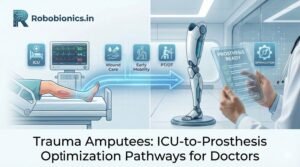
For trauma amputees, the journey does not begin at the prosthetic clinic. It begins much

Amputation after cancer is not just a surgical event. It is the end of one

When a child loses a limb, the challenge is never only physical. A child’s body