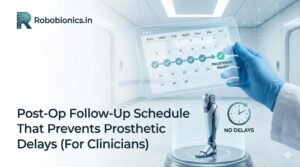
Post-Op Follow-Up Schedule That Prevents Prosthetic Delays (For Clinicians)
For many clinicians, the surgery is only the first step. What happens after the operation




For doctors treating upper-limb loss, the choice between a myoelectric prosthesis and a body-powered device is never just technical. It affects how a patient eats, works, earns, and lives every single day. In India, this decision also carries strong cost implications, because most patients and families pay from their own pocket and live with the outcome for decades.
This article is written for MDs who want clarity beyond brochures and assumptions. We will compare myoelectric and body-powered upper-limb prostheses through real costs, real outcomes, and long-term value. The focus will stay practical, Indian-context driven, and rooted in what doctors actually see in clinics and follow-ups. The aim is not to declare a winner, but to help you choose better for each patient you treat.
Body-powered prostheses use cables, harnesses, and body movement to control the hand or hook.
The user moves their shoulder, chest, or back to open and close the terminal device.
This system is fully mechanical and does not rely on batteries or electronics.
For decades, this has been the most common option offered in India.
Myoelectric prostheses use electrical signals from the user’s own muscles.
Sensors placed on the skin detect muscle activity and convert it into hand movement.
The device is powered by a battery and controlled through natural muscle contractions.
This allows more intuitive and refined control compared to cable-driven systems.
Both systems can restore some level of function, but in very different ways.
Doctors must weigh reliability, learning effort, cost, appearance, and long-term use.
What works well for one patient may fail completely for another.
This makes the decision deeply clinical rather than purely technical.

In India, most upper-limb prosthetic users pay for devices themselves.
This financial reality makes upfront cost a dominant concern during counseling.
However, focusing only on initial price can hide long-term burdens.
Doctors often have to help patients see beyond the first bill.
Many patients live far from prosthetic centers.
Regular follow-up and structured training are not always possible.
Devices that demand high maintenance or frequent tuning may struggle in this setting.
Context matters as much as capability.
Upper-limb use in India ranges from desk work to heavy manual labor.
Daily tasks often involve lifting, gripping tools, or working in crowded spaces.
Prosthetic choice must reflect these real-world demands.
Ignoring them reduces long-term success.
Body-powered devices usually offer a simple open-and-close grip.
This can be effective for holding tools or carrying objects.
However, fine motor control is limited and often tiring.
Tasks requiring precision are difficult to sustain.
Using a harness-based system requires continuous physical effort.
Over time, this can cause shoulder pain, back strain, and fatigue.
Many users reduce wear time because of discomfort.
Reduced usage directly lowers functional benefit.
Body-powered systems are mechanically robust.
They tolerate dust, moisture, and rough handling well.
Breakdowns are usually simple to fix.
This reliability is a strong advantage in low-resource settings.
Myoelectric control uses natural muscle signals.
This reduces the need for exaggerated body movements.
Users often find control more intuitive after training.
This ease supports longer daily wear.
Myoelectric hands can offer multiple grip options.
This expands the range of daily tasks that can be performed.
Activities like eating, dressing, and light work become easier.
Functional independence often improves.
Myoelectric devices require structured training initially.
Users must learn to activate muscles consistently.
Once learned, control becomes smoother over time.
Motivation and support play key roles here.
Body-powered prostheses have a much lower initial cost.
This makes them appear more accessible at first glance.
Myoelectric devices cost significantly more upfront.
This difference often dominates early discussions.
Body-powered devices require simple mechanical maintenance.
Repairs are usually affordable and quick.
Myoelectric devices involve batteries, electronics, and motors.
However, modern designs have become more durable and service-friendly.
Body-powered devices may need more frequent part replacements due to wear.
Myoelectric devices often last longer when maintained well.
Over several years, total costs can narrow.
Long-term planning changes the comparison.
A prosthesis delivers value only when worn regularly.
Discomfort and fatigue reduce daily use.
Myoelectric users often report longer wear times.
Higher adoption improves real-world outcomes.
Upper-limb function strongly affects self-care tasks.
Eating, grooming, and dressing shape dignity and confidence.
Myoelectric devices often support these tasks better.
Utility extends beyond work alone.
Body-powered devices can support heavy, repetitive tasks.
Myoelectric devices support varied and precise activities.
Matching device type to job role is critical.
Wrong matching leads to abandonment.

Upper-limb loss is highly visible.
Cosmesis affects confidence and social interaction.
Myoelectric hands often look more natural.
This can reduce stigma and self-consciousness.
Struggling with a device daily affects mood.
Repeated failure to complete tasks creates frustration.
Better functional fit improves emotional well-being.
Doctors should consider this seriously.
Upper-limb function affects dependence on others.
Devices that restore independence reduce caregiver burden.
This improves family dynamics.
Utility spreads beyond the patient alone.
Patients may expect near-natural function.
When reality falls short, disappointment sets in.
Clear counseling prevents this gap.
Expectation management is essential.
Harness discomfort is a common reason for stopping use.
Skin issues and muscle strain accumulate.
Myoelectric sockets also require careful fitting.
Comfort drives long-term use.
Devices fail when support disappears.
Training, follow-up, and servicing sustain outcomes.
Without support, even good devices are abandoned.
Systems matter as much as technology.
In upper-limb prosthetics, outcomes depend far more on patient–device matching than on the technology itself.
A well-chosen body-powered device can outperform a poorly matched myoelectric hand, just as an advanced myoelectric system can fail if given to the wrong user.
Doctors often see disappointment not because the device was bad, but because expectations, lifestyle, and capacity were not aligned from the start.
Understanding patient context is therefore the most important clinical step in this decision.
A patient’s age alone does not decide suitability, but lifestyle often does.
Younger patients may have higher activity demands and stronger motivation to learn complex control, while older patients may prioritize comfort and reliability.
Daily routines such as commuting, household work, or office tasks influence how much fine motor control is truly needed.
When these realities are discussed openly, device choice becomes clearer and more honest.
Work demands should always be explored in detail, not assumed.
A manual worker using tools in dusty or wet environments may value the ruggedness of a body-powered device.
An office worker, shop owner, or student may benefit more from the precision and appearance of a myoelectric hand.
Doctors who take time to understand the patient’s work reduce the risk of later abandonment.
Body-powered prostheses require continuous physical effort and conscious control.
Users must coordinate shoulder and body movement for every action, which can become tiring over long periods.
Myoelectric devices shift effort from the body to the mind during early learning.
Once learned, control often feels more natural and less physically demanding.
Myoelectric devices need structured training, especially in the first few weeks.
Patients must be willing to attend sessions and practice consistently.
If motivation is low or follow-up access is poor, outcomes may suffer.
Doctors should assess readiness for training as carefully as physical suitability.
Some patients adapt quickly and enjoy mastering new control methods.
Others prefer simple, predictable systems that do not change.
Neither preference is wrong, but each points toward a different device choice.
Respecting personality differences improves long-term satisfaction.

Patients often ask for the cheapest option first, driven by fear of cost.
Doctors can gently reframe the conversation toward long-term use and benefit.
Explaining how daily wear, comfort, and independence affect value helps patients think differently.
Cost discussions become more meaningful when linked to life outcomes.
Instead of focusing only on upfront price, doctors should explain cost over years.
Maintenance, repairs, replacement parts, and lost work time all matter.
When patients understand total cost, some become open to higher upfront investment.
Transparency builds trust and reduces regret.
Myoelectric devices are sometimes oversold as near-natural hands.
This creates unrealistic expectations and later frustration.
Doctors should clearly explain both strengths and limits.
Honest counseling protects both patient and clinician.
Body-powered devices require training to learn harness control and body mechanics.
Many patients adapt informally over time, but poor technique can cause strain.
Without guidance, shoulder and back pain become common.
Doctors should not assume these devices require no rehab.
Myoelectric devices require structured initial training.
Muscle signal control, grip switching, and task practice take time.
When rehab is available, outcomes improve significantly.
Lack of rehab is one of the biggest reasons for failure.
In many parts of India, rehab centers are limited.
Travel cost and time affect attendance.
Doctors must choose devices that fit the rehab reality of the patient.
Ignoring access issues leads to poor outcomes.
India’s climate is demanding on prosthetic devices.
Body-powered systems tolerate harsh environments well.
Modern myoelectric devices are improving but still need reasonable care.
Doctors should consider where and how the device will be used daily.
Patients may remove and wear devices multiple times a day.
Rough handling increases wear and tear.
Devices that are too delicate for the user’s lifestyle may fail early.
Matching durability to daily life improves value.
Quick access to service determines downtime.
Long downtime reduces trust and usage.
Doctors should consider local service availability when recommending devices.
Support systems are as important as technology.
Clinical measures often focus on grip strength or task completion.
Patients care more about ease, comfort, and reliability.
Doctors should ask about daily challenges during follow-ups.
These conversations reveal true outcomes.
How many hours per day the prosthesis is worn matters more than lab tests.
Higher wear time usually reflects better fit and satisfaction.
Myoelectric users often show longer wear time when well supported.
This metric deserves more attention.
Upper-limb function affects self-esteem deeply.
Being able to eat in public or shake hands matters emotionally.
Myoelectric devices often improve social confidence.
Doctors should listen for these cues during reviews.
For patients doing repetitive, forceful tasks, body-powered devices can be practical.
They offer strong grip and simple mechanics.
When expectations are realistic, outcomes can be good.
Doctors should not dismiss these devices automatically.
If training and follow-up are unlikely, simpler systems may perform better.
Body-powered devices tolerate low-support environments.
Utility depends on sustainability, not sophistication.
Practicality sometimes outweighs advancement.
Some patients trust mechanical systems more than electronics.
They prefer devices they can understand and fix easily.
Respecting this preference improves acceptance.
Choice should feel empowering, not imposed.
For patients prioritizing self-care and social function, myoelectric devices often perform better.
Tasks like eating, dressing, and phone use become easier.
These gains strongly affect dignity and confidence.
Doctors should highlight this clearly.
Myoelectric devices thrive with good training and follow-up.
Patients with access to rehab and service benefit most.
Support multiplies technology value.
Doctors should assess system strength before recommending.
Cosmesis matters more in upper-limb loss than many doctors realize.
Natural-looking hands reduce unwanted attention.
This improves social participation and mental health.
Utility includes emotional comfort.
Many upper-limb prosthetic decisions look successful in the first few months after fitting.
Patients are motivated, devices are new, and expectations are still flexible.
However, doctors know that the real test appears years later, when routine sets in and life pressures increase.
Long-term outcomes reveal whether a prosthesis truly fits into a patient’s life or slowly gets pushed aside.
In long-term follow-ups, body-powered devices often show declining daily wear time.
Harness discomfort, shoulder strain, and fatigue gradually reduce usage, even if the device still works mechanically.
Patients may wear the prosthesis only for specific tasks and rely more on the sound limb for everything else.
This partial use limits the functional and psychological benefit over time.
Myoelectric devices, when well fitted and supported, often show more stable wear patterns.
Because they demand less physical effort during use, patients are more likely to wear them for longer hours each day.
This sustained use translates into more consistent functional benefit across years.
With body-powered devices, some patients slowly adapt their lifestyle around limitations.
They stop attempting tasks that feel tiring or awkward and accept reduced function as normal.
While this adaptation may reduce frustration, it also lowers overall independence and utility.
Doctors may only notice this drift if they ask detailed questions during follow-up.
Myoelectric users often show the opposite pattern when support is strong.
As confidence grows, they attempt more complex tasks and integrate the prosthesis into varied activities.
This expansion of use can improve independence even years after initial fitting.

Prosthetic abandonment is rarely sudden.
Most patients do not declare that they have stopped using their device.
Instead, usage slowly decreases until the prosthesis stays in a cupboard or bag.
Doctors may not hear about this unless they ask directly.
For body-powered devices, chronic discomfort is a leading cause of abandonment.
Even small daily discomforts accumulate into a strong reason to stop wearing the device.
For myoelectric devices, abandonment often stems from poor training or lack of service support.
When problems remain unresolved, frustration replaces motivation.
When a prosthesis is abandoned, the financial cost is only one part of the loss.
Patients also lose confidence, trust in medical advice, and willingness to try again.
Some become resistant to future interventions, even when better options exist.
From a doctor’s perspective, abandonment represents a failure of the overall care pathway.
A useful way to think about prosthetic cost is cost per year of meaningful use.
A low-cost device that is abandoned after two years may be more expensive per year than a higher-cost device used for eight years.
This perspective often changes how doctors and patients view upfront pricing.
It shifts the focus from purchase to sustained benefit.
Body-powered devices have predictable and usually low repair costs.
However, frequent small repairs and part replacements add up over time.
Myoelectric devices may have fewer repairs but higher individual service costs.
When averaged over many years of regular use, the difference is often smaller than expected.
Upper-limb function affects earning ability, especially in younger patients.
Devices that support stable work participation reduce long-term financial stress.
This indirect economic benefit is rarely captured in formal cost comparisons.
Doctors should still consider it during counseling.
Independence is not static; it either grows or shrinks over time.
Patients with devices that support varied daily tasks often expand independence gradually.
Those with limited devices may shrink their activity range to avoid difficulty.
This difference becomes very clear over five to ten years.
Upper-limb loss affects how patients see themselves in social settings.
Avoiding public eating, handshakes, or visible tasks can limit participation.
Myoelectric devices often help patients feel more comfortable in social roles.
This social ease contributes strongly to long-term well-being.
Living with a prosthesis requires ongoing emotional adjustment.
Devices that reduce daily struggle preserve emotional energy.
Over many years, this difference affects resilience and mental health.
Doctors should recognize emotional load as a clinical outcome.
Doctors who follow patients consistently often see clearer patterns than those who do not.
They notice which devices disappear from use and which become part of life.
These observations refine future recommendations.
Experience becomes a powerful teacher.
Simple questions like “How often do you wear it?” reveal more than technical exams.
Asking about comfort, confidence, and frustration opens honest conversation.
Patients often wait for permission to share dissatisfaction.
Doctors who ask learn more.
Some patients start with one type of device and later transition to another.
This progression is not failure but adaptation.
Doctors should frame prosthetic care as a journey rather than a one-time decision.
Flexibility improves long-term outcomes.

The most effective prosthetic decisions begin with a deep understanding of the patient’s life rather than a preference for a specific technology.
Doctors should explore how the patient lives, works, travels, and interacts socially on a daily basis.
When these details are clear, the prosthetic choice becomes a response to real needs instead of a theoretical best option.
This patient-first approach reduces mismatch and long-term dissatisfaction.
In the first consultation, doctors should explain that more than one prosthetic path exists.
Presenting body-powered and myoelectric options side by side helps normalize choice.
Patients feel more comfortable when they understand that there is no single “right” answer.
This openness builds trust early in the care journey.
Rather than focusing on technical features, doctors can describe how each device fits into common daily activities.
Examples such as eating meals, managing personal hygiene, or handling tools make outcomes tangible.
Patients respond better to life-based explanations than to device specifications.
Clear scenarios support informed consent.
One of the strongest predictors of satisfaction is expectation alignment.
Doctors should clearly explain what each device can and cannot do, using simple language.
Avoiding exaggerated promises protects patients from later disappointment.
Honesty strengthens the doctor–patient relationship.
Both device types require learning, but in different ways.
Body-powered devices demand physical coordination, while myoelectric devices require mental focus during training.
Patients should understand this difference before choosing.
Prepared patients adapt better.
Cost discussions should be transparent and calm.
Doctors can explain both upfront expenses and long-term implications.
Avoid framing higher-cost options as superior by default.
Respecting financial boundaries builds ethical care.
Follow-up visits should include questions about daily wear time and comfort.
These factors reveal more about success than visual inspection alone.
Patients often normalize discomfort unless asked directly.
Early intervention prevents long-term abandonment.
If a device is underused, doctors should explore why without blame.
Sometimes small adjustments or retraining can restore confidence.
In other cases, a different device may suit the patient better.
Flexibility supports better outcomes.
Doctors play a role in encouraging ongoing training and skill development.
Positive reinforcement helps patients stay engaged.
Even brief guidance during follow-ups can make a difference.
Support should feel continuous, not one-time.
Persistent shoulder pain, low wear time, or avoidance of daily tasks suggest poor fit.
These signs should prompt discussion about alternatives.
Ignoring them allows dissatisfaction to grow silently.
Early reconsideration protects patient trust.
Frequent technical issues, training dropouts, or frustration with control are warning signs.
These often indicate gaps in support rather than device failure.
Addressing training and service needs first is important.
Only then should device change be considered.
Switching devices should be presented as adaptation, not a mistake.
Patients feel relieved when change is normalized.
This framing maintains confidence in medical guidance.
Care evolves as life evolves.
Upper-limb prosthetic care does not end with device selection.
Long-term value depends on follow-up, encouragement, and honest reassessment.
Doctors who stay engaged see better outcomes.
Continuity matters deeply.
Doctors are often the patient’s strongest advocate in complex systems.
Recommending the right device means balancing function, cost, and sustainability.
This advocacy protects patients from poor long-term choices.
Ethical care is thoughtful care.
Every patient teaches something new.
Reflecting on successes and failures refines judgment.
Over time, this experience improves decision-making quality.
Clinical wisdom grows through attention.

There is no universal answer to myoelectric versus body-powered prostheses.
Each has strengths that fit certain lives better than others.
Doctors should resist blanket recommendations.
Individualized care delivers better results.
Cost, service access, rehab availability, and lifestyle vary widely in India.
Decisions must respect these realities.
Advanced technology helps only when systems support it.
Practical fit defines success.
Technology should serve the patient, not the other way around.
When chosen thoughtfully, both device types can restore dignity and function.
Doctors guide this choice through clarity and compassion.
The goal remains a life well lived.
At RoboBionics, we work closely with doctors across India and see the real-life impact of prosthetic choices every day.
We see patients thrive when device selection matches their life, not just their limb loss.
We also see frustration when cost, expectation, or support gaps are ignored.
This article is meant to support MDs in making confident, patient-centered decisions grounded in reality.
When myoelectric and body-powered prostheses are understood deeply, they become tools of empowerment rather than sources of confusion.
If you would like, we can next create a quick OPD decision checklist, patient counseling scripts, or a hospital-focused cost comparison guide to support your clinical practice further.
For many clinicians, the surgery is only the first step. What happens after the operation
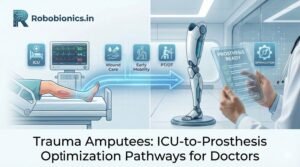
For trauma amputees, the journey does not begin at the prosthetic clinic. It begins much
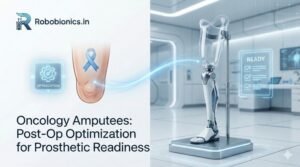
Amputation after cancer is not just a surgical event. It is the end of one

When a child loses a limb, the challenge is never only physical. A child’s body